
Product Description
Large Stress Electrical/Diesel Air Booster/Air Compressor
Introductions:
Our products have total types and specs. From the compressor type, it is divided into cellular type, mounted variety, automobile-mounted type, skid-mounted variety and so on. Compressed media include air, all-natural gas, liquefied petroleum fuel, hydrogen, recycled gas, nitrogen, ammonia, propylene, biogas, coalbed methane, carbon dioxide, and so forth. From the cylinder lubrication approach, it is divided into oil lubrication and oil-cost-free lubrication. From the compression variety, it is divided into reciprocating piston type and screw type. Items are extensively used in metallurgical machinery manufacturing, urban design, metal, countrywide protection, coal, mining, geology, normal fuel, petroleum, petrochemical, chemical, electric power, textile, biology, drugs, glass and other industries.
Principal characteristics:
one. The compressor is made by air-cooling and h2o-cooling technological innovation, with substantial trustworthiness and lengthy provider lifestyle.
two. The compressor device has a substantial degree of automation. The unit procedure is controlled by a programmable controller PLC and is outfitted with several protections.
three. Computerized shutdown protection, unloading restart, automatic drainage, and alarm for inadequate oil.
| Movement fee | ≤50 Nm³/min |
| Force | ≤40 MPa |
| Medium | air, nitrogen, carbon dioxide, all-natural fuel |
| Control | PLC automatic handle |
| Generate mode | electrical motor, diesel engine |
| Cooling method | air cooling, water cooling, blended cooling |
| Installation technique | cellular sort, mounted sort, car-mounted variety, skid-mounted sort |
Main Specialized Parameters:
| NO. | Model | Rotating Velocity (r/min) |
Ingestion Stress (Mpa) |
Exhaust Strain (Mpa) |
Exhaust Volume (Nm³/min) |
Dimension (L*W*H)mm | Travel Power/Shaft Electricity(KW) | Bodyweight (T) | Remark |
| one | SF-ten/a hundred and fifty | 1330 | Atmospheric Strain | fifteen | ten | 5500*2000*2300 | 227/139 | 6 | Stationary Diesel Motor |
| 2 | SF-ten/150 | 1330 | 15 | 10 | 7500*2300*2300 | 227/139 | 8 | Container Skid Mounted Diesel Motor | |
| three | SF-ten/250 | 1330 | twenty five | 10 | 5500*2000*2300 | 227/173 | six | Stationary Diesel Engine | |
| four | SF-10/250 | 1330 | twenty five | 10 | 7500*2300*2300 | 227/173 | eight | Container Skid Mounted Diesel Engine | |
| 5 | SF-ten/250 | 1330 | twenty five | ten | 15710*2496*3900 | 227/173 | 21.ninety eight | Vehicular | |
| six | WF-ten/sixty | a thousand | six | ten | 6000*2200*2200 | one hundred thirty five/a hundred and ten | six | Container Skid Mounted Diesel Engine | |
| 7 | W-10/350 | 980 | 35 | ten | 15710*2496*3900 | 303/187 | 21.98 | Vehicular | |
| eight | WF-.9/3-one hundred twenty | 980 | .three | 12 | .9 | 5100*2000*2350 | 75/50 | five.4 | Container Skid Mounted Diesel Motor |
| nine | SF-1.2/24-a hundred and fifty | 1200 | two.4 | 15 | 1.two | 7500*2300*2415 | 303/195 | eight.six | Container Skid Mounted Diesel Engine |
| ten | W-.86/seventeen-350 | a thousand | 1.seven | 35 | .86 | 8500*2500*2300 | 277/151 | 12 | Container Skid Mounted Diesel Engine |
| 11 | W-1.twenty five/eleven-350 | 980 | one.1 | 35 | 1.25 | 8000*2500*2500 | 185/one hundred forty five.35 | 15 | Container Skidding Motor |
| 12 | LG.V-25/one hundred fifty | Screw 2279 Piston 800 | Atmospheric Stress | 15 | twenty five | 7000*2420*2300 | 355 | sixteen | Container Skidding Motor |
| Model | Flow | Pressure | Stages | Cooling Sort | Rotating Speed | Power |
| m³/min | Mpa | r/min | ||||
| SVF-15/one hundred | 15 | ten | one+two | Air Cooling | 1150 | Diesel series |
| SVF-18/100 | eighteen | 10 | 1+two | 1150 | ||
| SVF-20/a hundred and twenty | twenty | 12 | one+two | 1150 | ||
| LGW-15/100 | fifteen | ten | 1+two | 1150 | ||
| LGW-15/one hundred fifty | fifteen | 15 | one+3 | 1150 | ||
| LGW-15/200 | 15 | 20 | one+three | 1150 | ||
| LGW-20/one hundred | 20 | ten | one+two | 1150 | ||
| LGW-20/150 | twenty | fifteen | 1+two | 1150 | ||
| LGS-24/150 | 24 | fifteen | 1+two | 1150 | ||
| LGS-30/a hundred and fifty | thirty | fifteen | one+two | 1150 | ||
| LGW-twenty five/a hundred and fifty | twenty five | fifteen | 1+two | Water cooling | 980 | Electrical tandem |
| LGV-twenty five/250 | twenty five | 25 | one+three | 740 | Diesel collection | |
| LGW-12/275 | twelve | 27.5 | one+three | 980 | Electric tandem | |
| LGV-fifteen/85 | 15 | 8.5 | 1+2 | 980 | ||
| LGV-15/250 | 15 | 25 | 1+three | Air Cooling | 740 | |
| LGV-15/350 | fifteen | 35 | 1+4 | Water cooling | 740 | |
| LGV-fifteen/400 | 15 | 40 | 1+four | 740 | ||
| LGV-12.5/four hundred | twelve.five | forty | one+4 | 740 | ||
| LGV-fifteen/a hundred | fifteen | 10 | 1+2 | 740 |
Software Business:
one. Suited for oilfield stress take a look at, line sweeping, fuel elevate, effectively drilling and other initiatives.
two. Utilized in air tightness screening, air tightness inspection, pressure check, toughness inspection, air tightness verification and other fields of different large-stress vessels or pressure vessels this kind of as fuel cylinders, steel cylinders, valves, pipelines, strain meters, high-stress boilers, and so forth. .
3. On-board force testing, pressurization, pipeline pressure screening, line sweeping, fuel elevate and other tasks in oil exploration.
4. Sand blasting and rust removing, parts dust removal, higher pressure phosphorus elimination, anti-corrosion engineering, nicely drilling operations, mountain quarrying.
five. For hydropower station turbine manage and high-voltage energy grid air limited-circuit gadget for arc extinguishing.
six. Give air source for big and medium-sized bottle blowing equipment.
| To Be Negotiated | 1 Piece (Min. Order) |
###
| Principle: | Reciprocating Compressor |
|---|---|
| Configuration: | Portable |
| Flow Rate: | ≤50 Nm³/Min |
| Pressure: | 0.1MPa-40MPa |
| Medium: | Air, Nitrogen, Carbon Dioxide, Natural Gas |
| Control: | PLC Automatic Control |
###
| Flow rate | ≤50 Nm³/min |
| Pressure | ≤40 MPa |
| Medium | air, nitrogen, carbon dioxide, natural gas |
| Control | PLC automatic control |
| Drive mode | electric motor, diesel engine |
| Cooling method | air cooling, water cooling, mixed cooling |
| Installation method | mobile type, fixed type, vehicle-mounted type, skid-mounted type |
###
| NO. | Model | Rotating Speed (r/min) |
Intake Pressure (Mpa) |
Exhaust Pressure (Mpa) |
Exhaust Volume (Nm³/min) |
Dimension (L*W*H)mm | Drive Power/Shaft Power(KW) | Weight (T) | Remark |
| 1 | SF-10/150 | 1330 | Atmospheric Pressure | 15 | 10 | 5500*2000*2300 | 227/139 | 6 | Stationary Diesel Engine |
| 2 | SF-10/150 | 1330 | 15 | 10 | 7500*2300*2300 | 227/139 | 8 | Container Skid Mounted Diesel Engine | |
| 3 | SF-10/250 | 1330 | 25 | 10 | 5500*2000*2300 | 227/173 | 6 | Stationary Diesel Engine | |
| 4 | SF-10/250 | 1330 | 25 | 10 | 7500*2300*2300 | 227/173 | 8 | Container Skid Mounted Diesel Engine | |
| 5 | SF-10/250 | 1330 | 25 | 10 | 10280*2496*3900 | 227/173 | 21.98 | Vehicular | |
| 6 | WF-10/60 | 1000 | 6 | 10 | 6000*2200*2200 | 135/110 | 6 | Container Skid Mounted Diesel Engine | |
| 7 | W-10/350 | 980 | 35 | 10 | 10280*2496*3900 | 303/187 | 21.98 | Vehicular | |
| 8 | WF-0.9/3-120 | 980 | 0.3 | 12 | 0.9 | 5100*2000*2350 | 75/50 | 5.4 | Container Skid Mounted Diesel Engine |
| 9 | SF-1.2/24-150 | 1200 | 2.4 | 15 | 1.2 | 7500*2300*2415 | 303/195 | 8.6 | Container Skid Mounted Diesel Engine |
| 10 | W-0.86/17-350 | 1000 | 1.7 | 35 | 0.86 | 8500*2500*2300 | 277/151 | 12 | Container Skid Mounted Diesel Engine |
| 11 | W-1.25/11-350 | 980 | 1.1 | 35 | 1.25 | 8000*2500*2500 | 185/145.35 | 15 | Container Skidding Motor |
| 12 | LG.V-25/150 | Screw 2279 Piston 800 | Atmospheric Pressure | 15 | 25 | 7000*2420*2300 | 355 | 16 | Container Skidding Motor |
###
| Model | Flow | Pressure | Stages | Cooling Type | Rotating Speed | Power |
| m³/min | Mpa | r/min | ||||
| SVF-15/100 | 15 | 10 | 1+2 | Air Cooling | 1150 | Diesel series |
| SVF-18/100 | 18 | 10 | 1+2 | 1150 | ||
| SVF-20/120 | 20 | 12 | 1+2 | 1150 | ||
| LGW-15/100 | 15 | 10 | 1+2 | 1150 | ||
| LGW-15/150 | 15 | 15 | 1+3 | 1150 | ||
| LGW-15/200 | 15 | 20 | 1+3 | 1150 | ||
| LGW-20/100 | 20 | 10 | 1+2 | 1150 | ||
| LGW-20/150 | 20 | 15 | 1+2 | 1150 | ||
| LGS-24/150 | 24 | 15 | 1+2 | 1150 | ||
| LGS-30/150 | 30 | 15 | 1+2 | 1150 | ||
| LGW-25/150 | 25 | 15 | 1+2 | Water cooling | 980 | Electric tandem |
| LGV-25/250 | 25 | 25 | 1+3 | 740 | Diesel series | |
| LGW-12/275 | 12 | 27.5 | 1+3 | 980 | Electric tandem | |
| LGV-15/85 | 15 | 8.5 | 1+2 | 980 | ||
| LGV-15/250 | 15 | 25 | 1+3 | Air Cooling | 740 | |
| LGV-15/350 | 15 | 35 | 1+4 | Water cooling | 740 | |
| LGV-15/400 | 15 | 40 | 1+4 | 740 | ||
| LGV-12.5/400 | 12.5 | 40 | 1+4 | 740 | ||
| LGV-15/100 | 15 | 10 | 1+2 | 740 |
| To Be Negotiated | 1 Piece (Min. Order) |
###
| Principle: | Reciprocating Compressor |
|---|---|
| Configuration: | Portable |
| Flow Rate: | ≤50 Nm³/Min |
| Pressure: | 0.1MPa-40MPa |
| Medium: | Air, Nitrogen, Carbon Dioxide, Natural Gas |
| Control: | PLC Automatic Control |
###
| Flow rate | ≤50 Nm³/min |
| Pressure | ≤40 MPa |
| Medium | air, nitrogen, carbon dioxide, natural gas |
| Control | PLC automatic control |
| Drive mode | electric motor, diesel engine |
| Cooling method | air cooling, water cooling, mixed cooling |
| Installation method | mobile type, fixed type, vehicle-mounted type, skid-mounted type |
###
| NO. | Model | Rotating Speed (r/min) |
Intake Pressure (Mpa) |
Exhaust Pressure (Mpa) |
Exhaust Volume (Nm³/min) |
Dimension (L*W*H)mm | Drive Power/Shaft Power(KW) | Weight (T) | Remark |
| 1 | SF-10/150 | 1330 | Atmospheric Pressure | 15 | 10 | 5500*2000*2300 | 227/139 | 6 | Stationary Diesel Engine |
| 2 | SF-10/150 | 1330 | 15 | 10 | 7500*2300*2300 | 227/139 | 8 | Container Skid Mounted Diesel Engine | |
| 3 | SF-10/250 | 1330 | 25 | 10 | 5500*2000*2300 | 227/173 | 6 | Stationary Diesel Engine | |
| 4 | SF-10/250 | 1330 | 25 | 10 | 7500*2300*2300 | 227/173 | 8 | Container Skid Mounted Diesel Engine | |
| 5 | SF-10/250 | 1330 | 25 | 10 | 10280*2496*3900 | 227/173 | 21.98 | Vehicular | |
| 6 | WF-10/60 | 1000 | 6 | 10 | 6000*2200*2200 | 135/110 | 6 | Container Skid Mounted Diesel Engine | |
| 7 | W-10/350 | 980 | 35 | 10 | 10280*2496*3900 | 303/187 | 21.98 | Vehicular | |
| 8 | WF-0.9/3-120 | 980 | 0.3 | 12 | 0.9 | 5100*2000*2350 | 75/50 | 5.4 | Container Skid Mounted Diesel Engine |
| 9 | SF-1.2/24-150 | 1200 | 2.4 | 15 | 1.2 | 7500*2300*2415 | 303/195 | 8.6 | Container Skid Mounted Diesel Engine |
| 10 | W-0.86/17-350 | 1000 | 1.7 | 35 | 0.86 | 8500*2500*2300 | 277/151 | 12 | Container Skid Mounted Diesel Engine |
| 11 | W-1.25/11-350 | 980 | 1.1 | 35 | 1.25 | 8000*2500*2500 | 185/145.35 | 15 | Container Skidding Motor |
| 12 | LG.V-25/150 | Screw 2279 Piston 800 | Atmospheric Pressure | 15 | 25 | 7000*2420*2300 | 355 | 16 | Container Skidding Motor |
###
| Model | Flow | Pressure | Stages | Cooling Type | Rotating Speed | Power |
| m³/min | Mpa | r/min | ||||
| SVF-15/100 | 15 | 10 | 1+2 | Air Cooling | 1150 | Diesel series |
| SVF-18/100 | 18 | 10 | 1+2 | 1150 | ||
| SVF-20/120 | 20 | 12 | 1+2 | 1150 | ||
| LGW-15/100 | 15 | 10 | 1+2 | 1150 | ||
| LGW-15/150 | 15 | 15 | 1+3 | 1150 | ||
| LGW-15/200 | 15 | 20 | 1+3 | 1150 | ||
| LGW-20/100 | 20 | 10 | 1+2 | 1150 | ||
| LGW-20/150 | 20 | 15 | 1+2 | 1150 | ||
| LGS-24/150 | 24 | 15 | 1+2 | 1150 | ||
| LGS-30/150 | 30 | 15 | 1+2 | 1150 | ||
| LGW-25/150 | 25 | 15 | 1+2 | Water cooling | 980 | Electric tandem |
| LGV-25/250 | 25 | 25 | 1+3 | 740 | Diesel series | |
| LGW-12/275 | 12 | 27.5 | 1+3 | 980 | Electric tandem | |
| LGV-15/85 | 15 | 8.5 | 1+2 | 980 | ||
| LGV-15/250 | 15 | 25 | 1+3 | Air Cooling | 740 | |
| LGV-15/350 | 15 | 35 | 1+4 | Water cooling | 740 | |
| LGV-15/400 | 15 | 40 | 1+4 | 740 | ||
| LGV-12.5/400 | 12.5 | 40 | 1+4 | 740 | ||
| LGV-15/100 | 15 | 10 | 1+2 | 740 |
Choosing an Air Compressor
Considering a new Air Compressor? Here are some tips to make the decision easier. Learn the pros and cons of each type, including the differences between oil-injected and oil-free models, single stage and positive displacement. In addition, learn more about the different technologies that are available for your air compressor. It is important to choose an appropriate unit for the type of work you do. Here are some of the best compressors available today.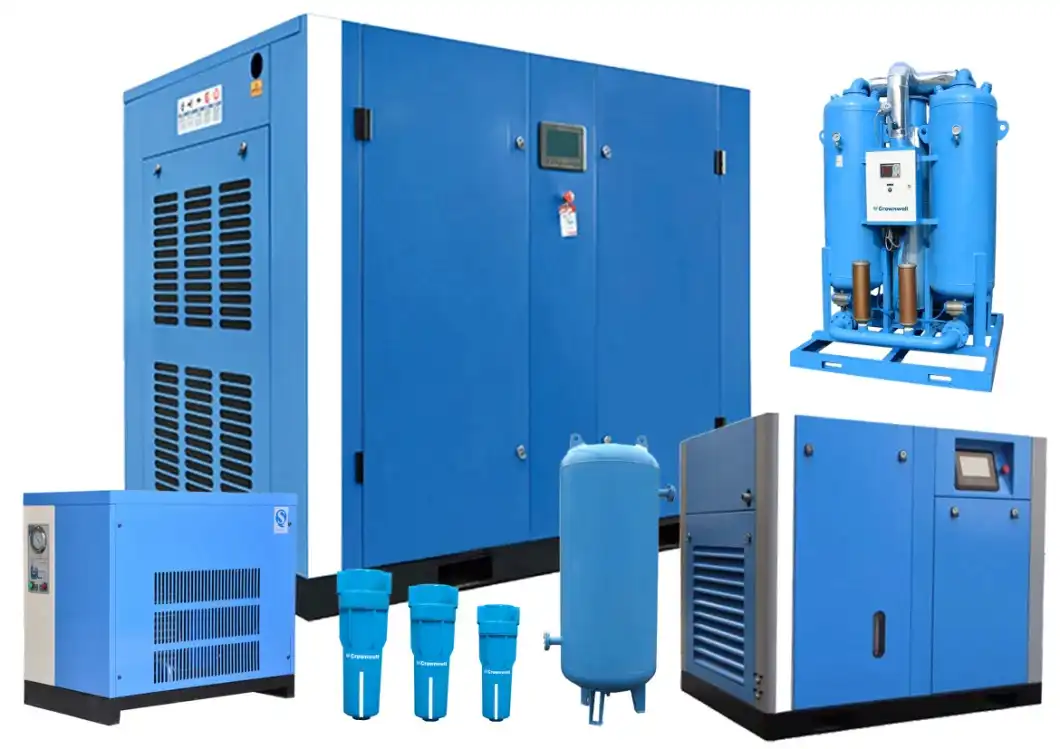
Positive displacement
There are several different types of air compressors, but most are positive displacement air compressors. They use a rotary or reciprocating component to compress air. The reciprocating component compresses air by reducing the volume of the chamber. Positive displacement compressors are used in bicycle pumps, chemical plants, and refrigerators. Positive displacement air compressors use multiple inlet ports. Despite the various types, the principle of operation remains the same.
Another type of positive displacement air compressor is a reciprocating piston. The piston inside a cylinder moves up and down, causing the compressed air to fill the upper part of the cylinder. These air compressors are used in a variety of different applications, including blowing bottles and gas pipelines. These air compressors can be water-cooled, lubricated, or non-lubricated. Different types have different capacities and air pressures.
A positive displacement flowmeter uses a rotating chamber that divides continuous fluid into discrete portions. The number of times the chamber is filled and discharged can be used to estimate the flow rate. The rotation speed of the measuring chamber is directly proportional to the flow rate. The drawbacks of this type of positive displacement flowmeter are that it is prone to jamming. If the fluid contains particles, it may be too thick for the meter to determine flow rate.
A negative displacement air compressor was invented in 1860 and is the oldest type of compressor. It uses two lobes positioned in a circular cavity. One rotor is connected to an engine, while the other pushes the other one to spin in the opposite direction. Negative displacement compressors are low-maintenance, but they do require more precision. They are often used in nuclear power plants because they use the kinetic energy of the rotating elements to produce pressure.
Oil-injected
Oil-flooded or oil-injected air compressors use liquid to seal and lubricate moving parts and reduce noise. Oil-flooded air compressors are effective for a variety of pneumatic tools and accessories. Some models have a thermostat that controls the amount of oil used during operation. Other types of oil-flooded air compressors are piston-type models. Here is an overview of the basic differences between these two air compressors.
An oil-injected air compressor is more expensive than a comparable oil-free air compressor, but its advantages far outweigh its disadvantages. An oil-free compressor is quieter, requires less maintenance, and has a lower price tag. It also offers a greater degree of air purity. A number of other advantages may also make this type of air compressor the better choice for many industrial settings. If you need a high-pressure compressor in a tight space, consider the benefits of an oil-free system.
Oil-injected air compressors require more maintenance than oil-free models. Both types of air compressors offer similar capacity and ISO 8573-1 Class 0 and 1-2 purity, but the oil-injected systems require more air-treatment components. They require an activated carbon filter and coalescing filter. Oil-injected air compressors will likely remain the standard for industrial air compressors for many years. And since their performance and efficiency are comparable, it may be worthwhile to invest in some point-of-use air treatment.
Both types of air compressors have their benefits. However, choosing between oil-free and oil-injected air compressors is not as straightforward as you might think. Whichever type you choose, make sure it will meet your needs. The benefits of an oil-injected air compressor outweigh their disadvantages. In general, oil-injected air compressors are more durable and can last longer than oil-free models. The only downside is their higher price.
Oil-free
When choosing an air compressor for your company, you’ll need to determine what it is going to be used for. For example, if you’re planning on using it to power multiple workers, you should consider getting an oil-free compressor. An oil-free compressor, on the other hand, is quieter and can power several workers at a time. If you’re a contractor, the most important consideration will be the type of jobs you’ll be doing. Higher air pressure means greater demand for air flow, and more pressure can damage the equipment.
Oil-free compressed air is certified 100% free of contaminants. Technically, oil-free air is not completely free of foreign matter, but it is extremely low within the limits of practical air quality. A technically oil-free air compressor might have a total oil level of 0.003 mg/m3. If you’re in need of a technically oil-free air compressor, you must install an air treatment equipment after your current compressor.
If you’re in the manufacturing industry, a good oil-free air compressor will save you money and reduce your environmental impact. Many of these tools require air compressors to work, and this equipment will ensure that they don’t get contaminated. To buy the best oil-free compressor, you should learn a bit about the different terms used by compressor repair companies. ACFM, for example, is the amount of air that can be compressed in one minute at rated conditions.
When you’re using an oil-free air compressor, you should know that the overall life of the device will be much shorter. Compared to an oil-flooded rotary screw air compressor, an oil-free compressor typically has a lifespan of 50 thousand hours. But it’s important to understand that this type of compressor can still cause damage to piping and processes. Therefore, you should choose an oil-free compressor when you need to clean air for your business.
Single-stage
A single-stage air compressor, also known as a piston air compressor, compresses air only once before storing it in a cylinder. This stored air has enough energy to power a variety of pneumatic tools, such as screwdrivers, chisels, and wrenches. These units are also ideally suited for low-flow applications and are widely used in gas stations, auto shops, and various manufacturing plants.
A single-stage air compressor uses two valves – one for inlet and one for outlet – to transfer compressed air. Both valves are actuated by springs. The inlet valve has a slight curvature to provide protection from damage. The compressor’s outlet valve opens when the pressure in the cylinder is higher than the pressure in the storage tank. The piston moves very quickly inside the cylinder, exerting a high amount of force throughout the compression process. This high piston speed is a common cause of compressor wear and tear.
A single-stage air compressor is ideal for smaller tradesmen and small construction crews. Its lightweight and compact design make it easier to transport and store. While it may be tempting to buy the first cheap air compressor you see, it’s important to balance the price against performance to choose the right air compressor for your needs. The best single-stage air compressor is one that provides excellent performance and durability. Its two-stage counterpart is designed for larger construction teams and large applications.
The main difference between a single-stage and a two-stage air compressor lies in their capacity. A single-stage air compressor compresses air only once and delivers it into the storage tank, while a two-stage compressor compresses it twice, creating double the pressure. Because of this, single-stage air compressors are cheaper and versatile than their counterparts, which means that they can be used for multiple purposes.
Low-noise
A low-noise air compressor is a type of industrial compressor that is less noisy than regular air compressors. These are generally smaller machines designed for smaller factories and workshops with a few to several employees. They are designed to handle mid-weight volumes of compressed air per day. This type of compressor is especially useful for smaller manufacturing businesses that need to produce compressed air for medical applications. Small breweries can also benefit from the low-noise capabilities of these compressors.
Low-noise air compressors come in various sizes and features. For smaller jobs, you can purchase a one-gallon model that is lightweight and portable. For larger jobs, you can purchase one with a larger tank that can provide more pressure for longer jobs. However, a larger tank will make the compressor heavier and harder to transport. To avoid this, make sure to check the size of the tank and how much power it can handle.
Considering a low-noise air compressor for your business? If so, you’ve come to the right place. There are a variety of affordable and dependable low-noise options to choose from. A CAT 10020C, for example, is designed to provide high-volume air to many outlets at once. A CAT 10020C comes with a 10-gallon tank, wheels, and a carrying handle.
Noise levels can also affect the productivity of employees. When employees work with air compressors in close proximity to each other, they may develop tinnitus. If employees are free from tinnitus because of the loud noise, they are likely to work more efficiently. Moreover, it will be easier for them to focus and communicate efficiently. If you need a compressor, a low-noise one is an excellent choice.


editor by czh 2022-12-07