
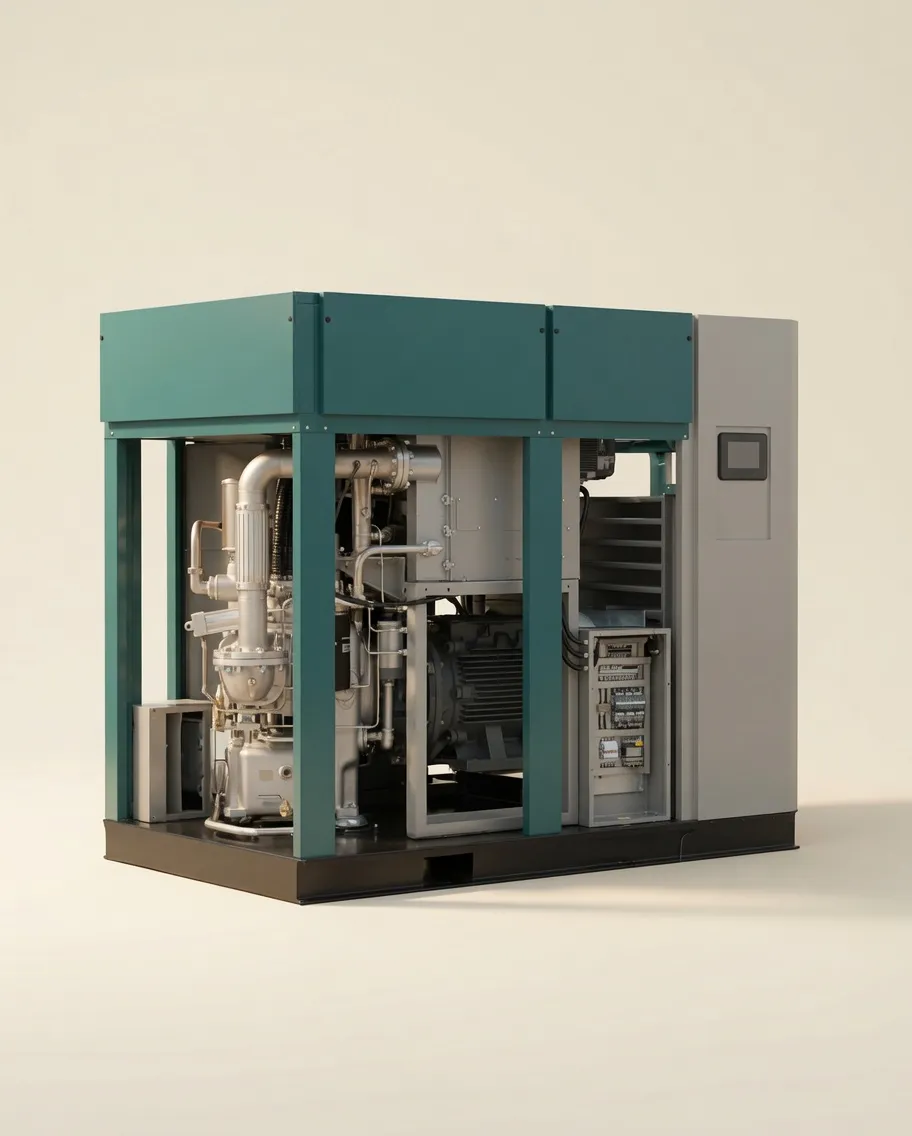
Why On-Site Nitrogen Generation Has Replaced Cylinder Supply
Nitrogen gas is one of the most widely used industrial gases — applied in laser cutting, food packaging (modified atmosphere), electronics manufacturing, pharmaceutical blanketing, tyre inflation in commercial vehicles, and dozens of other applications. Traditionally, nitrogen was delivered in pressurised cylinders or dewars (liquid nitrogen vessels) from a gas supplier — a model with significant cost, logistics complexity, and supply continuity risk.
On-site nitrogen generator technology — which extracts nitrogen from compressed air — has fundamentally changed this economics. A PSA (Pressure Swing Adsorption) or membrane nitrogen generator produces nitrogen continuously from a facility’s existing compressed air supply, at a fraction of the delivered cylinder cost. Payback periods of 12–24 months are common for facilities consuming more than 100 litres of nitrogen per hour.
The critical dependency, however, is the quality of the compressed air supplied as feedstock. Nitrogen generators are engineered to separate oxygen and nitrogen from clean, dry, oil-free compressed air. Feed any compressed air that fails on any of these three parameters — dry, clean, oil-free — and the generator performs poorly, fails early, or is permanently damaged. Understanding exactly what “clean, dry, oil-free” means in the context of nitrogen generation is the foundation of any successful N₂ system design.
How PSA Nitrogen Generators Work — And Why Air Quality Matters So Much
PSA nitrogen generation is the dominant technology for on-site nitrogen production in the 95–99.999% purity range. Understanding its operating principle explains directly why compressed air contamination is so damaging.
The separation mechanism is adsorption — the carbon molecular sieve (CMS) material preferentially adsorbs oxygen molecules over nitrogen, allowing nitrogen to pass through. The CMS is regenerated by depressurising the vessel (pressure swing), releasing the adsorbed oxygen to exhaust. Two vessels alternate between adsorption and regeneration to produce a continuous nitrogen stream.
The CMS is highly engineered material with a precisely calibrated pore structure sized to capture oxygen molecules. Oil molecules are orders of magnitude larger than oxygen — when oil aerosol enters the CMS bed, oil molecules are irreversibly trapped in the pore structure, permanently blocking the adsorption sites. Unlike moisture (which releases during regeneration), oil contamination is not recoverable. A contaminated CMS bed cannot be regenerated or cleaned — it must be replaced entirely, at a cost of AUD $5,000–50,000+ depending on generator size.
Oil contamination in a PSA nitrogen generator typically goes unnoticed until nitrogen purity begins to degrade — which may take weeks or months as the CMS bed is progressively contaminated. By the time purity monitoring triggers an alarm, a significant portion of the bed may already be permanently damaged. There is no remediation short of complete CMS replacement. The only protection is ensuring oil-free compressed air feed from the point of installation.
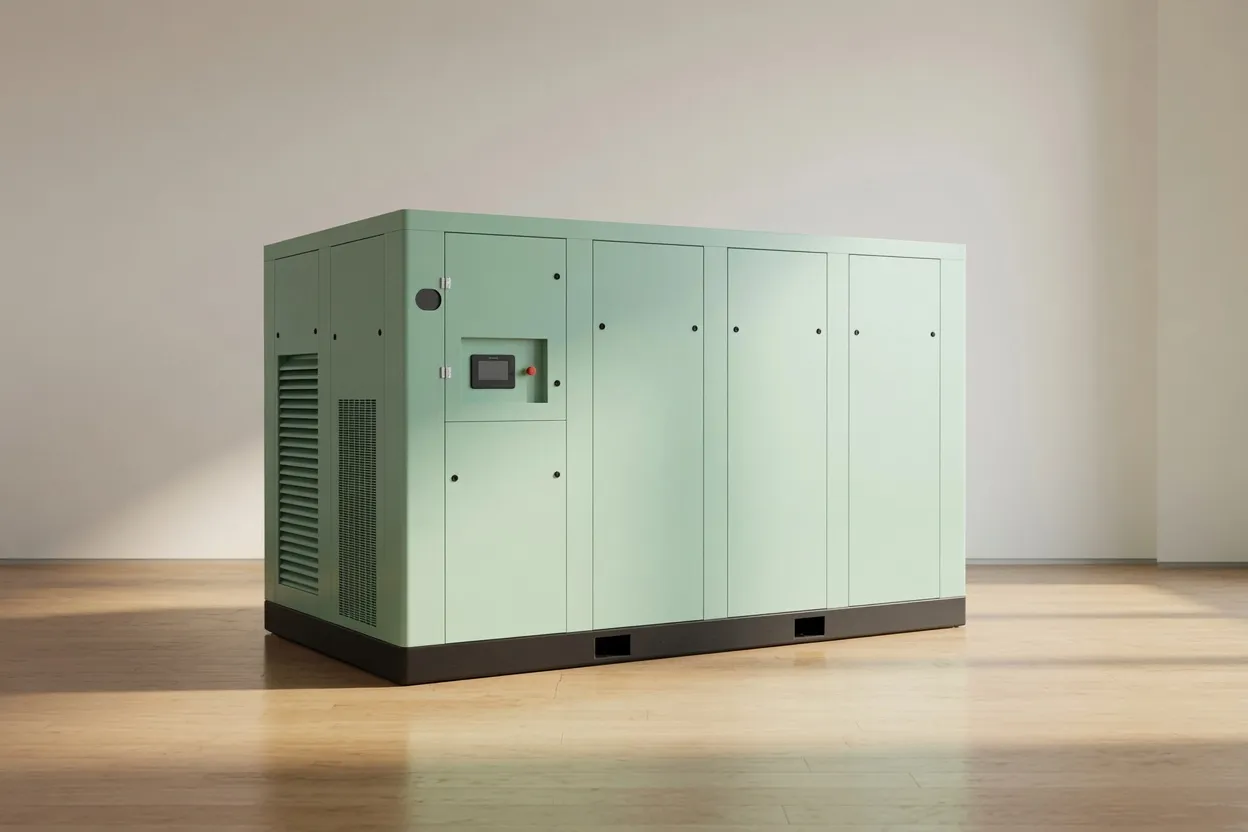
Why ISO Class 0 Oil-Free Air Is the Only Safe Feed for a Nitrogen Generator
Standard compressed air system design includes coalescing filters for oil aerosol removal. These filters can achieve oil content down to 0.01 mg/m³ (ISO 8573-1 Class 1) from oil-injected compressor systems — which is adequate for most direct compressed air applications. The question is: is Class 1 filtration of oil-injected air sufficient for nitrogen generator feed?
The answer is technically “Class 1 may be sufficient in the short term” — but in practice, it carries risks that make true ISO Class 0 oil-free supply the industry standard for nitrogen generation feed air. Three specific risks explain why:
Coalescing filter elements have a finite service life and can fail without an immediate visible indicator. A ruptured or bypassed filter element on an oil-injected system can deliver high-concentration oil aerosol directly to the nitrogen generator — causing rapid, severe CMS contamination. This failure mode is particularly dangerous in 24/7 operations where filter condition may not be checked between service intervals.
Coalescing filters remove liquid oil aerosol effectively but cannot remove oil vapour (gaseous phase). In high-temperature compressor rooms or during summer conditions, a greater proportion of oil contamination may be present as vapour — passing through a coalescing filter rated for aerosol removal and reaching the nitrogen generator. Activated carbon polishers can address vapour, but add complexity and another potential failure point.
Even sub-Class 1 concentrations of oil (above 0.01 mg/m³) that pass through a filter in its end-of-life condition accumulate progressively in the CMS bed. Purity degradation is slow, gradual, and invisible to casual monitoring. The generator continues to appear operational while its effective nitrogen purity capability slowly deteriorates — until the application reveals it through product quality failure or instrument malfunction.
The industry consensus, reflected in nitrogen generator manufacturers’ warranty conditions, is that feed air should be certified to ISO 8573-1 Class 0 for oil — achievable only with a true oil-free compressor, not with filtered oil-injected supply. An oil-free rotary screw compressor provides this guarantee structurally, without relying on filter performance or maintenance compliance.
Complete Feed Air Quality Requirements for PSA Nitrogen Generators
Oil contamination receives most of the attention, but it is not the only compressed air quality parameter that affects nitrogen generator performance. Moisture and solid particles also have significant impacts on CMS bed life and nitrogen purity:
| Parameter | Recommended Specification | ISO 8573-1 Class | Impact of Non-Compliance |
|---|---|---|---|
| Oil content | 0 mg/m³ (Class 0) | Class 0 | Permanent, irreversible CMS contamination — bed replacement required |
| Dew point (pressure) | −40°C pdp or better | Class 1 | Moisture adsorbed by CMS reduces N₂ capacity and shortens CMS service life by 30–60% |
| Solid particles | ≤0.1 µm, ≤0.1 mg/m³ | Class 1 | Particles block CMS pores over time; dust from CMS itself may contaminate nitrogen output |
| Inlet pressure | 100–175 PSI | N/A | Below minimum: lower N₂ output and purity; above maximum: possible generator damage |
| Inlet temperature | 5–40°C | N/A | High temperatures reduce CMS adsorption capacity; below 5°C risks moisture condensation in generator |
| Flow stability | ±10% of rated flow | N/A | Large flow fluctuations disrupt the pressure swing cycle, causing purity spikes and premature CMS cycling |
The dew point requirement (−40°C) is notable: it mandates desiccant drying, not just refrigerated drying. A refrigerated dryer (+3°C) would allow moisture to reach the CMS bed, progressively degrading its nitrogen separation capacity. The complete filter and dryer train for a nitrogen generator feed system therefore includes: oil-free compressor → receiver tank → refrigerated pre-dryer → coalescing filter → activated carbon filter → desiccant dryer → CMS generator.
Sizing the Compressor for Nitrogen Generator Feed
The relationship between compressed air input and nitrogen output depends on the required nitrogen purity. Higher purity nitrogen requires a larger compressed air volume per litre of nitrogen produced — because more of the feed air must cycle through multiple adsorption stages to achieve high nitrogen concentration. This ratio (compressed air to nitrogen output) is the key sizing parameter:
| Target N₂ Purity | Air-to-N₂ Ratio | Compressor CFM per 100 L/min N₂ | Typical Application |
|---|---|---|---|
| 95% | 2.5:1 | 8–10 CFM | Tyre inflation, general blanketing |
| 99% | 4:1 | 12–15 CFM | Electronics, food packaging MAP |
| 99.5% | 5:1 | 15–18 CFM | Laser cutting assist, beverage blanketing |
| 99.9% | 7:1 | 20–25 CFM | Pharmaceutical blanketing, wine production |
| 99.999% | 15–20:1 | 45–60 CFM | Semiconductor, laboratory reference gas |
The compressor sizing calculation must also account for the standard compressed air demand of the facility operating in parallel with the nitrogen generator feed. The oil-free compressor supplying both general facility air and N₂ generator feed must be rated for the combined peak demand — not just the nitrogen generation requirement.
For facilities where nitrogen generation is a continuous, high-priority process (such as food packaging lines or pharmaceutical manufacturing), a dedicated oil-free compressor for nitrogen generator feed only is often the preferred design. This ensures N₂ generator feed pressure and flow quality are not affected by demand fluctuations from the general facility air system.
Membrane vs PSA Nitrogen Generators: Which Technology for Your Application?
Two technologies dominate on-site nitrogen generation. Both require contamination-free compressed air as feed, but they have different strengths and weaknesses that determine the right choice for different applications:
Complete Nitrogen System Design from Australia Oil Free Air Compressor
Australia Oil Free Air Compressor Co., Ltd. has extensive experience designing compressed air systems for nitrogen generation feed — specifically because we understand that the compressor selection is the most consequential decision in the entire N₂ system. Our water-lubricated and dry oil-free screw compressor range provides certified ISO 8573-1 Class 0 oil content, giving nitrogen generator manufacturers the feed air specification they require for full warranty coverage.
Every nitrogen generation system proposal we support includes: compressor sizing for both N₂ feed and general facility demand, the correct upstream dryer and filter train, feed air pressure and temperature confirmation for your specific generator model, and N₂ purity achievability assessment against your required specification. We work with PSA and membrane generator suppliers to ensure the full system is designed as an integrated unit — not assembled from independently-specified components that may not match.
Contact us at [email protected] to discuss compressed air supply design for your nitrogen generation application.
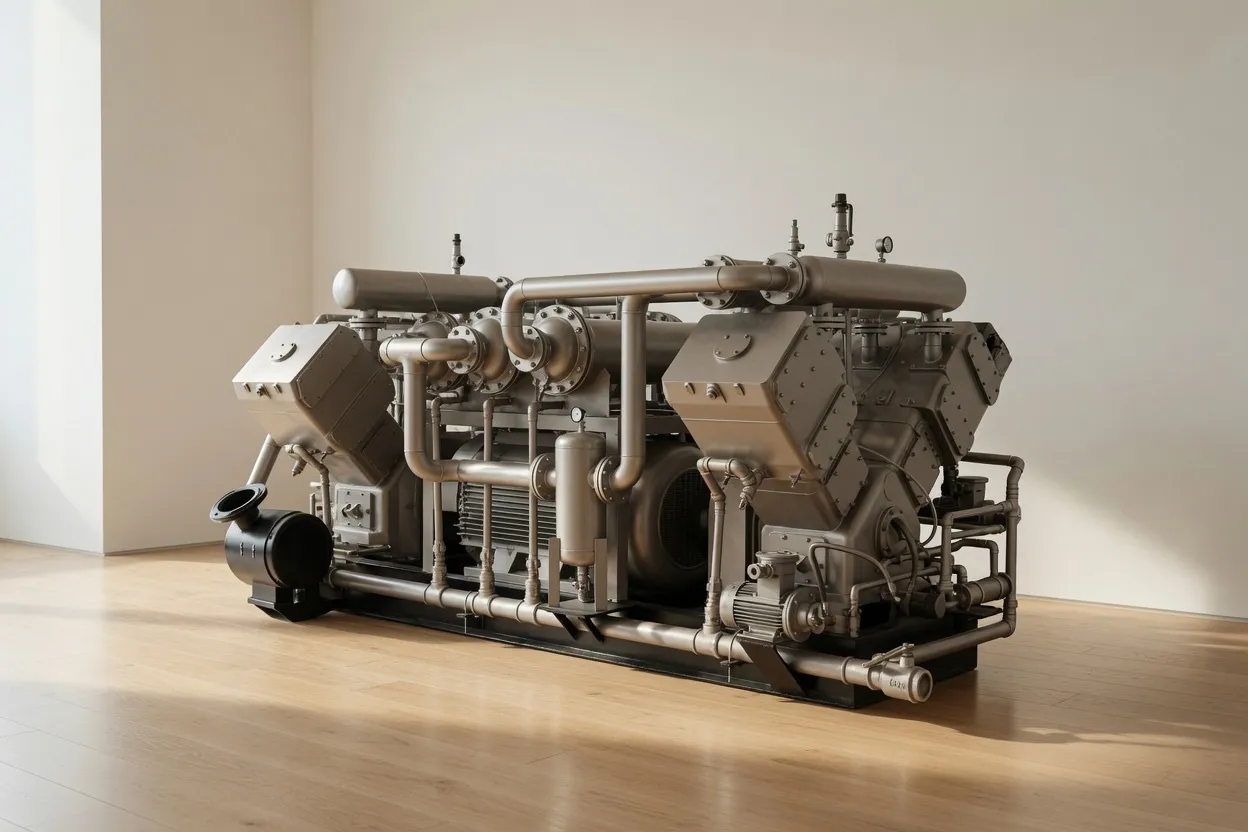
CM45D — Low-Pressure Oil-Free Screw Compressor (Water Lubrication)
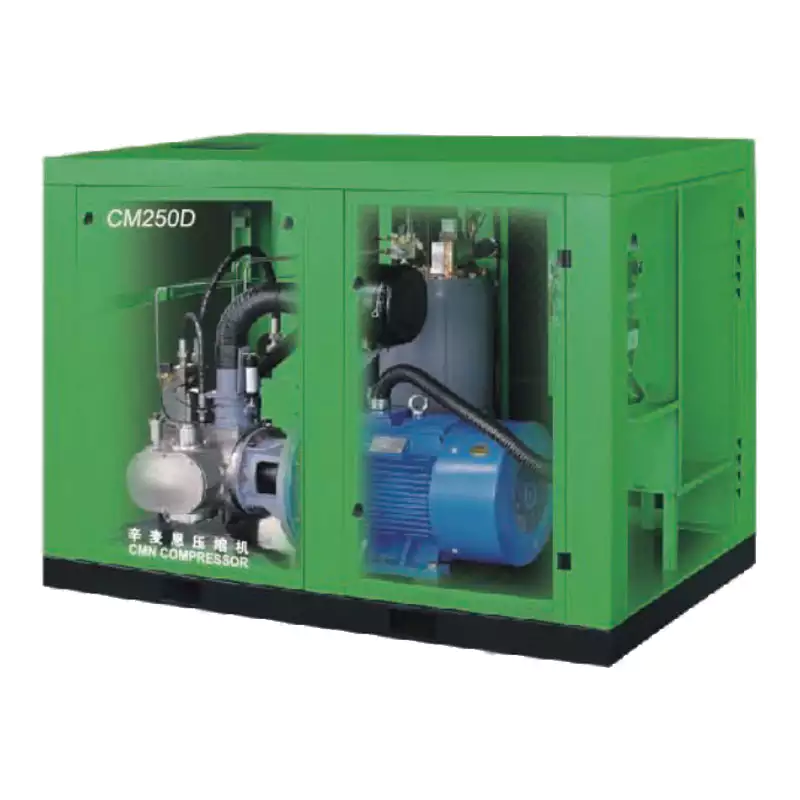
The CM45D water-lubricated oil-free screw compressor is ideally suited as dedicated nitrogen generator feed air supply for small-to-medium N₂ systems in food processing, pharmaceutical, and electronics applications. Its water lubrication technology ensures absolute zero oil carryover — meeting the ISO 8573-1 Class 0 oil specification that nitrogen generator manufacturers require. The 100% continuous duty rating ensures uninterrupted N₂ generator feed without the cycling limitations of piston or scroll units, and the low discharge temperature reduces the load on the upstream desiccant dryer — extending desiccant service intervals in the feed air treatment train.
Frequently Asked Questions
Australia Oil Free Air Compressor Co., Ltd.
Charlton Industrial Area, Australia | [email protected]