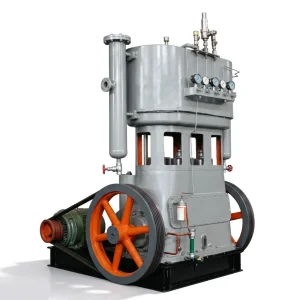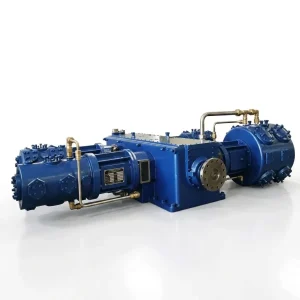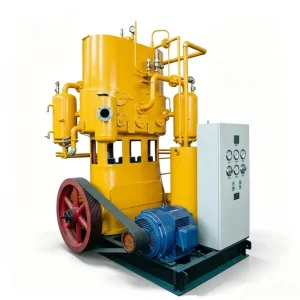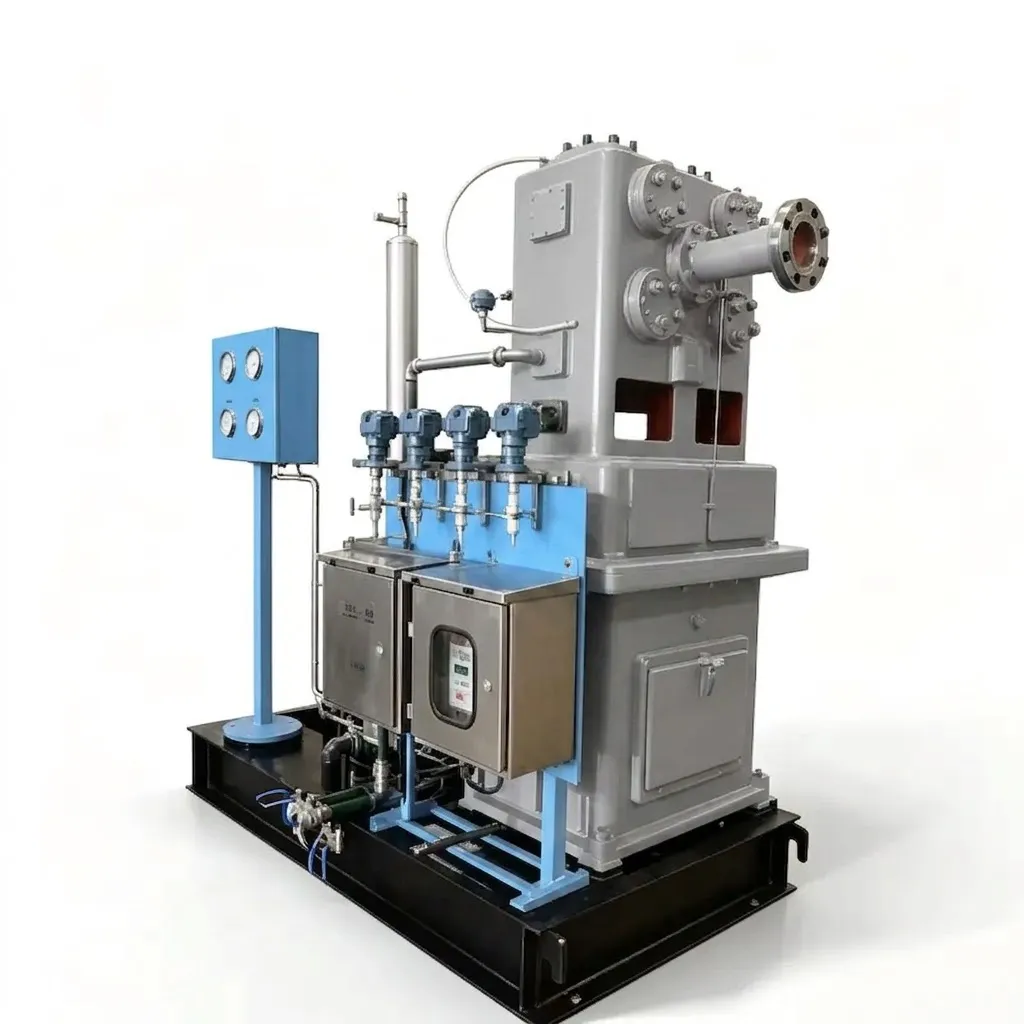
Description
Why Outdoor Explosion-Proof Oxygen Compression Is a Distinct Engineering Category
When a conventional oxygen compressor is installed indoors, the engineering team faces a specific risk that requires expensive mitigation: oxygen leaks accumulating in enclosed spaces. At concentrations above 23% — barely 4% above the atmospheric norm — ordinary materials that would barely smoulder in air become significantly more flammable. Clothing, lubricants, plastics, and even many building materials can ignite spontaneously. Managing this in an indoor installation demands oxygen detection systems, specialist ventilation, fire suppression, and electrical isolation rooms that together can add $25,000–$60,000 to project cost before the compressor is even specified.
The ZW Series eliminates this problem by inverting the design premise. Rather than installing a standard oxygen compressor indoors and managing the leak accumulation risk through facility engineering, the ZW Series is designed from the ground up for outdoor installation — any oxygen leak is immediately diluted by the atmosphere, preventing accumulation entirely. To survive outdoors in industrial environments, every component from the motor to the junction box to the instrument housing carries IP65 weatherproof and full Exd IIB T4 explosion-proof certification. The result is an oxygen compression system that can be installed on an existing concrete pad in an open-air environment, serving medical oxygen networks, steelmaking blast furnaces, wastewater treatment ozone generators, and chemical oxidation reactors — without a dedicated oxygen-safe building.
The second engineering distinction is materials science. Where the ZW oxygen bottling compressor (product 10) uses PTFE composite sealing because bottling pressures require it for oil-free performance, the ZW Series outdoor units use Monel 400 alloy cylinder liners and valve components, and bronze alloy C95800 piston rings — materials selected specifically because of their performance in high-velocity, high-pressure oxygen streams where particle impact ignition risk is significant. Together, the outdoor design and the oxygen-specific metallurgy make the ZW Series a categorically different product from general-purpose oil-free air or nitrogen compressors adapted for oxygen service.
Outdoor IP65 — No Oxygen-Safe Building Needed
IP65 weatherproof galvanised steel enclosure with gasketed access panels survives rain, snow, UV, coastal salt atmospheres, and temperatures from -20°C to +50°C. Eliminates specialist indoor infrastructure saving $25,000–$60,000 per installation.
Monel 400 and Bronze — True O2-Compatible Metallurgy
Monel 400 (ignition temp >900°C in O2) cylinder liners and valve seats, aluminum bronze C95800 piston rings. CGA G-4.1 and ASTM G93 cleaning protocol. Material selection prevents particle-impact ignition in high-velocity oxygen streams.
Medical and Industrial O2 Purity Compliance
100% oil-free design with CGA G-4.1 cleaning protocol satisfies USP and Ph. Eur. medical oxygen pharmacopoeial standards, ISO 10083 industrial oxygen specifications, and GMP compressed gas requirements simultaneously.
Four Specialised Engineering Systems That Define the ZW Series
Each system below addresses a specific oxygen compression failure mode or installation limitation that general-purpose compressors adapted for oxygen service cannot adequately resolve.
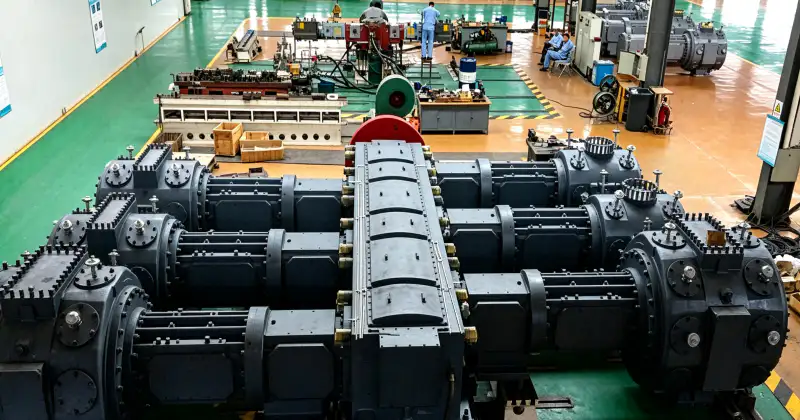
Complete ZW Series — 8 Models Across Four Pressure Families
All 8 standard models operate on 380V three-phase supply and are factory-cleaned per CGA G-4.1 and ASTM G93 oxygen cleaning protocols before shipment. Model naming: ZW-[Capacity m³/min]/[Pressure ×10 = MPa] — e.g. ZW-6/2 delivers 6 m³/min at 0.20 MPa.
Low-Pressure Family — 0.20 MPa (Medical O2 Supply / Aquaculture Enrichment)
| Model | Configuration | Capacity (m³/min) | Pressure (MPa) | Power (kW) | Weight (t) | Dimensions (mm) |
|---|---|---|---|---|---|---|
| ZW-6/2 | 2-row 2-stage | 6.0 | 0.20 | 30 | 2.00 | 2250×1865×2350 |
Standard-Pressure Family — 0.70 to 0.80 MPa (Industrial / Welding / Chemical Oxidation)
| Model | Configuration | Capacity (m³/min) | Pressure (MPa) | Power (kW) | Weight (t) | Dimensions (mm) |
|---|---|---|---|---|---|---|
| ZW-2/7 | 2-row 2-stage | 2.0 | 0.70 | 18.5 | 0.38 | 720×763×1475 |
| ZW-4.8/8 | 2-row 2-stage | 4.8 | 0.80 | 37 | 2.00 | 2250×1296×2350 |
| ZW-5.3/8 | 2-row 2-stage | 5.3 | 0.80 | 45 | 2.00 | 2250×1865×2350 |
Medium-Pressure Family — 1.50 MPa (Steelmaking / Filling Station / Oxidation Reactor)
| Model | Config | Capacity (m³/min) | Pressure (MPa) | Power (kW) | Weight (t) | Dimensions (mm) |
|---|---|---|---|---|---|---|
| ZW-3/15 | 2-row 2-stage | 3.0 | 1.50 | 37 | 2.00 | 2250×1865×2350 |
| ZW-4.5/15 | 2-row 2-stage | 4.5 | 1.50 | 45 | 2.00 | 2250×1865×2350 |
| ZW-14/15 ⭐ | 2-row 2-stage | 14.0 | 1.50 | 160 | 5.00 | 2764×2000×3277 |
High-Pressure Family — 3.00 MPa (Cylinder Filling / High-Pressure Oxidation)
| Model | Configuration | Capacity (m³/min) | Pressure (MPa) | Power (kW) | Weight (t) | Dimensions (mm) |
|---|---|---|---|---|---|---|
| 3ZW-9.5/30 | 3-row 3-stage | 9.5 | 3.00 | 110 | 3.50 | 1845×1660×2360 |
⭐ ZW-14/15: largest standard model at 14 m³/min, 160 kW — suitable for steelmaking oxygen enrichment and large wastewater treatment plants. Custom designs from 11 kW to 2,000 kW single-unit power available. All models 380V standard supply, CGA G-4.1 cleaned.
Where the ZW Series Outdoor Explosion-Proof Design Delivers Critical Advantages
The outdoor explosion-proof capability of the ZW Series is not an incremental safety feature — for the applications below, it is the specific characteristic that makes the entire installation viable without expensive oxygen-safe building construction.
Hospital Medical Oxygen Systems
Hospitals and aged care facilities with PSA oxygen generators on-site use the ZW-6/2 or ZW-3/15 to boost and distribute oxygen through the building’s central gas network. Outdoor siting of the compressor adjacent to the PSA plant prevents oxygen accumulation in plant rooms, satisfies TGA and international medical gas regulatory requirements, and keeps the explosion-proof equipment investment within the compressor unit itself rather than spread across expensive building modifications.
Steelmaking Oxygen Enrichment
Electric arc furnaces and blast furnaces use oxygen enrichment to increase combustion efficiency and reduce energy consumption. The ZW-14/15 at 14 m³/min, 160 kW serves as the oxygen injection booster between the plant’s cryogenic oxygen supply tank and the furnace tuyères. Steel plant environments are inherently outdoor — the ZW Series’ weatherproof outdoor rating is a natural fit for the open-air heavy industrial installation conditions typical of steelworks.
Wastewater Treatment — Ozone and Activated Sludge O2
Municipal wastewater treatment plants generating ozone for advanced disinfection and those using pure oxygen in activated sludge aeration require outdoor oxygen compression — treatment plants are large open-air facilities where indoor oxygen rooms are impractical. The ZW Series integrates directly into open-air treatment plant infrastructure, boosting oxygen from on-site generators to the ozone generator or aeration diffuser manifolds without any building infrastructure requirement.
Chemical Oxidation Reactors and Semiconductor Fabs
Fine chemical oxidation processes and semiconductor manufacturing cleanrooms require ultra-pure oxygen at stable pressures, with zero hydrocarbon contamination that could degrade catalyst performance or deposit on wafer surfaces. The 3ZW-9.5/30 at 3.0 MPa serves high-pressure chemical reactor oxygen injection, while the ZW-2/7 (the most compact model at only 380 kg) suits semiconductor facility oxygen supply in constrained utility areas where footprint is as important as purity performance.
Featured Case Study: Regional Hospital PSA Oxygen System Upgrade
Engineering Insight: The $47,000 saved on specialist room construction in this project comfortably exceeded the premium of the ZW Series explosion-proof outdoor specification over a standard indoor oxygen compressor. This is a consistent pattern across hospital and industrial installations: the ZW Series’ built-in outdoor capability does not cost more than a standard unit plus the facility modifications required to house it safely indoors — it costs less. The safety is concentrated in the right place: the machine itself, not the building around it.
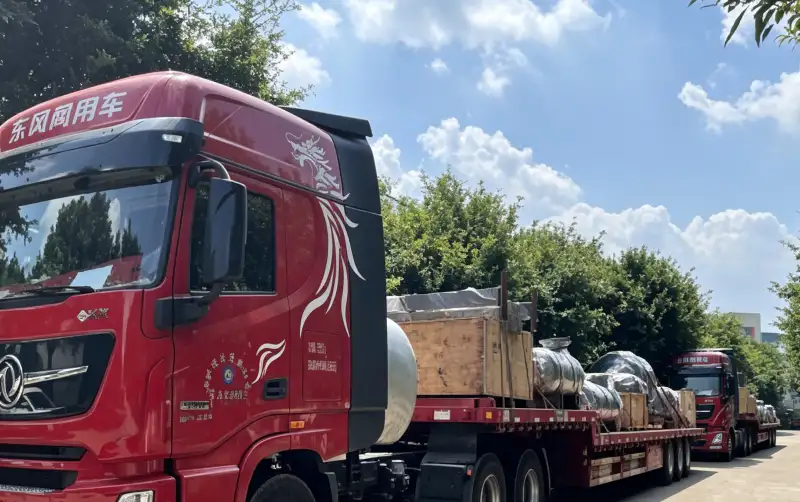
Installation Requirements and Maintenance Protocol
While outdoor installation eliminates the specialist building requirements, the ZW Series still demands rigorous site preparation and a disciplined preventative maintenance schedule — particularly for medical oxygen applications where supply interruption has direct patient care implications.
1
Concrete Pad, Cooling Water and Grounding
A level, reinforced concrete equipment pad with anchor bolt positions per our CAD drawings is required. Cooling water supply (15–25°C, 0.2–0.4 MPa) must be piped to all intercooler circuits. Electrical grounding of the enclosure is mandatory — both for standard electrical safety and to prevent static charge accumulation on the oxygen-compatible metal enclosure. For the ZW-14/15 at 5 tonnes and 160 kW, confirm local electrical infrastructure can support the motor starting inrush current before delivery.
2
Pre-Startup Nitrogen Purge
Before initial commissioning, and after any maintenance involving opening the gas circuit, the entire compression path must be purged with high-purity nitrogen to displace air and any residual moisture or contaminants. This step also verifies the integrity of all gas connections — a nitrogen leak detected before oxygen is introduced is resolved safely; an oxygen leak discovered under operating conditions is a safety event. The purge procedure is documented in our commissioning manual and should be witnessed by a qualified engineer.
3
4,000-Hour Valve and 8,000-Hour Ring Service
Monel K-500 valve plates on high-pressure stages are inspected at 4,000-hour intervals for fatigue thinning and seating surface condition — in oxygen service, a fractured valve plate is a contamination and ignition risk, not merely an efficiency loss. Bronze C95800 piston rings and rider rings are replaced at 8,000-hour intervals. Our global inventory maintains the specific Monel and bronze grades used in the ZW Series, enabling maintenance completion without material substitutions that would void the CGA G-4.1 compliance status of the oxygen-wetted components.
ZW Series Outdoor Explosion-Proof vs Indoor Standard Oxygen Compressor — Total Project Cost
The decision between outdoor explosion-proof and indoor standard oxygen compressor installation is ultimately an economics question. The comparison below addresses the full project cost, not just the equipment purchase price.
| Project Cost Factor | ZW Series Outdoor Explosion-Proof | Standard O2 Compressor — Indoor Installation |
|---|---|---|
| Civil and Building Works | ✔ Existing concrete pad — no specialist building required. | ✘ Oxygen-safe room: $25,000–$60,000 depending on size and jurisdiction. |
| Mechanical Ventilation | ✔ None — atmospheric dilution handles any leaks inherently. | ✘ Dedicated 10–15 ACH ventilation system: $8,000–$20,000 installed. |
| O2 Detection and Monitoring | ✔ None required — outdoor dilution eliminates accumulation risk. | ✘ Fixed oxygen detection system with alarm and auto-shutdown: $3,000–$8,000. |
| Ongoing Compliance Cost | ✔ No specialist room compliance documentation, monitoring, or audit burden. | ✘ Annual ventilation system testing, O2 monitor calibration, and regulatory audit documentation. |
Why Medical Gas Engineers and Industrial O2 System Specifiers Choose Australia Oil Free Air Compressor Co., Ltd.
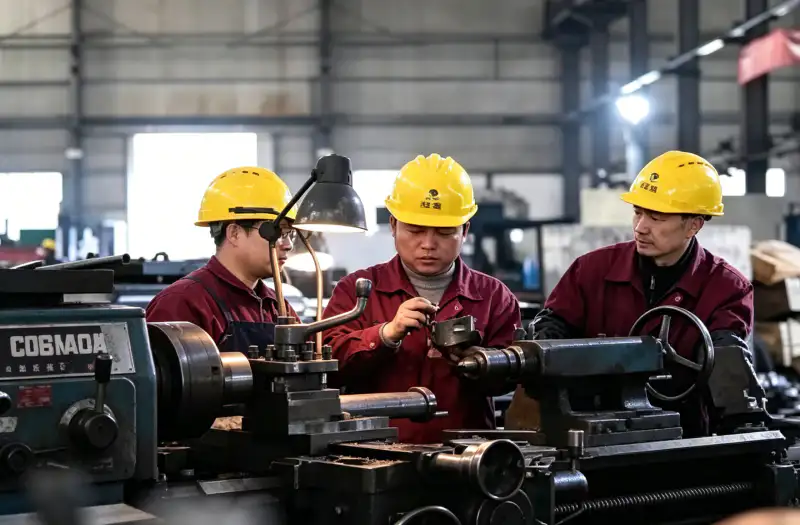
The ZW Series outdoor explosion-proof specification, Monel/bronze oxygen-specific metallurgy, and CGA G-4.1 cleaning protocol together represent the full engineering package for oxygen compression in classified hazardous and medical environments — documented and traceable through our ISO-certified production and inspection framework.
✅
ATEX Exd IIB T4 — Full Electrical Certification
Every electrical component — motor, control panel, junction box, instruments — carries full Exd IIB T4 explosion-proof certification with documentation supplied per unit.
✅
CGA G-4.1 / ASTM G93 Cleaning — Documented
Full 5-stage oxygen cleaning protocol completed and documented for every unit — traceable material test certificates, cleaning records, and UV inspection results supplied with delivery.
✅
Monel 400 / Inconel / Bronze Material Certs
Material test certificates for Monel 400 (UNS N04400) liners, Monel K-500 valve plates, Inconel X-750 springs, and bronze C95800 rings supplied per unit for TGA, pharmacopoeial, and ISO audits.
✅
Custom up to 2,000 kW Single Unit
Custom outdoor explosion-proof oxygen compressor configurations from compact 11 kW units to 2,000 kW mega-scale steelmaking oxygen injection systems — all engineered to exact site parameters.
How to Select the Right ZW Series Model for Your Oxygen Application
With 8 models across four pressure families and a capacity range of 2 to 14 m³/min, three decisions narrow the specification to a single correct model for any oxygen compression project.
Calculate Your Oxygen Demand (m³/min)
A small hospital PSA system may need only 3.0 m³/min (ZW-3/15). A mid-size wastewater treatment plant ozone system may need 4.8 m³/min (ZW-4.8/8). A large steelmaking oxygen enrichment installation may require 14 m³/min (ZW-14/15). Calculate peak simultaneous demand from all connected oxygen users and add a 20% diversity factor before entering the model selection table.
Confirm Required Discharge Pressure (MPa)
Medical oxygen central piping systems typically operate at 0.5–1.5 MPa. Steelmaking tuyère injection requires 0.8–1.5 MPa. High-pressure oxidation reactors may need 3.0 MPa (3ZW-9.5/30). The discharge pressure determines which pressure family you enter — confirm the system working pressure from your piping design specification or from the downstream equipment datasheet before model selection.
Confirm Documentation Requirements for Your Regulatory Jurisdiction
For medical oxygen applications, specify at the inquiry stage whether TGA (Australia), FDA (USA), CE (Europe), or other pharmacopoeial documentation is required — our documentation package covers all major medical gas certification schemes. For industrial applications subject to ATEX or IECEx area classification, specify the Zone and Group classification to confirm the Exd IIB T4 rating matches your hazardous area study outcome. Contact [email protected] with your regulatory documentation schedule at the inquiry stage.
Specify Your Outdoor Explosion-Proof Oxygen Compression System
Share your oxygen demand (m³/min), discharge pressure, site environmental conditions, and regulatory documentation requirements with the engineering team at Australia Oil Free Air Compressor Co., Ltd. — receive a fully specified, CGA G-4.1 cleaned ZW Series recommendation within 48 hours.
Charlton Industrial Area, Australia | [email protected]
Related Reading
For medical oxygen applications where understanding ISO purity classes and hospital piping standards matters before specifying the compression system: oil free air compressors for hospitals — medical air standards and setup — the regulatory and engineering framework that applies equally to medical oxygen systems across Australian and international healthcare facilities.