
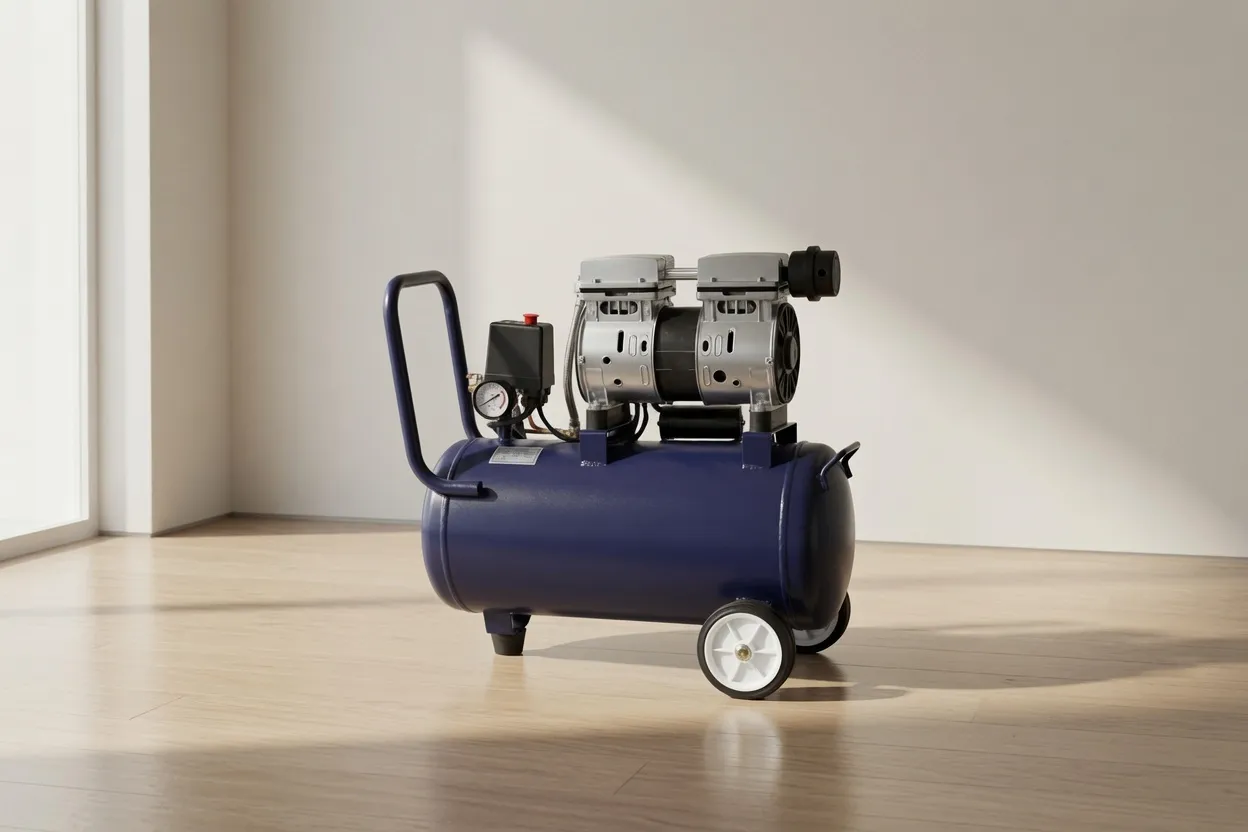
Medical Air in Hospitals: Why It Is Treated as a Drug
Compressed air used directly in patient care — to drive ventilators, power anaesthesia machines, operate respiratory therapy nebulisers, and supply medical air outlets in operating theatres and intensive care units — is classified as a medical gas in Australia. It is regulated under the Therapeutic Goods Act 1989 and must comply with the specification for Medical Air in the Australian Pharmacopoeia (AusPh) or British Pharmacopoeia (BP) as adopted.
This classification has profound implications for the compressor system design. It means that “industrial grade” oil-free compressors, however clean their output, cannot simply be connected to a hospital medical gas pipeline. The installation must comply with AS 2896 (Medical Gas Pipeline Systems), which specifies compressor type, installation requirements, redundancy provisions, monitoring and alarm systems, and documentation requirements for Type 4 (compressed air) pipeline systems.
The fundamental reason oil-free air compressors are mandatory for medical air generation is straightforward: oil contamination in air delivered to a patient airway is a direct patient safety risk. Even sub-ppm oil aerosol concentrations can trigger inflammatory responses in compromised lung tissue, interfere with surfactant function in neonatal patients, and contaminate anaesthetic circuits. The consequences are not product quality issues — they are patient harm events with regulatory, legal, and ethical consequences of the most serious kind.
Hospitals that generate their own medical air (rather than purchasing cylinder supply) must maintain their pipeline system to the same standard as a medicinal product manufacturing facility — with validated systems, calibrated instrumentation, documented maintenance, and periodic quality testing.
Australian Standards: AS 2896 and ISO 7396-1
Medical compressed air system design and installation in Australia is governed by two interlocking standards that specify everything from the compressor room layout to the alarm panel display content at the nurse station.
Medical Air vs Instrument Air: Two Separate Systems
Hospital compressed air systems are typically divided into two distinct pipeline systems: medical air and instrument air (also called surgical tool air in some facility classifications). Understanding the difference is essential when specifying compressor systems, because the standards, purity requirements, and redundancy provisions differ between them.
Important note for facility managers: Many hospitals operate a single oil-free compressor plant supplying both medical air and instrument air pipelines from a common source, with separate distribution pipelines after the compressor manifold. This is permitted under AS 2896 provided the source system meets medical air specification requirements and the pipelines are clearly differentiated with labelling, colour coding (white for medical air, white/black banding for instrument air), and zone valve separation.
Redundancy Requirements: Why Duplex Is the Minimum
Unlike an industrial compressed air failure — which halts production and costs money — a medical compressed air failure in an ICU or operating theatre is a life-safety event. This is why AS 2896 mandates a minimum duplex (two-compressor) installation for hospital medical air systems, with automatic duty/standby switchover and alarm signalling to the Master Alarm Panel.
Two equal-sized compressors, each capable of supplying 100% of demand. One runs as duty, one as standby. Automatic changeover occurs on duty unit fault or service requirement. Alarm annunciation to MAP on changeover event. Suitable for smaller hospitals and day procedure centres where demand is predictable and pipeline volume provides sufficient buffer time.
Three compressors where any two can supply 100% of peak demand. One unit is always in standby. This configuration allows planned maintenance on either duty unit without reducing redundancy — critical for large hospitals where scheduled service cannot practically wait for low-demand periods. Automatic duty rotation extends component life across all three units equally.
In addition to multiple compressors, AS 2896 requires an emergency cylinder backup supply connected to the medical air pipeline through a pressure-reducing valve and check valve. This cylinder reserve provides a final safety net in the event of complete compressor plant failure — sufficient supply time for patient evacuation or emergency clinical decisions. The cylinder backup activates automatically when pipeline pressure drops below the configured threshold.
Monitoring, Alarms, and Documentation Requirements
AS 2896 specifies a comprehensive monitoring and alarm architecture for medical compressed air systems that extends from the plant room to the point of use. Hospital facility managers and biomedical engineers need to understand these requirements when specifying or maintaining compressor systems.
| Monitoring Point | Parameter Monitored | Alarm Level | Alarm Location |
|---|---|---|---|
| Plant room | Compressor duty/standby status | Changeover event | MAP, local |
| Plant room | Pipeline pressure (high/low) | ±15% of nominal | MAP, AVSU, local |
| After dryer | Dew point (moisture) | > −26°C | MAP, local |
| After filters | Oil content (where fitted) | > 0.1 mg/m³ | MAP, local |
| Zone valves (AVSU) | Zone pipeline pressure | Low pressure | MAP, area alarm panel |
| Cylinder backup | Cylinder pressure | Low content warning | MAP |
The Master Alarm Panel (MAP) must be located in a continuously staffed area — typically the facilities management control room, biomedical engineering department, or hospital switchboard. All alarms must be logged with timestamp, acknowledged, and documented as part of the medical gas system maintenance record.
Periodic testing of alarm systems — including simulation of fault conditions to verify alarm activation and annunciation — must be documented in the system maintenance records. This documentation forms part of the hospital’s evidence base for TGA compliance and accreditation by the Australian Council on Healthcare Standards (ACHS).
Compressor Room Design for Hospital Medical Air Plants
The compressor room for a hospital medical air plant has specific design requirements that differ from industrial compressor installations. AS 2896 and hospital infection control guidelines both influence the design.
Maximum 40°C ambient. Australian summer conditions in inadequately ventilated plant rooms regularly exceed this, triggering thermal shutdowns. Mechanical ventilation (not reliant on natural convection) is typically required in Queensland and NT climates.
Intake must draw from outside the building in a location free from vehicle exhaust, loading docks, cooling tower drift, kitchen exhaust, and other contamination sources. Carbon monoxide monitoring at the intake is increasingly specified in new hospital designs.
Medical air compressor rooms must not be located adjacent to patient areas, ICU, or sleep areas. Acoustic treatment of the plant room — including vibration isolation mounts, acoustic wall lining, and anti-vibration pipework connections — is required in most hospital designs.
Plant rooms must be locked and accessible only to authorised personnel. Access logs should be maintained as part of the system security documentation. Unauthorised access to medical gas plant is a regulatory compliance issue.
Condensate from dryers and compressor cooling must drain to a compliant waste point. Even oil-free compressor condensate is not suitable for direct stormwater discharge and should route to sewer with appropriate waste disposal authorisation.
AS 2896 requires a system schematic, maintenance schedule, and emergency procedures to be posted in the plant room. The documentation must include the TGA registration details for the medical gas installation and current service records.
Maintenance and Periodic Testing Under AS 2896
AS 2896 specifies a structured maintenance and testing program for medical gas pipeline systems that hospital biomedical engineering and facilities teams must implement and document. The program includes routine servicing of compressor components, periodic performance verification, and annual system inspection by a qualified medical gas system technician.
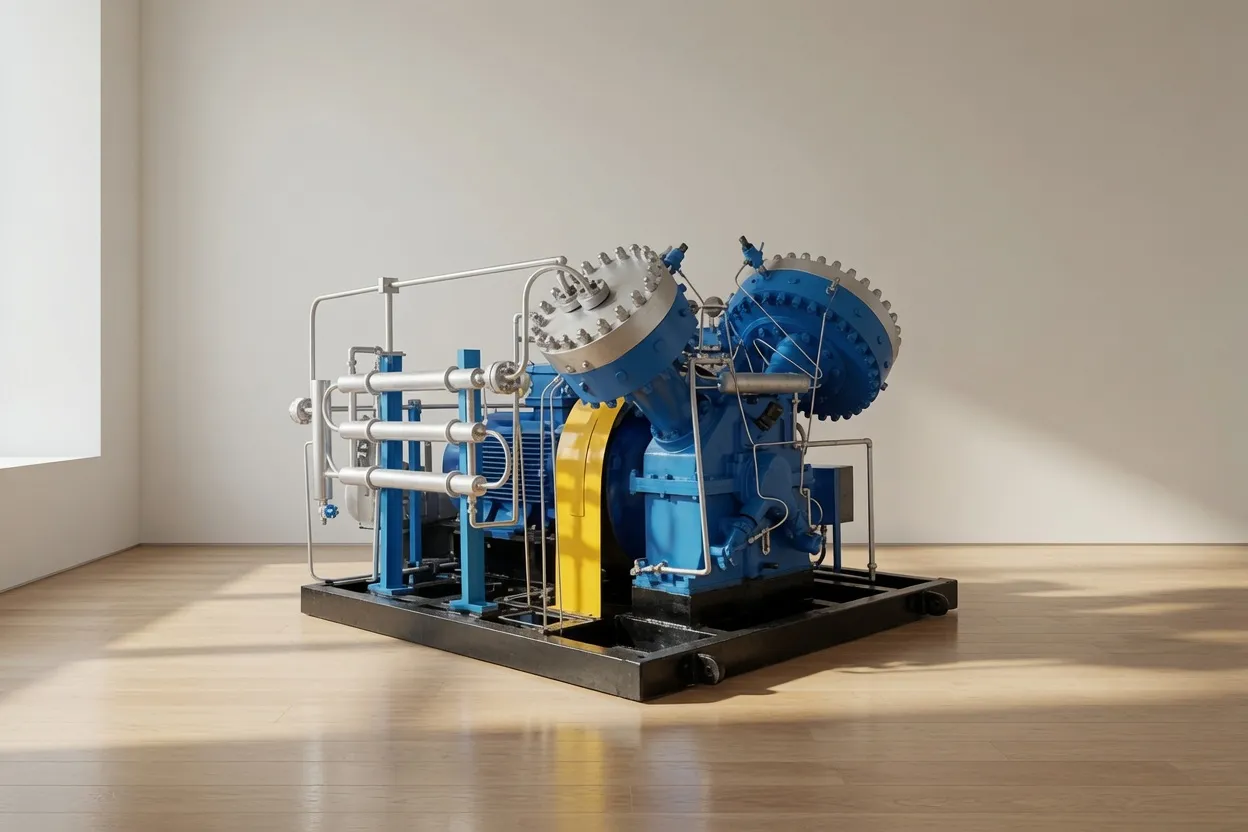
CM132DV Water-Lubricated Oil-Free Screw Compressor
The CM132DV delivers confirmed ISO Class 0 oil-free compressed air with the reliability profile demanded by medical gas applications. Its water-lubricated design eliminates oil from the process entirely — not just from the output — providing the most defensible compliance position for AS 2896 Type 4 medical air systems. The VSD drive matches output to actual hospital demand, reducing energy consumption during off-peak periods without compromising system pressure.
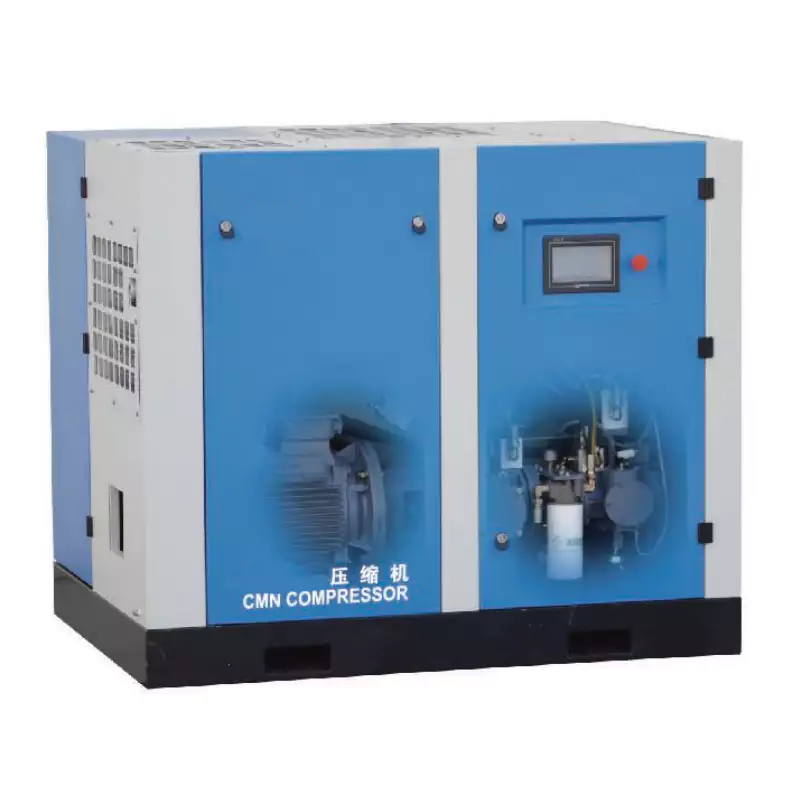
- ✓ Certified ISO Class 0 — the highest oil-free classification under ISO 8573-1
- ✓ Water lubrication — no oil in the compression process, eliminating contamination at source
- ✓ VSD for energy efficiency — matches output to variable hospital demand profiles
- ✓ Suitable for duplex and N+1 triplex installations
- ✓ Full documentation package available for AS 2896 compliance files
Frequently Asked Questions
Can a dental clinic or small day surgery use a standard industrial oil-free compressor for medical air?
How is the intake air location for a hospital medical air compressor determined?
What is the difference between a medical air compressor and a standard oil-free compressor?
How often must the compressed air quality be tested in a hospital medical gas system?
Can we use the same compressor to supply both medical air and industrial compressed air in a hospital?
Medical-Grade Oil-Free Compressor Systems for Australian Healthcare
Australia Oil Free Air Compressor Co., Ltd. supplies oil-free compressed air systems suitable for medical and healthcare facility applications. Our team can assist with system specification, documentation, and technical support for AS 2896-compliant installations.
📧 [email protected] | Charlton Industrial Area, Australia