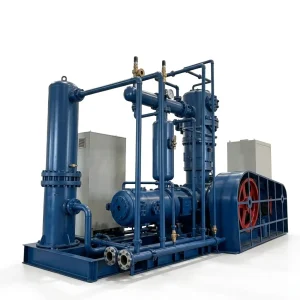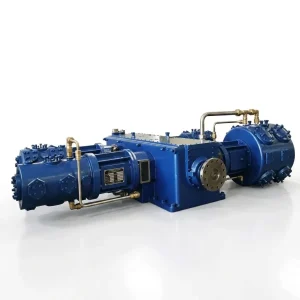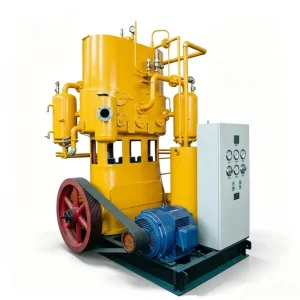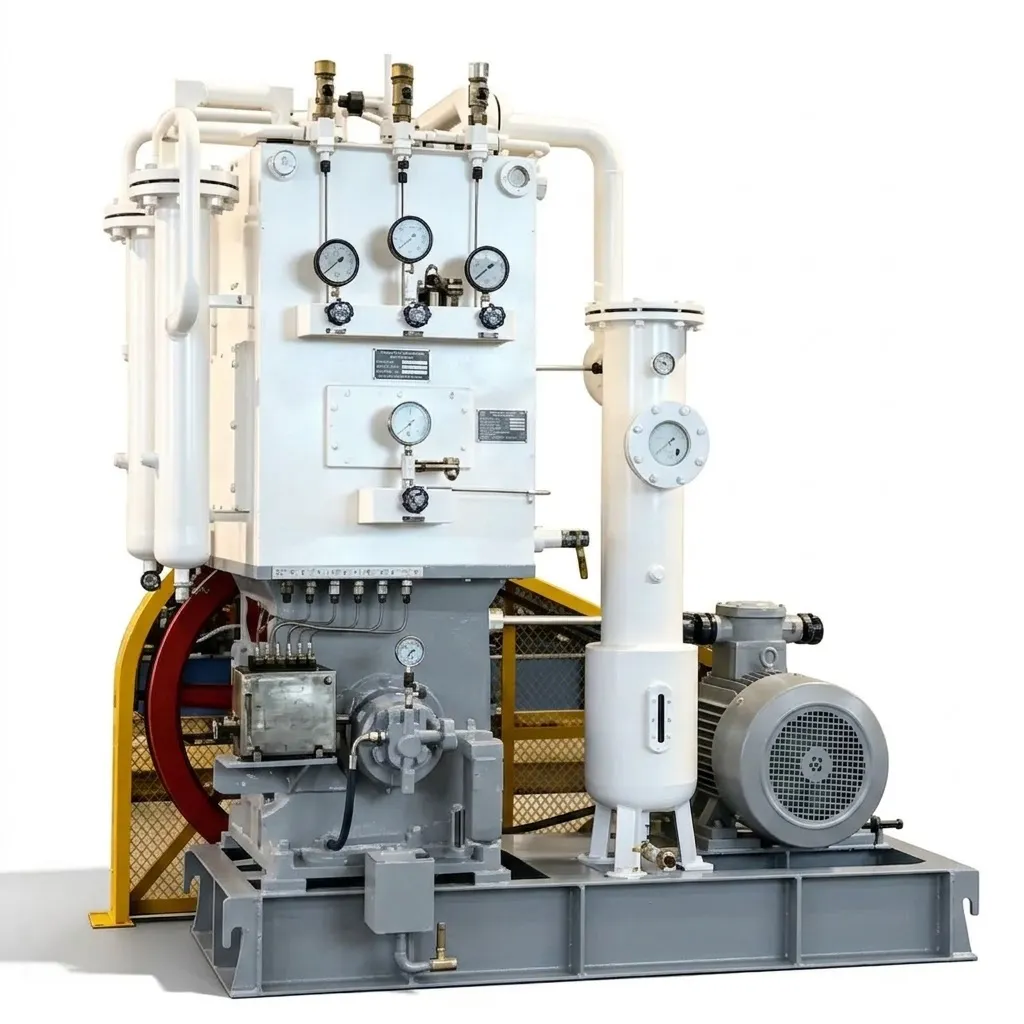
Description
What Makes Acetylene Compression a Unique Engineering Challenge
Acetylene (C2H2) occupies a singular position among industrial gases — it is simultaneously one of the most chemically productive and thermally dangerous materials handled in large-scale manufacturing. At the heart of vinyl chloride monomer (VCM) production, 1,4-butanediol (BDO) synthesis, and acetylene black manufacturing, the gas must be moved continuously and in massive volumes. Yet C2H2 carries an inherent paradox: the very act of compression generates heat, and heat destabilises the molecule’s triple-bond structure. Above certain temperature thresholds, acetylene can decompose spontaneously — releasing carbon and hydrogen in a violent, oxygen-independent reaction.
Standard industrial compressors — even high-quality oil free air compressor platforms — are not engineered to manage these hazards. The solution demands purpose-built machinery with carefully controlled piston speeds, copper-free metallurgy, thermally managed cylinder geometry, and certified explosion-proof electrical systems. Our Medium and Low Pressure Acetylene Compressors exist precisely to address every one of these imperatives, making them the industry-standard choice for chemical plants across Australia and globally.
Safe Metallurgy
Zero copper, silver, or mercury in any wetted component. Eliminates explosive acetylide formation at the material level.
Thermal Control
Ultra-low RPM operation with oversized water-cooling jackets keeps discharge temperatures safely below decomposition thresholds.
VFD-Ready Scaling
Full 50–100% capacity turndown via variable frequency drive integration, matching real-time reactor stoichiometry precisely.
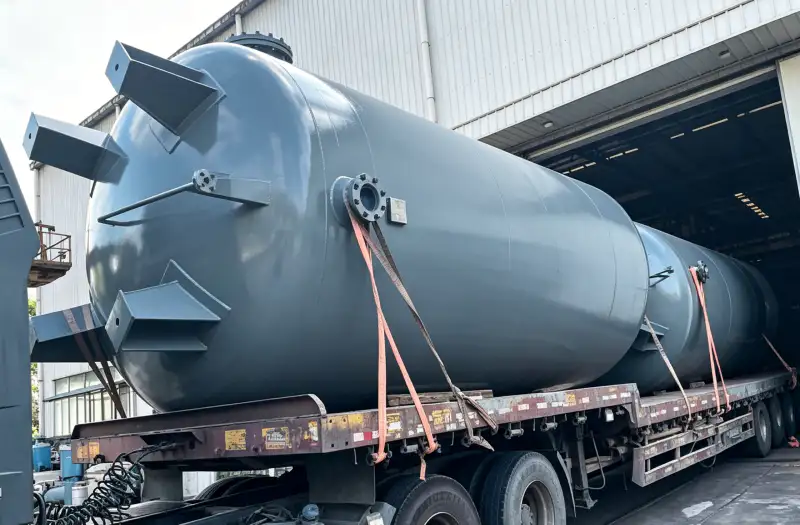
Core Engineering Innovations Behind Safe C2H2 Compression
Three fundamental design disciplines separate a professional-grade acetylene compressor from adapted general-purpose machinery. Each addresses a specific failure mode that has historically caused chemical plant incidents.
Complete Model Spectrum and Technical Specifications
Our C2H2 compressor range spans three distinct series — 2Z Skid-Mounted, L-Series, and DW-Series — covering every process scale from pilot plant to world-class manufacturing complex. The table below provides a comprehensive reference for engineering and procurement teams.
2Z Series — Skid-Mounted Compact Units
| Model | Capacity (m³/h) | Pressure (MPa) | Power (kW) | Weight (t) |
|---|---|---|---|---|
| 2Z-0.34/8(6) | 20 | 0.80 (0.60) | 3 | 1.65 |
| 2Z-0.67/8(6) | 40 | 0.80 (0.60) | 5.5 | 1.65 |
| 2Z-1/8(6) | 60 | 0.80 (0.60) | 7.5 | 2.40 |
| 2Z-1.67/8(6) | 100 | 0.80 (0.60) | 15 | 2.40 |
| 2Z-3/8(6) | 180 | 0.80 (0.60) | 22 | 3.80 |
| 2Z-5/8(6) | 300 | 0.80 (0.60) | 45 | 3.00 |
L-Series & DW-Series — Heavy-Duty Bare-Block Units
| Model | Capacity (m³/h) | Pressure (MPa) | Power (kW) | Weight (t) |
|---|---|---|---|---|
| L-2.5/8(6) | 150 | 0.80 (0.60) | 30 | 3.00 |
| L-5.1/8(6) | 300 | 0.80 (0.60) | 45 | 4.50 |
| L-8.5/8(6) | 500 | 0.80 (0.60) | 75 | 4.50 |
| L-10/8(6) | 600 | 0.80 (0.60) | 90 | 6.50 |
| DW-13/16.5 | 750 | 1.65 | 132 | 6.50 |
| DW-70/2 | 4,000 | 0.20 | 220 | 17.00 |
Custom configurations up to 6,000 m³/h and 400 kW motor ratings available. Contact our engineering team for bespoke synthesis integration.
Industrial Process Applications Across Chemical Manufacturing
Unlike cylinder-bottling compressors that operate intermittently, these units are the continuous lifeblood of chemical manufacturing — running 24/7/365 at the heart of the most demanding synthetic pathways in modern industry.
Vinyl Chloride Monomer (VCM) & PVC Production
The coal-to-chemicals PVC pathway requires vast volumes of C2H2 at stable low pressures (0.10 – 0.20 MPa). The DW-70/2 delivers 4,000 m³/h with zero pulsation, ensuring that massive VCM catalytic reactors receive a perfectly consistent gas feed around the clock.
1,4-Butanediol (BDO) Synthesis
A critical solvent and polymer precursor for spandex, polyurethanes, and biodegradable plastics, BDO requires the Reppe process — pressurising C2H2 to 0.5 – 1.5 MPa in sensitive high-yield reactors. Our L-Series and staged DW-Series provide the thermodynamic stability and safety this demands.
Acetylene Black for Lithium-Ion Batteries
Controlled thermal decomposition of pure C2H2 produces ultra-conductive acetylene black — a critical additive in premium lithium-ion battery electrodes. Precise, regulated compressor delivery into the cracking furnace is essential to consistent product quality and explosive hazard prevention.
Fine Chemicals & Specialty Polymer Feedstocks
From vinyl acetate to acrylates and neoprene precursors, acetylene underpins dozens of downstream polymer chains. Our reciprocating piston compressor platform scales from 20 m³/h pilot vessels all the way to mega-scale 6,000 m³/h world-class complexes without compromising on chemical compatibility or thermal safety.
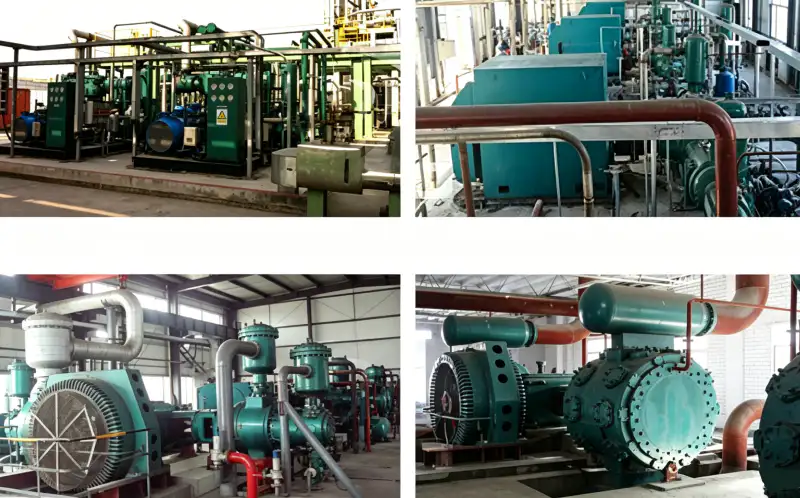
Featured Case Study: Mega-Scale BDO Synthesis Facility
Engineering Insight: The DCS-to-VFD integration was the critical differentiator. Primitive bypass-valve approaches would have wasted 30–40% of motor energy during low-demand periods. Real-time speed modulation eliminated that loss entirely while delivering more consistent reactor pressure than any fixed-speed installation.
Installation Requirements and Ongoing Maintenance Protocol
A compressor failure in a chemical process loop does not merely halt production — it can destabilise the entire downstream plant and create hazardous conditions. A rigorous lifecycle approach is therefore inseparable from safe operation.
1 Foundation Engineering
For heavy units such as the DW-70/2 (17 tonnes), vibration-isolating reinforced concrete foundations are mandatory. We supply complete dynamic loading calculations and anchor bolt specifications to civil engineering teams ahead of site preparation. Pre-commissioning nitrogen purge manifolds must also be plumbed directly to each compressor for pre-startup air displacement.
2 4,000-Hour Inspection
Comprehensive inspection of large-bore low-lift gas valves is due at 4,000 operating hours. Technicians clear polymerised acetylene residues and assess spring condition — preventing aerodynamic throttling and thermal buildup in the valve chamber that can accelerate toward unsafe discharge temperatures if left unattended.
3 8,000-Hour Overhaul
Full replacement of PTFE guide rings, piston rings, and critical distance-piece packing rings restores flawless volumetric efficiency and eliminates hazardous gas blowby risk. Our global parts inventory maintains dedicated copper-free wear items for immediate dispatch, minimising planned downtime windows.
Why Chemical Plants Choose Australia Oil Free Air Compressor Co., Ltd.
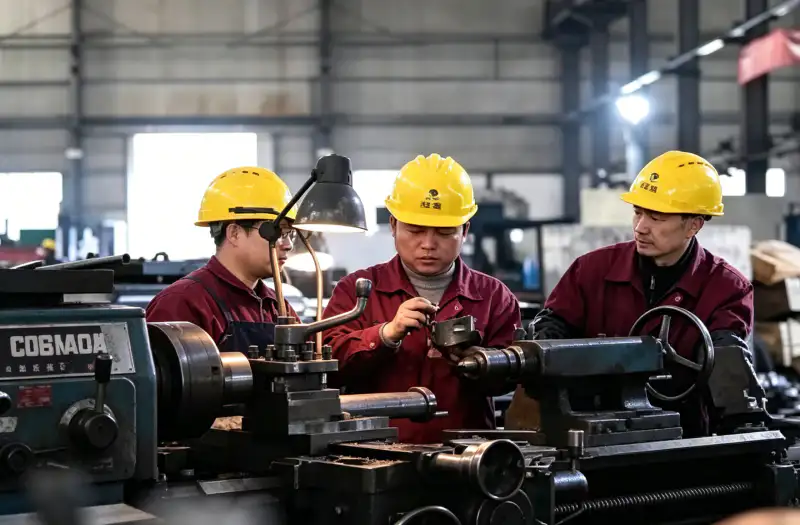
Engineering machinery that moves massive volumes of explosive gas into critical chemical reactors leaves no room for compromise. Our facility operates under an elite ISO-certified quality management framework — every pressure-bearing vessel, cylinder block, and high-pressure manifold undergoes rigorous ultrasonic non-destructive testing and exhaustive hydrostatic pressure trials before final assembly.
✅
Exd IIC T4 Certified Electrics
All motors and instrumentation carry full explosion-proof certification, validated by independent global regulatory authorities.
✅
ISO Quality Management
Full ISO-certified production framework with NDT and hydrostatic testing on every pressure component before shipment.
✅
Global Copper-Free Parts Inventory
Dedicated acetylene-compatible wear parts stocked globally for rapid dispatch, minimising plant downtime windows.
✅
Custom Engineering Capacity
Bespoke configurations up to 6,000 m³/h and 400 kW designed to integrate directly into specific chemical synthesis architectures.
Dedicated Acetylene Compressors vs Generic Industrial Alternatives
Repurposing a standard natural gas or syngas compressor for acetylene service is a serious safety hazard, not a cost-saving measure. The following comparison illustrates the critical differences that matter in chemical plant procurement decisions.
| Critical Metric | Dedicated C2H2 Compressors | Generic Petrochemical Compressors |
|---|---|---|
| Metallurgical Safety | ✔ Zero copper, silver, or mercury in wetted paths. Acetylide formation impossible. | ✘ Standard bronze/copper-alloy packing creates latent explosive hazard. |
| Operating Speed | ✔ Ultra-low RPM (6/8/18-pole motors) — maximum cooling contact time. | ✘ High RPM for capacity — excessive adiabatic and frictional heat generation. |
| Capacity Control | ✔ Native VFD integration: 50–100% turndown, zero energy waste. | ✘ Bypass valves waste 30–40% motor energy. No true process synchronisation. |
| Gas Sealing System | ✔ Purged distance piece routes any blowby gas safely to flare. Zero crankcase contamination. | ✘ Standard sealing not rated for C2H2 — explosive crankcase atmosphere possible. |
Strategic Selection Guide: Matching the Right Series to Your Process
Three variables determine the correct equipment selection for an acetylene compression project. Working through these in sequence with our engineering team eliminates specification errors before capital is committed.
Calculate Total Reactor Demand (m³/h)
A pilot BDO plant may only require 60 m³/h (2Z-1/8 skid is appropriate). A world-scale VCM complex running multiple reactors simultaneously may demand the DW-70/2 at 4,000 m³/h. Oversizing wastes capital; undersizing starves the reactor and destroys yield.
Determine Reactor Inlet Pressure (MPa)
Low-pressure reactions (acetylene black, some VCM pathways) may need only 0.20 MPa — matching the DW-70/2. Higher-intensity BDO syntheses targeting 1.65 MPa require the DW-13/16.5. Accurate pressure profiling from the reactor licensor is the critical starting point.
Choose Between Skid and Bare-Block Configuration
The 2Z series arrives as a fully assembled skid for rapid peripheral deployment — minimal civil engineering required. The L and DW series are massive bare-block machines requiring dedicated foundations, piping design, and full civil engineering coordination. Project timeline and site infrastructure dictate which approach makes practical sense.
Integrate a World-Class Acetylene Compressor Into Your Process Flow
Our engineering specialists at Australia Oil Free Air Compressor Co., Ltd. are ready to evaluate your specific process parameters and recommend the optimal model configuration for your chemical synthesis application.
Charlton Industrial Area, Australia | [email protected]
Related Reading
Before specifying your compression system, understanding pressure requirements by application is essential: oil free air compressor PSI requirements by industry application — a detailed guide covering target pressures across chemical synthesis, medical, food, and manufacturing sectors.