Description
Why High-Pressure CH4 Compression Demands API 618 Engineering
Elevating natural gas — predominantly methane (CH4) — from pipeline distribution pressure to 90 Bar is a fundamentally different engineering challenge from low-pressure gathering or boosting. At these pressures, the adiabatic heat of compression intensifies across each stage, hydrocarbon liquids condense from the gas stream in intercoolers, and the mechanical forces on pistons, connecting rods, and frame structures become enormous. A standard industrial compressor — even a well-specified two-stage oil free air compressor — has no place in this service. The machinery must be purpose-built, and the engineering standard that defines what purpose-built means for reciprocating compressors in petroleum service is API 618.
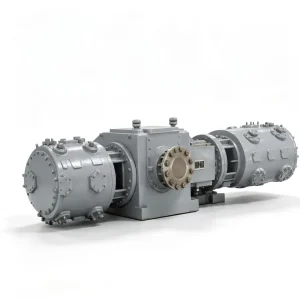
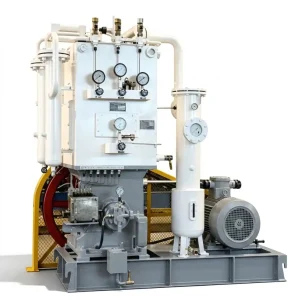
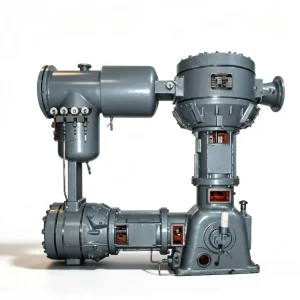
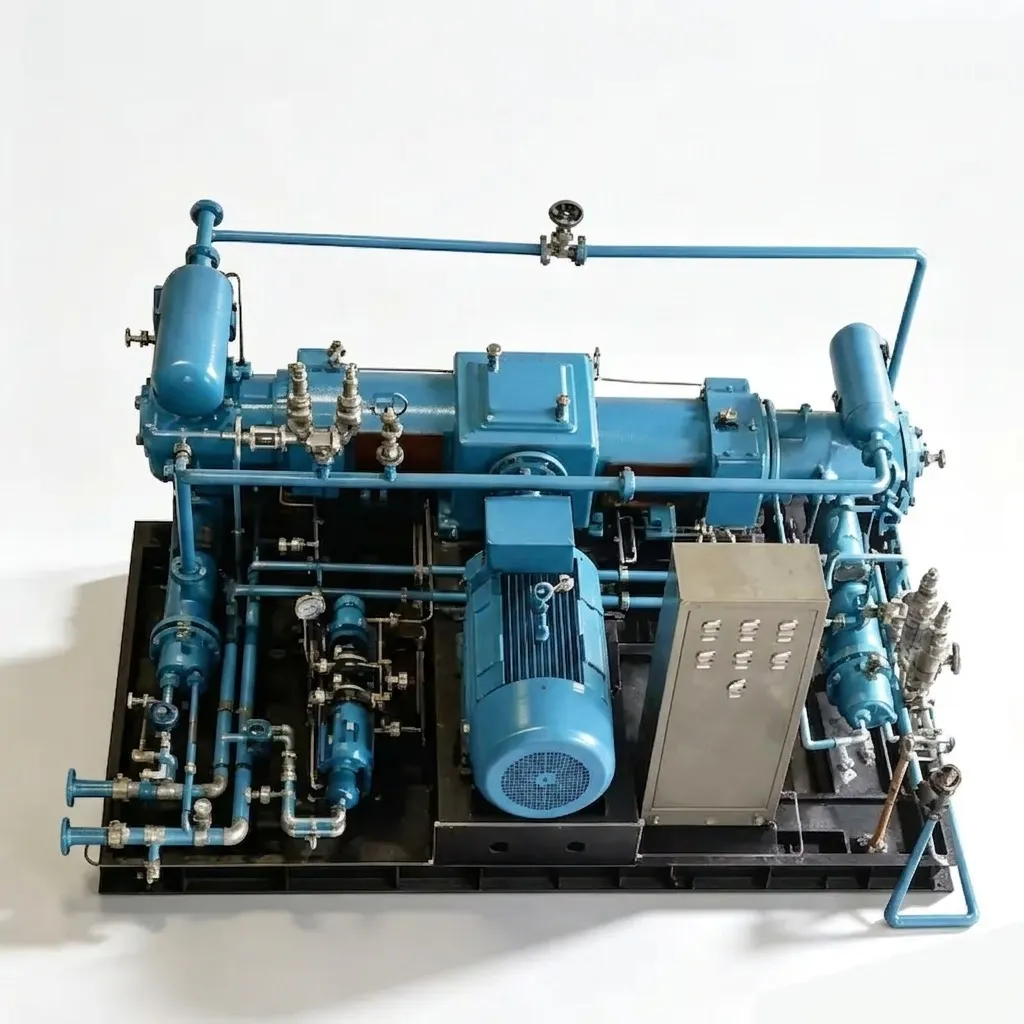
Our Medium and High Pressure Natural Gas Compressors adhere strictly to API 618 design philosophies across frame sizing, pulsation analysis, distance piece configuration, and metallurgical specification. Handling 2 to 200 m³/min at discharge pressures between 1.20 and 9.00 MPa, they serve the most critical nodes in the global CH4 infrastructure — transcontinental pipeline booster stations, underground seasonal storage caverns, CNG mother stations, and enhanced oil recovery gas-lift operations.
Zero Methane Slip
API 618 Type C / Type D extended distance piece with nitrogen purge. Every trace of blowby gas routed to flare — zero atmospheric CH4 leakage under any operating load.
Sour Gas Metallurgy
NACE MR0175 compliant alloys throughout all gas-wetted components. Eliminates hydrogen sulfide-induced sulfide stress cracking at pressures up to 90 Bar.
Multi-Stage Thermodynamics
3-stage and 4-stage compression geometries with inter-stage shell-and-tube heat exchangers strip adiabatic heat between cylinders, holding discharge temperatures within safe limits at all pressure targets.
Four Engineering Systems That Make 90 Bar CH4 Compression Safe
Pushing methane to 9.0 MPa requires solving thermodynamic, metallurgical, mechanical, and sealing challenges simultaneously. Each system below addresses a specific failure mode that has caused real-world pipeline compressor incidents.
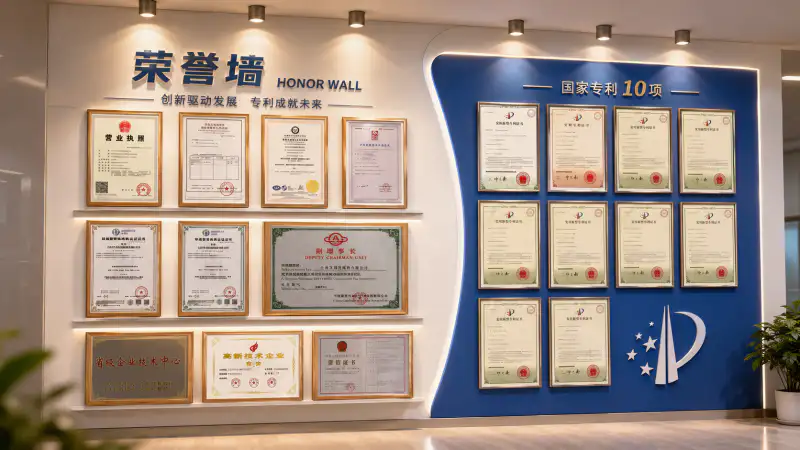
Complete Model Range and Technical Specifications
Three pressure classes cover every high-pressure natural gas application — from compact CNG skids to world-scale pipeline booster station powerhouses. All models are available with API 618-aligned pulsation studies and full factory acceptance testing documentation.
Class A — 1.80 to 2.50 MPa (Regional Distribution / CNG Pre-Boost)
| Model | Configuration | Capacity (m³/min) | Pressure (MPa) | Power (kW) | Weight (t) |
|---|---|---|---|---|---|
| LW-6/18 | 2-row 2-stage | 6.0 | 1.80 | 65 | 1.80 |
| LW-8/18 | 2-row 2-stage | 8.0 | 1.80 | 75 | 1.80 |
| LW-10/18 | 2-row 2-stage | 10.0 | 1.80 | 110 | 3.00 |
| ZW-5.5/24 | 3-row 3-stage | 5.5 | 2.40 | 75 | 3.50 |
| ZW-4/25 (Skid) | 2-row 3-stage | 4.0 | 2.50 | 55 | 3.97 |
| DW-50/25 | 2-row 3-stage | 50.0 | 2.50 | 500 | 11.00 |
Class B — 3.00 to 4.00 MPa (Pipeline Injection / UGS / Gas Lift)
| Model | Configuration | Capacity (m³/min) | Pressure (MPa) | Power (kW) | Weight (t) |
|---|---|---|---|---|---|
| LW-25/30 | 2-row 3-stage | 25.0 | 3.00 | 280 | 6.50 |
| DW-46/30 | 2-row 3-stage | 46.0 | 3.00 | 550 | 11.50 |
| DW-70/30(40) | 2-row 4-stage | 70.0 | 3.00 / 4.00 | 850 | 18.00 |
| DW-46/40 | 2-row 4-stage | 46.0 | 4.00 | 600 | 13.00 |
| 4MW-120/30(40) | 4-row 4-stage | 120.0 | 3.00 / 4.00 | 1,400 | 26.50 |
| 4MW-150/30(40) | 4-row 4-stage | 150.0 | 3.00 / 4.00 | 1,700 | 27.00 |
Class C — 6.00 MPa and Above (Underground Storage / High-Pressure CNG)
| Model | Capacity (m³/min) | Pressure (MPa) | Power (kW) | Weight (t) |
|---|---|---|---|---|
| ZW-2/60 (Skid) | 2.0 | 6.00 | 45 | 2.90 |
| Custom up to 9.0 MPa | Per project | Up to 9.00 | Up to 2,000 | Per design |
All configurations available with API 618 pulsation analysis report, NACE MR0175 material upgrade, and full factory acceptance test (FAT) documentation.
High-Pressure Applications Across the Global CH4 Infrastructure
From transcontinental pipeline midpoints to urban CNG refuelling hubs and remote oil field gas-lift wellheads, these compressors serve the pressure-critical nodes that the entire natural gas supply chain depends on.
Transcontinental Pipeline Booster Stations
Gas loses pressure to pipe wall friction across long pipeline spans. Midpoint booster stations restore transmission pressure to 3.0–4.0 MPa to keep gas moving efficiently. Our 4MW series provides the mechanical power to boost hundreds of cubic metres per minute — continuously, at baseload, for decades of unattended operation.
Underground Gas Storage (UGS) Injection
Seasonal demand management requires injecting surplus summer gas into depleted reservoirs or salt caverns at pressures of 6.0 to 9.0 MPa — sufficient to overcome subterranean geological backpressure. Our high-pressure multi-stage configurations handle this extreme injection duty while maintaining zero methane slip via API 618-compliant sealing throughout.
CNG Mother Station Compression
City distribution gas at 0.4 MPa must be boosted to 20–25 MPa for high-pressure tube trailers and commercial vehicle CNG refuelling. Our ZW and DW series pull directly from the city gate and compress methane to the required cylinder-filling pressure — serving logistics fleets, transit authorities, and distributed gas supply networks.
Enhanced Oil Recovery (Gas Lift)
High-pressure natural gas injected into ageing wellbores aerates crude oil, reducing its density and lifting production to surface. The NACE MR0175-compliant metallurgy of our compressors ensures long-term survival in the sour gas environments typical of remote oil field gas-lift operations — often the harshest conditions any compression equipment faces.
Featured Case Study: Transcontinental Pipeline Booster Station
Engineering Insight: The VFD integration here was not simply an energy-saving measure — it was the feature that allowed the station to operate without bypass loops. Every cubic metre of gas that would have been recycled through a bypass to prevent surge instead reached the downstream consumer. The station operated at higher utilisation efficiency from day one than its predecessor centrifugal installation ever achieved.
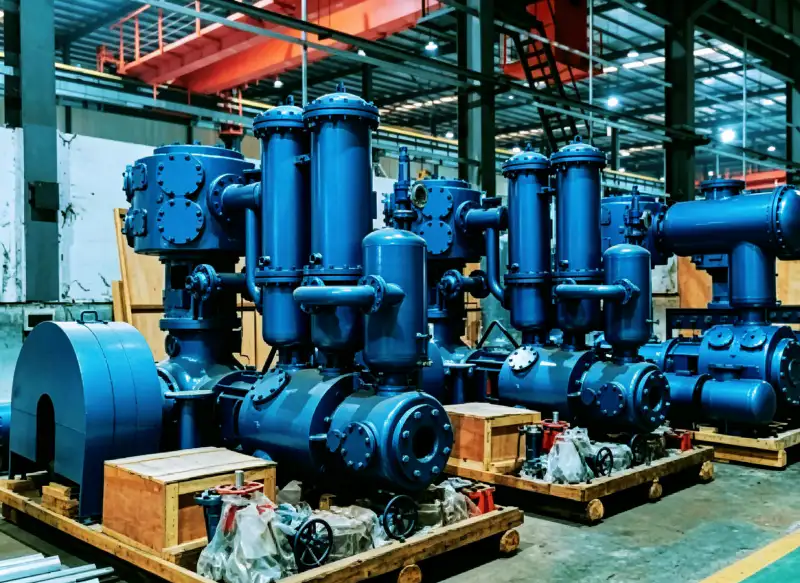
Installation Engineering and Preventative Maintenance Protocol
Driving 1,700 kW of motor power while compressing explosive gas at 90 Bar in a hazardous-area environment demands a disciplined engineering lifecycle — from API 618 pulsation study to IoT-enabled remote diagnostics running continuously for the life of the asset.
1
API 618 Pulsation and Mechanical Analysis
We supply complete API 618 pulsation studies and mechanical vibration analyses for every high-pressure installation. These determine exact surge bottle sizing for inlet and discharge manifolds, preventing acoustic resonance from fatiguing your facility piping. For massive bare-block machines up to 27 tonnes, isolated reinforced concrete block foundations with precisely calculated dynamic loading specs are mandatory before unit delivery.
2
4,000-Hour High-Stage Valve Inspection
High-pressure differential across final-stage valves generates significant fatigue loading on valve plates — far greater than seen in low-pressure service. At 4,000-hour intervals, precision valves in the highest-pressure stages are removed for plate thickness measurement and spring load verification. Replacing pre-fatigued components on schedule prevents the uncontrolled valve failure that is the leading cause of unplanned high-pressure compressor shutdowns in pipeline service.
3
8,000-Hour Comprehensive Overhaul
Scheduled replacement of PTFE piston rings, rider bands, crosshead pin bearings, and the complete distance-piece labyrinth packing system restores full volumetric efficiency and re-certifies zero methane leakage compliance. Our global parts inventory maintains dedicated high-pressure-grade wear items for all models, enabling planned maintenance windows to be completed without supply chain delays.
4
Remote IoT Telemetry and Predictive Dispatch
Our PLC architectures support secure remote IoT monitoring of main bearing vibration signatures, interstage gas temperatures, crosshead pin lubrication pressures, and distance-piece purge flow rates. Anomaly detection algorithms flag developing wear trends weeks before they would force an unplanned shutdown — converting reactive emergency responses into scheduled, cost-controlled maintenance events across geographically remote pipeline stations.
Reciprocating vs Centrifugal at High Pressure — Why Technology Choice Matters
When discharge pressure targets exceed 20 Bar (2.0 MPa), centrifugal compressors rapidly lose thermodynamic efficiency and require increasingly complex surge control systems. The cost comparison across a 20-year pipeline asset life consistently favours reciprocating positive displacement technology in this pressure band.
| Performance Metric | Our Reciprocating CH4 Compressors | Centrifugal High-Pressure Alternatives |
|---|---|---|
| Efficiency Above 4.0 MPa | ✔ Positive displacement maintains rated efficiency regardless of pressure target. | ✘ Aerodynamic slip causes efficiency collapse as discharge pressure rises past 4.0 MPa. |
| Surge Risk | ✔ No surge phenomenon. VFDs and unloader valves cover the full 50–100% turndown range safely. | ✘ Surge at low flow is dangerous and requires hot-gas bypass loops that waste energy continuously. |
| Wet Gas Tolerance | ✔ Cyclonic inter-stage separators and robust valve geometry handle NGL dropout safely. | ✘ Liquid impingement on 10,000+ RPM impellers causes rapid blade erosion and catastrophic failure. |
| Methane Emission Control | ✔ API 618 Type-C/D purged distance piece — zero atmospheric CH4 by design. | ✘ Dry gas seals on centrifugals have structural leakage characteristics requiring continuous monitoring. |
Why Pipeline Engineers Choose Australia Oil Free Air Compressor Co., Ltd.
Building compressors that move explosive gas through national energy infrastructure at 90 Bar demands a manufacturer whose engineering rigour is verifiable at every production stage. Our ISO-certified framework covers every process from raw material certification to factory acceptance testing — and our API 618 design alignment is not a marketing claim but a documented engineering practice embedded in our design review process.
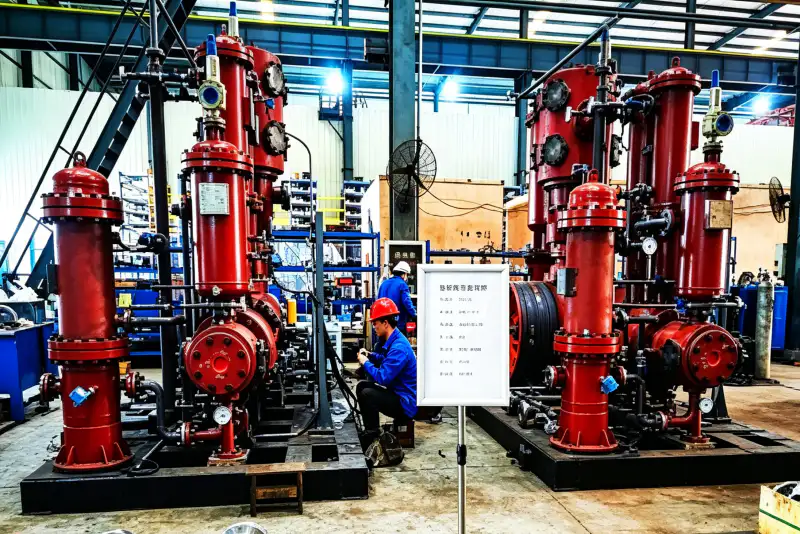
API 618 Design Compliance
Design, frame sizing, pulsation analysis, and distance piece selection follow API 618 for petroleum-service reciprocating compressors.
Exd IIB / IIC T4 Certified
All drive motors, instrumentation, and PLC enclosures carry full explosion-proof certification for natural gas hazardous area classifications.
NACE MR0175 Material Options
Sour gas H2S service available as a standard factory option — all wetted components specified in NACE-compliant stainless alloys at the engineering stage.
Custom up to 2,000 kW
Bespoke single-machine configurations from compact 11 kW CNG skids to 2,000 kW mega-station powerhouses, all engineered to exact site parameters.
Strategic Selection Pathway for High-Pressure CH4 Applications
Three sequential engineering decisions determine the correct model series for any high-pressure natural gas compression project. Confirming all three before procurement avoids the most common and costly specification errors.
A single CNG station might need 4–10 m³/min (ZW or LW compact series). A transcontinental booster station handling a major trunk line may require 120–150 m³/min (4MW series). Size to peak demand — but also confirm the turndown range the VFD must cover, since minimum stable flow determines surge margin requirements.
Regional distribution injection targets 1.80–3.00 MPa (2-stage or 3-stage models). Underground storage injection typically demands 4.00–6.00 MPa (4-stage, high-pressure models). CNG filling to 20+ MPa requires custom engineering. The staging architecture is entirely determined by the discharge pressure target — get this number from the pipeline or storage licensor specification before specifying any equipment.
Motors above 500 kW require 6 kV or 10 kV medium-voltage supply with adequate switchgear and startup capacity. Additionally, confirm the H2S content of the gas stream — if H2S is present above trace concentrations, specify NACE MR0175 material upgrade at the engineering stage rather than after delivery, when retrofitting becomes extremely costly.
Specify Your High-Pressure Natural Gas Compression Station
Send our engineering team at Australia Oil Free Air Compressor Co., Ltd. your flow rate, inlet conditions, discharge pressure target, and gas composition analysis. A fully specified model recommendation, with API 618 pulsation study scope, returns within 48 hours.
Charlton Industrial Area, Australia | [email protected]
Related Reading
For high-pressure applications where staging and duty cycle sizing directly affect energy consumption and capital cost: two-stage oil free air compressors — efficiency, pressure and use cases — a detailed breakdown of how staging decisions affect real-world operating costs.