Description
The Case for Oil-Free Air in Medium-Duty Industrial Applications
In most manufacturing environments, compressed air is the fourth utility — as essential as electricity, water, and gas. But unlike those utilities, compressed air quality is invisible. A pharmaceutical tablet coating line, a food packaging operation, and a semiconductor assembly cleanroom all share the same requirement: air that reaches their processes must carry zero hydrocarbon contamination. An oil-lubricated compressor — however well-maintained, however well-filtered downstream — introduces a structural contamination risk that no filter can guarantee to eliminate 100% across an entire production lifetime. A single filter bypass event, a coalescing element past its saturation point, or an oil carryover spike during motor startup can trigger batch rejections, regulatory violations, or irreversible product contamination.
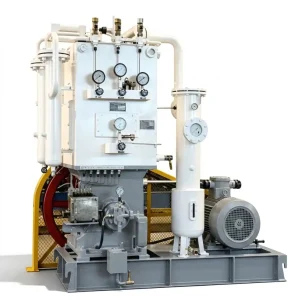
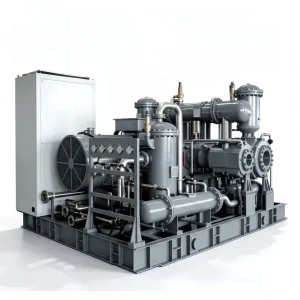
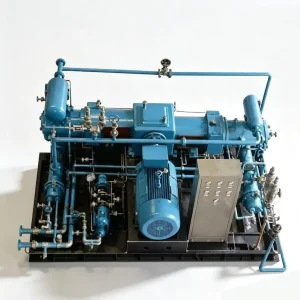
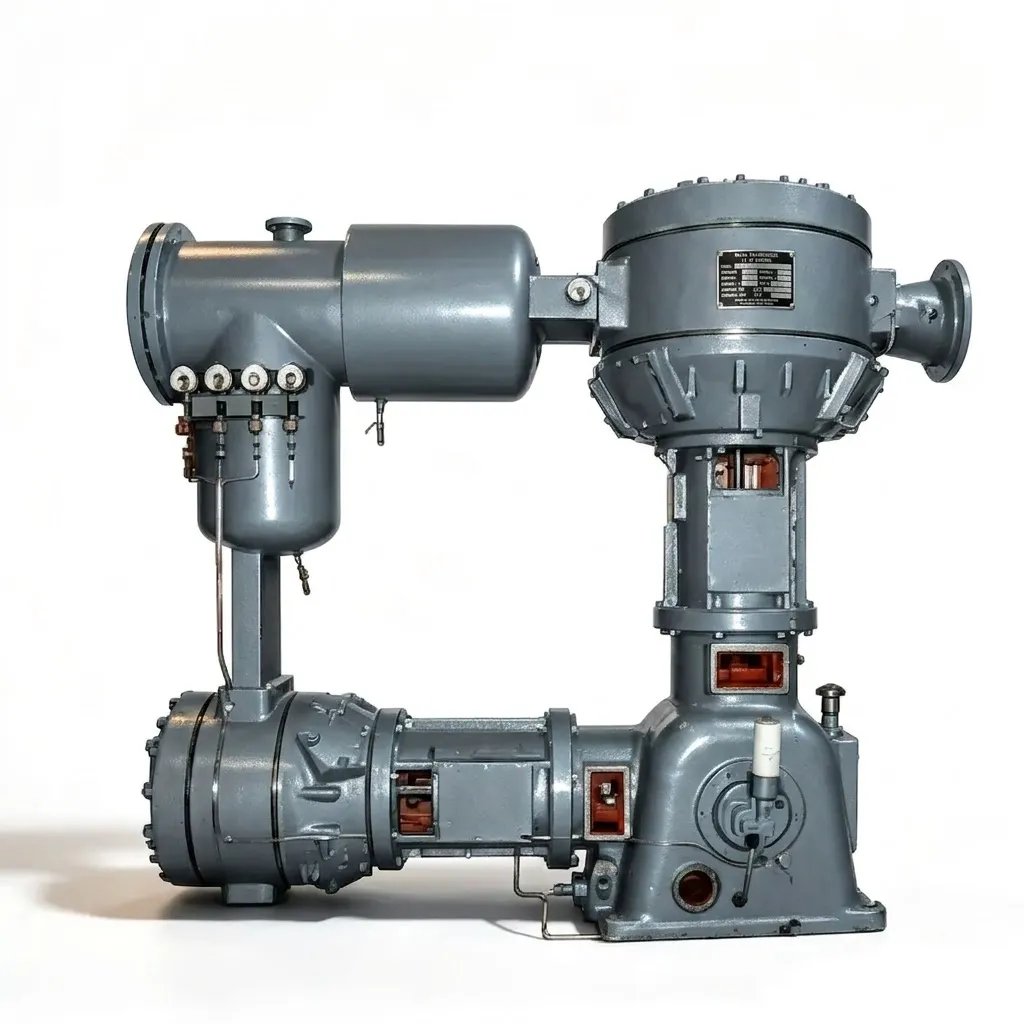
The LW Series oil free air compressor eliminates this risk at the source. With 29 models delivering 9 to 65 m³/min at pressures spanning 0.56 to 5.00 MPa — and achieving ISO 8573-1 Class 0 certification for oil content — this series covers the full range of medium-duty industrial air demand without the contamination liability of oil-lubricated alternatives. From compact 65 kW workshop units to 400 kW high-capacity plant installations and the remarkable LW-16/50-A reaching 5.00 MPa in a single compact skid, the LW Series is designed to be the last oil-free air compressor specification decision your engineering team will need to revisit.
ISO 8573-1 Class 0 Guaranteed
Self-lubricating composite PTFE piston rings and segmented packing seals — zero oil in the compression chamber by design. Eliminates downstream oil filtration costs of $15,000–$40,000 annually versus oil-lubricated alternatives.
Unmatched Pressure Versatility
From 0.56 MPa general pneumatics through 1.60 MPa process air to 5.00 MPa PET blow moulding — all in a single series. Three-stage models eliminate the need for separate downstream booster compressors.
8,000+ Hour MTBF Reliability
Symmetrically balanced two-row crankshaft below ISO 10816-1 Class A vibration limits. Modular cylinder architecture allows single-cylinder maintenance at 50% continued capacity — no full plant shutdown required.
Three Engineering Advantages That Set the LW Series Apart
Medium-duty oil free air compressors are broadly available — but not all are built with the same engineering discipline. Three specific design decisions in the LW Series determine its performance advantage across a 20-year facility service life.
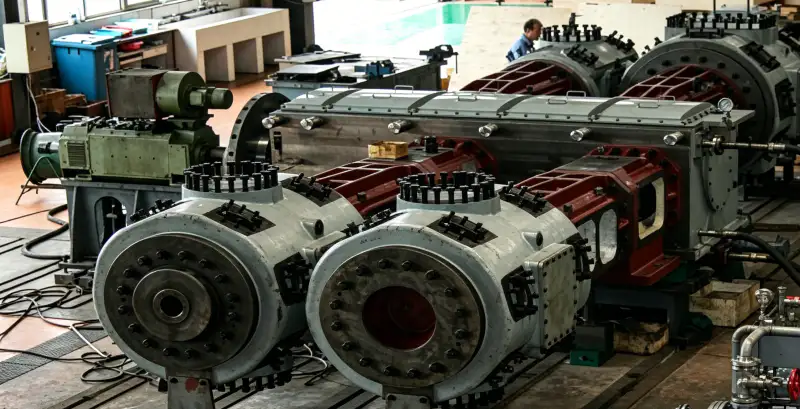
Complete LW Series Model Range — 29 Configurations Across Four Pressure Families
Model nomenclature follows a clear structure: LW-[Capacity (m³/min)]/[Pressure (×10 = MPa)]-A. For example, LW-48/5.6-A delivers 48 m³/min at 0.56 MPa; LW-16/50-A delivers 16 m³/min at 5.00 MPa.
Low-Pressure Family — 0.56 to 0.60 MPa (Pneumatic Conveying / Workshop Air)
| Model | Configuration | Capacity (m³/min) | Pressure (MPa) | Power (kW) | Weight (t) | Voltage |
|---|---|---|---|---|---|---|
| LW-48/5.6-A | 2-row 2-stage | 48 | 0.56 | 280 | 5.5 | 380 / 6k / 10k |
| LW-43.5/5.7-A | 2-row 2-stage | 43.5 | 0.57 | 240–250 | 5.0 | 380 / 6k / 10k |
| LW-55/5.8-A | 2-row 2-stage | 55 | 0.58 | 315 | 6.5 | 380 / 6k / 10k |
| LW-40/6-A | 2-row 2-stage | 40 | 0.60 | 220 | 4.12 | 380 / 6k / 10k |
| LW-54/6-A | 2-row 2-stage | 54 | 0.60 | 315 | 6.5 | 380 / 6k / 10k |
| LW-60/6-A | 2-row 2-stage | 60 | 0.60 | 315 | 6.5 | 6k / 10k |
Standard-Pressure Family — 0.70 to 0.80 MPa (General Industrial / Food / Textile)
| Model | Capacity (m³/min) | Pressure (MPa) | Power (kW) | Weight (t) | Voltage |
|---|---|---|---|---|---|
| LW-11/7-A | 11 | 0.70 | 65 | 1.8 | 380V |
| LW-13/7-A | 13 | 0.70 | 90 | 3.0 | 380V |
| LW-22/7-A | 22 | 0.70 | 132 | 3.0 | 380V |
| LW-32/7-A | 32 | 0.70 | 200 | 4.12 | 380V |
| LW-42/7-A | 42 | 0.70 | 240–250 | 5.0 | 380 / 6k / 10k |
| LW-65/7-A | 65 | 0.70 | 400 | 6.5 | 6k / 10k |
| LW-48/8-A | 48 | 0.80 | 280 | 6.5 | 380 / 6k / 10k |
| LW-60/8-A | 60 | 0.80 | 350 | 6.5 | 380 / 6k / 10k |
High & Ultra-High Pressure — 1.00 to 5.00 MPa (Process Air / PET Blow Moulding)
| Model | Configuration | Capacity (m³/min) | Pressure (MPa) | Power (kW) | Weight (t) |
|---|---|---|---|---|---|
| LW-10/10-A | 2-row 2-stage | 10 | 1.00 | 75 | 1.8 |
| LW-22/10-A | 2-row 2-stage | 22 | 1.00 | 160 | 3.0 |
| LW-42/10-A | 2-row 2-stage | 42 | 1.00 | 315 | 6.0 |
| LW-25.7/12-A | 2-row 2-stage | 25.7 | 1.20 | 200 | 3.85 |
| LW-43.5/13-A | 2-row 3-stage | 43.5 | 1.30 | 400 | 7.5 |
| LW-9/16-A | 2-row 2-stage | 9 | 1.60 | 75 | 1.8 |
| LW-16/50-A ⭐ | 2-row 3-stage | 16 | 5.00 | 220 | 6.6 |
⭐ LW-16/50-A: 50 Bar oil-free air in a single compact 4080 × 1910 × 2620 mm skid — eliminates the need for a separate booster compressor. Custom designs from 11 kW to 2,000 kW available on request.
Where the LW Series Oil-Free Air Compressor Operates — Key Industry Applications
The common thread across every LW Series application is the same: processes where oil contamination in the air supply creates outcomes ranging from batch rejections to regulatory shutdowns to irreversible product or equipment damage.
Food and Beverage Processing
Pneumatic conveying of powders, bottle blowing, packaging line actuation, and product contact air in food manufacturing demand ISO 8573-1 Class 0 air purity. Even trace hydrocarbon contamination from oil-lubricated compressors can trigger recall events under HACCP and FDA regulations. The LW Series delivers guaranteed oil-free air that satisfies both food safety auditors and insurance requirements without downstream filtration assumptions.
Pharmaceutical Manufacturing and Cleanrooms
GMP air supply for tablet coating, blister packaging, fermentation vessel actuation, and cleanroom pressurisation requires the highest achievable purity standard. The LW Series achieves GMP air compressor requirements without compromise — eliminating oil contamination risk that no coalescing filter can guarantee to block across a regulatory-audited production lifetime.
Electronics and Semiconductor Assembly
PCB assembly, chip bonding, and wafer handling environments are contaminated by nanogram-level hydrocarbon deposits from oil-lubricated compressor systems. The LW Series supplies cleanroom-grade oil-free compressed air for pick-and-place machines, pneumatic actuators, and precision blow-off stations — protecting high-value electronic components from the surface contamination that causes soldering defects and bonding failures.
PET Bottle Blow Moulding — LW-16/50-A
PET preform blow moulding requires high-pressure compressed air at 35–50 Bar (3.5–5.0 MPa) to inflate bottles into their final shape within the mould. Oil contamination at these pressures transfers directly onto interior bottle surfaces — compromising food-grade and pharmaceutical-grade PET applications. The LW-16/50-A delivers 16 m³/min at exactly 5.00 MPa with guaranteed oil-free air, in a single compact unit replacing what was previously a cascaded two-compressor system.
Featured Case Study: Pharmaceutical Tablet Coating Facility Upgrade
Engineering Insight: Downstream filtration does not solve an oil contamination problem — it manages it while the source remains. Coalescing filters have saturation limits, bypass risks during element changes, and performance degradation curves that are invisible without inline monitoring. The only reliable approach in GMP environments is eliminating oil from the compression chamber entirely, which is the structural guarantee the LW Series provides — not a specification claim dependent on filter condition.
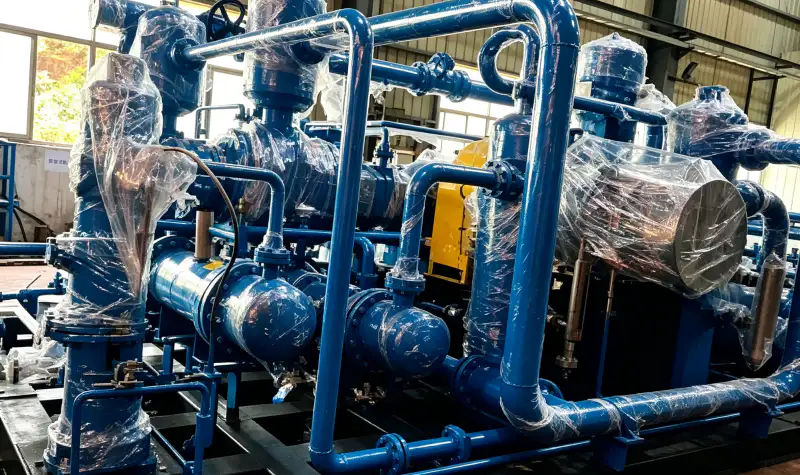
Maintenance Protocol and Operating Cost Structure
The LW Series is engineered from the outset for low total cost of ownership across a 20-year facility service life. The scheduled maintenance intervals and the cost differences versus oil-lubricated alternatives are both documented and quantifiable.
1
2,000-Hour Air Valve Inspection
Suction and discharge valve plates are inspected for wear patterns and seating surface condition. The oil-free compression environment produces cleaner valve faces than oil-lubricated systems — carbon and varnish deposits are absent — but valve spring fatigue and plate flutter remain time-dependent. Early identification of spring load reduction prevents the volumetric efficiency losses and discharge temperature increases that are the first symptoms of valve degradation in dry air service.
2
8,000-Hour Piston Ring Replacement
Scheduled replacement of the proprietary self-lubricating composite piston rings and rider bands at 8,000-hour intervals maintains ISO 8573-1 Class 0 oil-free certification and rated volumetric efficiency. Our modular cylinder design allows this replacement to be completed by two technicians in 4–6 hours per cylinder without shutting down the other cylinder — preserving approximately 50% air supply capacity throughout the maintenance window.
3
16,000-Hour Major Overhaul
Major overhaul at 16,000+ hours covers crankshaft main bearing replacement, crosshead pin and bush measurement, connecting rod inspection, and complete packing seal renewal. For a facility operating 6,000 hours per year, this translates to a major overhaul approximately every 2.5 years — a significantly lower maintenance intensity than comparable oil-lubricated compressors where oil changes, filter replacements, and downstream separator servicing accumulate substantially higher annual maintenance labour and consumable costs.
Oil-Free vs Oil-Lubricated — The Total Cost of Ownership Reality
The purchase price of an oil-lubricated compressor with filtration often appears lower than an equivalent oil-free unit. Across a 10-year operating period, the calculation reverses decisively — particularly for regulated industries where contamination events carry production and compliance costs.
| Cost Factor | LW Series Oil-Free Air Compressor | Oil-Lubricated + Filtration |
|---|---|---|
| Downstream Filtration | ✔ None required. Zero annual filter consumable cost. | ✘ Coalescing + activated carbon filters: $15,000–$40,000 per year. |
| Contamination Risk | ✔ Structurally zero — no oil in compression chamber. | ✘ Filter bypass, saturation, and change-over events create contamination windows. |
| Regulatory Compliance | ✔ ISO 8573-1 Class 0 certified — satisfies GMP, HACCP, FDA audits directly. | ✘ Requires ongoing oil-in-air monitoring and filter change documentation for auditors. |
| Civil Engineering Cost | ✔ Standard 200 mm industrial concrete floor. No inertia blocks needed. | ✘ Similar — though filtration skid floor penetrations and drain routing add $3,000–$8,000. |
Why Manufacturing Facilities Across Australia Choose Our LW Series
With 29 models, a pressure range from 0.56 to 5.00 MPa, and ISO 8573-1 Class 0 certification — the LW Series covers more medium-duty air supply scenarios in a single range than any comparable oil free air compressor product family. Our ISO-certified manufacturing process and documented MTBF performance make the LW Series a straightforward specification decision for industrial engineers across food, pharma, electronics, and general manufacturing sectors.
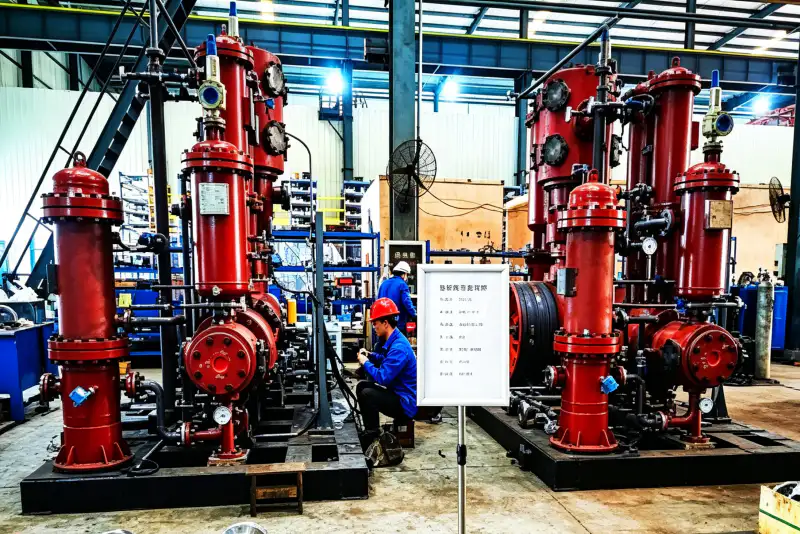
✅
ISO 8573-1 Class 0 Certified
The highest achievable oil content standard — certified, not self-declared. Accepted by GMP, HACCP, FDA, and food safety auditors without additional air quality monitoring requirements.
✅
29 Models, One Series
A single spare parts ecosystem, training programme, and service network covering the full 9–65 m³/min capacity and 0.56–5.00 MPa pressure range — simplifying procurement and maintenance planning.
✅
8,000+ Hour MTBF
Documented mean time between failures across the installed base. For a 6,000-hour annual operating facility, this is 16 months of continuous uninterrupted operation per maintenance cycle.
✅
Custom up to 2,000 kW
Bespoke oil-free air compressor configurations beyond the 29-model standard range engineered on request — for unique pressure, capacity, or voltage requirements across any industry.
How to Select the Right LW Series Model for Your Facility
With 29 models spanning four pressure families, three decisions narrow the specification to the correct unit for any medium-duty oil-free air application.
Calculate Your Peak Air Demand (m³/min)
Sum the free air delivery requirements of all connected pneumatic tools, actuators, and process equipment at their simultaneous peak demand. Add a 20–25% diversity margin. For example: a 30 m³/min calculated peak demand with 25% margin selects the LW-36/7-A or LW-40/6-A depending on pressure requirement. Undersizing causes pressure drops and production slowdowns; oversizing wastes capital and runs the compressor inefficiently at low load fractions.
Confirm Your Required Discharge Pressure (MPa)
Standard industrial pneumatics operate at 0.70–0.80 MPa (the largest LW family). Food and beverage and pharmaceutical facilities often standardise on 0.70 MPa. PET blow moulding requires 3.5–5.0 MPa — selecting the LW-16/50-A three-stage model. High-pressure process testing may need 1.0–1.6 MPa. The pressure requirement determines which pressure family you enter — and within that family, capacity narrows the model selection.
Verify Electrical Infrastructure — 380V or Medium Voltage
Models up to approximately 220 kW are available on standard 380V three-phase supply — suitable for most medium-sized facilities. Larger units (LW-65/7-A at 400 kW, and high-capacity models at 315 kW and above) require 6 kV or 10 kV medium-voltage switchgear. Confirm your substation capacity and available voltage before finalising the model — contacting [email protected] with your electrical single-line drawing resolves this in one exchange.
Specify Your Oil-Free Air Supply — Zero Contamination, Long-Term Reliability
Tell our team at Australia Oil Free Air Compressor Co., Ltd. your required flow rate, discharge pressure, and facility electrical supply. We will identify the correct LW Series model and provide a full specification package within 48 hours.
Charlton Industrial Area, Australia | [email protected]
Related Reading
Understanding the true 10-year cost difference between oil-free and oil-lubricated compressors is essential reading before any medium-duty procurement decision: oil free vs oil lubricated compressor — true cost comparison over 10 years.