Description
Why Hydrogen Compression Is the Most Demanding Gas Engineering Challenge
Hydrogen has emerged as the defining energy vector of the decarbonisation era — a clean fuel for mobility, a feedstock for green ammonia and methanol, and a circulation gas in some of the world’s most demanding petrochemical processes. But compressing hydrogen is categorically unlike compressing any other industrial gas. It is the smallest molecule known to science, making containment a fundamental engineering challenge that standard mechanical seals cannot solve. Under high pressure and elevated temperature, diatomic hydrogen dissociates into atomic form and diffuses into the crystal lattice of standard carbon steel and cast iron — a process called hydrogen embrittlement — which causes sudden, catastrophic brittle fracture under load. And with a flammability range of 4% to 75% in air and a minimum ignition energy measured in fractions of a millijoule, even a pinhole leak in a standard industrial air compressor seal represents an unacceptable risk in hydrogen service.
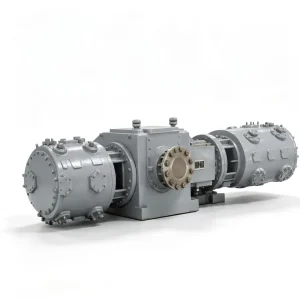
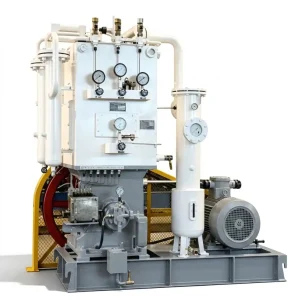
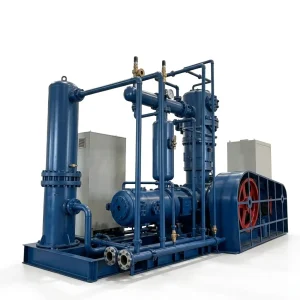
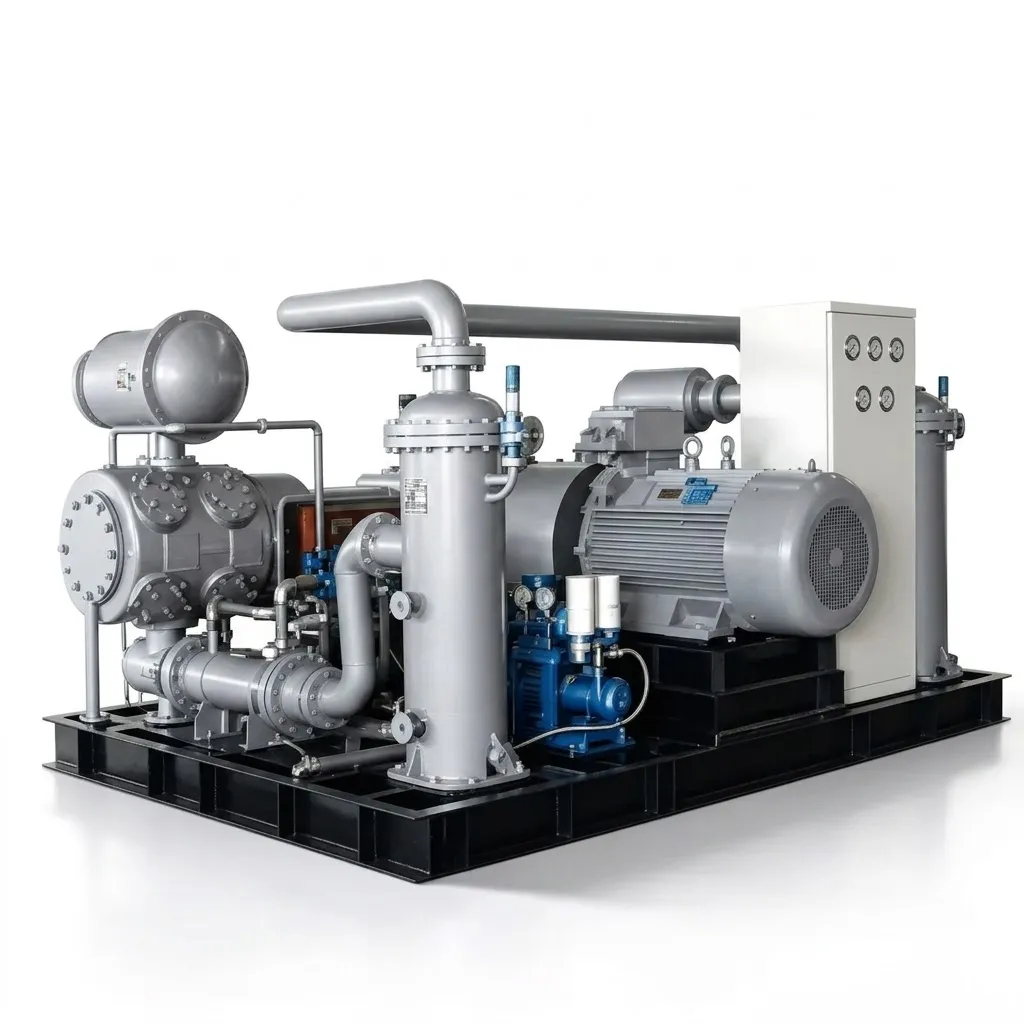
Our Industrial Hydrogen Compressors are purpose-built from the ground up to overcome every one of these hazards. Spanning 0.1 to 200 Nm³/min capacity and discharge pressures from 0.15 to 25.0 MPa, they serve green hydrogen electrolyser boosting, petroleum hydrocracking, ammonia and methanol synthesis, and high-capacity mobility refuelling infrastructure — with 100% oil-free gas delivery guaranteed at every operating point.
Anti-Embrittlement Metallurgy
316L austenitic stainless steel and high-nickel alloys throughout all gas-wetted components. Face-centred cubic structure is virtually impenetrable to hydrogen diffusion at any operating pressure.
Hermetic Zero-Leak Sealing
API 618 Type-C / Type-D extended distance pieces with continuous nitrogen purging. Every trace of fugitive H2 is captured and safely routed to flare — zero atmospheric hydrogen leakage.
Guaranteed 100% Oil-Free
Proprietary filled-PTFE piston rings and rider bands. Zero oil migration — protecting fuel cell catalysts, synthesis reactors, and storage cascades from hydrocarbon contamination at all flow rates.
Three Core Engineering Systems Behind Safe H2 Compression
Safe, reliable hydrogen compression requires three independent engineering disciplines working in concert. Each addresses a distinct failure mode that has caused real-world incidents in hydrogen plant and refinery operations.
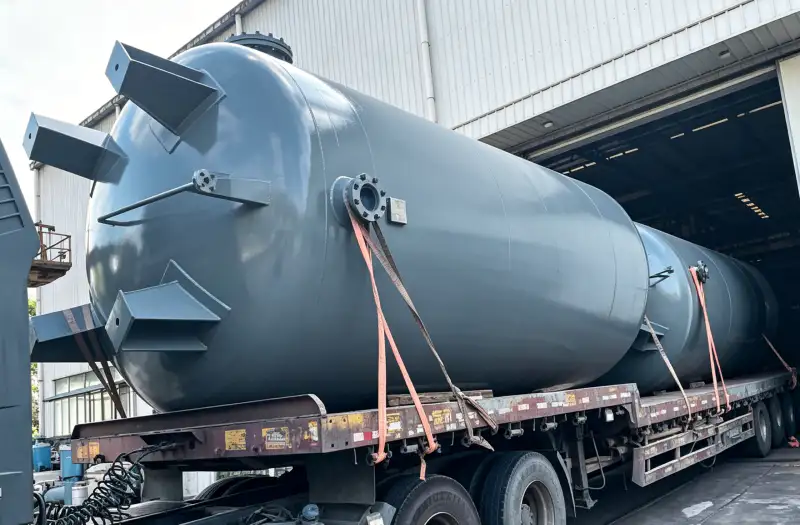
Hydrogen Compressor Model Range and Technical Specifications
Our hydrogen compressor matrix covers the full range of industrial H2 applications — from compact electrolyser booster skids to massive bare-block petrochemical circulation machines. Intake pressures vary widely depending on the upstream process or electrolyser output; all models are configurable to exact site conditions.
Compact Series — ZW & LW Units (Low to Medium Capacity)
| Model | Stages | Capacity (Nm³/min) | Intake Pressure | Discharge (MPa) | Power (kW) | Weight (t) |
|---|---|---|---|---|---|---|
| ZW-0.1/21-25 | 1-stage | 0.1 | 2.10 MPa | 2.50 | 7.5 | 0.80 |
| ZW-1.1/25 | 3-stage | 1.1 | Positive | 2.50 | 30 | 2.83 |
| 3ZW-9.5/30 | 3-stage | 9.5 | Positive | 3.00 | 110 | 3.50 |
| LW-11.7/0.6-10 | 2-stage | 11.7 | 0.06 MPa | 1.00 | 132 | 3.00 |
| LW-20/18 | 3-stage | 20.0 | Positive | 1.80 | 240 | 6.00 |
| LW-2.1/8-120 | 2-stage | 2.1 | 0.80 MPa | 12.00 | 160 | 6.50 |
Heavy-Duty Series — DW Bare-Block Units (High Capacity)
| Model | Stages | Capacity (Nm³/min) | Intake Pressure | Discharge (MPa) | Power (kW) | Weight (t) |
|---|---|---|---|---|---|---|
| DW-5/0.8-120 | 4-stage | 5.0 | 0.08 MPa | 12.00 | 132 | 6.50 |
| DW-10/24-36 | 1-stage boost | 10.0 | 2.40 MPa | 3.60 | 355 | 10.00 |
| DW-66/28 | 4-stage | 66.0 | Positive | 2.80 | 900 | 13.00 |
| DW-100/8 | 2-stage | 100.0 | Positive | 0.80 | 630 | 17.00 |
| DW-86/4-12.5 | 1-stage boost | 86.0 | 0.40 MPa | 1.25 | 1,400 | 25.00 |
Custom configurations from 5.5 kW to 2,000 kW available. Maximum discharge 25.0 MPa (250 Bar). Intake pressure from near-atmospheric to high-pressure electrolyser output — all configurable to exact site conditions.
Industrial Hydrogen Compression Applications Across the H2 Economy
From the output port of a solar-powered electrolyser to the inlet manifold of a refinery hydrocracker, our hydrogen compressors serve as the pressure backbone of the modern hydrogen economy — across clean energy, heavy industry, and emerging mobility infrastructure.
Green Hydrogen Electrolyser Boosting
PEM and alkaline electrolysers produce hydrogen at 1.0 to 3.0 MPa. For injection into high-pressure tube trailers, underground salt cavern storage, or pipeline distribution at 25.0 MPa, our DW booster series safely elevates the gas while preserving the 99.999% purity that downstream fuel cell stacks require. Zero oil migration is guaranteed by the oil-free PTFE ring design.
Petroleum Hydrocracking and Desulfurisation
Refineries crack heavy crude fractions into lighter fuels using massive volumes of high-pressure hydrogen. Our heavy-duty bare-block machines run continuously to circulate make-up hydrogen and recycle gas directly into catalytic reactors — providing the pulsation-free, high-volume throughput that keeps refinery processing units at peak throughput without unplanned shutdowns.
Green Ammonia and Methanol Synthesis
Hydrogen is the primary feedstock of the Haber-Bosch ammonia process and methanol synthesis loops — both critical pathways to decarbonising fertiliser production and maritime fuel. Our LW and DW series provide the thermodynamic stability and stoichiometric precision that sensitive high-yield synthesis reactors demand, maintaining exact H2 partial pressures across continuous 24/7 production campaigns.
High-Capacity Mobility Refuelling Infrastructure
Hydrogen bus depots, truck refuelling hubs, and rail depot filling stations require hydrogen compressed to 35–70 MPa for onboard storage tanks. Our multi-stage compressor cascades start from low-pressure electrolyser or pipeline supply and step up through precisely staged intermediate pressures — delivering the high-volume throughput needed to turn around commercial fleets within operational scheduling windows.
Featured Case Study: Regional Green Hydrogen Distribution Hub
Engineering Insight: Green hydrogen produced by electrolysis is drier than almost any other industrial gas stream — it carries virtually no moisture vapour that standard PTFE rings rely on for trace lubrication. This is why off-the-shelf compressor ring materials fail rapidly in electrolyser service. Our application-specific PTFE composite formulation was developed specifically for this zero-humidity operating environment and is validated across thousands of hours of electrolyser H2 duty.
Installation Requirements and Lifecycle Maintenance Protocol
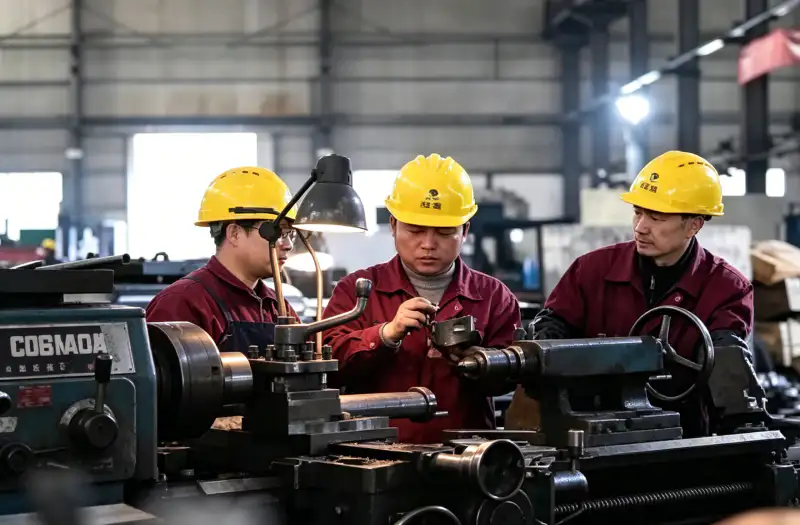
Deploying machinery that compresses the world’s most explosive gas at 250 Bar — in facilities classified as Group IIC hazardous areas — demands the most rigorous installation engineering and maintenance discipline of any gas compression application.
1
Exd IIC T4 Hazardous Area Compliance
Hydrogen falls under Group IIC — the most stringent explosion-proof classification, requiring greater energy containment than any other gas group. Every electrical component on our compressors, from the main drive motor and starter panel to individual field instruments and junction boxes, carries full Exd IIC T4 certification. Installation zones must be classified to ATEX Zone 1 or NEC Class 1 Division 1 Group B standards, with gas detection systems and emergency shutdown logic integrated from day one.
2
Continuous Nitrogen Purge Management
The distance piece nitrogen purge is not a startup procedure — it is a continuous operational requirement throughout every operating hour. The purge flow rate and pressure must be monitored by a dedicated instrument loop with low-flow alarm and automatic compressor shutdown. Purge supply must come from a reliable, instrument-quality nitrogen source with adequate backup — any interruption to the purge while hydrogen is flowing represents a direct safety event requiring immediate shutdown.
3
4,000-Hour High-Stage Valve Inspection
High-pressure hydrogen service creates severe fatigue loading on final-stage valve plates due to large pressure differentials and the low viscosity of the gas, which generates very rapid valve dynamics. At 4,000-hour intervals, high-stage valve plates are measured for thickness reduction and spring loads are verified. Replacing components on schedule prevents uncontrolled valve failure — the primary mechanism of hydrogen compressor incidents in refinery and electrolyser plant service.
4
8,000-Hour PTFE Ring and Packing Overhaul
Full replacement of proprietary PTFE composite piston rings, rider bands, and all distance-piece labyrinth packing sets restores 100% oil-free volumetric efficiency and re-certifies zero hydrogen leakage compliance. Our global parts inventory stocks the specific bone-dry PTFE formulations validated for hydrogen service, enabling planned maintenance windows to complete on schedule without supply chain delays or substitution risks.
Reciprocating vs Diaphragm vs Centrifugal — H2 Compression Technology Comparison
Three compressor technologies compete for hydrogen duty in industrial and energy applications. For large-scale operations above 5 Nm³/min, the total cost of ownership comparison consistently points in one direction.
| Metric | Our Reciprocating H2 Compressors | Diaphragm Compressors | Centrifugal Compressors |
|---|---|---|---|
| Volumetric Capacity | ✔ Up to 200 Nm³/min — suited for all industrial scales. | ✘ Lab-scale only — typically below 0.5 Nm³/min. | △ High volume, but efficiency collapses at high pressures. |
| High-Pressure Efficiency | ✔ Positive displacement maintains full efficiency up to 25.0 MPa. | △ Efficient but hydraulic oil resistance limits scale. | ✘ H2 low molecular weight causes massive aerodynamic slip above 4 MPa. |
| Turndown Flexibility | ✔ VFD integration — 50–100% turndown without surge risk. | ✘ Run-or-stop only. No meaningful turndown capability. | ✘ Surge at low flow requires wasteful bypass loops. |
| Oil-Free Gas Purity | ✔ PTFE composite rings — 100% oil-free guaranteed at all flows. | ✔ Oil-free by design via diaphragm isolation. | ✘ Bearing lubrication migration risk at shaft seal faces. |
Why Hydrogen Producers and Refineries Choose Australia Oil Free Air Compressor Co., Ltd.
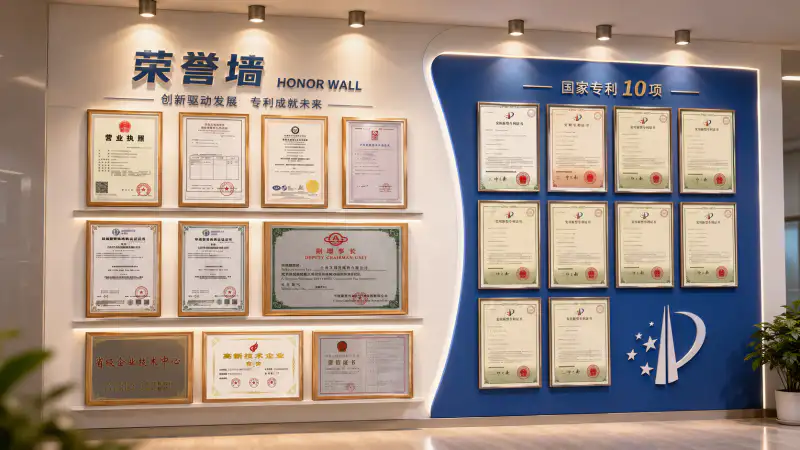
Compressing the world’s most explosive gas at 250 Bar in facilities where safety incidents make international headlines demands a manufacturer whose quality standards go beyond certification paperwork. Our ISO-certified production framework involves ultrasonic NDT and hydrostatic pressure testing on every pressure-bearing component before assembly — documented and traceable to individual units.
Exd IIC T4 Group B Certified
Highest explosion-proof classification for hydrogen environments — every motor, instrument, and enclosure independently certified.
316L / High-Nickel Alloy Build
All gas-wetted components in austenitic stainless steel — hydrogen embrittlement structurally impossible, not just managed by inspection.
18,000+ Hour Validated Rings
Bone-dry PTFE composite formulations validated in real electrolyser H2 service — not standard ring materials repurposed for hydrogen duty.
Custom up to 2,000 kW
Bespoke configurations from 5.5 kW compact skids to 2,000 kW mega-scale hydrogen production plant compressors — all engineered to exact intake and discharge conditions.
How to Select the Right Hydrogen Compressor for Your Application
Unlike most gas compression projects where inlet pressure is fixed and predictable, hydrogen applications span an enormous range of upstream conditions — from near-vacuum purification stages to high-pressure electrolyser outputs. Three questions define the correct model.
Boosting from an electrolyser at 2.4 MPa uses a different model (DW-10/24-36) than drawing from a low-pressure purification stage at 0.08 MPa (4-stage DW-5/0.8-120). Intake pressure determines the number of stages required to reach the target discharge pressure without excessive inter-stage temperatures — provide your upstream equipment datasheet to our engineering team at the start of the selection process.
Fuel cell and polymer electrolyte membrane applications demand 99.999% purity with sub-ppm oil contamination tolerance. Refinery hydrocracking recycle gas has more relaxed purity requirements. Both applications are served by our oil-free PTFE ring design — but downstream purity specifications may influence inter-stage filter selection and the choice of distance piece nitrogen purge rate.
High-capacity models above 500 kW require 6 kV or 10 kV medium-voltage switchgear. The installation zone must be classified and certified to Group IIC standards before equipment delivery — not after. Contact [email protected] with your electrical single-line diagram and hazardous area classification drawing for a complete pre-order compatibility review.
Engineer Your Hydrogen Compression System the Right Way
Share your electrolyser output conditions, discharge pressure target, required gas purity, and flow rate with the engineering team at Australia Oil Free Air Compressor Co., Ltd. — and receive a fully specified hydrogen compressor recommendation within 48 hours.
Charlton Industrial Area, Australia | [email protected]
Related Reading
Understanding how downstream filtration interacts with oil-free compression is essential for fuel cell and synthesis applications: downstream filtration for oil free compressors — is it still needed — a practical guide to what post-compression treatment is required even when the compressor itself is 100% oil-free.