
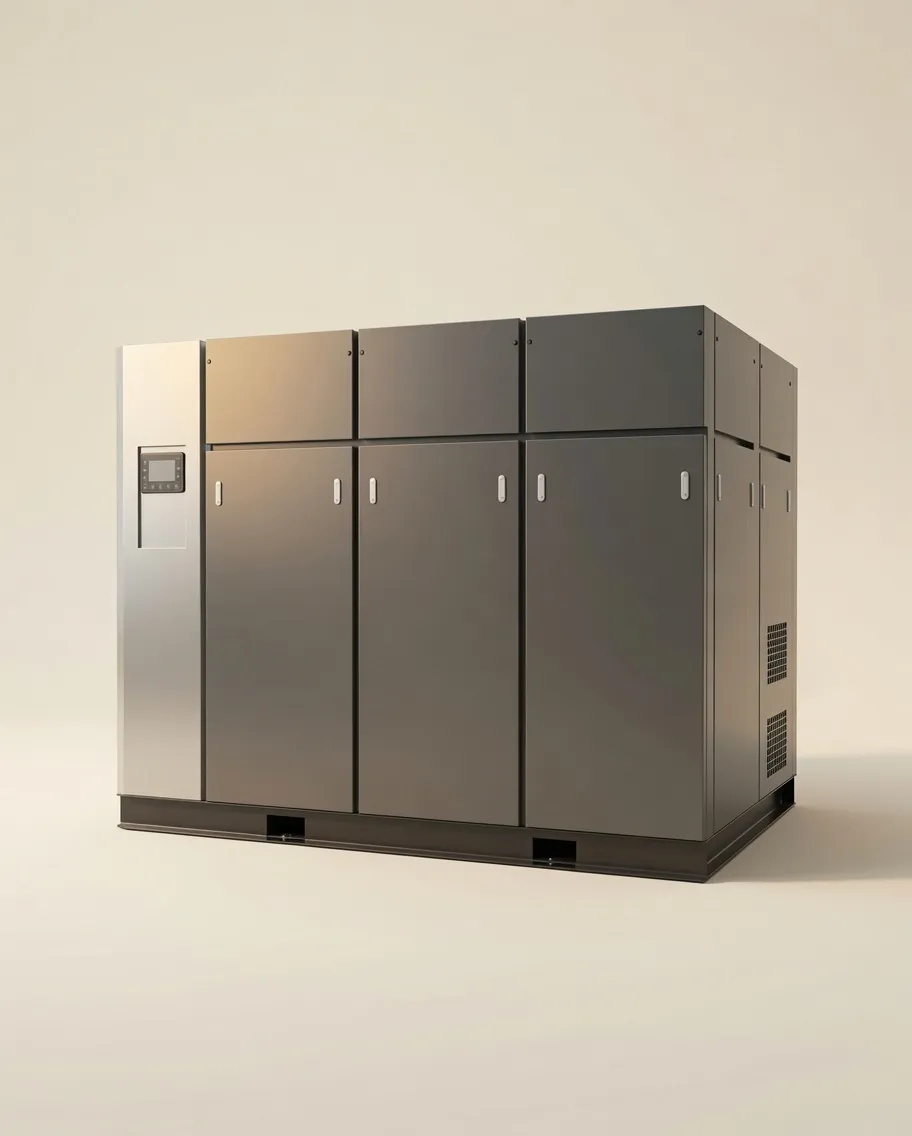
What an Oil-Free Compressor Eliminates — and What It Does Not
The term “oil-free” is precise in its meaning: it describes a compressor where no lubricating oil is present in the compression element — no oil injected into the compression chamber, no oil film between rotors, no oil ring around PTFE-coated pistons. As a result, there is no mechanism by which oil can be carried over into the compressed air stream from the compression process itself.
What oil-free technology does not address — and cannot address — is contamination that originates from sources other than the compression element. The compressed air produced by any compressor, oil-free or otherwise, contains the following contaminants sourced from the atmosphere and the distribution system:
Every cubic metre of air drawn into the compressor intake contains 100–200 million particles above 0.5 µm diameter — pollen, dust, industrial aerosols, and combustion products. The compressor intake filter removes the larger particles (typically above 5–10 µm), but finer particles pass through and are concentrated in the compressed air. Without downstream filtration, these sub-micron particles reach every tool and process point.
Atmospheric humidity becomes concentrated water vapour and liquid aerosol in the compressed air. After the receiver and dryer, residual water aerosol and vapour persist at levels determined by the dryer’s rated dew point. For refrigerated dryers (+3°C pdp), significant water aerosol can be present downstream — requiring a downstream coalescing filter to catch liquid droplets before sensitive equipment.
Atmospheric air contains bacteria, fungi, and mould spores — typically 10–500 colony-forming units per cubic metre in industrial environments. When compressed, these are concentrated. Condensate in distribution pipework creates breeding grounds for biofilm. For pharmaceutical, medical, and food direct-contact applications, microbiological contamination in compressed air is a regulatory compliance issue, not merely a quality concern.
Atmospheric air near vehicle traffic, loading docks, or industrial processes contains gaseous hydrocarbons (vehicle exhaust, solvent vapours, industrial off-gases). These are not particles and cannot be removed by particle filters — they pass straight through a coalescing filter element. Activated carbon adsorbers are required to remove hydrocarbon vapour from the compressed air stream.
Distribution pipework — particularly carbon steel — generates corrosion particles, scale, and joint compound debris that enter the compressed air stream over time. Even aluminium and stainless steel systems generate trace particulate from machining marks, weld spatter (stainless), and fitting seal material degradation. Point-of-use filtration at sensitive process connections catches these particles regardless of upstream system condition.
The conclusion is clear: an oil-free compressor is a necessary precondition for ISO Class 0 oil-free compressed air — but it is not sufficient on its own. Downstream filtration addressing particles, water aerosol, and (for relevant applications) vapour-phase hydrocarbons and microorganisms is required alongside the oil-free compressor for complete compressed air quality compliance.
The Five Compressed Air Filter Types and What Each Removes
Each filter type in a compressed air treatment train performs a specific removal function. Understanding the mechanism of each type explains why they must be used in the correct sequence — and why substituting one for another produces poor results.
Complete Filter Train Configurations by Application
The correct filter train for an oil-free system is determined by the application’s ISO 8573 quality requirement. Here are the standard configurations used in Australian industrial and process environments:
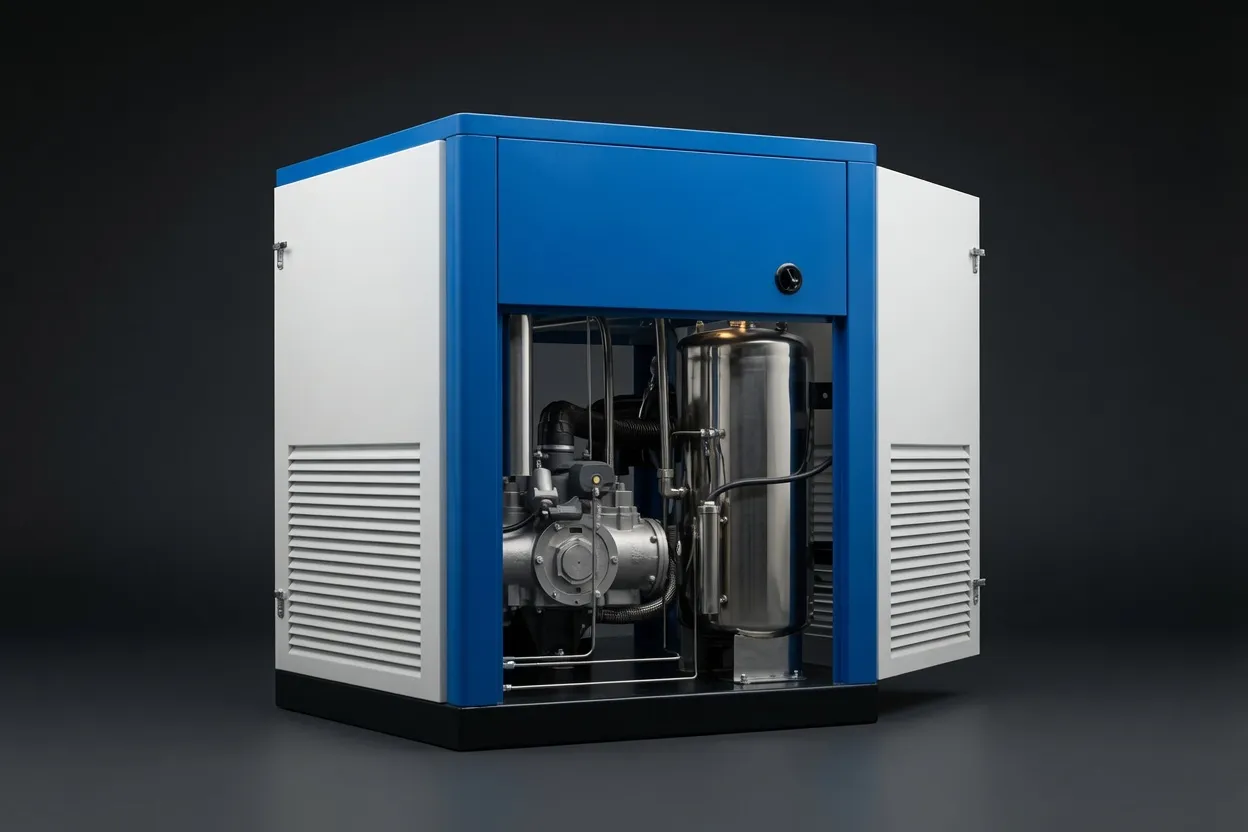
ISO Class 0 Oil-Free Air: What the Standard Actually Requires
ISO Class 0 is the highest oil purity class in ISO 8573-1. It specifies an oil content lower than Class 1 (≤0.01 mg/m³), with the exact limit defined by the end user in agreement with the equipment supplier. In practice, ISO Class 0 typically means <0.001 mg/m³ (total oil, vapour + aerosol) — a concentration effectively undetectable by field measurement.
Critically, ISO Class 0 applies only to the oil dimension of the ISO 8573-1 standard. It does not specify particle count or water content — these are separately specified under their respective classes. A system claiming “ISO Class 0 oil-free air” must separately specify particle class and water class to provide a complete quality statement. Many marketing claims of “ISO Class 0” relate only to the compressor’s oil class — not to the complete downstream air quality at the point of use.
For oil-free systems, the oil dimension is managed by the compressor — a true ISO Class 0 result. But ISO Class 0 on the oil dimension alone cannot be claimed as the system quality class without also specifying the particle and water performance. The downstream filter train is what determines whether the complete quality statement can be supported.
Five Ways Downstream Filters Fail in Oil-Free Systems
Having the right filter train is necessary but not sufficient — filters fail when improperly maintained, incorrectly sized, or installed in the wrong sequence. These are the five most common failure modes in oil-free system filter trains:
Filter elements load progressively with captured particles. A saturated particulate filter creates 8–12 PSI pressure drop and allows particle bypass (the element ruptures or the flow bypasses around its seating). Most filter housings have a pressure drop indicator — replace the element when the indicator enters the red zone, regardless of the service calendar.
Unlike particulate filters that show pressure drop as they load, activated carbon adsorbers pass vapour contamination through when saturated without generating any visible indicator. There is no “full” signal — the filter continues to operate while providing zero adsorption. Change on a fixed schedule based on flow rate and expected inlet hydrocarbon concentration — typically 3–6 months in high-contamination environments, annually in clean sites.
Installing the carbon adsorber before the coalescing filter (instead of after) allows liquid water and oil aerosol from the dryer to enter the carbon bed — rapidly deactivating it and generating carbon fines that contaminate the air stream. Always: general filter → coalescer → carbon → desiccant → afterfilter.
Filter housings rated for nominal flow conditions may be overloaded during peak demand — high velocity through a filter element reduces contact time, worsening particle and aerosol capture efficiency. Pressure drop across an undersized filter housing at peak flow can also cause element deformation. Size filter housings for 1.2× system maximum flow.
Coalescing filter housings accumulate liquid condensate at the bottom sump. Without an automatic drain, this condensate fills the sump and the liquid level rises to contact the filter element — flooding the element with liquid, which collapses the borosilicate fibre structure and allows bypass around the collapsed section. Every coalescing filter must have a functioning automatic drain as a baseline maintenance requirement.
Oil Vapour from Atmosphere: The Contaminant Oil-Free Compressors Cannot Prevent
This is the most commonly overlooked source of oil contamination in oil-free systems. While the compressor itself contributes zero oil to the air stream, the atmosphere drawn into the compressor intake may contain hydrocarbon vapour from vehicle exhaust, industrial processes, or nearby oil-lubricated equipment. This vapour enters with the intake air and must be removed downstream.
In Australian industrial environments, atmospheric oil vapour concentration typically ranges from 0.01–0.1 mg/m³ — at or above the ISO Class 1 oil limit of 0.01 mg/m³. A true ISO Class 0 or Class 1 oil specification therefore requires an activated carbon adsorber downstream to remove this atmospheric contribution to oil content, regardless of the compressor type.
An oil-free compressor guarantees ISO Class 0 oil output from the compression element — it cannot guarantee ISO Class 0 at the point of use without an activated carbon adsorber if the intake air contains atmospheric hydrocarbons. For the most demanding oil-free applications, complete air quality verification must include measurement at the point of use, not just at the compressor outlet, to confirm that atmospheric hydrocarbon contribution has been removed by the filter train.
Complete Filtration System Design from Australia Oil Free Air Compressor
Australia Oil Free Air Compressor Co., Ltd. specifies downstream filtration as an integrated element of every oil-free system proposal — not as an optional accessory. Our team at the Charlton Industrial Area facility designs the complete filter train based on your application’s ISO 8573 quality target, inlet air quality assessment, and system flow rate — matching filter technology, housing size, and element grade to the specific quality requirement.
We supply complete system packages — compressor, dryer, filter train, receiver, and controls — with all components sized and matched to each other and to your application. This eliminates the common problem of correctly specified individual components that underperform when assembled in the wrong sequence or size combination.
Contact us at [email protected] with your ISO 8573 quality requirement and system flow rate for a complete filtration system specification.
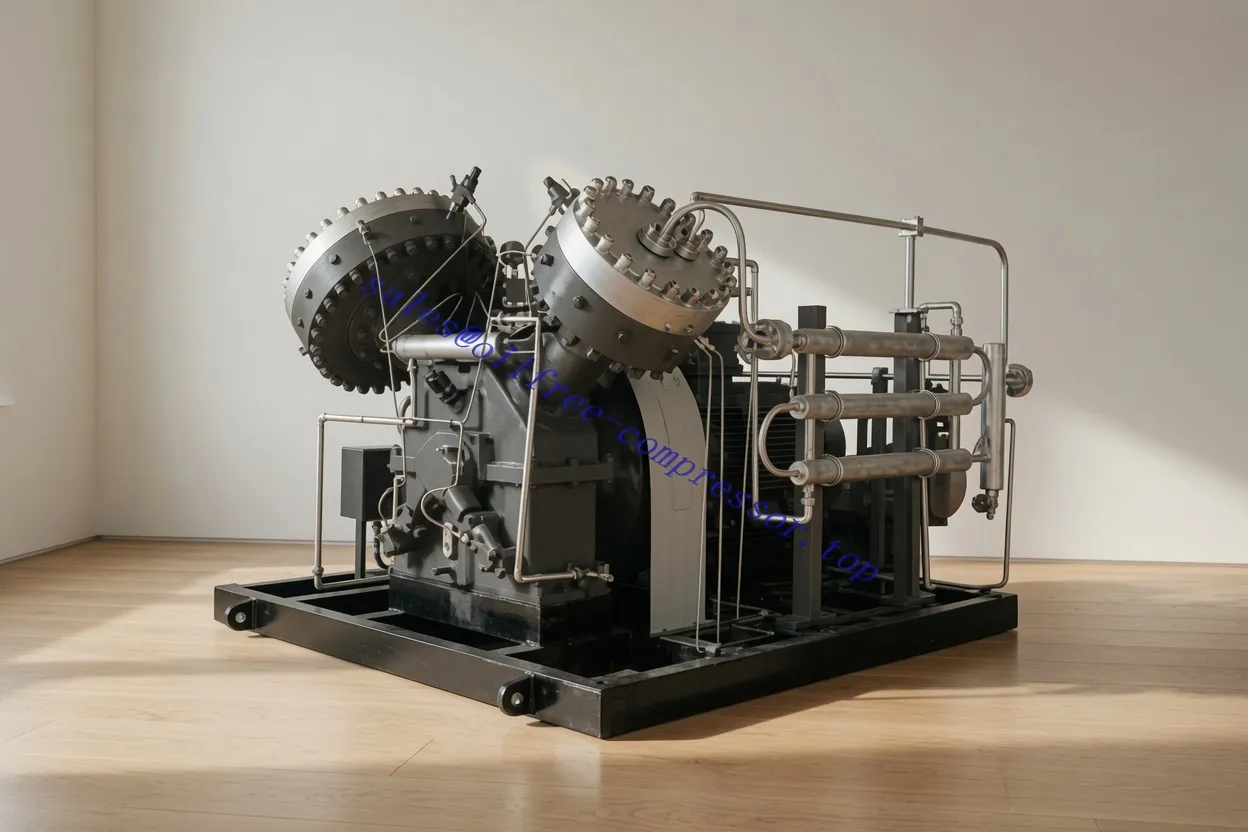
CM45D — Water-Lubricated Oil-Free Screw Compressor: The Zero-Oil-at-Source Foundation
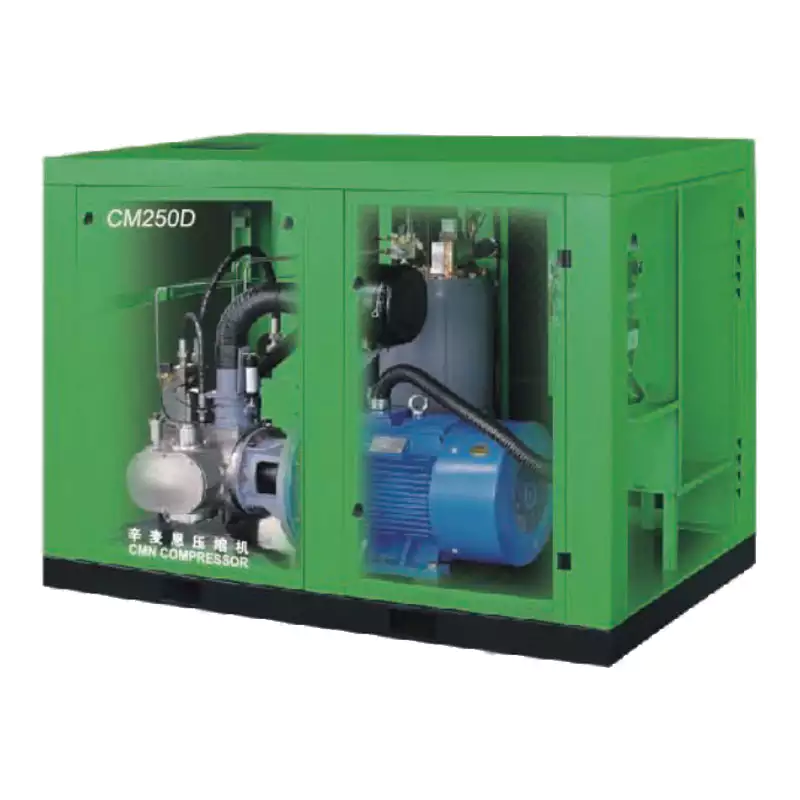
The CM45D water-lubricated oil-free screw compressor provides the zero-oil-at-source foundation on which a complete ISO 8573-1 Class 1:1:0 quality system can be built. Water lubrication means there is no oil in the compression circuit at all — not even trace amounts from bearing circuits that might migrate into the airstream in some dry oil-free designs. The downstream filter train specified alongside the CM45D is therefore focused entirely on atmospheric particle removal, moisture management, and atmospheric hydrocarbon treatment — not on residual compressor oil, because there is none. This makes the CM45D the cleanest starting point for any application requiring verified Class 0 oil content at the point of use.
Frequently Asked Questions
Australia Oil Free Air Compressor Co., Ltd.
Charlton Industrial Area, Australia | [email protected]