Description
Why Oxygen Compression at 150–165 Bar Demands Zero-Oil Engineering
Oxygen is not simply a reactive gas — at elevated pressures, it becomes an extraordinarily powerful oxidiser capable of causing hydrocarbons to combust spontaneously without any external ignition source. The phenomenon is well-documented in industrial gas engineering: lubricating oil entering a high-pressure oxygen compression chamber can ignite at temperatures far below its conventional flash point due to the oxidiser partial pressure effect. At 150 to 165 Bar, even microscopic oil aerosol concentrations represent a credible ignition risk. This is not a theoretical concern managed by downstream filters — it is a structural hazard that has caused documented fires and explosions at oxygen cylinder filling facilities that relied on oil-lubricated compression with filtration to remove oil after the fact.
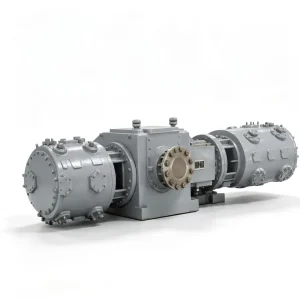
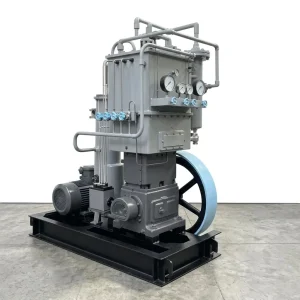
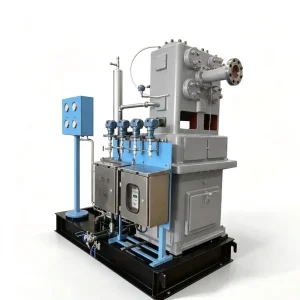
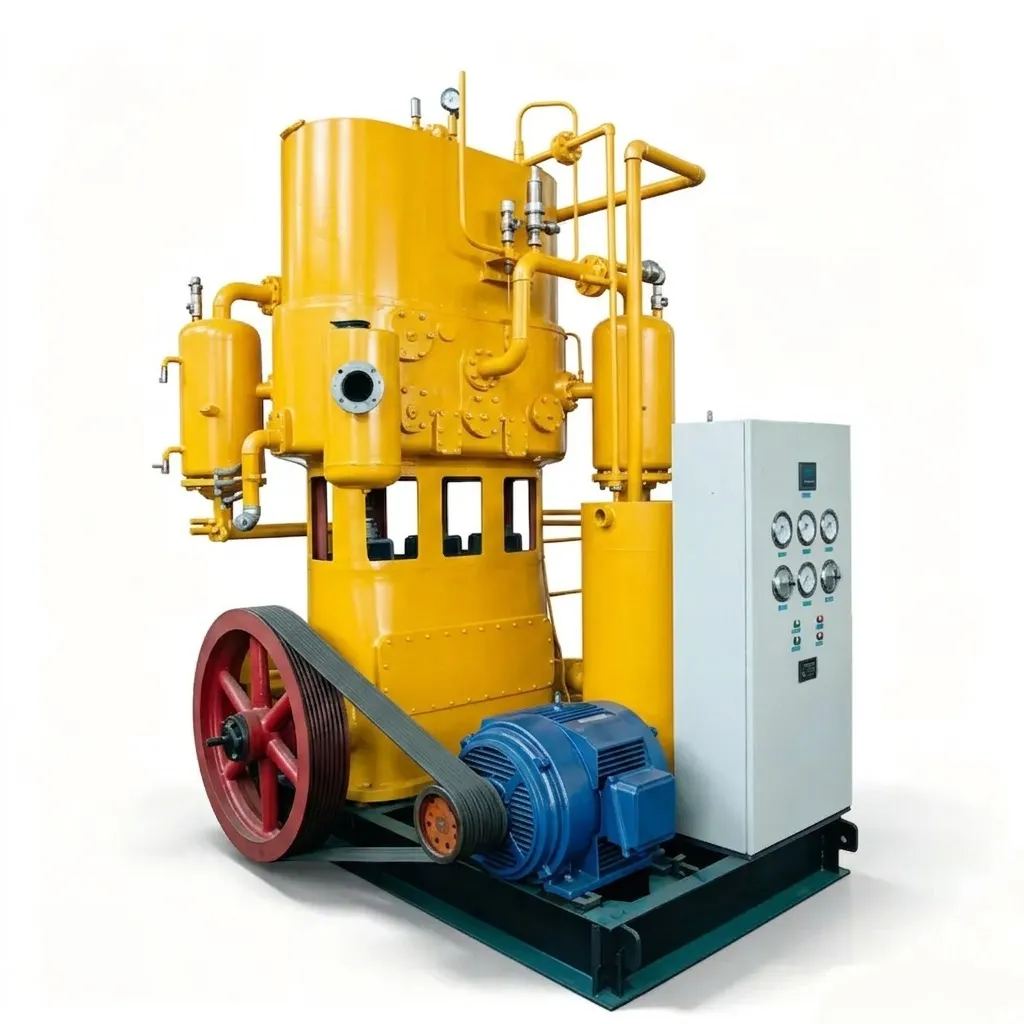
Our ZW Series oxygen compressor eliminates hydrocarbon contamination at the source by using proprietary filled-PTFE composite sealing throughout the compression chamber — no oil is introduced at any point in the mechanical cycle. Combined with 4-stage and 5-stage thermodynamic intercooling that prevents dangerous heat accumulation, and an extended distance piece that physically isolates the oil-lubricated crankcase from the oxygen gas path, the ZW Series provides the structural safety assurance that medical oxygen networks and industrial bottling stations require — not a filter-dependent approximation of it.
Zero Oil-O2 Contact by Design
Proprietary filled-PTFE piston rings, guide rings, and distance piece packing operate entirely without liquid lubrication. No hydrocarbon enters the compression chamber — combustion is structurally impossible, not filter-dependent.
Multi-Stage Thermal Management
4-stage and 5-stage compression with high-efficiency tubular intercoolers between every stage. Discharge temperatures are kept far below the thresholds where oxygen reacts with any trace contaminant or weakens metallic components.
24/7 Continuous Filling Reliability
Dynamically balanced multi-row crankshaft, rugged heavy-mass cast frame, and 8,000-hour PTFE ring service intervals. Designed from the outset for continuous cylinder filling without unplanned thermal shutdowns or valve failures.
Three Engineering Disciplines Behind Safe Oxygen Compression at 165 Bar
Each engineering decision in the ZW Series oxygen compressor exists to eliminate a specific safety mechanism that has caused fires or failures in oxygen bottling facilities using inferior equipment.
Complete ZW Series O2 Bottling Compressor — Full Model Specifications
14 standard models span the full range of oxygen bottling station scales — from compact single-PSA-plant units to high-throughput industrial filling hubs running multiple manifolds simultaneously. All standard models operate on 380V three-phase supply.
Two-Row Four-Stage Models — 1.00 to 1.82 m³/min
| Model | Configuration | Capacity (m³/min) | Pressure (MPa) | Power (kW) | Weight (t) | Dimensions (mm) |
|---|---|---|---|---|---|---|
| ZW-1/150 | 2-row 4-stage | 1.00 | 15.00 | 30 | 4.00 | 2495×1800×2945 |
| ZW-1/165 | 2-row 4-stage | 1.00 | 16.50 | 30 | 4.00 | 2495×1800×2945 |
| ZW-1.67/150 | 2-row 4-stage | 1.67 | 15.00 | 37 | 4.00 | 2495×1800×2945 |
| ZW-1.67/165 | 2-row 4-stage | 1.67 | 16.50 | 37 | 4.00 | 2495×1800×2945 |
| ZW-1.82/150 | 2-row 4-stage | 1.82 | 15.00 | 37 | 4.00 | 2495×1800×2945 |
| ZW-1.82/165 | 2-row 4-stage | 1.82 | 16.50 | 45 | 4.00 | 2495×1800×2945 |
Three-Row Five-Stage Models — 3.00 to 5.00 m³/min (High-Volume Medical & Industrial Hubs)
| Model | Configuration | Capacity (m³/min) | Pressure (MPa) | Power (kW) | Weight (t) | Dimensions (mm) |
|---|---|---|---|---|---|---|
| ZW-3/150 | 3-row 5-stage | 3.00 | 15.00 | 55 | 4.50 | 2575×2064×3407 |
| ZW-3/165 | 3-row 5-stage | 3.00 | 16.50 | 55 | 4.50 | 2575×2064×3407 |
| ZW-3.3/150 | 3-row 5-stage | 3.30 | 15.00 | 55 | 4.80 | 2575×2064×3407 |
| ZW-3.3/165 | 3-row 5-stage | 3.30 | 16.50 | 55 | 4.80 | 2575×2064×3407 |
| ZW-4.2/150 | 3-row 5-stage | 4.20 | 15.00 | 75 | 5.60 | 2900×2300×3500 |
| ZW-4.2/165 | 3-row 5-stage | 4.20 | 16.50 | 75 | 5.60 | 2900×2300×3500 |
| ZW-5/150 | 3-row 5-stage | 5.00 | 15.00 | 90 | 5.60 | 2900×2300×3500 |
| ZW-5/165 ⭐ | 3-row 5-stage | 5.00 | 16.50 | 90 | 5.60 | 2900×2300×3500 |
⭐ ZW-5/165: maximum standard capacity — 5.0 m³/min at 16.5 MPa, 90 kW, 380V. Custom configurations from 11 kW to 132 kW available including VFD-equipped skids. All models factory acceptance tested at rated discharge pressure.
Four Core Applications Where Oil-Free Oxygen Compression Is Non-Negotiable
Every application below shares the same fundamental requirement: the oxygen that enters the storage cylinder must be chemically identical to the oxygen that left the generation plant — with no hydrocarbon addition of any kind at any pressure level.
Medical Oxygen Supply Networks
Medical oxygen pharmacopoeias worldwide specify hydrocarbon contamination limits measured in parts per million — limits that oil-lubricated compression with filtration cannot reliably sustain across an equipment’s entire service life. The ZW Series integrates directly downstream from PSA or cryogenic oxygen generators and fills 40 L medical cylinders to 150 or 165 Bar with structural purity assurance. In the regional medical gas hub case study below, this capability drove a 45% output capacity increase over the thermally limited legacy 2-stage system it replaced.
Heavy Industrial Cutting and Welding Supply
Metal fabrication facilities, shipyards, smelting operations, and heavy engineering workshops consume high-pressure oxygen in large volumes daily for oxy-fuel cutting, plasma cutting assist, and arc welding support. The ZW-5/150 and ZW-5/165 at 90 kW provide the continuous throughput to sustain manifold filling across two-shift and three-shift production operations, with the 5-stage architecture substantially reducing electrical cost per cylinder filled versus 2-stage alternatives.
Chemical Oxidation and Synthesis
Fine chemical and petrochemical processes that use oxygen as a direct oxidising agent in high-pressure reactors demand feedstock-grade purity free from hydrocarbons that would compete as reducing agents or poison catalysts. The ZW Series provides stable, controllable oxygen delivery at reactor inlet pressures up to 16.5 MPa, with the 5-stage architecture offering the flow stability that sensitive oxidation reaction kinetics require for consistent product yield.
Commercial Gas Distribution — O2 Cylinder Bottling Plants
Industrial gas distributors filling cylinder inventories for medical, industrial, and laboratory customers operate under continuous commercial pressure to maximise cylinders filled per shift while minimising per-unit electrical cost. The ZW Series’ 5-stage thermodynamic efficiency and predictable 8,000-hour maintenance intervals translate directly into lower operating cost per cylinder — a commercially meaningful advantage across a distribution fleet filling hundreds of cylinders daily.
Featured Case Study: Regional Medical Gas Bottling Hub Upgrade
Engineering Insight: The legacy 2-stage compressors were not failing due to component defects — they were thermodynamically undersized for the sustained duty cycle the application required. The 2-stage compression ratio generated discharge temperatures that triggered safety shutdowns at rated continuous duty. The 5-stage ZW-4.2/165 redistributes exactly the same total compression work across more stages and more intercoolers — the physical heat per stage is lower, the duty cycle ceiling is higher, and continuous 24/7 operation within safety limits becomes straightforward thermodynamic arithmetic rather than a constant maintenance management challenge.
Installation Prerequisites and Preventative Maintenance Protocol
An oxygen compression installation is not a plug-and-play exercise. The combination of high reactive gas pressure, continuous operation demand, and patient care dependency in medical applications requires the most rigorous site preparation and maintenance discipline of any cylinder filling technology.
1
Foundation Engineering and Cooling Water Supply
All ZW Series units require a dedicated reinforced concrete foundation with anchor bolt positions matching our supplied CAD drawings. Cooling water (15–25°C, 0.2–0.4 MPa) must be plumbed to all inter-stage cooler circuits before commissioning — inadequate cooling water is the primary preventable cause of thermal valve damage in oxygen compression service. For medical oxygen facilities, the cooling water circuit should have monitored redundancy to ensure continuous inter-stage cooling even during cooling system maintenance windows.
2
4,000-Hour High-Stage Valve Inspection
Valve plates on the 4th and 5th high-pressure stages face the greatest pressure differential per stroke and the most demanding fatigue loading. At 4,000 operating hours, these plates are measured for thickness reduction and spring loads are verified. In oxygen service, a fractured valve plate does not simply reduce filling efficiency — valve plate debris in a high-pressure oxygen stream represents a particulate contamination event with potential ignition implications. Proactive replacement on schedule is a safety requirement, not just a maintenance preference.
3
8,000-Hour PTFE Ring and Packing Overhaul
Complete replacement of all PTFE composite piston rings, guide rings, and distance piece packing assemblies at 8,000-hour intervals restores the structural oil-free integrity of the compression chamber and re-certifies zero hydrocarbon contamination compliance. Our global parts inventory maintains the specific oxygen-service PTFE formulations used in the ZW Series — enabling planned maintenance to complete without substituting ring materials that have not been validated for high-pressure oxygen duty.
ZW Series Dedicated O2 vs Retrofitted Generic High-Pressure Compressors
The consequences of using a non-dedicated compressor in high-pressure oxygen service range from product quality failure to facility fire. The comparison is not about performance preference — it is about engineering suitability for service.
| Safety Metric | ZW Series (Dedicated O2 Compressor) | Retrofitted Generic Compressors |
|---|---|---|
| Oil-O2 Contact Risk | ✔ Structurally zero — no oil in compression chamber by design. Combustion impossible. | ✘ Filter-dependent oil removal — filter bypass or saturation creates direct combustion risk. |
| Thermal Safety | ✔ 4–5 stages with intercooling — discharge temperatures per stage far below critical thresholds. | ✘ 2–3 stage designs generate thermal spikes that trigger safety shutdowns or damage valve materials. |
| Medical Compliance | ✔ Structural oil-free guarantee simplifies pharmacopoeial audits — no ongoing monitoring burden. | ✘ Ongoing oil-in-gas monitoring, filter change documentation, and audit justification required. |
| Continuous Duty | ✔ Designed for 24/7 filling operations — 8,000-hour MTBF with predictable maintenance windows. | ✘ Thermal shutdowns at peak demand, accelerated valve wear, and unplanned downtime are structural characteristics of 2-stage O2 duty. |
Why Medical Gas Suppliers and Industrial Bottling Stations Choose Australia Oil Free Air Compressor Co., Ltd.
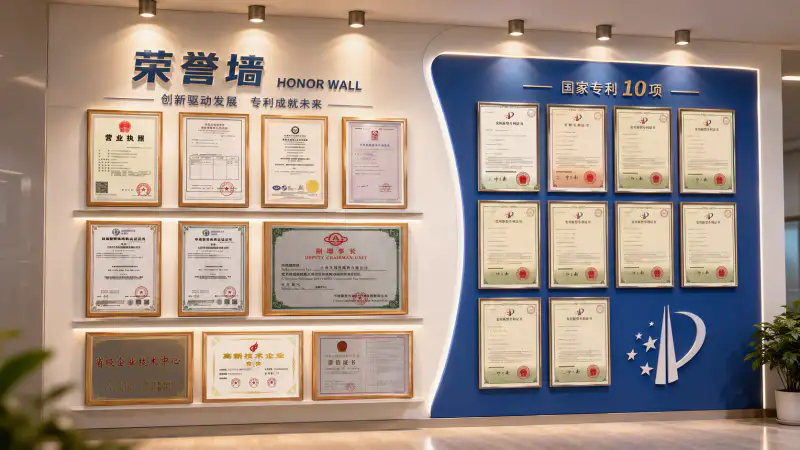
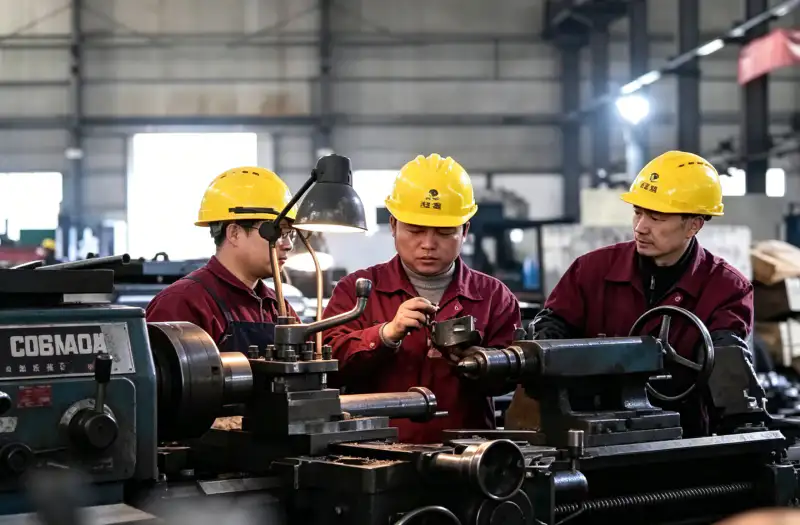
Manufacturing equipment that pressurises oxygen to 16.5 MPa for medical and industrial filling is a zero-error engineering discipline. Our ISO-certified production framework subjects every ZW Series cylinder, manifold, and intercooler to ultrasonic NDT, hydrostatic pressure testing, and full-load factory acceptance testing before shipment — documented and traceable to individual unit serial numbers.
✅
Hydrostatic Testing at 165 Bar
Every high-pressure cylinder and manifold pressure-tested at rated discharge pressure before assembly — structural integrity confirmed before any oxygen contact.
✅
Oxygen-Specific PTFE Ring Formulation
Proprietary filled-PTFE composite grades validated specifically for oxygen service — not standard air compressor ring materials repurposed for O2 duty.
✅
14 Models, All 380V Standard
Full capacity range from 1.0 to 5.0 m³/min on standard three-phase supply — no medium-voltage electrical infrastructure required for any standard model.
✅
Global Spare Parts on Hand
Valve plates, oxygen-grade PTFE rings, and packing sets for all ZW models stocked for international expedited dispatch — minimising maintenance downtime at remote filling stations.
How to Select the Correct ZW Series O2 Model for Your Application
Three decisions reduce the 14-model range to a single correct specification for any oxygen bottling application.
Calculate Daily Cylinder Output Requirement
A small regional medical filling hub may need only 1.0–1.82 m³/min (4-stage ZW compact models). A large industrial distribution plant filling multiple manifolds simultaneously needs 4.2–5.0 m³/min (5-stage models). Calculate your required daily filled volume, divide by the filling hours per shift, and add 20% operational reserve to determine the minimum continuous flow rate required from the compressor.
Confirm Cylinder Fill Pressure — 15.0 or 16.5 MPa
Medical oxygen cylinders in Australia and most markets fill to 15.0 MPa (150 Bar). Some industrial cylinder specifications and certain export markets require 16.5 MPa (165 Bar). Confirm your cylinder working pressure rating and manifold specifications from the cylinder supplier before selecting between the /150 and /165 model variants — the final stage is sized differently for each target pressure.
Confirm Cooling Water Supply and Foundation Readiness
All ZW Series models require cooling water to the inter-stage shell-and-tube coolers (15–25°C, 0.2–0.4 MPa) and a dedicated reinforced concrete foundation. For medical facilities without cooling tower access, a closed-circuit fluid cooler serves as an alternative — sizing guidance is available from our engineering team. Contact [email protected] with your site utilities summary for a pre-order installation assessment.
Upgrade Your Oxygen Bottling Infrastructure
Share your oxygen generator output, daily cylinder filling requirement, target fill pressure, and cooling water availability with the engineering team at Australia Oil Free Air Compressor Co., Ltd. — receive a fully specified ZW Series recommendation within 48 hours.
Charlton Industrial Area, Australia | [email protected]
Related Reading
For medical gas supply applications where hospital air quality standards intersect with oxygen purity requirements: oil free air compressors for hospitals — medical air standards and setup — a comprehensive guide to the regulatory and engineering requirements of medical-grade compressed gas systems.