
The oil-free rotary screw air compressor is the workhorse of industrial oil-free compressed air generation. Across pharmaceutical manufacturing, food and beverage production, hospital plant rooms, electronics fabs, and laser cutting facilities, the oil-free screw compressor delivers the combination of continuous-duty performance, ISO 8573-1 Class 0 air quality, long service intervals, and energy efficiency that no other oil-free technology matches at medium-to-large capacity. Yet despite its widespread deployment, the oil-free screw category contains significant internal variety — dry screw vs water-lubricated, single-stage vs two-stage, fixed-speed vs VSD, low-pressure vs medium-pressure — and the differences between these variants have decisive implications for which application each suits best, what the lifetime operating costs will be, and what regulatory documentation the installation can support. This guide provides the complete technical foundation for understanding, specifying, and selecting oil-free rotary screw compressors — covering working principles, the full range of design variants, key performance metrics, application mapping, and the selection framework that ensures the right technology reaches every installation.
How Oil-Free Screw Compressors Work
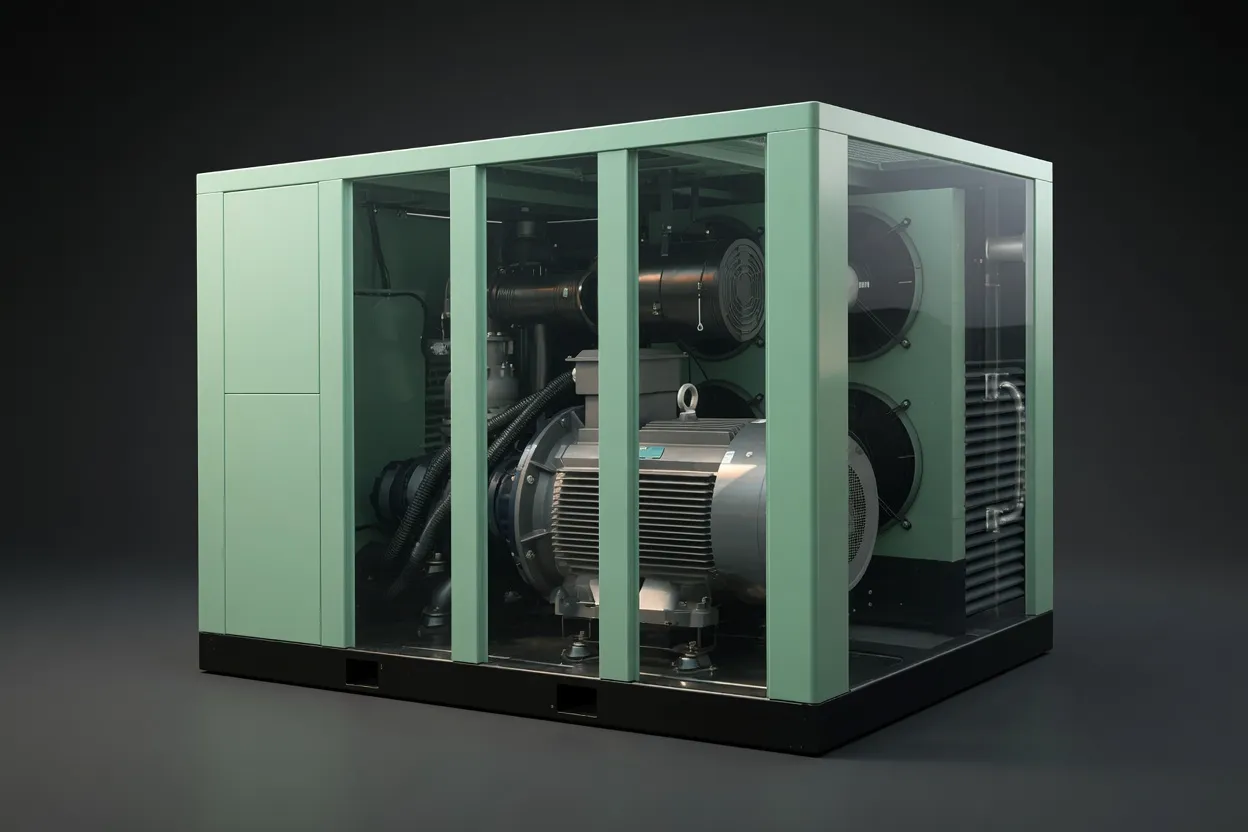
The rotary screw compression mechanism uses two intermeshing helical rotors — a male (convex lobe profile) and a female (concave flute profile) — that rotate in opposite directions within a precision-machined housing. As the rotors turn, the meshing action traps air pockets between the rotor lobes and the housing wall at the inlet end of the machine. Continued rotation progressively reduces the volume of these trapped pockets, compressing the air, until the compressed air is discharged at the outlet port at the delivery pressure. The process is continuous — unlike the intermittent compression of a piston compressor — providing smooth, pulse-free delivered air at the system pressure.
In a conventional oil-lubricated screw compressor, a film of oil is injected into the compression chamber to serve three functions simultaneously: sealing the rotor clearances (without which compressed air leaks back from the high-pressure discharge side to the low-pressure inlet side); lubricating the rotor surfaces; and absorbing the heat of compression. The oil separator then removes the injected oil from the compressed air downstream of the compression stage.
In an oil-free screw compressor, the compression stage operates without any fluid injected into the airway. The rotor clearances are maintained by precision manufacturing tolerances alone (in dry screw designs) or by water injection (in water-lubricated designs). The timing of the two rotors is maintained by external timing gears that are physically separated from the compression chamber — oil lubricating these gears is contained within a sealed gear housing and cannot reach the air stream. This is the defining characteristic of the oil-free screw: the thermodynamic compression process occurs in a space that contains no oil, eliminating hydrocarbon contamination at the source rather than filtering it out downstream.
Design Variants: The Four Key Differentiators
1. Dry Screw vs. Water-Lubricated Screw
This is the most architecturally significant difference within the oil-free screw category, with practical implications for air quality verification, discharge temperature, service life, and maintenance programme.
Dry Screw Oil-Free
No fluid in the compression chamber — rotors run on precision clearances sealed by rotor profile tolerances of 0.05–0.15 mm. Discharge temperatures of 160–220°C are typical because there is no cooling medium in the compression zone. The high discharge temperature requires robust downstream aftercooler design. Rotor surface coatings (PTFE, DLC, ceramic) reduce friction and slow clearance degradation but wear progressively over time. Timing gear oil is in a separate sealed housing but represents a credible contamination pathway if shaft seals fail.
Water-Lubricated Oil-Free
Demineralised water is injected into the compression chamber — sealing rotor clearances, cooling the compression process, and lubricating rotor surfaces. Discharge temperatures of 40–55°C are typical, dramatically reducing thermal stress on downstream equipment. No oil enters the compression zone from any internal source — the theoretical contamination pathway is zero. Water circuit requires pH monitoring, water filter maintenance, and scale management in hard-water regions. Models like the CM45D and CM132DV represent this category.
2. Single-Stage vs. Two-Stage Compression
Single-stage oil-free screw compressors compress air from atmospheric pressure to delivery pressure in one pass through a single screw element pair. This is the most common configuration for pressures up to 0.9 MPa (9 bar). For delivery pressures of 1.0–3.0 MPa (10–30 bar), two-stage compression is required — a first-stage screw element compresses air to an intermediate pressure (typically 0.3–0.5 MPa), an intercooler removes compression heat, and a second-stage screw element compresses from the intermediate pressure to the final delivery pressure.
Two-stage designs are thermodynamically more efficient for high-pressure applications because intercooling reduces the specific volume of air entering the second stage, reducing the work required. The 3.0 MPa two-stage model is an example of this architecture applied to laser cutting applications where high-pressure oil-free air is required for thick-material cutting. For standard industrial applications at 0.7–0.9 MPa, a well-designed single-stage screw is thermodynamically efficient and mechanically simpler.
3. Fixed-Speed vs. Variable Speed Drive (VSD)
A fixed-speed oil-free screw compressor runs its motor at a constant speed — it compresses at full capacity when loaded and runs unloaded (consuming approximately 25–35% of full load power) when demand falls below capacity. This on-load/off-load cycle means the compressor delivers energy proportional to demand only when running fully loaded; during light-demand periods, it wastes energy in idle running.
A VSD (variable speed drive) compressor adjusts motor RPM continuously in proportion to compressed air demand — at 60% demand, the motor runs at approximately 60% speed, consuming approximately 60% of full-load power (minus the speed-independent motor losses). In manufacturing operations with variable demand profiles — which represents the majority of pharmaceutical, food, and industrial facilities — VSD designs typically reduce energy consumption by 20–35% compared to fixed-speed equivalents at the same average load. The CM132DV integrates VSD with water-lubricated oil-free technology for the best combination of air quality and energy efficiency in the industrial range.
4. Low-Pressure vs. Medium-Pressure Designs
Most industrial oil-free screw compressors are designed for delivery pressures of 0.7–0.9 MPa — the “low-pressure” category covering the vast majority of manufacturing, pharmaceutical, food, and medical applications. Medium-pressure designs target the 1.0–3.5 MPa range for applications with elevated pressure requirements, including laser cutting, PET bottle blowing, hyperbaric systems, and high-pressure process applications. The CM242GPV medium-pressure oil-free screw compressor serves this segment, delivering ISO 8573-1 Class 0 air at elevated pressures for demanding process applications.
Key Benefits of Oil-Free Screw Compressors
ISO 8573-1 Class 0 — Verifiable
Oil-free screw compressors are the technology of choice for all regulated industry applications requiring ISO 8573-1 Class 0 certification backed by third-party analytical test data. The architecture — no oil in the compression pathway — makes Class 0 achievable and independently verifiable in a way that no filtered oil-lubricated design can match.
Continuous Duty — 24/7 Operation
Unlike piston compressors limited to 50–70% duty cycles, oil-free screw compressors are designed for 100% continuous duty — they can run uninterrupted for months between planned service events. This makes them the only suitable oil-free technology for pharmaceutical batch manufacturing, 24/7 food production lines, and hospital central plant rooms.
Long Service Intervals
Water-lubricated oil-free screw compressors typically operate 7,000–10,000 hours between major service events. At 8,000 operating hours per year (continuous production), this translates to one major service event every 10–15 months — significantly reducing maintenance frequency and planned downtime compared to piston alternatives.
VSD Energy Efficiency
VSD oil-free screw compressors match motor speed to actual air demand — eliminating the 25–35% energy waste of unloaded fixed-speed operation. At typical industrial operating profiles (60–75% average load), VSD designs reduce annual electricity consumption by 20–35% compared to fixed-speed alternatives, saving AUD 8,000–40,000/year depending on unit size and operating hours.
Scalable Capacity
Oil-free screw compressors are available from 7.5 kW to over 500 kW in single-unit configurations, with multiple units networked for even larger total system capacity. This scalability covers the full range from a small pharmaceutical laboratory (7.5–22 kW) to a large food production complex (132–250 kW+ multi-unit installation) within a single consistent technology platform.
GMP Documentation Capability
Oil-free screw compressors — particularly water-lubricated designs — are available with complete IQ/OQ/PQ documentation packages, ISO 8573-1 Class 0 third-party test certificates, and annual validation service contracts. This documentation infrastructure is not available for piston or scroll compressors at the regulatory standard required for TGA, BRCGS, and SQF audits.
Performance Specifications: What to Evaluate When Selecting
Comparing oil-free screw compressors across suppliers requires understanding which performance parameters are meaningful and how to evaluate them on a consistent basis. The following parameters should be evaluated and compared for any significant oil-free screw compressor procurement.
Industry Applications: Where Oil-Free Screw Compressors Excel
Pharmaceutical Manufacturing
The dominant technology for TGA-licensed facilities — providing ISO 8573-1 Class 0 certified air with IQ/OQ/PQ qualification documentation for product contact, sterile filling, tablet coating, and spray drying applications. Water-lubricated designs are specifically preferred at Class A and Class B air points due to their zero theoretical oil contamination pathway and low discharge temperature. Capacity range: 22–250+ kW for multi-suite manufacturing facilities. Refer to our complete pharmaceutical guide for full regulatory framework.
Food & Beverage Production
BRCGS Issue 9 Clause 4.9.3 and SQF Edition 9 require oil-free compressed air with documented monitoring for direct product contact — requirements that oil-free screw compressors with ISO 8573-1 Class 0 certification and annual validation contracts satisfy completely. 24/7 production environments with continuous air demands of 100–1,000+ L/min are squarely within the capacity range of the oil-free screw product family, from the CM45D to the CM242GPV.
Laser Cutting
High-pressure oil-free air is the cutting assist gas for fibre laser systems cutting stainless steel, aluminium, and mild steel — replacing nitrogen gas cylinders with a more economical continuous air supply. The 1.6 MPa oil-free laser cutting compressor and the 3.0 MPa two-stage model are purpose-designed for this application, matching the pressure and flow requirements of modern 6–20 kW fibre laser cutting machines.
Hospital & Medical Facility Central Plant
AS 2896:2011 requires oil-free air at Class 0 purity for all patient-administered medical air and surgical instrument supply systems. Oil-free screw compressors in duplex (N+1) configuration — with automatic changeover — are the standard plant configuration for medium and large healthcare facilities. The requirement for 24/7 uptime with automatic failover makes screw technology the only viable option at hospital scale.
Industrial & Precision Manufacturing
Electronics assembly, semiconductor packaging, precision optics, medical device manufacturing, and aerospace component production all require oil-free compressed air to prevent hydrocarbon contamination of sensitive surfaces, optical coatings, and electronic assemblies. Oil-free screw compressors in the 22–132 kW range provide the continuous, high-quality compressed air that these production environments demand at an operating cost that general industrial oil-free piston or scroll technology cannot match at scale.
Selection Guide: Choosing the Right Oil-Free Screw Variant
Use the following decision framework to identify the appropriate oil-free screw compressor variant for your application. For each axis, select the description that matches your requirements most closely.
Required air purity level
Operating schedule & duty cycle
Delivery pressure requirement
Regulatory documentation requirements
CM132DV — the Premier Oil-Free Screw for Regulated Industry
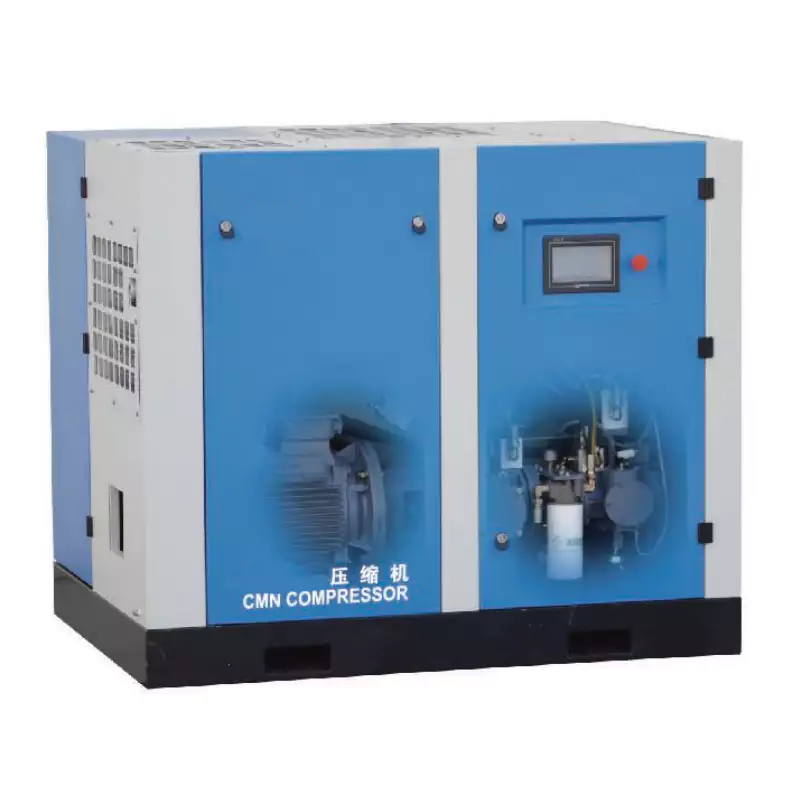
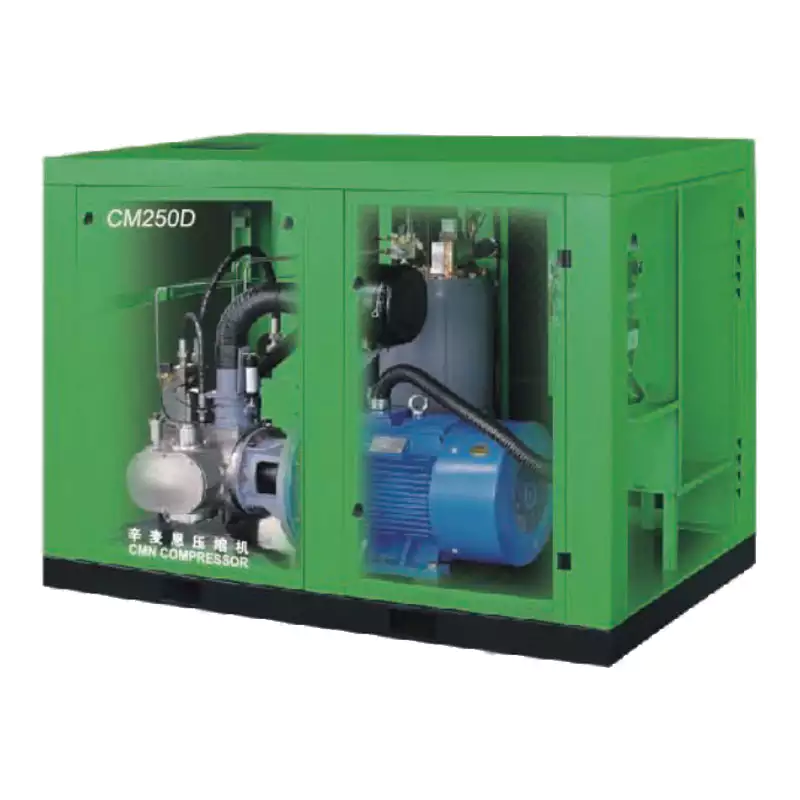
Water-lubricated oil-free technology + variable speed drive + ISO 8573-1 Class 0 third-party certification = the lowest total cost of ownership with the highest regulatory compliance confidence in the Australian market. IQ/OQ/PQ documentation templates supplied. Annual validation service contract available. Contact our team for a site-specific capacity and TCO analysis.
Frequently Asked Questions
Specify Your Oil-Free Screw Compressor System
Australia Oil Free Air Compressor Co., Ltd. supplies the complete range of oil-free rotary screw compressors — from compact 22 kW units to large 250 kW installations — with ISO 8573-1 Class 0 certification, IQ/OQ/PQ documentation, and annual validation services for Australian regulated industry customers.
Request a Compressor Specification & Quotation
Email: [email protected] | Contact Us | About Us