
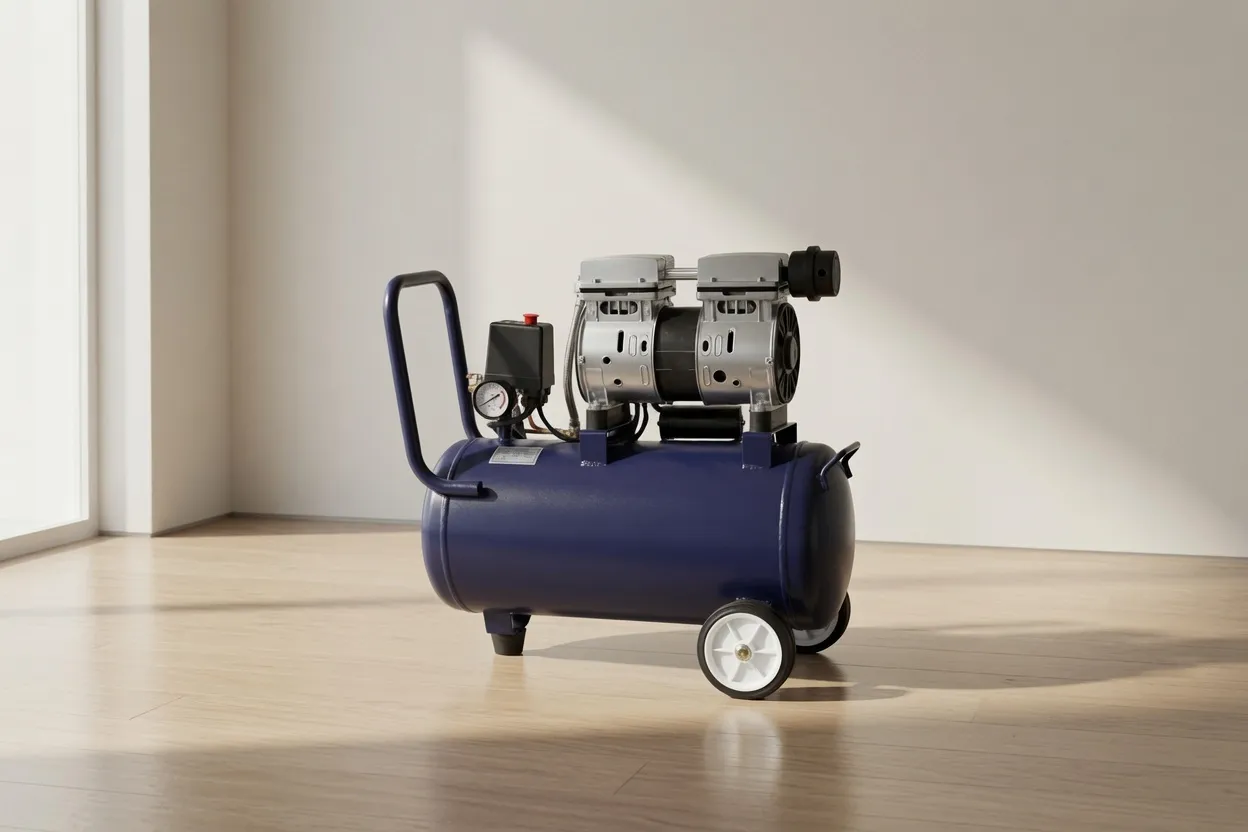
The Repair-or-Replace Decision Framework
Every maintenance manager faces the repair-or-replace decision at some point in a compressor’s life. The challenge is that neither extreme — “always repair until total failure” or “replace on any fault” — is economically rational. The correct answer requires comparing the forward cost of continued operation against the net cost of replacement, accounting for energy efficiency, reliability, production risk, and compressed air quality compliance.
For oil-free air compressors, this calculation has some characteristics that differ from oil-lubricated machines. The compression element — whether water-lubricated screw, dry oil-free screw, or oil-free scroll — has higher unit replacement cost than an equivalent oil-lubricated element. But the consequence of element failure is also more severe in oil-free applications, because oil-free compressors typically serve quality-critical processes (pharmaceutical, food, aerospace) where an unexpected production stop triggers regulatory and quality management consequences beyond just lost production time.
The five signals below are not individually definitive — a single signal warrants investigation, but the replacement recommendation strengthens with each additional signal present simultaneously.
Sign 1 — Energy Consumption Has Increased by More Than 15% for the Same Output
The most financially measurable sign of a compressor approaching end of economic life is rising energy consumption for the same amount of compressed air output. Specific power — the kilowatts consumed per cubic metre of compressed air delivered — should remain stable throughout the compressor’s service life if maintained correctly. When specific power rises significantly, it indicates internal wear that is causing the machine to work harder to achieve the same compression result.
For oil-free screw compressors, rising specific power usually indicates rotor profile wear (increasing internal recirculation between high and low pressure sides), bearing wear (increased mechanical friction), or seal degradation in water-lubricated designs. For oil-free scroll compressors, PTFE tip seal wear causes the same effect.
How to measure it: Record motor kW input (using a clamp power meter) and FAD output (using an in-line flow meter) simultaneously during a steady loaded period. Calculate kW/m³. Compare to the commissioning baseline. A 15% increase in specific power at the same operating pressure is significant; above 20% the economics of replacement become compelling, especially in high-usage operations where energy represents 70–80% of lifetime operating cost.
Sign 2 — Annual Repair Costs Exceed 25–30% of Replacement Capital Cost
The “50% rule” from capital equipment economics states that when the annual maintenance and repair cost of an asset exceeds 50% of its replacement cost, replacement is almost always more economical. For compressed air equipment, a more conservative 25–30% threshold is appropriate, because compressor repairs tend to escalate rather than stabilise — a bearing replacement is followed by a seal replacement, followed by an element rebuild.
Calculate annual repair cost correctly: include parts cost, labour cost, hire equipment used during repairs, and — critically — the production downtime cost during unplanned repairs. An oil-free compressor serving a pharmaceutical filling line may have a downtime cost of AUD $5,000–15,000 per hour of unplanned stoppage in production hours. Even one unplanned repair event per year can push the true annual maintenance cost well above the 25–30% threshold.
| Cost Category | Last 12 Months | Prior 12 Months | Trend |
|---|---|---|---|
| Scheduled parts (filters, belts, consumables) | $____ | $____ | __ |
| Unscheduled repair parts | $____ | $____ | __ |
| Labour (internal + contracted) | $____ | $____ | __ |
| Production downtime (hours × hourly value) | $____ | $____ | __ |
| Total annual maintenance cost | $____ | $____ | ↑ or ↓ |
If Total Annual Maintenance Cost ÷ Current Replacement Cost > 0.30 → replacement economics are strongly favourable.
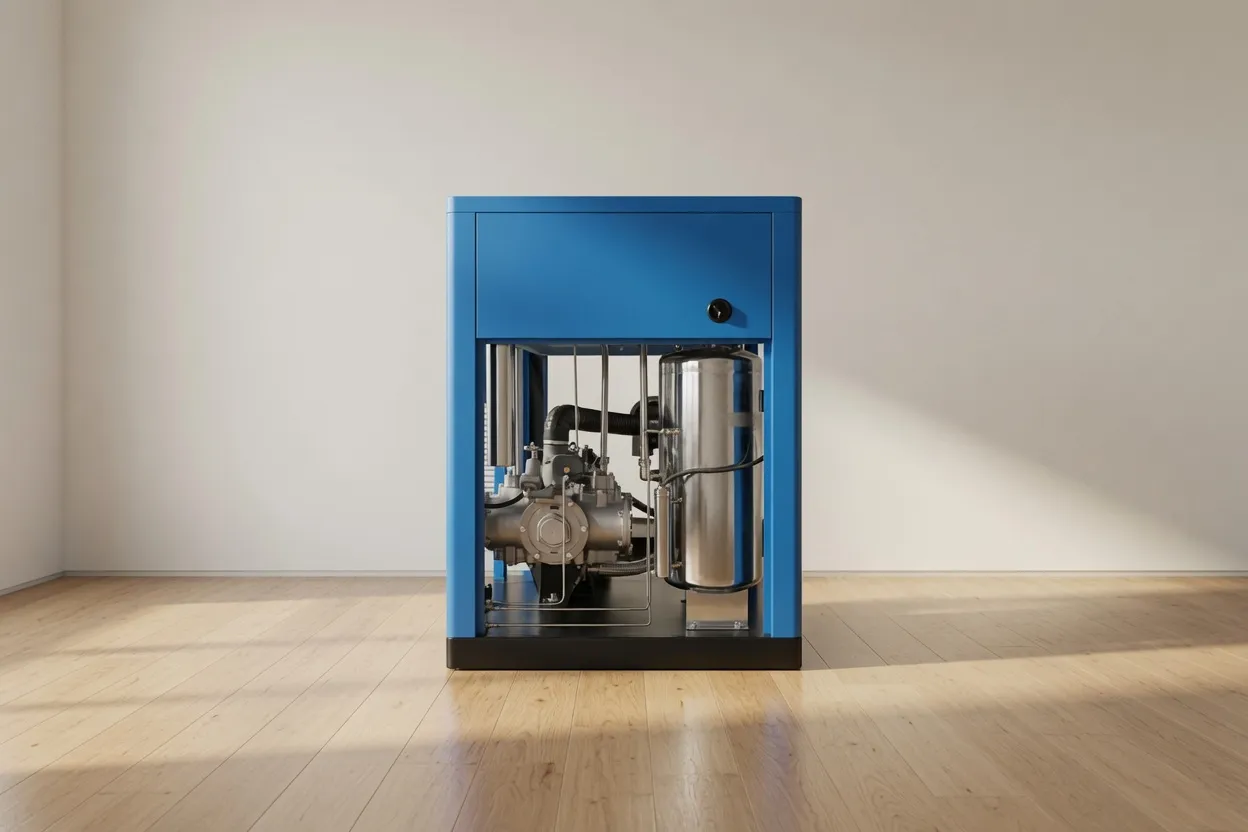
Sign 3 — The Compressor Can No Longer Meet Air Quality Specification
For oil-free compressors in regulated industries — pharmaceutical, food, aerospace, semiconductor — the ability to consistently deliver compressed air meeting the specified ISO 8573-1 quality class is non-negotiable. When a compressor consistently produces out-of-specification air quality results despite correct filter maintenance and dryer operation, the compressor itself has become the quality risk.
Signs that an aged oil-free compressor is compromising air quality include: increasing particle counts at the generation zone despite filter replacement (worn element generating internal particles); dew point creep despite desiccant replacement (reduced compression temperature causing more moisture carry-through); and — for dry oil-free screw compressors — micro-particulate from degrading PTFE rotor coatings appearing in downstream filters as a distinctive white/grey powder residue.
Particle counts at the generation zone rising between service intervals — white or grey powder in downstream filter elements — indicates PTFE rotor coating degradation in dry oil-free screw designs.
Dew point at the generation zone is warmer than expected for the dryer specification, despite recently regenerated desiccant — indicates reduced compression temperature, changing the moisture load presented to the dryer.
Air quality test results are consistently marginal — within 10–20% of the specification limit — rather than well within limit as they were at commissioning. The compressor is using up all available headroom in the specification.
In regulated environments, a compressor that has failed an air quality test — even once — requires a documented corrective action. If multiple corrective actions have been needed in a 12-month period, the compressor’s contribution to the quality management burden has become disproportionate. Replacement eliminates the quality risk rather than managing it.
Sign 4 — Output Capacity Has Dropped Below Demand, and Repair Cannot Restore It
A compressor operating with worn rotors, degraded PTFE coatings, or failing valves produces less CFM at rated pressure than its nameplate specification. This internal capacity loss is progressive and insidious — it often appears first as “the pressure sags when we run the big tools” before becoming a clear and persistent deficit. When element wear reduces actual output to the point where demand cannot be met even at full load, the compressor has become a production bottleneck.
The defining characteristic of wear-related capacity loss — as opposed to demand growth — is that measured FAD at the compressor outlet is below specification. If FAD measurement shows the compressor producing, say, 75% of nameplate output at rated pressure, element wear of approximately 25% has occurred. An element rebuild may restore output temporarily, but on an aged machine it typically restores 80–90% of nameplate rather than 100%, and the next rebuild interval arrives sooner than the first.
Sign 5 — Parts and Technical Support Are No Longer Available
Oil-free compressor manufacturers typically support their products with spare parts for 10–15 years after the model is discontinued. Once a compressor model reaches end-of-life support, several risks materialise simultaneously: genuine OEM parts become unavailable (forcing the use of unvalidated aftermarket alternatives); technical documentation for service and repair becomes harder to source; and manufacturer technical support — critical for complex faults — is withdrawn.
For oil-free compressors in regulated applications, using non-OEM parts raises compliance questions. A pharmaceutical facility using non-OEM seals or non-OEM filter elements in a compressed air system that is part of its GMP utility qualification must justify that substitution in its change control documentation. An OEM material declaration that confirms the part meets the specification of the original is difficult to obtain for non-genuine parts.
Additionally, compressor technology has advanced significantly over the past 10–15 years. A compressor installed before 2010 almost certainly lacks: variable speed drive control (20–35% energy saving); integrated IoT monitoring with remote diagnostics; modern low-friction bearing designs; and current refrigerant in air-cooled aftercoolers (older refrigerants are phased out). These are not trivial efficiency differences — they represent substantial operating cost advantages in a modern machine versus continued operation of an aged design.
| Feature | Pre-2010 Machine | Current Generation |
|---|---|---|
| Motor control | Fixed speed (DOL or star-delta) | Integrated VSD — 20–35% energy saving |
| Remote monitoring | Local display only | IoT / cloud monitoring, remote alerts |
| Efficiency rating | IE2 motor efficiency class | IE4 / PM motor efficiency class |
| Noise level | 70–78 dB(A) typical | 62–68 dB(A) typical |
| Warranty on new installation | N/A (aged machine) | 2–5 years full factory warranty |
Making the Business Case: Total Cost of Ownership Comparison
When presenting a compressor replacement recommendation to management, a total cost of ownership (TCO) comparison over a defined forward period (typically 5 or 10 years) is more persuasive than a simple capital cost comparison. The TCO model includes energy cost, maintenance cost, production downtime cost, and compliance risk cost — all areas where an aged compressor underperforms a modern replacement.
| Cost Element | Aged Machine (Year 12+) | New CM132DV VSD |
|---|---|---|
| Capital cost | $0 (sunk) | $[replacement cost] |
| 5-year energy cost (8hrs/day, 250 days, $0.25/kWh) | ~$115,000 | ~$75,000–85,000 |
| 5-year scheduled maintenance | ~$28,000 | ~$14,000 |
| 5-year unplanned repairs + downtime | ~$35,000+ | ~$5,000 |
| 5-year total operating cost | ~$178,000+ | ~$94,000 + capital |
Indicative figures for comparison purposes. Actual costs depend on specific operating conditions. Includes energy, maintenance and downtime only — excludes compliance and quality risk costs associated with aged equipment.
Replacement Planning: Timing and Transition
Once the replacement decision is made, the transition requires planning to minimise production risk. For compressed air systems without redundancy, scheduling the replacement during a planned maintenance shutdown or low-production period is critical. For facilities with n+1 compressor configurations, the replacement can often be undertaken without production interruption by running the remaining unit(s) at higher load during the changeover.
When specifying the replacement, review the original design brief: has demand grown since the original specification? Is the process now more quality-critical than when the original machine was selected? Is a VSD unit now appropriate where a fixed-speed was originally selected? A compressor replacement is the most economical moment to make system design improvements — the capital mobilisation cost is shared with the equipment cost, making incremental upgrades (larger receiver, VSD control, integrated monitoring) relatively affordable compared to retrofitting them to a continuing machine.
Contact [email protected] with your current compressor model, hours run, and a description of any of the five signs above for a replacement assessment and proposal.
CM132DV — Water-Lubricated Oil-Free VSD Screw Compressor
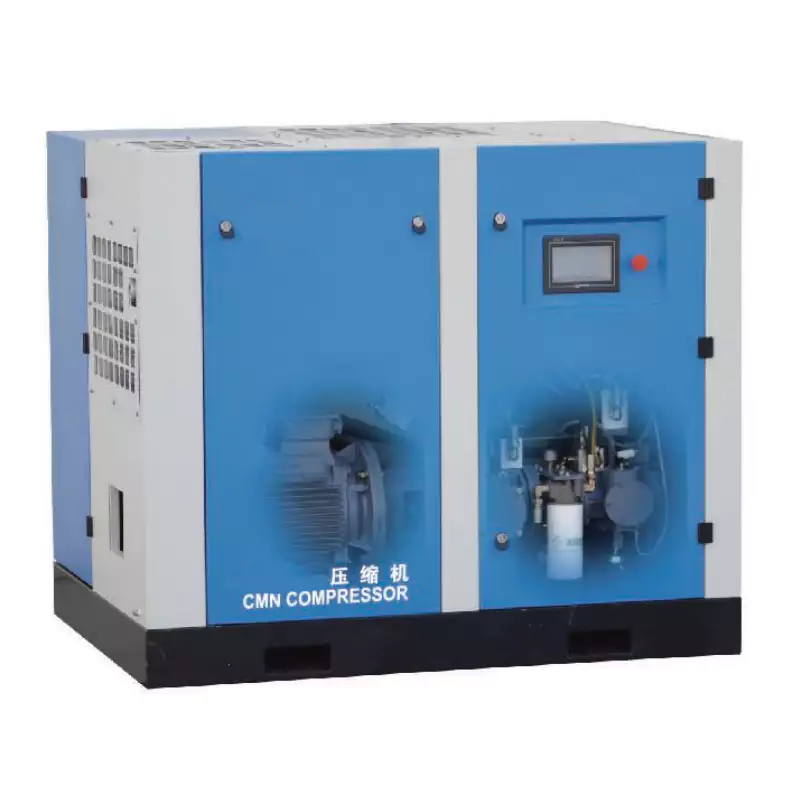
The CM132DV water-lubricated oil-free VSD screw compressor addresses all five replacement triggers simultaneously. Its water-lubricated design eliminates PTFE rotor wear (Sign 3 — quality risk), the VSD drive delivers 20–30% energy saving versus fixed-speed predecessors (Sign 1 — energy increase), and the modern design platform has a service life of 80,000+ hours between major overhauls (Sign 2 — repair cost escalation). The CM132DV comes with full OEM parts support, digital monitoring, and Australia-based technical service — eliminating the parts availability risk (Sign 5) that ageing machines increasingly present. Available with a performance guarantee and a 5-year extended warranty option for total cost certainty.
Frequently Asked Questions
Australia Oil Free Air Compressor Co., Ltd.
Charlton Industrial Area, Australia | [email protected]