
How Compressed Air Is Used in Winery Operations
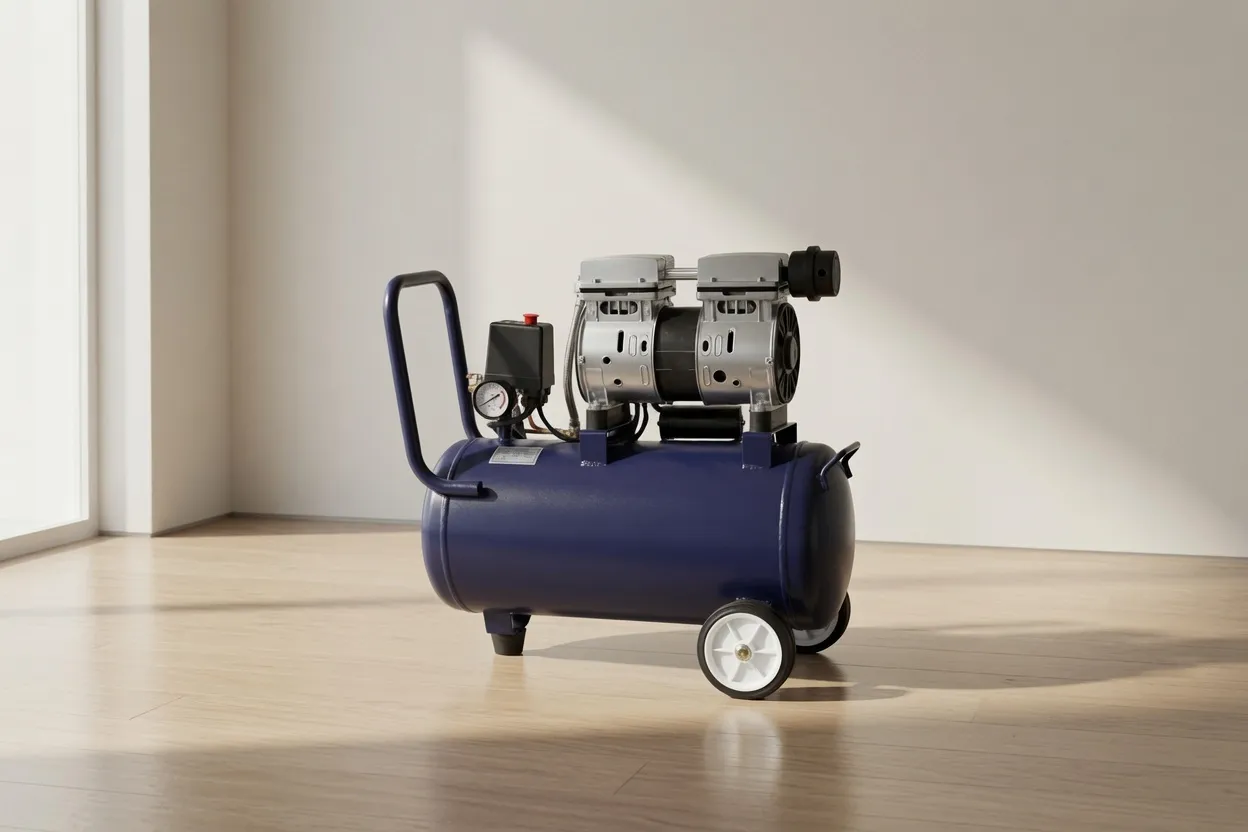
Compressed air is woven through nearly every stage of modern winery production — from the moment grapes arrive at the weighbridge to the moment the bottle is labelled and palletised for despatch. Understanding the full scope of compressed air use clarifies why the choice of compressor technology has direct consequences for wine quality.
- • Pneumatic grape destemmer and crusher controls
- • Airbag press inflation — direct wine contact during pressing
- • Grape sorting conveyor pneumatic drives
- • Receiving bin pneumatic tipping systems
- • Tank valve pneumatic actuation
- • Pump-over air controls for cap management
- • Barrel topping and nitrogen blanketing system controls
- • Temperature control valve actuation (glycol system)
- • Bottle rinser (water or inert gas purge)
- • Filling valve actuation — air near open bottle
- • Corking/capping machine pneumatics
- • Label applicator and foil spinner air drives
- • Conveyors, case erectors, and palletiser pneumatics
- • Laboratory analytical instrument supply air
- • Sample preparation air
- • Micro-oxygenation equipment controls
- • Tank blanketing system pressure testing
The most critical application — and the one with the highest contamination risk — is the airbag press. Modern membrane presses inflate an internal membrane using compressed air to press grape must against the outside of the press drum. The compressed air is separated from the juice by a flexible membrane, but at the pressures involved (typically 0.5–2.0 bar), any oil aerosol that diffuses through membrane seals or micro-perforations enters directly into the pressed juice. This is why pressing is the application that most strongly drives the adoption of oil-free compressors in serious wine production.
The Airbag Press: Why It Demands Oil-Free Air Above All Else
The pneumatic membrane press is arguably the single most important winemaking equipment advance of the past half century. Gentle pressing with precise pressure control — rather than the mechanical brutality of older screw presses — allows winemakers to extract juice at the exact level of phenolic and aromatic intensity they want for each wine style. Premium wineries invest $150,000–$500,000+ in modern membrane presses. Contaminating their performance with oil-lubricated compressor air is not a calculated risk any serious winery should accept.
→
→
→
→
Organic & Biodynamic Certification Requirements
Australia has a significant organic and biodynamic wine sector, with certified producers supplying premium domestic and export markets (particularly EU, UK, and Japan) that command meaningful price premiums for certified product. Maintaining certification requires attention to every input into the wine production process — including the compressed air used in processing equipment.
Export Market Food Safety Requirements
Australia’s wine export markets — particularly China, the United States, United Kingdom, and the European Union — impose food safety and quality requirements that go beyond domestic production standards in some respects. Export-focused wineries face compressed air quality scrutiny through two channels: regulatory import requirements and retailer or importer quality audits.
| Export Market | Compressed Air Relevance | Implication for Wineries |
|---|---|---|
| European Union | EU Regulation (EC) 178/2002 food law requires traceability and contamination control across the food chain including processing utilities | Oil-free for product contact; documented maintenance; contamination control records |
| United Kingdom | UK food law (retained EU law) plus BRC Global Standard for Food Safety requirements for major UK retail buyers | BRC Standard requires compressed air quality control programs with documented evidence |
| United States | FDA FSMA requirements apply to winery production for US market; TTB (Alcohol and Tobacco Tax and Trade Bureau) may assess GMP standards | FSMA preventive controls apply to product-contact utilities including compressed air |
| China | China’s GB/T food safety standards and CNAS accreditation requirements for food producers are increasingly assessed by major Chinese importers | Premium Chinese market importers conducting facility audits expect oil-free compressed air as standard |
The commercial consequence of failing an export market quality audit — losing a distribution arrangement, being delisted by an importer, or having a shipment rejected at port — typically far exceeds the cost differential between oil-free and oil-lubricated compressed air systems over the life of the equipment.
Compressor Sizing for Winery Operations
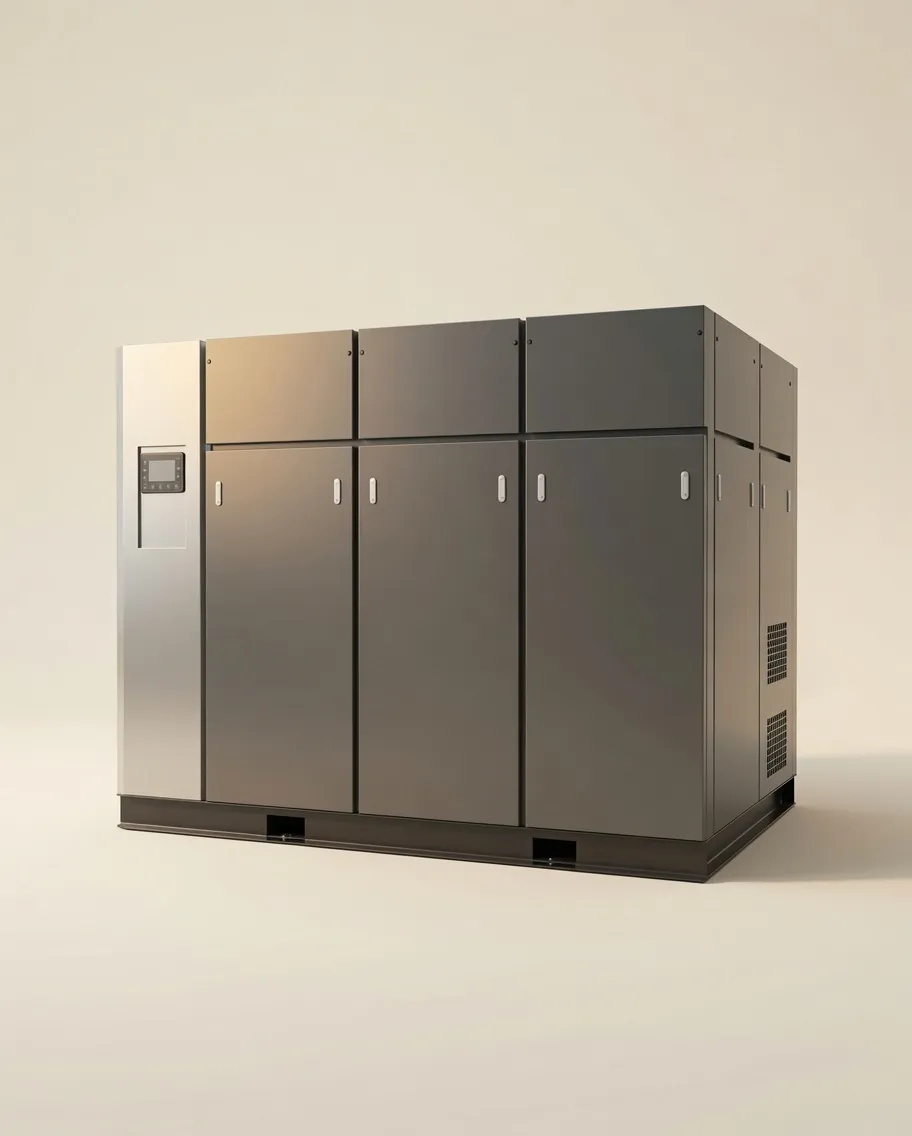
Winery compressed air demand is highly seasonal — crush season (typically February to May in Australia) imposes dramatically higher demand than the rest of the year. A compressor system must be sized for crush season peak demand while remaining energy-efficient during the longer off-peak period.
| Winery Size (tonnes crush) | Crush Season Demand | Working Pressure | Suggested Compressor |
|---|---|---|---|
| < 100 tonnes | 100–200 L/min | 7–8 bar | 7–11 kW oil-free |
| 100–500 tonnes | 200–500 L/min | 7–8 bar | 15–30 kW oil-free |
| 500–2,000 tonnes | 500–1,200 L/min | 7–8 bar | 30–55 kW oil-free |
| 2,000+ tonnes | 1,200–3,000+ L/min | 7–10 bar | 55–132+ kW, VSD |
The airbag press is typically the single largest compressed air consumer during crush — a medium-sized 5,000 litre press requires approximately 200–400 L/min during inflation and pressing cycles. Larger automated wineries running multiple presses simultaneously must size the compressor system accordingly, typically with a VSD to manage the varying demand between press cycles.
For wineries with highly variable seasonal demand, a VSD (variable speed drive) oil-free compressor provides the most efficient solution — delivering rated capacity during crush and reducing to minimal output during cellar operations and bottling. Energy savings of 30–50% versus fixed-speed operation over the full year are typical for this demand profile.
Moisture Control in Winery Compressed Air
Australian wine regions — particularly in South Australia, Victoria’s Yarra Valley, and Western Australia’s Margaret River — experience high ambient humidity during harvest season that significantly increases the moisture content of compressed air. Without adequate drying, this moisture causes:
Valve bores, actuator cylinders, and press control components develop rust that causes stiction, leaks, and premature failure
Wet pipelines develop biofilm that can deliver microbial contamination directly into wine during product-contact applications
Moisture-laden press air that contacts juice during pressing dilutes the must and can affect fermentation and final wine composition
A refrigeration dryer delivering a pressure dew point of +3°C is the minimum recommended for winery compressed air. Harvest-season ambient conditions in warmer wine regions can challenge underpowered or poorly maintained refrigeration dryers — specifying a dryer rated for elevated inlet temperatures (up to 45°C ambient) is important for Australian cellar applications.
Water-injected oil-free air compressors produce cooler discharge air than dry-screw technology — typically 10–15°C lower — which reduces the moisture load entering the dryer and improves drying efficiency in hot harvest conditions. This is a meaningful operational advantage for Australian wineries running compressors during February and March.
BRC Global Standard for Food Safety: Winery Compliance
Wineries supplying to major Australian and international retail chains — particularly for private label wine programs — may be required to achieve BRC Global Standard for Food Safety certification. BRC Issue 9 includes specific compressed air requirements that winery quality and compliance managers must address.
BRC Clause 4.7.3 (Air and other gases) states that compressed air used in product contact applications must be of appropriate quality and purity. BRC auditors assess this requirement by reviewing the compressor type (oil-free preferred), filtration installed, maintenance records, and compressed air quality testing records. A documented compressed air quality programme covering specification, monitoring, and maintenance is required to demonstrate compliance.
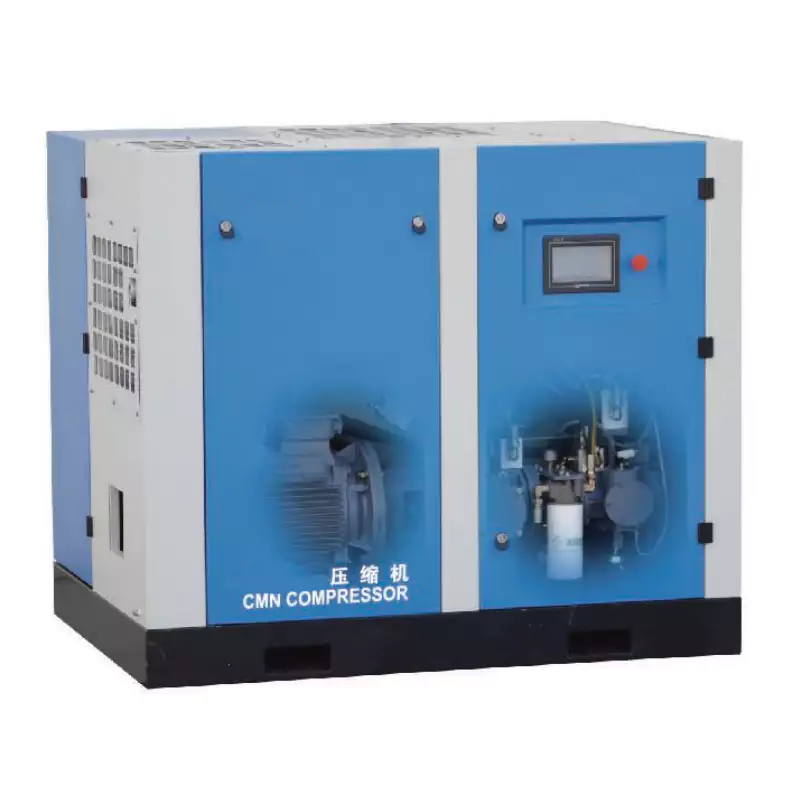
CM132DV Water-Lubricated Oil-Free Screw Compressor with VSD
The CM132DV combines water-lubricated oil-free technology — delivering the coolest discharge temperatures of any oil-free technology — with a variable speed drive that matches output to the dramatically variable demand profile of a winery across crush season and the rest of the year. Certified ISO Class 0 oil content protects your wine, your membranes, and your certifications.
- ✓ ISO Class 0 certified — press air never contacts wine with mineral oil risk
- ✓ VSD matches crush season peak demand and off-season efficiency
- ✓ Cooler discharge air — reduces dryer load in hot harvest conditions
- ✓ Supports organic, biodynamic, and BRC certification compliance
- ✓ No oil changes, no oil disposal — simplified maintenance for small winery teams
Frequently Asked Questions
Does press air directly contact the wine in a membrane press?
Will using an oil-free compressor affect my organic or biodynamic certification?
What compressed air pressure do most Australian winery presses require?
How should I size the air receiver tank for vintage operations?
Can I use the same compressor for press air and for pneumatic tools in the cellar?
Protect Your Vintage with Oil-Free Compressed Air
Australia Oil Free Air Compressor Co., Ltd. supplies oil-free compressed air systems to wineries, breweries, and food producers across Australia. We can specify the right system for your crush season demand, certifications, and export market requirements.
📧 [email protected] | Charlton Industrial Area, Australia