
Understanding Pressure Drop: Why Every Bar Matters
Pressure drop is the reduction in air compressor PSI between the point of generation (compressor outlet) and the point of use (tool connection). It is caused by friction losses in pipework, pressure drop across treatment equipment (filters, dryers), resistance at fittings and valves, and velocity-related losses in undersized pipe sections. Unlike an air leak — which is visible (or audible) — pressure drop is invisible, which is why it is frequently left unaddressed even as it accumulates over years of system modifications and equipment additions.
The energy penalty of pressure drop is significant. A well-established rule of thumb in compressed air engineering is that each 1 bar of additional discharge pressure requires approximately 7% additional compressor energy. When a system has 1.5 bar of accumulated pressure drop between the compressor and the tools, the compressor must be set to 1.5 bar above the actual tool requirement — consuming 10–11% more energy than a system with negligible pressure drop. For a 37 kW compressor operating 4,000 hours per year at AUD $0.25/kWh, this represents approximately AUD $1,500–2,000 of unnecessary energy cost per year from pressure drop alone.
The industry standard maximum allowable pressure drop from compressor outlet to point of use is 0.5 bar total for well-designed systems. Many industrial systems in Australia have accumulated 1.0–2.0 bar of total pressure drop through years of incremental modifications, undersized additions, and neglected filter maintenance.
How to Measure Pressure Drop Systematically
Systematic pressure drop measurement requires calibrated gauges or pressure transducers at multiple points in the system, measured simultaneously during a representative production period. The principle is simple: record pressure at the inlet and outlet of each component or pipe section; the difference is the pressure drop across that section.
Outlet
P₁
Aftercooler
P₂
Outlet
P₃
Dryer
P₄
Filters
P₅
Header
P₆
Outlet
P₇
of Use
P₈
Record all pressures simultaneously during a representative production period at 70–80% of typical demand. Subtract each reading from the previous to get pressure drop across each section.
| Component / Section | Maximum Allowable ΔP | Action if Exceeded |
|---|---|---|
| Aftercooler and moisture separator | 0.05–0.1 bar | Clean aftercooler fins; check separator internals |
| Refrigerated dryer | 0.1–0.2 bar | Service dryer; check heat exchanger fouling; verify refrigerant charge |
| Coalescing filter (new element) | 0.05–0.1 bar | Replace element if ΔP exceeds 0.2 bar (end-of-service indicator) |
| Particulate filter (new element) | 0.05–0.08 bar | Replace element; check for incorrect element grade specified |
| Carbon adsorber (new media) | 0.05–0.1 bar | Replace carbon media; check for media compaction (channelling) |
| Main distribution header (well-sized) | 0.05–0.1 bar | If exceeded: upsize pipework or convert to ring main layout |
| Branch piping to point of use | 0.1 bar | Check pipe bore, length, and number of fittings; upsize or reroute |
The 7 Causes of Pressure Drop: Diagnosis and Fix
Pressure Drop Reduction: Priority Sequence for Maximum ROI
When reducing pressure drop in an existing system, address causes in the following sequence to achieve the greatest improvement per dollar spent:
Pressure Drop Assessment from Australia Oil Free Air Compressor
Australia Oil Free Air Compressor Co., Ltd. provides compressed air system pressure drop assessments as part of our system optimisation service. Our team measures pressure at all critical points in your system during a representative production period, identifies the largest contributors to system pressure drop, and provides a prioritised action plan with estimated energy savings for each recommendation.
For facilities where significant pressure drop has accumulated over years of system expansion, a pressure drop assessment typically identifies 0.5–1.5 bar of recoverable pressure drop — translating to 3–10% compressor energy reduction achievable through low-cost measures (leak repair, filter replacement, coupling upgrades) before any capital works are needed.
Contact us at [email protected] to arrange a pressure drop assessment at your facility.
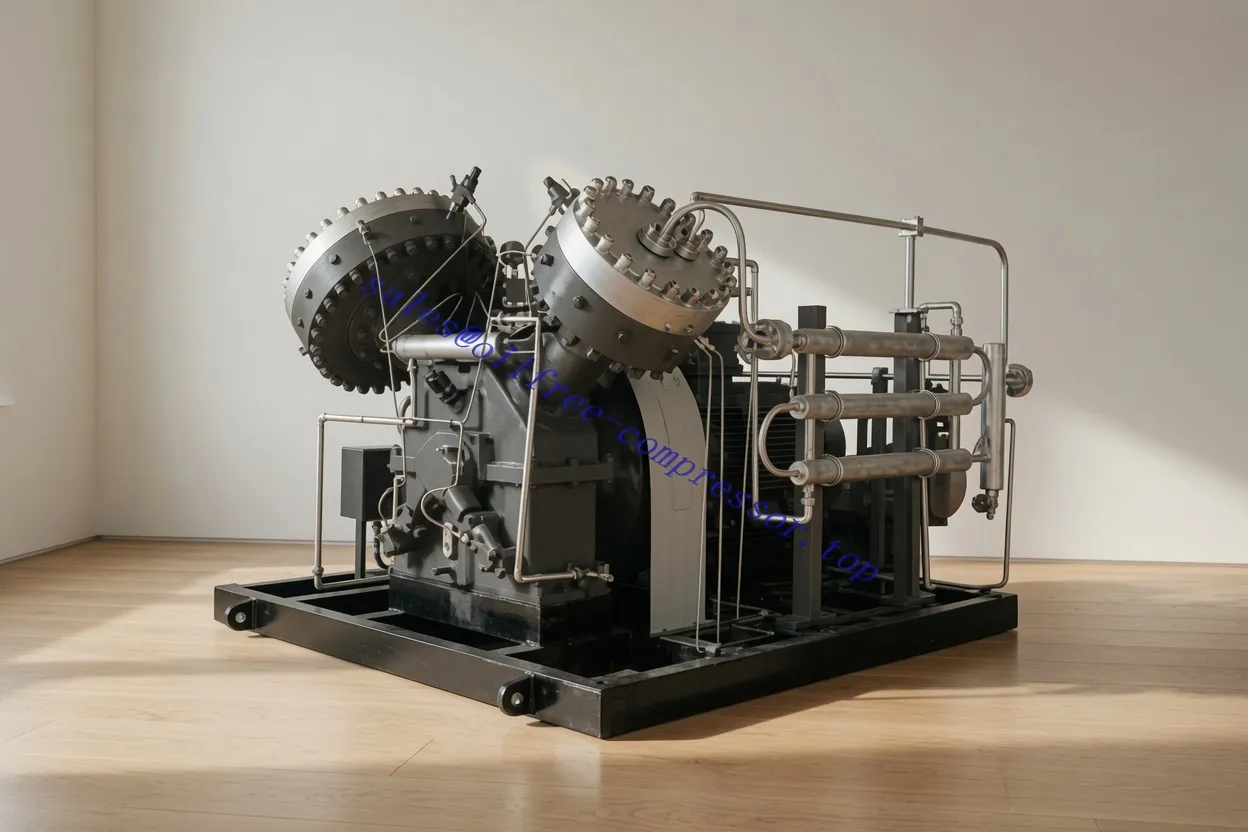
CM242GPV — Medium-Pressure Oil-Free Screw Compressor: Higher Setpoint, Same Energy
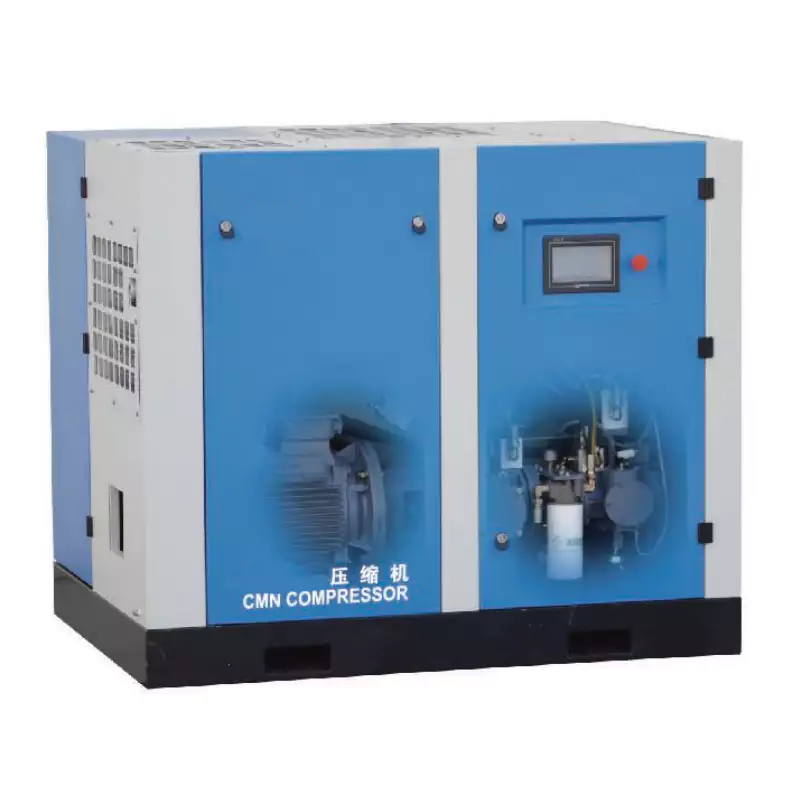
For facilities where the root cause of pressure drop is fundamentally a capacity or pressure rating issue — where even after eliminating leaks, replacing filters, and optimising pipework, the compressor cannot supply adequate pressure at the tools — the CM242GPV medium-pressure oil-free screw compressor provides 16 bar rated discharge pressure. This additional pressure margin provides the compressor setpoint headroom to absorb reasonable system pressure drop while still delivering adequate pressure at the tool. The CM242GPV’s oil-free design maintains full quality compliance for all process-contact compressed air applications, and its variable pressure output (adjustable to application requirements) ensures no energy is wasted generating pressure above what is actually needed.
Frequently Asked Questions
Australia Oil Free Air Compressor Co., Ltd.
Charlton Industrial Area, Australia | [email protected]