
The Regulatory Convergence Driving Oil-Free Adoption
Until recently, the primary driver for oil-free compressor adoption in Australian industry was product quality — food safety certification, pharmaceutical GMP requirements, and electronics manufacturing cleanliness standards. These remain important, but they apply to specific industry sectors. What has changed in 2025–26 is the emergence of environmental regulations that create compliance obligations for oil-free compressed air across almost all industrial sectors, regardless of what the compressed air is used for.
Three regulatory trends are converging to make oil-injected compressors increasingly difficult to operate in a fully compliant manner. First, strengthened trade waste regulations in multiple Australian states have tightened oil concentration limits in industrial wastewater discharge, creating compliance obligations for facilities whose compressed air condensate was previously discharged without treatment. Second, the expansion of Australia’s mandatory climate disclosure requirements means more facilities must account for and manage greenhouse gas emissions — including the indirect emissions from lubricant consumption and the direct efficiency losses from unoptimised compressor systems. Third, product stewardship obligations for petroleum-based lubricants are increasing the administrative and cost burden of proper lubricant disposal.
The combined effect is that the total cost of regulatory compliance for oil-injected compressed air systems is increasing — while the regulatory burden of oil-free systems, which produce no oil waste stream, is comparatively stable. For facilities reviewing compressed air strategy in 2026, this regulatory trend is a significant input to the total cost of ownership calculation.
Trade Waste Regulations: State-by-State Compressed Air Condensate Requirements
Compressed air condensate from oil-injected compressors is classified as trade waste in all Australian states and territories. Discharge to stormwater is prohibited under all state EPA regulations. Discharge to the sewer requires a trade waste agreement with the relevant water authority, and those agreements specify maximum oil and grease concentration limits. In 2025–26, several states have tightened these limits:
| State / Authority | Oil & Grease Limit (Sewer) | Untreated Condensate Level | Compliance Requirement |
|---|---|---|---|
| NSW (Sydney Water, Hunter Water) | 50 mg/L | 50–200 mg/L | Oil-water separator required for most facilities |
| Victoria (Melbourne Water, South East Water) | 50 mg/L | 50–200 mg/L | Oil-water separator + periodic sampling required |
| Queensland (Urban Utilities, Unitywater) | 30 mg/L | 50–200 mg/L | Tighter limit — treatment essential; regular testing |
| South Australia (SA Water) | 50 mg/L | 50–200 mg/L | Trade waste agreement; oil-water separator standard |
| Western Australia (Water Corporation) | 100 mg/L | 50–200 mg/L | Higher limit but condensate still near or above limit |
| Oil-Free Compressor Condensate | n/a | <5 mg/L | Standard trade waste agreement — no treatment required |
For most oil-injected compressors, untreated condensate contains 50–200 mg/L of oil — exceeding the sewer discharge limit in every Australian jurisdiction. Treatment infrastructure (oil-water separator) has a capital cost of AUD $3,000–8,000 and requires maintenance and periodic analytical testing to demonstrate compliance. An oil-free compressor eliminates this entire compliance obligation.
The Safeguard Mechanism: Compressor Efficiency Under Carbon Budget Pressure
Australia’s Safeguard Mechanism, reformed in 2024, imposes declining emissions baselines on facilities emitting more than 100,000 tonnes CO₂e annually. As of 2026, the mechanism covers approximately 215 facilities across mining, manufacturing, oil and gas, and waste sectors — with baselines declining at 4.9% per year until 2030.
For Safeguard-covered facilities, every tonne of CO₂e matters financially. Australian Carbon Credit Units (ACCUs) required to cover baseline exceedances were trading at AUD $35–55 per tonne through 2025. At this price, a 37 kW compressor running at 70% load for 5,000 hours per year, consuming approximately 65,000 kWh, generates approximately 46 tonnes CO₂e of Scope 2 emissions annually (at the Queensland grid factor) — a carbon liability of approximately AUD $1,600–2,500 per year per compressor at current ACCU prices. A VSD upgrade that reduces energy consumption by 25% directly reduces this liability by AUD $400–625 per compressor per year, in addition to the electricity cost saving.
For Safeguard-covered facilities, the compressed air system is a meaningful energy reduction target because it is large, well-understood, and amenable to specific improvement actions with quantifiable results. An oil-free VSD compressor upgrade, combined with a leak management programme and pressure optimisation, can typically reduce compressed air Scope 2 emissions by 25–40% — contributing meaningfully to a facility’s declining baseline management strategy without process changes or production constraints.
Mandatory Climate Disclosure: ASIC Requirements Effective 2026
Australia’s mandatory climate-related financial disclosure regime, phased in from 2024–25, requires large Australian entities to disclose climate-related risks, opportunities, and transition plans under the Australian Sustainability Reporting Standards (ASRS). By 2026, Group 1 entities (large listed companies and financial institutions) are in their second year of mandatory reporting, and Group 2 entities (large unlisted companies) are beginning their first year of full disclosure obligations.
For manufacturing companies within the disclosure scope, the compressed air system is a reportable energy consumer that falls under Scope 2 emissions reporting. Facilities that cannot demonstrate a credible emissions reduction trajectory — including planned energy efficiency improvements in significant energy users like compressed air — face scrutiny in their climate transition plan disclosures.
The compressed air system specifically becomes relevant to climate disclosure in two ways. First, as a significant energy consumer, it should be identified and addressed in any credible energy efficiency roadmap presented in a climate disclosure. Second, if the facility uses oil-injected compressors and purchases petroleum lubricants in significant volumes, these may be relevant to Scope 3 Category 1 (purchased goods and services) emissions reporting.
- → Listed companies with >$500M assets or >$500M revenue
- → Large financial institutions
- → Full ASRS disclosure including Scope 1, 2, 3
- → Third-party assurance required from 2026–27
- → Companies with >$200M assets or >$200M revenue
- → Large unlisted manufacturers in significant sectors
- → Scope 1 and 2 mandatory; Scope 3 phased
- → Transition plan disclosure from 2026–27
Product Stewardship for Petroleum Lubricants: Growing Compliance Burden
Australia’s Product Stewardship Act 2011 provides the framework for mandatory and voluntary product stewardship schemes for categories of products with significant end-of-life environmental impact. Used oil — including compressor oil — has been subject to the Rerefined Used Oil Products (RUOP) scheme and broader used oil collection infrastructure for many years. In 2025–26, several developments are increasing the compliance burden for industrial lubricant users:
Victoria’s EPA has updated its scheduled waste framework, tightening the classification thresholds for “used oil” as a prescribed industrial waste (PIW). NSW EPA’s Protection of the Environment Operations Act similarly requires proper management of used oil as a controlled substance. Businesses generating more than 200 litres per year of used oil (easily reached by a single 37 kW oil-injected compressor changing oil twice yearly) face formal scheduled waste obligations including licensed transporter requirements and waste tracking.
Under current and emerging state EPA requirements, facilities generating scheduled waste (including used compressor oil) must maintain chain of custody documentation — waste tracking documents confirming that waste was collected by a licensed transporter and delivered to a licensed facility. This documentation must be retained for a minimum of 5 years and is subject to EPA audit. The administrative burden of maintaining this documentation for regular small oil changes is often underestimated by facilities with multiple compressors.
The oil separator element in a rotary screw compressor is replaced annually and is impregnated with compressor oil at the time of removal — typically classifying it as scheduled waste or prescribed industrial waste in most states. The oil-saturated element cannot go to general waste; it requires collection by a licensed waste contractor. This is a recurring annual cost and compliance obligation that oil-free compressor operators simply do not face.
Supply Chain Sustainability Requirements: Customer-Driven Regulation
Beyond government regulation, the most rapidly expanding sustainability compliance obligation for Australian manufacturers in 2026 comes from their customers. Major retailers, global manufacturers, and government procurement agencies are embedding environmental requirements in supplier qualification criteria — and compressed air quality and sustainability is increasingly part of these requirements.
All three major Australian grocery retailers require food suppliers to hold BRC Issue 9 or equivalent certification — which includes compressed air quality requirements under Clause 4.7.5. Beyond certification, retailer sustainability audits in 2025–26 are increasingly including direct questions about energy management, waste streams, and environmental compliance. Facilities with documented oil-free compressor systems and annual air quality test certificates are better positioned in these audits than facilities with oil-injected systems and informal treatment arrangements.
Australian automotive component suppliers and aerospace manufacturers supplying Tier 1 customers increasingly face CDP Supply Chain programme requirements, which include detailed questions about Scope 1, 2, and 3 emissions and environmental management practices. Oil-injected compressed air systems generate Scope 3 upstream emissions (lubricant supply chain) and Scope 1 waste disposal emissions that oil-free systems do not — creating a measurable supply chain emissions disadvantage for oil-injected operations when customers are calculating their Scope 3 inventory.
The Australian Government’s Supplier Code of Conduct and equivalent state government procurement frameworks increasingly include environmental performance criteria for significant government suppliers. The Department of Finance’s buy.australia.gov.au supplier qualification process includes environmental compliance questions. Defence materiel suppliers face the CASG (Capability Acquisition and Sustainment Group) environmental requirements. For manufacturers supplying government, demonstrating environmental management of utility systems — including compressed air — is part of the compliance package.
Compliance Risk Summary: Oil-Injected vs Oil-Free in 2026
| Regulatory Area | Oil-Injected Compressor | Oil-Free Compressor |
|---|---|---|
| Trade Waste (Condensate) | ⚠️ Treatment required; periodic testing | ✅ Standard agreement, no treatment |
| Scheduled Waste (Used Oil) | ⚠️ Licensed disposal, waste tracking docs | ✅ No oil waste generated |
| Scheduled Waste (Oil Separator) | ⚠️ Annual licensed disposal required | ✅ No oil separator — not applicable |
| NGERS / Safeguard Mechanism | 🟡 Higher Scope 2; lubricant Scope 3 | ✅ Lower Scope 2 (VSD); no lubricant Scope 3 |
| Mandatory Climate Disclosure | 🟡 Higher energy intensity to explain | ✅ Demonstrable efficiency improvement |
| Food / Pharma Certification (BRC, SQF, GMP) | ⚠️ Requires validation evidence; audit risk | ✅ Simpler audit trail; Class 0 designation |
| Customer Sustainability Audits | 🟡 Oil waste stream to explain and document | ✅ No oil waste; clean ESG narrative |
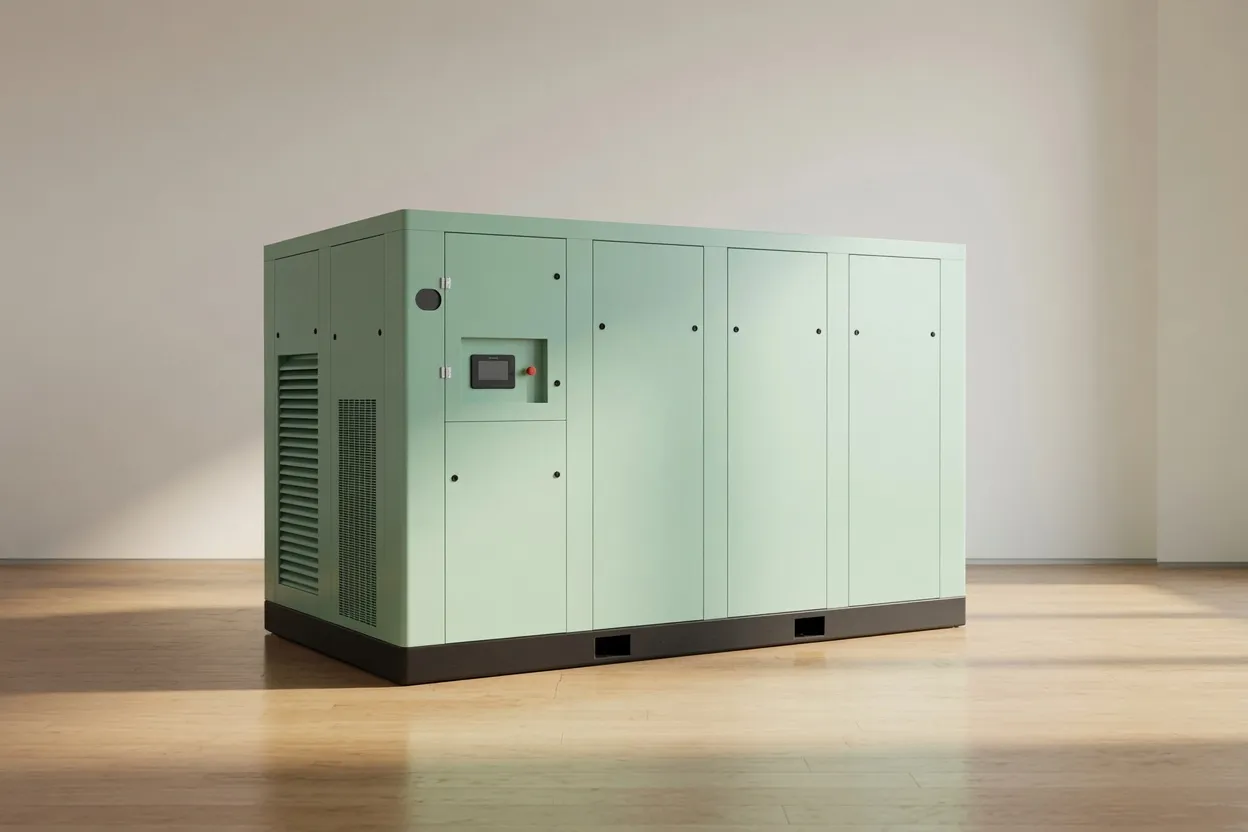
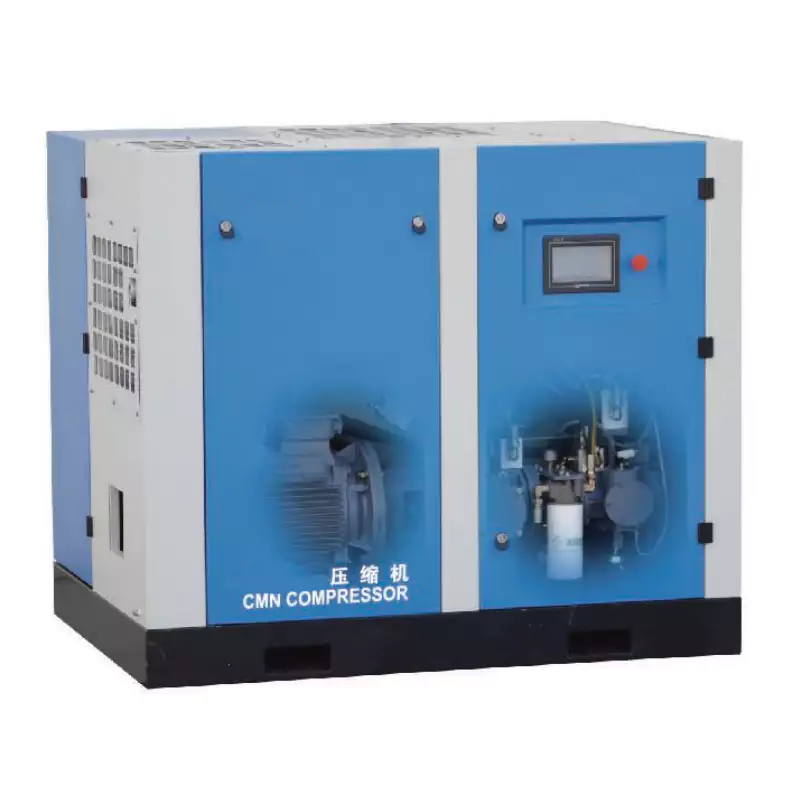
The CM132DV eliminates every oil-related regulatory compliance obligation from your compressed air system: no trade waste treatment for condensate, no scheduled waste tracking for used oil or oil separator elements, no lubricant Scope 3 emissions to report, and ISO Class 0 air that satisfies the most demanding food, pharmaceutical, and industrial quality audit. The permanent magnet VSD motor delivers the best specific power across the load range, directly reducing Scope 2 emissions for NGERS and climate disclosure reporting. For Australian manufacturers facing the convergent regulatory pressures of 2026, the CM132DV represents the simplest path to a fully compliant compressed air system.
Frequently Asked Questions
Is my facility actually at risk of EPA action for compressor condensate discharge?
Do small facilities below the Safeguard Mechanism threshold need to worry about compressor emissions?
How do I document that my oil-free compressor meets environmental regulations?
What state rebates or incentives are available for upgrading to oil-free compressors in 2026?
Can switching to oil-free compressors help us achieve ISO 14001 certification?
Australia Oil Free Air Compressor Co., Ltd. helps Australian manufacturers understand and meet their environmental compliance obligations through oil-free compressor systems with complete documentation support. Charlton Industrial Area.