
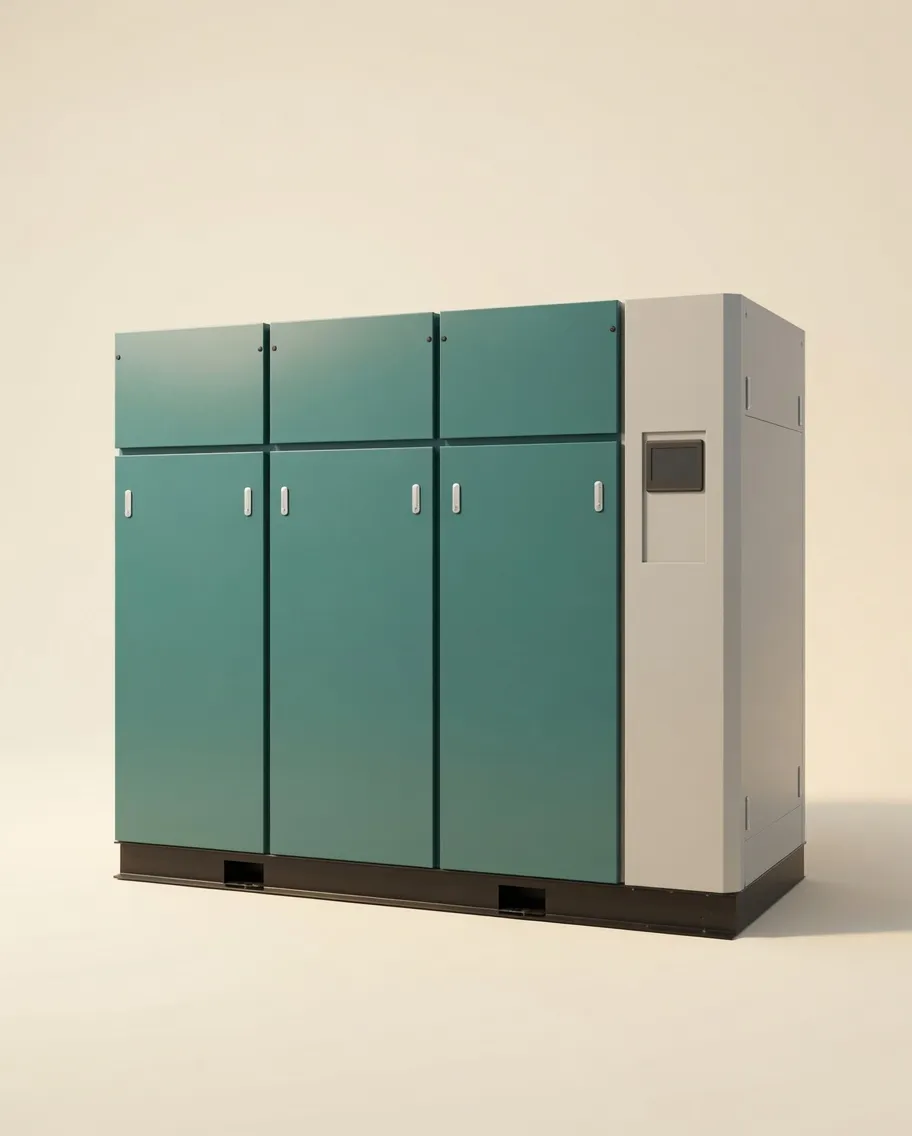
Why Compressed Air Must Be in Your HACCP Plan
Hazard Analysis and Critical Control Points (HACCP) is the internationally recognised systematic approach to identifying, evaluating, and controlling food safety hazards. In Australia, HACCP principles underpin the food safety management requirements of Standard 3.2.1 of the Food Standards Code, and HACCP certification is required by major retailers and food service customers. Under FSMA in the US (which applies to Australian food exporters to the US market), hazard analysis is mandatory for food facilities.
Compressed air in food production facilities can contact food directly (blowing, conveying, sparging), contact food-contact surfaces (cleaning, actuating, sealing), or be used in close proximity to open food products (general pneumatic operations near open lines). Any of these contact scenarios introduces three categories of food safety hazard: chemical (oil contamination), physical (particles, water droplets), and biological (microorganisms in moisture). All three must be addressed in the HACCP hazard analysis.
The most common HACCP gap for compressed air is simply omission — many food safety plans do not include a compressed air hazard analysis at all, treating air as a background utility rather than a food safety input. Third-party auditors — including SQF, BRC, FSSC 22000, and Freshcare auditors — consistently identify compressed air as a source of non-conformances during food safety audits. Having a documented, comprehensive compressed air hazard analysis with implemented controls and ongoing monitoring is a straightforward way to close this gap.
The Three Compressed Air Hazard Categories in Food Production
Conducting the Compressed Air Hazard Analysis: A Step-by-Step Approach
A HACCP hazard analysis for compressed air follows the same structured approach as any other process input. The analysis must cover all uses of compressed air in the facility, classify each by contact level, evaluate the hazards at each use point, and determine the appropriate control measures.
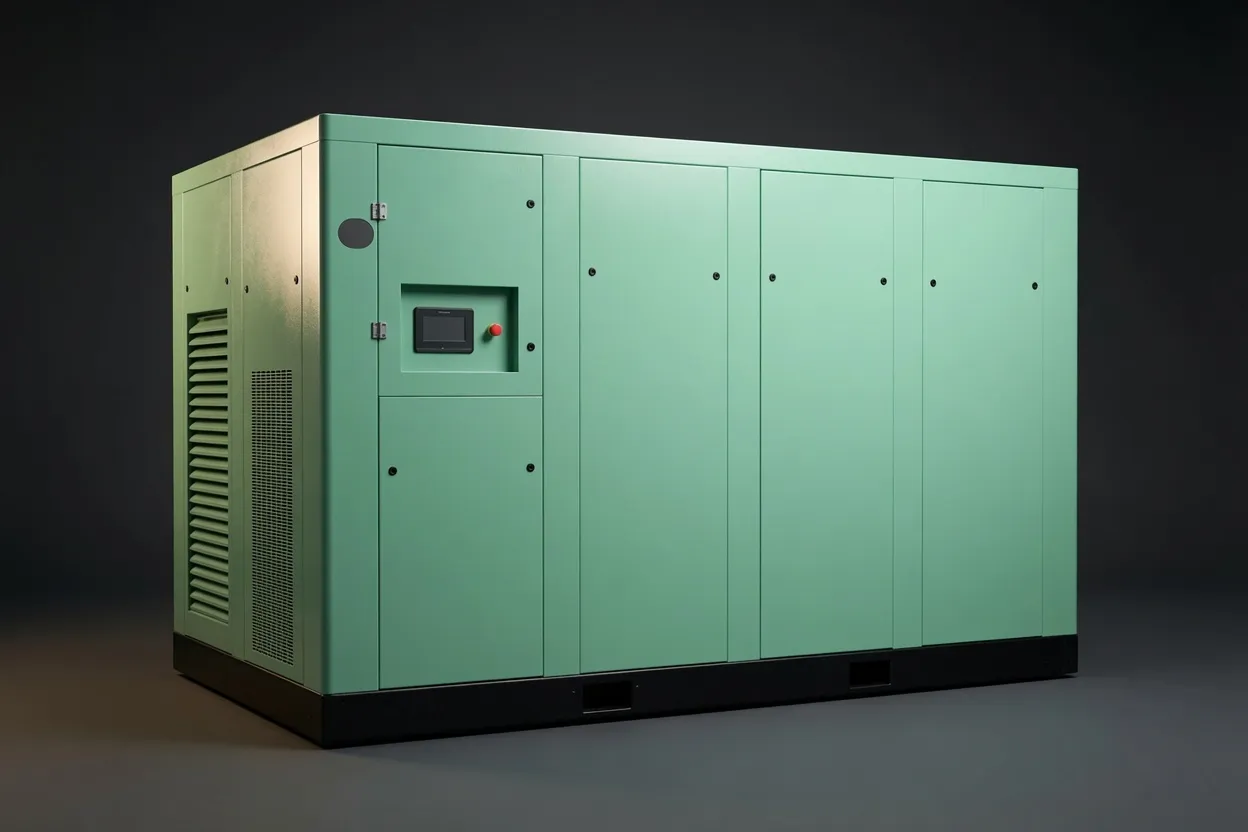
HACCP Control Measures for Compressed Air: By Contact Category
The following table summarises the control measures, critical limits, monitoring requirements, and corrective actions for compressed air hazards by contact category — structured as a HACCP control table suitable for inclusion in a food safety plan:
| Contact Category | Hazard | Control Measure | Critical Limit | Monitoring | Corrective Action |
|---|---|---|---|---|---|
| A — Direct Food Contact | Chemical: Oil | Oil-free compressor (hazard elimination) + activated carbon adsorber (atmospheric vapour) | ISO 8573-1 Class 0 oil (<0.001 mg/m³ total) | Annual oil testing (ISO 8573-2 method); carbon element change records | Cease production; identify root cause; test and requalify; product impact assessment |
| Physical: Particles/Water | Particulate filter + coalescing filter + desiccant dryer | ISO 8573-1 Class 1 particles; Class 1 water (−26°C pdp) | Monthly filter ΔP check; weekly dew point; annual particle count | Replace filter element; investigate dew point exceedance; product impact assessment | |
| Biological: Microorganisms | Desiccant drying + 0.2 µm membrane filter at point of use (high-care) | <10 CFU/m³ (standard food) · <1 CFU/m³ (ready-to-eat, high-care) | Quarterly microbiological sampling per ISO 8573-7 | Cease direct food contact use; deep-clean system; investigate source; product impact assessment | |
| B — Food-Contact Surface | Chemical: Oil | Oil-free compressor + coalescing filter | ISO 8573-1 Class 1 oil (≤0.01 mg/m³) | Annual oil testing; filter element change records | Replace filter; retest; assess whether food-contact surfaces were compromised |
| Physical / Biological | Particulate filter + refrigerated dryer (minimum) | ISO 8573-1 Class 2 particles; Class 3 water (+3°C pdp) | Monthly filter ΔP; quarterly dew point check | Replace filter or service dryer; retest before continued use | |
| C — Non-Contact | All (lower risk) | Oil-free compressor recommended; basic filtration | ISO 8573-1 Class 3–4 (general utility) | Annual filter element check; no specific air quality testing required | Standard maintenance corrective action; no food safety product impact |
This table provides a framework — actual critical limits and monitoring frequencies must be validated against your specific production environment, product risk level, and applicable food safety scheme requirements (SQF, BRC, FSSC 22000, etc.).
Compressed Air Requirements in Major Food Safety Certification Schemes
Beyond regulatory HACCP requirements, food manufacturers seeking certification under major retail and food service schemes face specific compressed air requirements. Understanding what each scheme expects allows facilities to build a compliant system from the start rather than discovering gaps during a certification audit:
SQF Code Element 11.6 (Compressed Air) requires that: compressed air that contacts food or food-contact surfaces shall be clean and shall not present a contamination risk to the product; the quality of compressed air used in food production shall be tested at least annually; and test results shall be documented and available for review. The SQF Code does not specify ISO 8573 class numbers, but auditors accept ISO 8573 specifications as the quality framework for compliance demonstration.
BRCGS Issue 9 Clause 4.7.1 requires that compressed air or other gas used in production or coming into contact with product or product-contact surfaces shall be filtered, monitored to ensure quality, and shall not present a contamination risk. BRCGS specifically references oil-free compressors as the appropriate choice for food contact applications. Testing at defined frequencies and documented records are mandatory requirements for BRCGS certification.
FSSC 22000 is based on ISO 22000 (Food Safety Management Systems) supplemented by technical specifications for infrastructure and maintenance (ISO/TS 22002-1 for food manufacturing). ISO/TS 22002-1 Clause 8.3 specifically addresses compressed air and other gases, requiring that they be controlled as part of the food safety management system. FSSC 22000 version 6 added explicit requirements for food safety culture that include equipment maintenance — compressed air system maintenance falls within scope.
Freshcare’s Food Safety and Quality standard requires that compressed air used in post-harvest handling (packing, grading, drying) be from a clean source and managed to prevent contamination. While Freshcare does not specify ISO 8573 class requirements, its risk-based approach requires that compressed air in contact with fresh produce be free of oil, excessive moisture, and contamination — achievable only with an oil-free system and appropriate filtration and drying.
HACCP Records for Compressed Air: What Auditors Expect
HACCP record-keeping for compressed air is one of the most consistent audit failure points — not because facilities lack the records, but because the records are scattered across different systems (maintenance log, quality testing folder, supplier files) and cannot be quickly presented as a coherent compliance picture during an audit. Consolidating compressed air records into a single dedicated system (a Compressed Air Management File or equivalent) is the most practical improvement most facilities can make.
The compressed air management file should contain:
- → Schematic diagram of complete compressed air system
- → List of all use points with contact category classification
- → Compressed air quality specification per contact category (ISO 8573 class)
- → Compressor manufacturer’s oil-free certification / ISO 8573 Class 0 declaration
- → Equipment specifications for dryer, filters, receiver
- → Annual compressed air quality test reports (oil, particles, dew point, microbiological)
- → Test certificates from accredited laboratory with sampling point identification
- → Dew point monitoring logs (if continuous monitoring in place)
- → Comparison of test results against specification limits
- → Corrective action records for any out-of-specification results
- → Filter element replacement records (date, element lot number, person responsible)
- → Desiccant replacement records
- → Activated carbon replacement records
- → Compressor service records
- → Drain maintenance and inspection logs
- → Compressed air hazard analysis worksheet
- → CCP/PRP determination for each use point
- → Compressed air monitoring procedure (SOP)
- → Corrective action procedure for compressed air non-conformances
- → Annual review records confirming compressed air controls remain valid
HACCP-Ready Compressed Air Systems from Australia Oil Free Air Compressor
Australia Oil Free Air Compressor Co., Ltd. supplies complete HACCP-ready compressed air systems for Australian food manufacturers — from compressor selection through to the documentation package that supports third-party food safety certification audits. Our engineering team understands that a food manufacturer’s HACCP auditor will ask specific questions about compressed air quality, monitoring, and records — and that the answers must be in writing, not just in the engineer’s head.
We provide: ISO 8573-1 certified oil-free compressors with manufacturer oil-free declarations; complete system designs with use-point contact classification; compressed air quality specifications matching your product risk level; recommended testing schedules aligned to SQF, BRCGS, or FSSC 22000 requirements; and maintenance documentation structured for HACCP record-keeping. Our water-lubricated compressor range provides the highest-assurance foundation for food direct-contact applications — zero oil in the compression element, zero risk of oil carryover from the compressor itself.
Email [email protected] with your food safety scheme, current compressed air system, and any audit non-conformances related to compressed air for a gap assessment and system proposal.
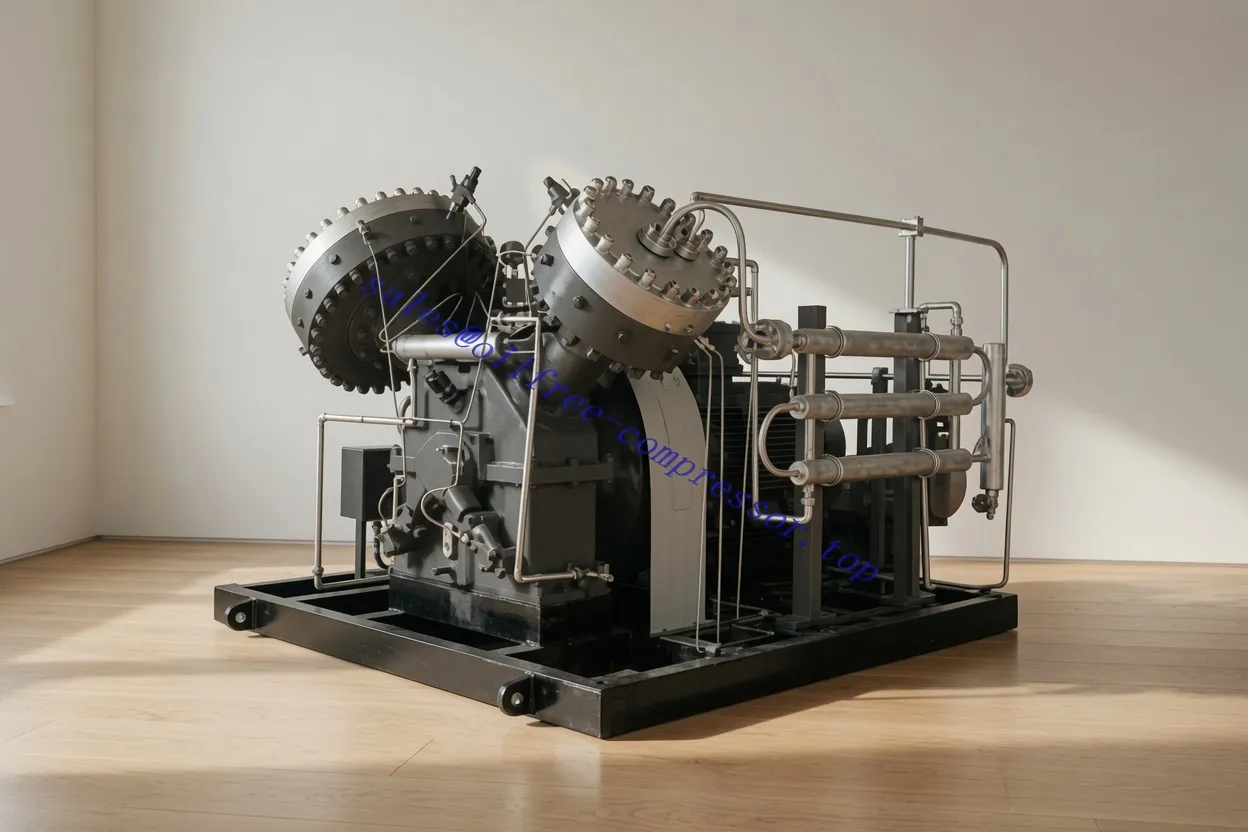
CM45D — Water-Lubricated Oil-Free Screw Compressor: HACCP’s Preferred Hazard Elimination Control
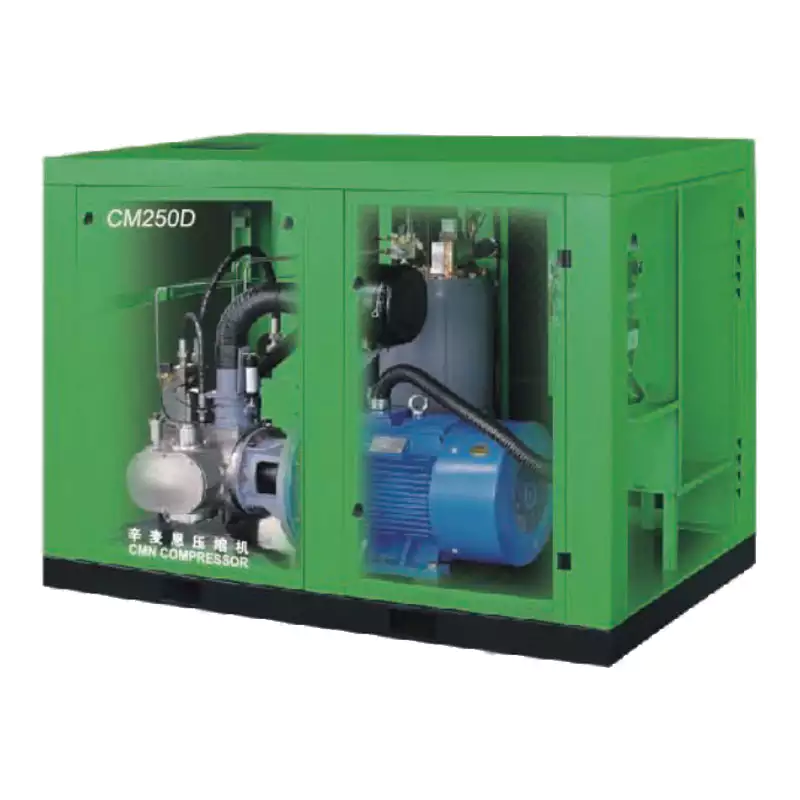
In HACCP terminology, hazard elimination is the highest-level control — more robust than detection, filtration, or monitoring. The CM45D water-lubricated oil-free screw compressor achieves oil hazard elimination by design: there is no oil anywhere in the compression element, so oil carryover is structurally impossible regardless of filter condition or maintenance status. For a HACCP auditor reviewing your compressed air chemical hazard control, “oil-free water-lubricated compressor — oil hazard eliminated by design” is the most defensible statement available. Combined with appropriate downstream drying and filtration for particle and moisture control, the CM45D provides the foundation for a complete HACCP-compliant food grade compressed air system that will satisfy SQF, BRCGS, FSSC 22000, and Freshcare audit requirements.
Frequently Asked Questions
Australia Oil Free Air Compressor Co., Ltd.
Charlton Industrial Area, Australia | [email protected]