
Merchandise Description
Product: XHW85PG6 worm gearbox for valve
Double stage
Application
XHW part turn worm gearboxes are used to dampers, ball valves, butterfly valves and also other 90° quarter change valves. XHW part turn worm equipment operator has range models of hand wheel for optional.
Operating Atmosphere
XHW component switch worm gearboxes are with very good mechanical quality and regular operating efficiency which apply to deal with selection weather and temperature. We attempt to produce RHW component flip worm gear operators to meet up with greater needs.
Enclosure: IP67
Functioning Temperature: From -20ºC to 120ºC( -4ºF to 248ºF)
Portray: Silver gray (Customization)
Introduction
XHW collection Part-flip Gearboxes use worm and worm wheel revolute pairs, with high efficiency needle roller bearing assembled on both ends of the worm shaft. It ensures the thrust necessity for the duration of rotation. It is in substantial mechanical performance withstands big torque, tiny measurement with compact layout, and it really is also easy to run and has reliable self-locking perform.
Figures
one.Precision casting ductile iron housing
two.Optional output torque, selection up to 32000Nm
3.Substantial productive needle roller bearing
4.High toughness metal input shaft
5.Stroke 0°- 90°( ±5°)
six.Compact composition
7.Grease crammed for for a longer time lifestyle
eight.Adjustable stopper (±5°)
9.Great seal
Hook up with valve
The flange connecting to valve is according to ENISO5210 or DIN3210(Customization)
Principal Merchandise
Worm gearbox, bevel gearbox, valve equipment box, worm gear operator, worm equipment actuator, valve worm gear, valve gear operator, valve gear actuator, valve actuator
Gear Operator, Valve Gearbox, Worm Gearbox, Gearbox, Pace Reducer, Component-turn Worm Gearbox, Worm Gearbox Supplier, Higher Quality Worm Gearbox, Gearbox producer
How to Decide on a Worm Shaft and Gear For Your Task
You will find out about axial pitch PX and tooth parameters for a Worm Shaft twenty and Gear 22. Detailed data on these two elements will help you pick a ideal Worm Shaft. Read through on to learn a lot more….and get your palms on the most superior gearbox at any time produced! Below are some suggestions for deciding on a Worm Shaft and Gear for your project!…and a couple of things to keep in brain.
Equipment 22
The tooth profile of Gear 22 on Worm Shaft 20 differs from that of a traditional equipment. This is since the enamel of Equipment 22 are concave, permitting for greater interaction with the threads of the worm shaft twenty. The worm’s direct angle brings about the worm to self-lock, stopping reverse motion. Nonetheless, this self-locking mechanism is not totally dependable. Worm gears are employed in quite a few industrial programs, from elevators to fishing reels and automotive electrical power steering.
The new equipment is set up on a shaft that is secured in an oil seal. To install a new gear, you first require to get rid of the previous equipment. Up coming, you need to have to unscrew the two bolts that hold the gear on to the shaft. Following, you must get rid of the bearing carrier from the output shaft. Once the worm gear is taken out, you want to unscrew the retaining ring. Right after that, install the bearing cones and the shaft spacer. Make positive that the shaft is tightened properly, but do not above-tighten the plug.
To stop untimely failures, use the appropriate lubricant for the sort of worm equipment. A high viscosity oil is needed for the sliding motion of worm gears. In two-thirds of purposes, lubricants ended up inadequate. If the worm is flippantly loaded, a minimal-viscosity oil might be sufficient. Otherwise, a higher-viscosity oil is necessary to maintain the worm gears in excellent condition.
One more alternative is to range the quantity of tooth around the equipment 22 to lessen the output shaft’s pace. This can be completed by environment a particular ratio (for example, five or ten moments the motor’s pace) and modifying the worm’s dedendum accordingly. This procedure will minimize the output shaft’s speed to the wanted stage. The worm’s dedendum must be tailored to the wanted axial pitch.
Worm Shaft twenty
When selecting a worm equipment, think about the subsequent factors to take into account. These are high-efficiency, minimal-sound gears. They are resilient, minimal-temperature, and lengthy-long lasting. Worm gears are widely utilised in several industries and have quite a few advantages. Shown beneath are just some of their rewards. Study on for far more details. Worm gears can be tough to sustain, but with suitable upkeep, they can be really reputable.
The worm shaft is configured to be supported in a body 24. The dimension of the body 24 is decided by the centre length amongst the worm shaft 20 and the output shaft sixteen. The worm shaft and gear 22 may not come in get in touch with or interfere with one an additional if they are not configured appropriately. For these causes, correct assembly is vital. Nonetheless, if the worm shaft 20 is not appropriately put in, the assembly will not perform.
An additional crucial consideration is the worm substance. Some worm gears have brass wheels, which could trigger corrosion in the worm. In addition, sulfur-phosphorous EP gear oil activates on the brass wheel. These supplies can trigger considerable decline of load area. Worm gears must be set up with substantial-top quality lubricant to stop these issues. There is also a need to decide on a material that is large-viscosity and has lower friction.
Velocity reducers can contain several distinct worm shafts, and each velocity reducer will need different ratios. In this circumstance, the speed reducer manufacturer can give various worm shafts with diverse thread patterns. The diverse thread designs will correspond to distinct equipment ratios. Regardless of the equipment ratio, every worm shaft is produced from a blank with the preferred thread. It will not be difficult to locate 1 that matches your wants.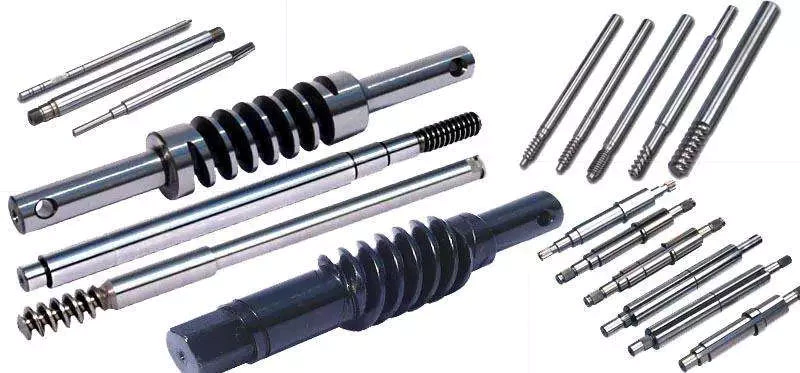
Equipment 22’s axial pitch PX
The axial pitch of a worm equipment is calculated by utilizing the nominal heart length and the Addendum Element, a constant. The Heart Distance is the distance from the middle of the gear to the worm wheel. The worm wheel pitch is also called the worm pitch. Each the dimension and the pitch diameter are taken into thought when calculating the axial pitch PX for a Gear 22.
The axial pitch, or guide angle, of a worm equipment determines how powerful it is. The larger the direct angle, the less successful the equipment. Lead angles are straight relevant to the worm gear’s load ability. In certain, the angle of the lead is proportional to the size of the anxiety spot on the worm wheel tooth. A worm gear’s load capability is immediately proportional to the volume of root bending pressure introduced by cantilever action. A worm with a guide angle of g is virtually identical to a helical gear with a helix angle of 90 deg.
In the current invention, an improved strategy of manufacturing worm shafts is described. The technique involves deciding the sought after axial pitch PX for each reduction ratio and body dimensions. The axial pitch is established by a approach of production a worm shaft that has a thread that corresponds to the wanted gear ratio. A equipment is a rotating assembly of areas that are created up of teeth and a worm.
In addition to the axial pitch, a worm gear’s shaft can also be produced from various supplies. The material utilised for the gear’s worms is an crucial thought in its assortment. Worm gears are typically made of steel, which is stronger and corrosion-resistant than other supplies. They also need lubrication and could have ground tooth to decrease friction. In addition, worm gears are typically quieter than other gears.
Equipment 22’s tooth parameters
A study of Gear 22’s tooth parameters revealed that the worm shaft’s deflection is dependent on a variety of aspects. The parameters of the worm gear had been different to account for the worm equipment dimensions, force angle, and measurement aspect. In addition, the variety of worm threads was modified. These parameters are diverse based on the ISO/TS 14521 reference equipment. This research validates the developed numerical calculation product utilizing experimental results from Lutz and FEM calculations of worm gear shafts.
Utilizing the outcomes from the Lutz check, we can get the deflection of the worm shaft making use of the calculation technique of ISO/TS 14521 and DIN 3996. The calculation of the bending diameter of a worm shaft in accordance to the formulas provided in AGMA 6022 and DIN 3996 show a excellent correlation with check final results. Nevertheless, the calculation of the worm shaft utilizing the root diameter of the worm employs a distinct parameter to estimate the equal bending diameter.
The bending stiffness of a worm shaft is calculated via a finite aspect model (FEM). Utilizing a FEM simulation, the deflection of a worm shaft can be calculated from its toothing parameters. The deflection can be regarded as for a complete gearbox method as stiffness of the worm toothing is regarded. And ultimately, based mostly on this study, a correction issue is created.
For an ideal worm equipment, the quantity of thread commences is proportional to the size of the worm. The worm’s diameter and toothing element are calculated from Equation 9, which is a formula for the worm gear’s root inertia. The distance in between the main axes and the worm shaft is identified by Equation 14.
Gear 22’s deflection
To review the result of toothing parameters on the deflection of a worm shaft, we utilized a finite factor technique. The parameters considered are tooth top, stress angle, size issue, and amount of worm threads. Every of these parameters has a distinct affect on worm shaft bending. Table 1 demonstrates the parameter variants for a reference gear (Gear 22) and a diverse toothing model. The worm equipment dimension and variety of threads determine the deflection of the worm shaft.
The calculation technique of ISO/TS 14521 is dependent on the boundary circumstances of the Lutz check set up. This strategy calculates the deflection of the worm shaft using the finite aspect strategy. The experimentally calculated shafts had been when compared to the simulation benefits. The examination outcomes and the correction factor had been in contrast to verify that the calculated deflection is equivalent to the measured deflection.
The FEM evaluation suggests the result of tooth parameters on worm shaft bending. Equipment 22’s deflection on Worm Shaft can be described by the ratio of tooth force to mass. The ratio of worm tooth pressure to mass establishes the torque. The ratio among the two parameters is the rotational pace. The ratio of worm gear tooth forces to worm shaft mass establishes the deflection of worm gears. The deflection of a worm gear has an effect on worm shaft bending potential, performance, and NVH. The ongoing growth of electricity density has been reached via advancements in bronze components, lubricants, and manufacturing quality.
The principal axes of minute of inertia are indicated with the letters A-N. The three-dimensional graphs are equivalent for the 7-threaded and a single-threaded worms. The diagrams also show the axial profiles of every gear. In addition, the main axes of second of inertia are indicated by a white cross.

