
Every significant capital equipment decision involves trade-offs, and oil-free air compressors are no exception. Understanding precisely what you gain and what you give up when selecting oil-free technology — rather than repeating generalised claims — is what separates a procurement decision that holds up under scrutiny from one that creates problems at commissioning or in the maintenance budget. This article presents a structured, data-supported analysis of the real advantages of oil-free compressed air systems, the genuine disadvantages that must be planned for, and the contextual trade-offs that determine whether oil-free is the right choice for a specific application. We will not oversell. We will not obscure the limitations. But the data, where relevant, speaks clearly.
The Quick Verdict: When Each Technology Wins
Before drilling into the detailed analysis, a summary framework helps orient the evaluation. The honest answer to “should I choose oil-free?” depends entirely on what you produce, what regulations you operate under, and how you calculate cost.
✅ Oil-Free Wins When…
- Air contacts product (food, pharma, medical)
- ISO 8573-1 Class 0 or Class 1 is required
- Regulatory compliance is audited
- Lens/optic protection critical (laser cutting)
- Low-maintenance facilities operations
- 5-year TCO matters more than CAPEX
- Hazardous waste elimination is a priority
⚠️ Oil-Lubricated May Win When…
- Budget is severely constrained (CAPEX-only view)
- Application tolerates Class 2–4 air quality
- Maximum pressure (>3.5 MPa) is required
- Experienced oil maintenance team on site
- Construction / quarrying / heavy industrial
- Low annual operating hours (<2,000 hrs/yr)
- No regulatory air purity obligation
Advantages of Oil-Free Air Compressors
The benefits of oil-free air compressor technology are measurable, documented, and in the most critical cases — non-negotiable. Each advantage below is supported by industry data or regulatory context rather than manufacturer claims alone.
1. Guaranteed Product Purity & Contamination Prevention
Oil contamination in compressed air is not merely an aesthetic problem — it carries direct product safety and liability implications. A single oil contamination event in a food packaging facility can result in an FSANZ recall costing AUD 500,000–5,000,000. In pharmaceutical manufacturing, an oil-contaminated batch triggers regulatory investigation, batch destruction, and potential facility shutdown under TGA oversight.
The oil-free air compressor eliminates this failure mode by design. ISO 8573-1 Class 0 means <0.01 mg/m³ oil content — not “reduced risk” but “zero risk from the compressor source.” No downstream filter failure, no degrading separator element, no oil carry-over event can originate from the machine itself.
2. Lower Total Cost of Ownership Over 5–10 Years
The higher capital cost of oil-free technology — typically 30–50% above comparable oil-lubricated models — is real but context-dependent. Against a 5–10 year operating horizon, the picture changes substantially. Eliminating oil changes (AUD 600–1,200/event), oil separator elements (AUD 400–900/event), coalescing filter cartridges (AUD 200–500/event), and associated labour typically saves AUD 3,000–8,000 annually on a 75 kW machine.
VSD-equipped oil-free screw compressors add a further 20–35% energy reduction against fixed-speed oil-lubricated alternatives. At Australian electricity tariffs of AUD 0.12–0.18/kWh and 6,000 annual operating hours, the energy saving alone on a 75 kW unit represents AUD 10,000–18,000 per year — well exceeding the capital premium within the first two operating years.
3. Regulatory Compliance & Certification Eligibility
In regulated industries, compliance is not optional. TGA Good Manufacturing Practice for pharmaceutical production, FSANZ food safety standards, ISO 13485 for medical device manufacturers, and international standards like EU 2017/745 (Medical Device Regulation) all mandate or effectively require oil-free compressed air at various processing stages.
A 100% oil-free compressed air supply with documented Class 0 certification is a prerequisite for obtaining and maintaining these accreditations. Oil-lubricated systems with downstream filtration cannot provide the independent third-party certification required for these compliance audits. This regulatory imperative is, in practice, the deciding factor for over 60% of oil-free compressor procurement decisions in the food, pharma, and medical sectors.
4. Environmental Sustainability & Zero Waste Oil
Compressor oil is classified as a controlled waste in all Australian states and territories. Disposal through licensed contractors adds a recurring cost — typically AUD 2.50–4.00/litre — and creates a documented environmental liability. A 75 kW oil-lubricated compressor generates approximately 80–120 litres of waste oil per year across oil changes and separator purges.
Oil-free air compressors generate no oil waste whatsoever. This eliminates the waste disposal cost, removes the environmental liability, simplifies ISO 14001 audits, and supports sustainability reporting under frameworks like GRI and the UN Sustainable Development Goals. For manufacturers with corporate environmental targets or customer ESG requirements, the oil-free choice reduces the compressed air system’s environmental footprint to near zero.
5. Reduced Maintenance Complexity & Downtime Risk
Oil-lubricated compressors require a multi-item maintenance programme: oil sampling and analysis, oil changes at 2,000–4,000 hours, oil separator element replacement at 4,000–8,000 hours, coalescing filter changes every 4,000 hours, and oil system pipework inspection. Each item creates a planned downtime event, a consumable cost, and a skills requirement for the maintenance team.
A modern oil-free screw air compressor reduces this to air filter element replacement, cooler cleaning, and gear/bearing inspection — typically at 6,000–8,000 hour intervals. Facilities report 40–60% reductions in annual maintenance hours after transitioning from oil-lubricated to oil-free technology. This directly translates to lower maintenance labour cost and longer periods of uninterrupted production.
Honest Disadvantages of Oil-Free Air Compressors
Balanced decision-making requires acknowledging the genuine limitations of oil-free technology. A supplier who will not discuss the disadvantages is not a reliable technical partner. Here is what the data actually shows.
Higher Upfront Capital Investment
The capital cost differential between oil-free and oil-lubricated compressors is real: typically 30–50% higher for equivalent power and pressure ratings. For a 75 kW machine, this translates to an additional AUD 8,000–20,000 upfront. For organisations evaluating on purchase price alone or managing constrained CAPEX budgets, this premium requires explicit justification. The answer is a 5-year TCO model — but constructing that model takes time and resources that not every procurement process accommodates.
Slightly Lower Peak Energy Efficiency at Full Load
At identical pressure and flow conditions, the specific power (kW per m³/min) of a dry oil-free screw compressor is typically 5–10% higher than an equivalent oil-injected model at full continuous load. The timing gear drive system and the absence of oil film sealing create slightly more mechanical friction than the oil-wetted rotor surfaces of an oil-lubricated design. This gap narrows significantly with VSD technology and vanishes entirely in two-stage designs at pressures above 1.0 MPa, but it is a real consideration for applications running at 100% duty cycle continuously.
Sensitivity to Inlet Conditions
Dry oil-free screw compressors are more sensitive to elevated inlet air temperature and humidity than oil-injected machines, because oil injection in lubricated designs naturally absorbs heat and manages moisture before compression. High ambient temperatures (>40°C) accelerate rotor coating wear in dry oil-free designs. For Australian facilities in Queensland, the Northern Territory, or Western Australia where summer ambient temperatures regularly exceed 38–42°C, proper ventilation design and inlet air temperature management are engineering requirements — not optional extras.
Pressure Range Constraints on Entry-Level Models
Single-stage oil-free screw compressors typically top out at 0.9–1.0 MPa reliably. For applications demanding 1.6 MPa or higher, two-stage designs are required — adding to both capital cost and machine complexity. For very high-pressure applications above 3.5 MPa (such as PET pre-form blowing or breathing air), reciprocating oil-free compressors or multi-stage designs carry significant cost premiums over oil-lubricated alternatives at equivalent pressure. This is not a limitation that affects the majority of industrial applications, but it is relevant for niche high-pressure processes.
Rotor Coating Service Life Uncertainty
Dry oil-free screw compressors use PTFE, ceramic, or DLC (diamond-like carbon) rotor coatings that resist wear and provide rotor-to-rotor sealing. These coatings have a finite service life — typically 20,000–40,000 hours — after which specific power consumption rises gradually as clearances increase, eventually requiring air-end refurbishment. Poor inlet air quality (inadequate filtration), excessively high inlet temperatures, or condensate ingestion can shorten coating life significantly. Water-lubricated designs eliminate this issue entirely, as the water film replaces the coating function.
Navigating the Key Trade-offs
The advantages and disadvantages above do not exist in isolation — they interact with each other and with the specific context of your application. Four major trade-off dimensions deserve careful thought.
Trade-off 1: Capital Cost vs. Five-Year Total Cost of Ownership
This is the most frequently misframed trade-off in compressor procurement. The higher CAPEX of an oil-free air compressor is used as a veto by organisations evaluating capital budgets in isolation from operational budgets. The reality: over a 5-year operating period at 6,000 hours/year, a 75 kW VSD oil-free unit versus a fixed-speed oil-lubricated equivalent produces estimated savings of AUD 65,000–95,000 in combined energy and maintenance costs — well above the AUD 10,000–18,000 capital premium. The payback period is typically 18–30 months. This calculation should be part of every business case for compressor procurement, regardless of which technology wins.
Trade-off 2: Contamination Risk Tolerance vs. Capital Economy
Some applications genuinely tolerate Class 2–4 air quality without safety or quality consequences — general pneumatic actuators, tyre inflation, construction tools, quarry drilling equipment. In these contexts, the oil contamination risk of a lubricated compressor is acceptable, and the lower capital cost is a legitimate factor. But risk tolerance must be assessed honestly. A facility that processes food in one area and uses compressed air for machine guarding in another cannot apply “we don’t need oil-free” thinking globally — the machine guarding air circuit may share headers with a product contact point through a leaky valve or misconfigured distribution pipework. The only genuinely safe approach in multi-use plants is system-wide oil-free compressed air.
Trade-off 3: Pressure Requirements vs. Technology Efficiency
Below 1.0 MPa, single-stage oil-free screw compressors are competitive on energy efficiency. Between 1.0–1.6 MPa, two-stage oil-free designs match or beat oil-lubricated machines on specific power while delivering Class 0 air. Above 1.6 MPa, two-stage oil-free designs remain viable and are the industry standard for laser cutting assist gas, but specific power rises above equivalent oil-lubricated high-pressure models by 5–8%. For facilities requiring 3.0 MPa output for PET blowing or other ultra-high-pressure applications, the oil-free technology premium is most significant — but the contamination consequence of oil-lubricated alternatives at these pressures (direct beverage container interior contact) makes oil-free the only rational choice regardless.
Trade-off 4: Maintenance Simplicity vs. On-Site Expertise
Oil-free compressors require less frequent maintenance and fewer consumables, but the maintenance tasks that do arise — timing gear inspection, rotor coating assessment, bearing condition monitoring — require more specialised knowledge than an oil change or filter swap. Facilities with capable in-house maintenance teams experienced with oil-lubricated equipment sometimes face a learning curve transitioning to oil-free platforms. The counter-argument: the reduced frequency and simpler consumable list means less maintenance burden overall, and service organisations like Australia Oil Free Air Compressor Co., Ltd. provide training and on-site support specifically to address this transition challenge.
Industry-by-Industry Advantage Assessment
The advantages and disadvantages of oil-free technology do not weigh equally across every sector. This distilled summary maps the net balance for the industries most commonly served by our equipment.
Mitigating the Disadvantages: Engineering Solutions
Most of the disadvantages of oil-free technology are not inherent — they are engineering problems with engineering solutions. A well-specified, properly installed, and correctly operated oil-free system eliminates or substantially reduces all the limitations described above.
Addressing High Capex
Build and present a documented 5-year TCO model that captures energy costs, maintenance consumables, and contamination risk premium. In regulated industries, include the compliance cost of NOT using oil-free technology. This framing consistently moves procurement decisions beyond CAPEX-only thinking.
Addressing Inlet Temperature Sensitivity
Specify inlet air pre-cooling for sites with sustained ambient temperatures above 38°C. Adequate compressor room ventilation — minimum 10–15 air changes per hour — is a standard requirement. Alternatively, specify water-lubricated oil-free models that are inherently less sensitive to high inlet temperatures due to the cooling effect of water injection.
Addressing Rotor Coating Wear
Specify air inlet filtration to 3 μm or finer. Confirm the air-end is rated for the ambient temperature at your site. Consider water-lubricated designs for applications where coating longevity is a critical concern. Enrol in a periodic compressed air performance audit programme — rising specific power consumption is the earliest measurable indicator of coating degradation, detectable before any operational disruption occurs.
Addressing Maintenance Knowledge Gap
Request a comprehensive commissioning and maintenance training programme from your supplier as part of the purchase contract. Establish a preventive maintenance agreement covering the first 8,000 hours. Digital monitoring systems available on modern oil-free compressors provide real-time performance data that guides maintenance decisions without requiring deep mechanical expertise on site.
Why Australian Facilities Choose Australia Oil Free Air Compressor Co., Ltd.
The decision to invest in oil-free technology is only as sound as the partner supplying and supporting the equipment. Our company delivers not just compliant machines, but the technical depth and after-sales support infrastructure to keep them performing across their service life.
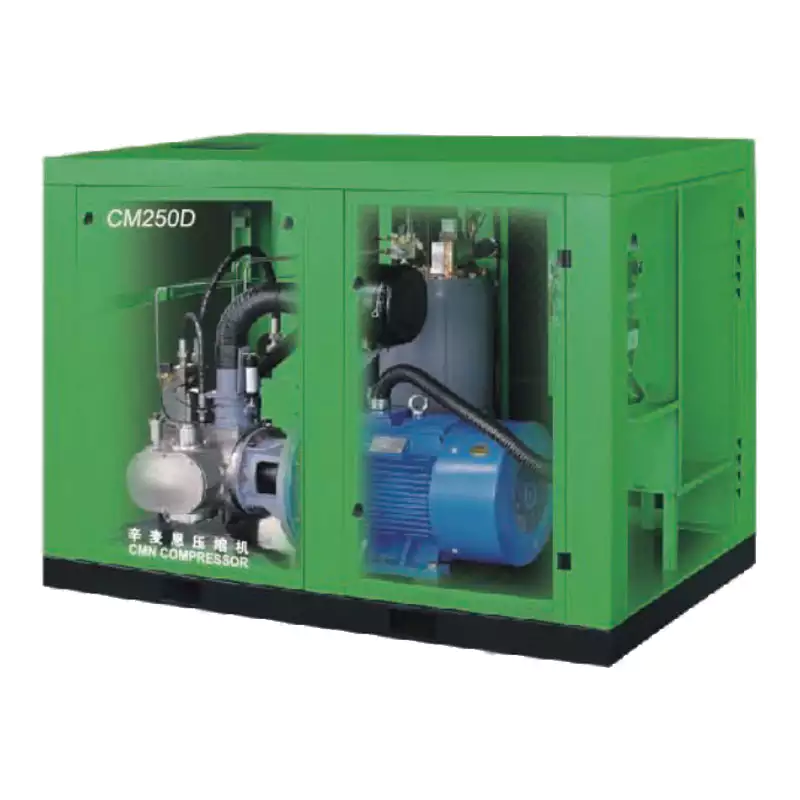
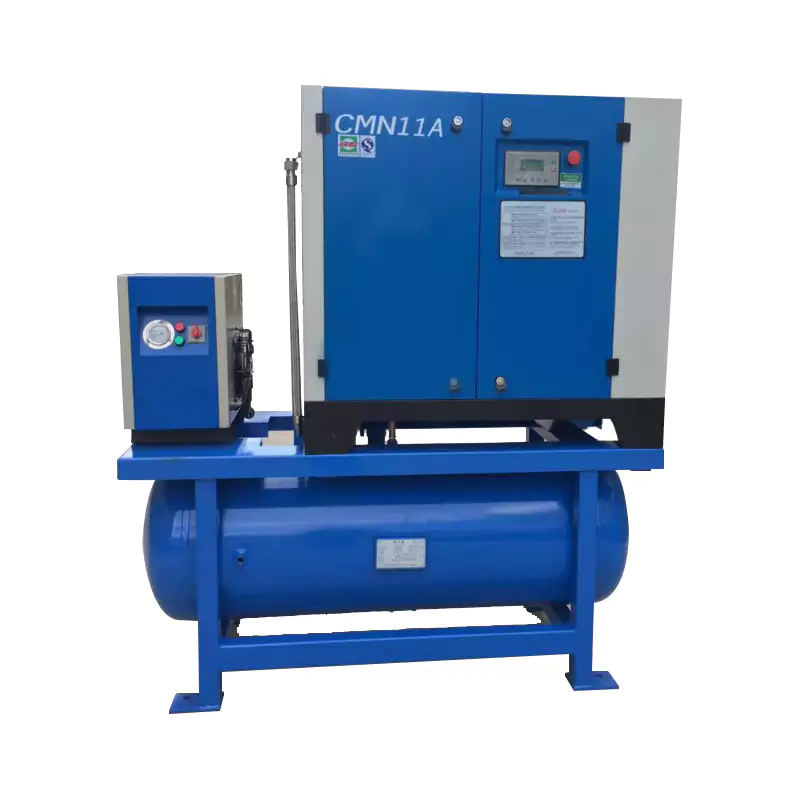
CM242GPV Medium-Pressure Oil-Free Screw Compressor
Medium-pressure oil-free design with VSD technology. Delivers the energy efficiency advantage at part-load that eliminates the specific power disadvantage of oil-free designs in variable demand applications. ISO Class 0 certified, suitable for food, pharma, and industrial manufacturing.
Frequently Asked Questions
Request Your Free Oil-Free Compressor Assessment
Australia Oil Free Air Compressor Co., Ltd. provides free TCO modelling and application assessments for facilities considering a transition to oil-free technology. Charlton Industrial Area, Australia.
Email: [email protected]
|
About Us
|
Contact Us