
“ISO Class 0” has become one of the most frequently cited specifications in compressed air procurement — and one of the most frequently misunderstood. Manufacturers claim it. Procurement teams specify it. Auditors ask for it. But when pressed on exactly what it means, what it certifies, and what evidence is required to substantiate it, the conversation often falters. This guide removes that ambiguity entirely. We explain what ISO 8573-1 Class 0 means with engineering precision, how it was defined and by whom, how it differs from Class 1 and other purity classes, which industries are required by regulation to use Class 0 oil-free compressed air, and — critically — what documentation you must demand from any supplier claiming their compressor is Class 0 certified. If you are specifying, procuring, or auditing ISO Class 0 oil-free air compressors in Australia, this article gives you the technical foundation to make the right decisions and ask the right questions.
The Origin of ISO 8573-1 Class 0: How the Standard Evolved
ISO 8573-1 is the international standard that classifies the purity of compressed air by defining maximum allowable contamination levels across three primary contaminant types: particulate matter, water (expressed as pressure dewpoint), and oil content. The standard was first published in 1991 and has been revised twice — in 2001 and most significantly in 2010 — with each revision tightening definitions and expanding the purity class range to address the increasingly stringent requirements of healthcare, food safety, and semiconductor manufacturing.
The 2010 revision introduced Class 0 as a formally defined purity class for the first time. Prior to this, manufacturers claiming “better than Class 1” had no standardised framework against which to be verified. The introduction of Class 0 created a specific, testable, certifiable target: total oil content (liquid oil + oil aerosol + oil vapour combined) not exceeding 0.01 mg/m³. Critically, the standard specifies that where a user requires Class 0, the specific limits must be agreed between the equipment user and supplier and stated in the purchase documentation — because “Class 0” designates the highest class of purity, not a single fixed numerical value, and the verification method must be documented.
This technical nuance — that Class 0 requires documented agreement on test limits and test methods — is why simply reading “ISO 8573-1 Class 0” on a compressor datasheet is insufficient for regulated industry procurement. The certification is only meaningful when accompanied by third-party test data demonstrating compliance with the agreed limits under defined test conditions.
What the Numbers Actually Mean: The Full ISO 8573-1 Classification Table
ISO 8573-1:2010 classifies compressed air quality across three parameters independently. A complete air quality specification requires a class designation for each parameter — written as a three-number code (e.g., ISO 8573-1 Class 1.2.1 means Class 1 particulate, Class 2 water, Class 1 oil). Understanding each axis is essential for correctly specifying and verifying your compressed air system.
Axis 1: Solid Particulate
Axis 2: Water & Moisture (Pressure Dewpoint)
Axis 3: Total Oil Content — The Class 0 Definition
Class 0 vs. Class 1: The Practical Difference
The numerical difference between Class 0 (<0.01 mg/m³) and Class 1 (≤0.01 mg/m³) appears trivial — in fact, they share the same numerical limit. The critical distinction is how that limit must be achieved and evidenced. Class 1 can be achieved by an oil-lubricated compressor with high-efficiency downstream filtration. Class 0 cannot. Class 0 requires a true oil-free compression source, independently verified by a third-party accredited laboratory, with test limits and test methods agreed between supplier and user and documented in the purchase record. Class 0 is not a filtration achievement — it is a source elimination achievement. A filter on an oil-lubricated compressor, however efficient, cannot achieve Class 0 certification because it cannot eliminate the theoretical contamination pathway.
For pharmaceutical GMP auditors and BRCGS food safety auditors, this distinction is decisive: Class 0 certification with third-party test data is accepted as evidence of a preventive contamination control; a Class 1 result from a filtered oil-lubricated system is treated as a detection/reduction control — a lower standard of hazard management under HACCP and GMP risk frameworks.
Who Needs ISO Class 0: Industry-by-Industry Requirements
ISO Class 0 is not a voluntary premium specification. For the following industries, it is a regulatory requirement — either mandated directly by the relevant standard or effectively required by the audit framework used to assess compliance. Our CM132DV water-lubricated oil-free compressor and CM45D compact model carry full ISO 8573-1 Class 0 third-party certification for customers in these sectors.
Pharmaceutical Manufacturing
PIC/S GMP Chapter 3 and Annex 1 mandate that compressed air in product contact applications must not constitute a contamination risk. TGA GMP inspectors treat the absence of Class 0 certification for product-contact air circuits as a Critical or Major finding. IQ/OQ/PQ qualification documentation for the compressed air system is expected at every TGA inspection of a licensed Australian manufacturer.
Food & Beverage Manufacturing
BRCGS Issue 9 Clause 4.9.3 requires oil-free compressed air with documented monitoring for direct product contact. SQF Edition 9 Module 11 and IFS Food Version 8 contain parallel requirements. Certification audit failure against these clauses is a Major non-conformance that risks GFSI certificate suspension — which terminates supply contracts with Woolworths, Coles, and major food service customers.
Medical & Hospital Facilities
AS 2896:2011 governs medical gas pipeline systems in Australian hospitals and healthcare facilities, requiring Class 0 quality for patient-administered air and surgical instrument supply. Hyperbaric chamber air is uniquely critical — patients breathe pressurised air directly, making oil vapour contamination a direct inhalation toxicity risk at therapeutic pressures.
Dental Practices
AS/NZS 4492 (dental air) and the Dental Board of Australia’s infection control requirements mandate oil-free compressed air for all clinical air supplies. Every dental handpiece and unit manufacturer (Sirona, KaVo, W&H, NSK) specifies oil-free air — oil contamination voids the instrument warranty and creates biofilm-promoting conditions in dental unit waterlines.
Laboratory & Analytical Instruments
HPLC systems, gas chromatographs, mass spectrometers, ICP-MS instruments, and electron microscopes require hydrocarbon-free carrier gas and instrument air. Oil aerosol in analytical instrument air contaminates detector cells, column stationary phases, and vacuum pump systems — destroying chromatographic columns (AUD 800–2,500 each) and invalidating analytical results.
Electronics & Semiconductor Manufacturing
Wafer fab clean rooms, PCB assembly, and precision electronics manufacturing use compressed air for component handling, cleanroom pressurisation, and precision cleaning. Hydrocarbon contamination from oil aerosols deposits on semiconductor wafer surfaces and PCB pads — a contamination mechanism that causes component failure that cannot be detected until field use.
What “Class 0 Certified” Actually Requires: The Documentation Test
The phrase “ISO 8573-1 Class 0 certified” on a sales brochure or datasheet is a claim — not evidence. For regulated industry procurement, the distinction between a legitimate certification and a marketing claim is determined entirely by the documentation provided. Here is exactly what constitutes a valid Class 0 certification:
Third-Party Accredited Laboratory Test Report
A test report from a NATA-accredited (or equivalent international accreditation body) laboratory, showing measured total oil content in mg/m³ at defined test conditions (flow rate, pressure, temperature). The report must reference ISO 8573-1:2010 and the specific test method used (e.g., ISO 8573-2 for aerosol oil, ISO 8573-5 for vapour). A manufacturer’s own in-house test report is insufficient for regulated industry procurement.
Test Conditions and Machine Identification
The test report must identify the specific compressor model, serial number range, and the operating conditions under which the test was conducted (rated pressure, rated flow, ambient temperature). A Class 0 certification obtained at low load and low temperature does not guarantee Class 0 performance at maximum load and maximum ambient — ask whether the test was performed at worst-case operating conditions.
Agreed Limits Documented in Purchase Record
ISO 8573-1:2010 explicitly states that for Class 0, “the limits for this class shall be agreed between the user and the supplier, and shall be more stringent than Class 1.” This agreement must be in writing — ideally in the purchase order, technical specification, or a separate signed test acceptance record. This is the documentary link between the standard’s requirements and the specific equipment installed in your facility.
Annual Revalidation at Installation
The manufacturer’s factory test confirms Class 0 at the point of manufacture. Annual air quality testing at the installed system — measuring total oil content at point-of-use outlet points — is required to maintain Class 0 compliance evidence for GMP, BRCGS, and AS 2896 audits. Factory certification alone is not sufficient for ongoing regulatory compliance; it must be supported by annual site validation data. Australia Oil Free Air Compressor Co., Ltd. provides annual validation testing and report issuance as a service for all Class 0 installations.
Which Compressor Technologies Can Achieve Class 0
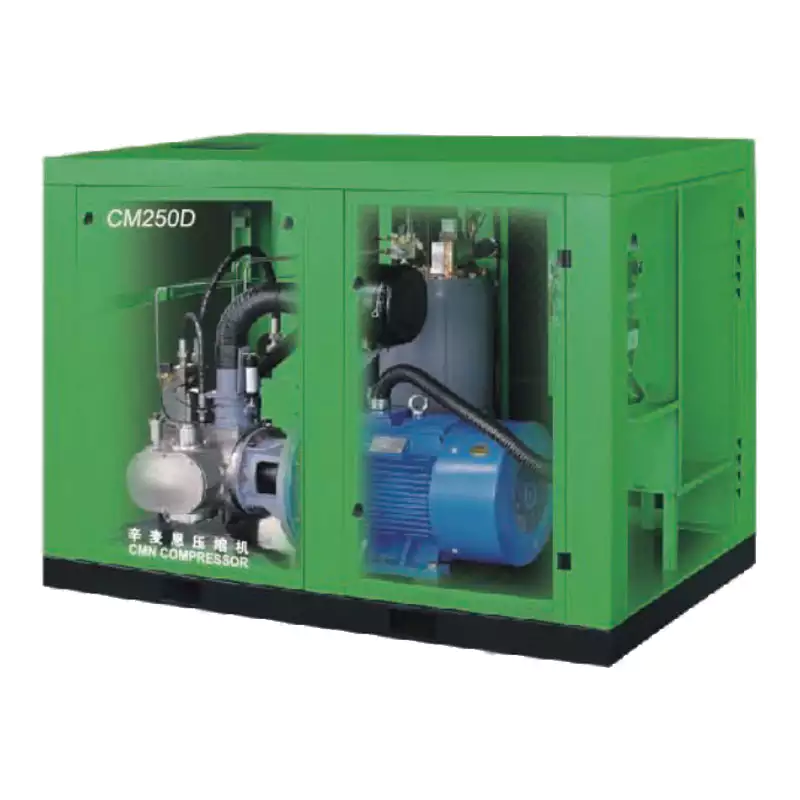
Not all oil-free compressor designs deliver equal confidence at Class 0 specification. The architecture of the compression stage determines both the theoretical contamination risk and the ease of obtaining third-party certification. Here is how the primary oil-free technologies compare:
How to Specify ISO Class 0 Correctly in a Purchase Order
A vague specification creates disputes. A precise specification protects you at audit. The following specification language, adapted to your specific application, closes the gaps that make “Class 0 certified” claims ambiguous at audit time:
The compressor system shall supply compressed air meeting ISO 8573-1:2010 Class 0 for total oil content at all product-contact outlets, as verified by third-party analytical testing in accordance with ISO 8573-2 (aerosol) and ISO 8573-5 (vapour) conducted at rated operating conditions.
The supplier shall provide, at the time of equipment delivery: (a) a test report from a NATA-accredited laboratory (or equivalent under ILAC MRA) confirming total oil content <0.01 mg/m³ at rated flow and rated pressure; (b) documentation of the agreed Class 0 oil content limit per ISO 8573-1:2010 Clause 5; and (c) a recommended annual air quality testing protocol for ongoing compliance verification.
A manufacturer’s datasheet or self-declaration alone does not satisfy this specification. Third-party test data is required.
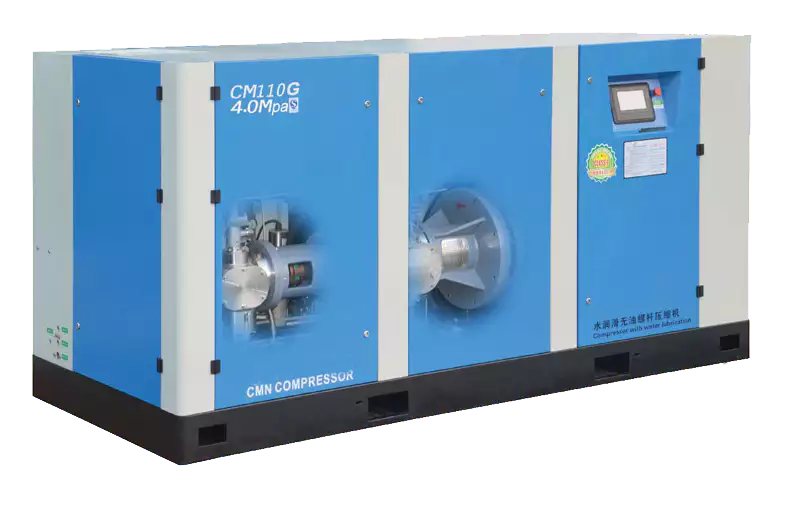
CM242GPV Medium-Pressure Oil-Free Screw Compressor
Third-party certified to ISO 8573-1 Class 0 — documentation package included at delivery. Suitable for pharmaceutical manufacturing, food production, and medical facility central plant installations requiring independently verifiable oil-free air. Full IQ/OQ/PQ documentation templates available for pharmaceutical purchasers. Annual validation contract available from our Charlton Industrial Area service base.
Frequently Asked Questions
Get ISO 8573-1 Class 0 Certification Documentation
Australia Oil Free Air Compressor Co., Ltd. supplies ISO 8573-1 Class 0 certified compressors with full third-party test documentation, annual revalidation services, and compliance support for pharmaceutical, food, and medical facility customers across Australia.
Request Class 0 Documentation Package
Email: [email protected] | Contact Us | About Us