
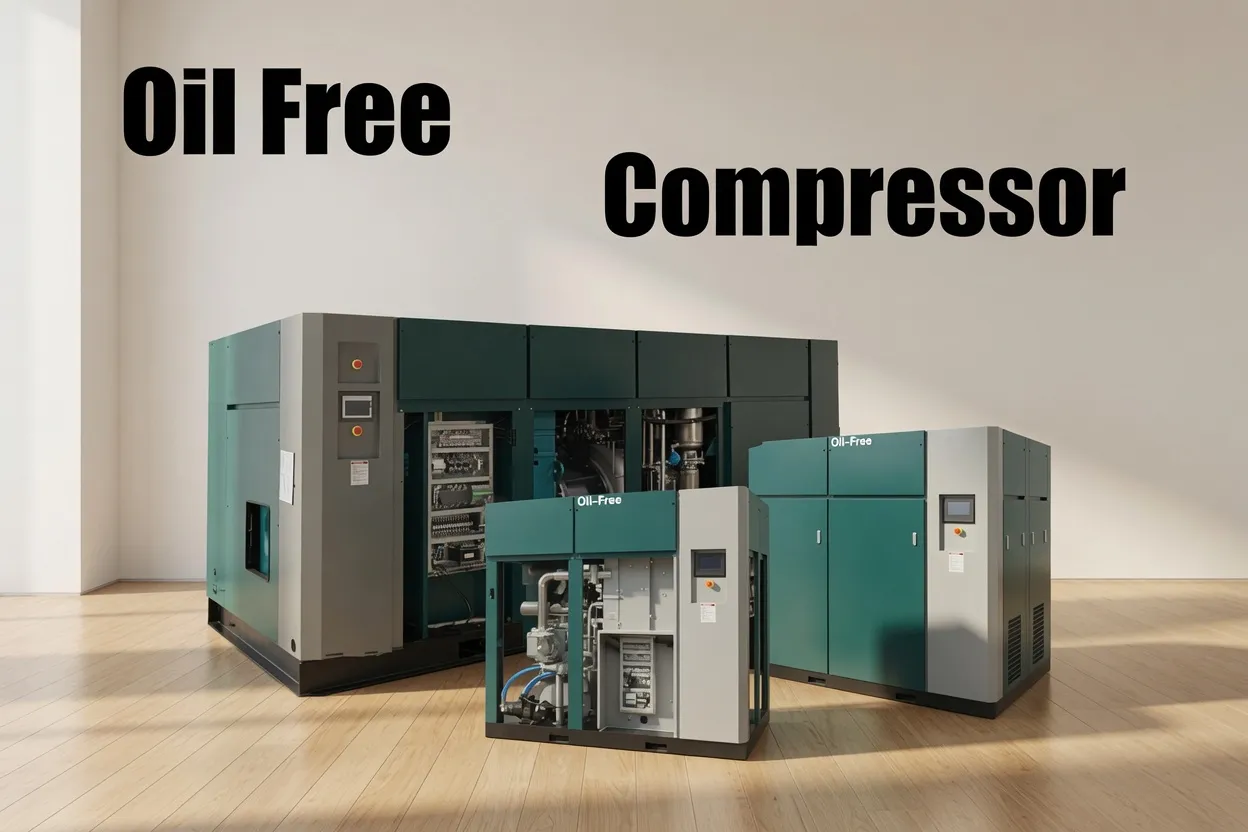
The oil-free scroll air compressor occupies a distinctive position in the compressed air landscape: uniquely quiet, exceptionally smooth in its air delivery, mechanically elegant in its operating principle, and ideally suited to a specific class of application that neither piston nor screw compressor technology serves as well. Yet scroll technology is also commonly over-specified into applications where its advantages are irrelevant, and under-specified into applications where it quietly becomes inadequate years into service as demand grows. This guide provides a thorough technical grounding in oil-free scroll air compressor technology — from the physics of the orbital compression mechanism through to the specific clinical, laboratory, and light industrial scenarios where scroll is the unambiguous technology of choice — and the adjacent scenarios where a water-lubricated oil-free screw compressor is the smarter long-term investment.
How Oil-Free Scroll Compressors Work: The Orbital Compression Mechanism
The scroll compressor’s operating principle is one of the most elegant in mechanical engineering. At its heart are two identically shaped spiral components — both machined from high-strength aluminium alloy — that mesh together in a precise offset arrangement. The outer spiral is the fixed scroll, anchored to the compressor housing. The inner spiral is the orbiting scroll, driven by an eccentric bearing on the motor shaft. Critically, the orbiting scroll does not rotate — it orbits in a tight circle (eccentricity of typically 3–8 mm) while maintaining a fixed angular orientation relative to the housing. This orbital motion is what drives the compression process.
As the orbiting scroll traces its circular path, the spaces formed between the two meshing spirals undergo a continuous transformation. At the outer periphery of the scroll set, new air pockets are drawn in from the atmosphere. As the orbiting motion continues, these pockets are progressively swept inward toward the centre of the scroll set, decreasing in volume with each revolution — compressing the trapped air. By the time a pocket reaches the central discharge port, the air within it has been compressed to the delivery pressure and is discharged into the system. Because multiple compression pockets are active simultaneously at different stages of the compression process — typically three or four crescent-shaped pockets at different radial positions — the discharge is continuous and smooth, with no pressure pulsation from valve action.
The Oil-Free Aspect: What “Oil-Free” Means in Scroll Technology
In a conventional scroll compressor (used widely in air conditioning and refrigeration), refrigerant oil is used to lubricate the bearing and to provide the thin film that seals the tip of each scroll against the face of the opposing scroll — preventing compressed gas from leaking back through the tip clearance. In an oil-free scroll compressor, this tip sealing function is achieved instead by a PTFE or polymer-composite tip seal — a thin, low-friction strip moulded into the scroll tip that presses against the opposing face under differential pressure. The motor-side bearings are grease-lubricated in a sealed arrangement physically isolated from the compression zone. No oil of any type enters the air stream — giving the scroll its ISO 8573-1 Class 0 oil content performance.
Performance Characteristics: What Makes Scroll Technology Distinctive
Exceptionally Low Noise: 45–62 dB(A)
The orbital mechanism generates no reciprocating impulse forces, no inlet valve snapping, and no piston-reversal impacts. Combined with the balanced mass of the orbiting component, this results in noise levels of 45–62 dB(A) for typical oil-free scroll compressors — quieter than a normal conversation, and far below the 62–78 dB(A) of equivalent oil-free piston machines. This is the defining characteristic that drives scroll technology selection in clinical environments.
Very Low Vibration
The orbiting scroll is dynamically counterbalanced, and the absence of reciprocating masses means vibration levels are an order of magnitude lower than piston compressors. Scroll compressors can be installed directly on laboratory benches or dental surgery floors without anti-vibration mounts in many configurations — a feature that piston compressors cannot match. This makes scroll technology suitable for installations adjacent to microbalances, NMR systems, optical benches, and other vibration-sensitive analytical instruments.
Smooth, Pulse-Free Air Delivery
Multiple compression pockets active simultaneously produce continuous, smooth discharge pressure without the valve-generated pulsation of piston compressors. For analytical instruments requiring consistent gas pressure (HPLC pumps, GC carrier gas, mass spectrometer curtain gas), pulse-free supply eliminates flow measurement artifacts and baseline noise. Even without a receiver, scroll compressor discharge air is suitable for direct instrument supply in many applications.
100% Continuous Duty Rating
Unlike standard oil-free piston compressors rated for 50–70% duty cycles, all oil-free scroll compressors are designed for 100% continuous operation — they can run uninterrupted for the duration of a working day (or longer) without overheating or requiring rest periods. This makes scroll suitable for clinical environments where the compressor must remain operational throughout a full day’s treatment schedule without interruption.
Moderate Discharge Temperature: 60–90°C
Scroll discharge temperatures of 60–90°C are significantly lower than dry screw (160–220°C) and somewhat higher than water-lubricated screw (<55°C). This moderate temperature is well within the operating range of standard refrigerant dryers and downstream filters, and substantially reduces the heat load on the dryer compared to a dry screw machine — extending dryer component life and maintaining dewpoint performance at elevated ambient temperatures.
Pressure Limitation: Max ~1.0 MPa
The scroll mechanism’s geometric compression ratio is fixed by the spiral design — unlike piston or screw designs that can be configured in multiple stages for higher pressures. Most oil-free scroll compressors are rated for 0.7–0.95 MPa (7–9.5 bar). This is adequate for dental, laboratory, and general medical instrument supply, but insufficient for laser cutting, PET bottle blowing, or high-pressure process applications that require 1.0–3.5 MPa.
Tip Seals: The Critical Wear Component
The performance and service life of an oil-free scroll compressor is primarily determined by the condition of its tip seals. Understanding tip seal behaviour, degradation mechanisms, and service timing is the most important technical knowledge for anyone operating a scroll compressor in a clinical or regulatory environment.
What Tip Seals Do
Tip seals are precision-moulded strips of PTFE or PTFE-composite material that fit into machined grooves at the tip (apex) of each scroll spiral. They are loaded against the face of the opposing scroll by a combination of spring backing and the differential pressure of the compression process itself. Their function is identical to the piston ring in a reciprocating compressor — to maintain a gas-tight seal that prevents compressed air in higher-pressure inner pockets from leaking back through the tip clearance into lower-pressure outer pockets.
How Tip Seals Degrade
PTFE tip seals wear through slow, uniform abrasion against the opposing scroll face. Unlike piston rings, which wear primarily from the high-contact-velocity reciprocating motion, scroll tip seal wear is a gentle, distributed process across the full length of the seal — the result of the low-velocity, low-contact-force sliding of the orbital motion. Under normal conditions (clean inlet air, correct operating temperature, within-rated pressure), tip seals typically last 8,000–16,000 operating hours. Degradation accelerates significantly in three conditions: operation above rated pressure; inlet air with elevated particulate loading (worn inlet filter); and operation at elevated ambient temperatures that increase thermal softening of the PTFE.
Signs of Tip Seal Wear — Detecting It Before It Matters
As tip seals wear and internal leakage increases, the compressor must work harder to maintain delivery pressure — motor power consumption rises while output FAD decreases. A 5–8% rise in specific power above commissioning baseline at the same operating conditions is an early signal of tip seal wear.
Measurable reduction in delivered air volume at rated pressure — the compressor can no longer fill the receiver to working pressure at its normal rate. For clinical applications, this may manifest as dental handpieces losing power at full chair utilisation or laboratory instruments reporting low inlet pressure alarms.
Internal leakage from worn tip seals means air is being recompressed multiple times, increasing compression work and discharge temperature above baseline. A sustained rise of 15°C above the established baseline (at consistent ambient conditions) indicates advanced tip seal wear requiring prompt replacement to avoid accelerated scroll element damage.
Maintenance Programme for Oil-Free Scroll Compressors
The oil-free scroll compressor’s maintenance programme is notably lighter than oil-free piston equivalents — a key advantage for facilities with limited technical maintenance resources. The following schedule applies to standard industrial and clinical oil-free scroll compressors in the 0.75–22 kW range operating in clean-air environments at rated conditions.
Confirm system pressure is reaching and holding setpoint; check controller for active fault codes; verify auto-drain is expelling condensate at each cycle; note any change in operating noise (excessive scroll noise is an early sign of bearing or tip seal issues). Daily checks require no tools and take 2–3 minutes.
Replace inlet air filter element (AUD 40–100 depending on model). Inspect cooler fins and clean with compressed air or low-pressure water if debris accumulation is visible. Verify auto-drain function on receiver. Check downstream filter differential pressure; replace cartridges if indicated. For regulated industry applications, record all maintenance actions with part numbers and dates.
Replenish motor bearing grease with the manufacturer-specified grade and quantity (AUD 30–80). Replace all downstream filter cartridges — coalescing and fine — regardless of differential pressure reading (for regulated industry: do not defer based on visual assessment). Service refrigerant dryer: clean condenser, verify dewpoint performance. Test and certify safety relief valve. Perform annual air quality test (ISO 8573-1) for dental, laboratory, and regulated industry applications (AUD 800–2,000 for accredited third-party testing).
Replace scroll tip seals — the primary wear-life service event for the scroll compressor air-end (AUD 400–900 for parts, AUD 200–400 for specialist labour). At this event, inspect the scroll element faces for wear marks, scoring, or aluminium oxidation. Replace bearings if approaching rated service life. This event represents the most significant service cost and planned downtime (typically 2–4 hours) in the scroll compressor’s lifecycle. Tip seal replacement restores volumetric efficiency and specific power to near-new performance levels.
The Right Application Scenarios for Oil-Free Scroll
Scroll technology has specific application niches where its combination of quiet operation, vibration-free performance, continuous duty capability, and moderate capacity is unmatched. The following scenarios are where scroll compressors consistently deliver the best combination of performance, cost, and suitability.
Dental Practice: 1–4 Chairs
The canonical scroll application. One to four dental chairs require 50–300 L/min continuous air flow during active use, well within scroll capacity. The patient is conscious and present throughout treatment — noise levels of 45–58 dB(A) are clinically acceptable and can be installed within the surgery suite itself, eliminating the need for a separate plant room. Dual-head scroll configurations (two scroll pairs on one motor) provide both N+1 redundancy and capacity for busier practices. AS/NZS 4492 compliance is straightforwardly achieved with scroll + refrigerant dryer + downstream filtration.
Analytical & Research Laboratory
HPLC, GC, GC-MS, ICP-MS, atomic absorption, TOC analysers, and flow chemistry platforms require steady, oil-free, dry instrument air at flow rates of 10–100 L/min. Scroll compressors supply this with: ultra-quiet operation compatible with open-plan laboratory environments; pulse-free discharge that eliminates pressure artifacts in flow-sensitive instruments; vibration levels low enough for adjacent installation to microbalances; and ISO 8573-1 Class 0 air quality when combined with standard downstream treatment.
Small Medical & Allied Health
Podiatry clinics, cosmetic medicine practices, minor-procedure rooms, and physiotherapy clinics using air-driven equipment in the 50–400 L/min range. The 100% duty cycle allows continuous operation through a full treatment day. Quiet operation allows installation in treatment rooms without disturbing patient-clinician consultations. AS 2896 compliance for medical instrument air is readily achieved with an appropriately equipped scroll system.
Veterinary Clinic
Veterinary practices face similar requirements to dental and medical clinics: oil-free air for dental scaling, surgical instrument drive, and anaesthesia equipment; noise constraints due to animal stress sensitivity; and moderate demand compatible with scroll capacity. Scroll compressors are increasingly specified for veterinary surgical suites for the same reasons as dental surgeries — quiet, reliable, oil-free, and suitable for room-side installation.
Precision Electronics & Cleanroom (Small Scale)
Small electronics assembly, PCB rework, precision optical fabrication, and small-scale cleanroom applications requiring oil-free ionised air, purging air, or instrument air at flow rates below 500 L/min. Scroll’s vibration-free operation and ISO 8573-1 Class 0 capability make it ideal for open-architecture electronics workshops where ambient noise limits are important and particle contamination from oil-lubricated compressors is unacceptable.
When Scroll Is NOT the Right Choice
Consider an oil-free screw compressor instead when: demand exceeds 15–22 kW continuously; operating schedule is 24/7 with no planned maintenance windows; pharmaceutical GMP qualification (IQ/OQ/PQ) is required; delivery pressure must exceed 0.95 MPa; or capital cost is secondary to minimising 10-year lifecycle cost at high operating hours. The CM132DV and CM45D serve these scenarios.
Duplex Scroll Configurations: Redundancy and Capacity
For applications requiring either N+1 redundancy (medical, dental, laboratory) or capacity beyond a single scroll unit (4–6 dental chairs, multi-room laboratory installations), duplex scroll configurations provide the answer. A duplex arrangement connects two identical scroll compressor units to a shared receiver and distribution system, with an automatic alternating controller that rotates which unit is duty and which is standby.
The benefits of duplex scroll over a single larger machine: both units serve as backup for each other — if one fails, the other immediately assumes full duty; both units accumulate equal operating hours (via alternating rotation), extending the time before any single unit requires tip seal replacement; combined FAD is the sum of both units when both run simultaneously during peak demand; and for dental and medical compliance, the configuration demonstrates the redundancy that AS 2896 and AS/NZS 4492 require for critical clinical air supply. Most dental industry guidelines and practice accreditation frameworks now recommend duplex arrangements for practices with more than two chairs.
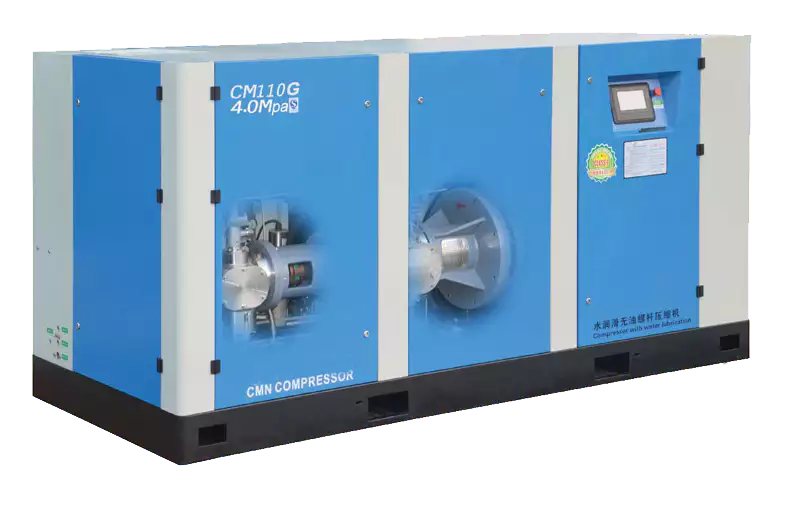
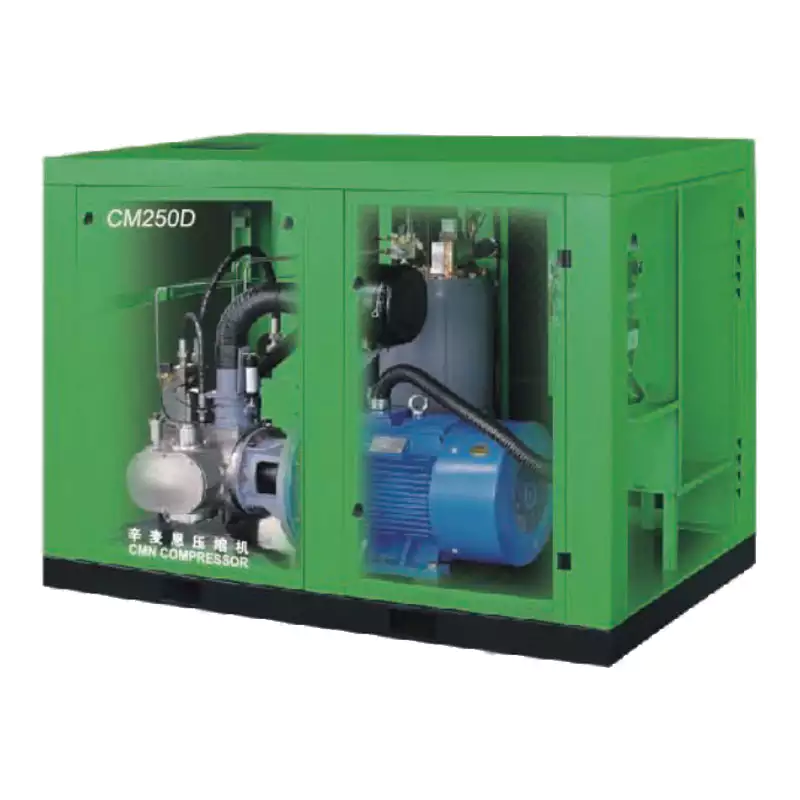
CM45D Water-Lubricated Oil-Free Screw Compressor
As dental practices grow to 6+ chairs, laboratories expand, or production schedules move to 24/7 operation, the CM45D provides the step up in capacity, service interval, and documentation that scroll technology cannot deliver. ISO 8573-1 Class 0 certified. Zero theoretical oil contamination pathway. 7,000-hour service intervals. IQ/OQ/PQ documentation for regulated industry buyers. Plan your growth path from the outset.
Frequently Asked Questions
Specify the Right Oil-Free Compressor for Your Application
Australia Oil Free Air Compressor Co., Ltd. supplies oil-free scroll and screw compressor systems for dental, laboratory, medical, and industrial customers across Australia — with free application assessment, technology selection guidance, and compliance documentation support.
Request a Free Application Assessment
Email: [email protected] | Contact Us | About Us