Certification & Standards Guide
The complete technical and regulatory guide to ISO 8573-1 Class 0 — the highest purity classification for compressed air — covering the standard’s precise definition, what documentation constitutes genuine certification, and every industry in Australia required to use it.
“ISO Class 0” is printed on datasheets, cited in tender specifications, and demanded by auditors across pharmaceutical manufacturing, food production, medical facilities, and dental practices. Yet the term is chronically misunderstood — by the engineers who specify it, by the procurement teams who evaluate it, and sometimes by the suppliers who claim it. This guide cuts through that ambiguity with engineering precision. We explain exactly what ISO 8573-1 Class 0 means in the language of the standard itself: what numerical limit it imposes, which contaminant it governs, how it was defined and why, and — critically — what documentation is required to substantiate a legitimate Class 0 claim versus a marketing assertion that will not withstand audit scrutiny. We then map Class 0 to every Australian industry sector where it is either legally mandated or effectively required under the regulatory frameworks that govern operations, explaining the specific regulatory instrument that creates the obligation and the consequences of non-compliance. Whether you are a facility engineer specifying a new compressed air system, a quality manager preparing for a TGA or BRCGS audit, or a procurement professional evaluating competing claims, this guide gives you the technical foundation to make — and defend — the right decision.
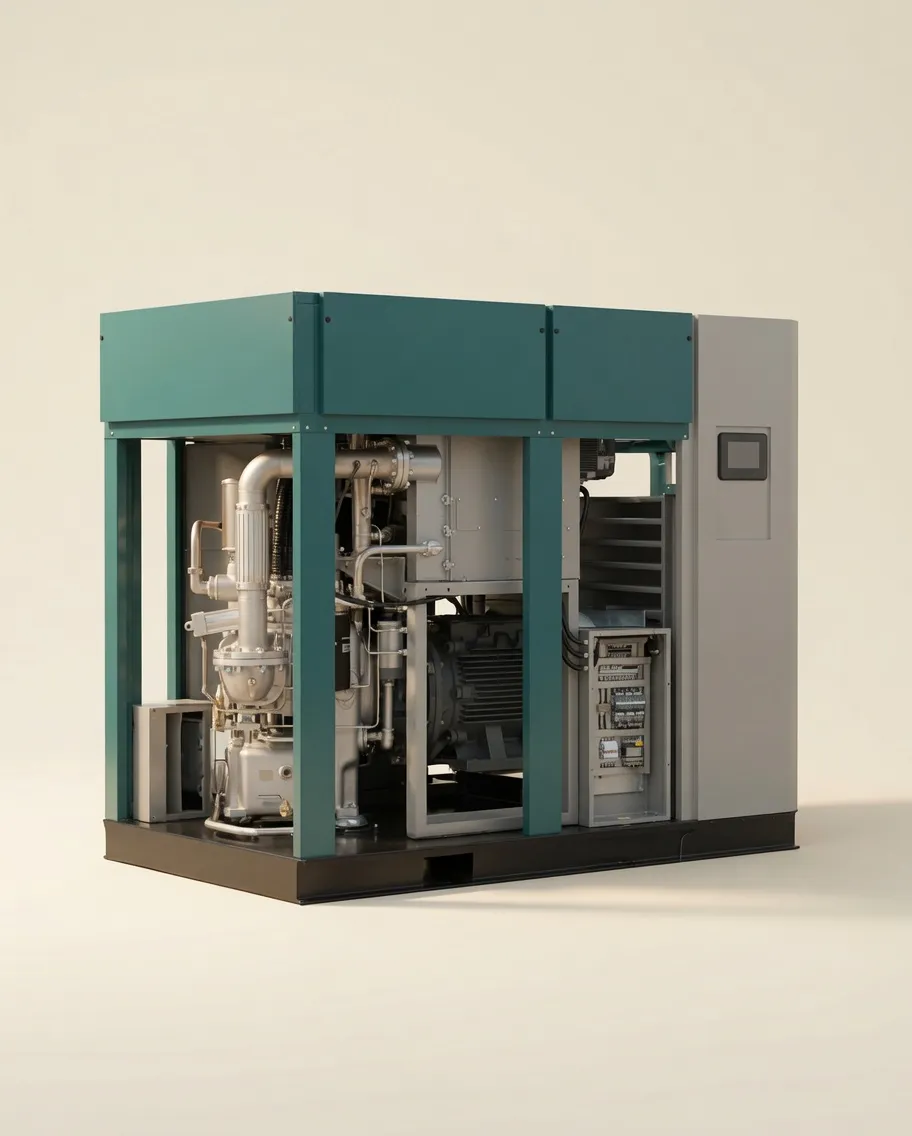
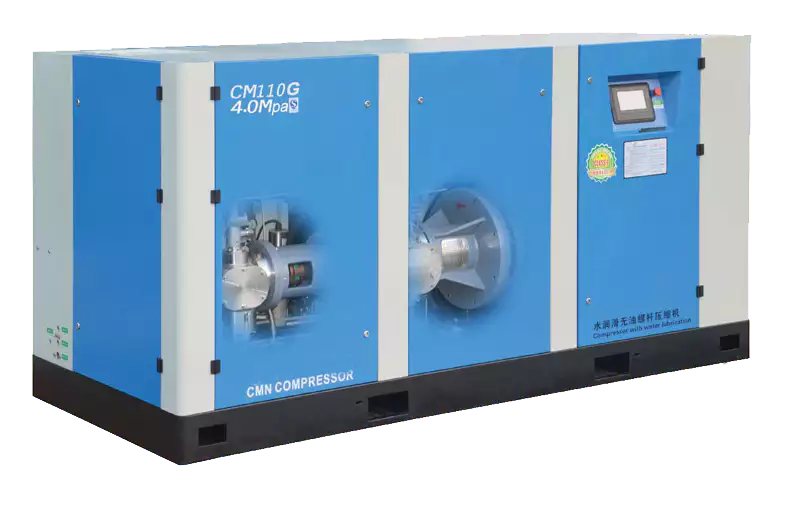
ISO 8573-1 Class 0 certified oil-free screw compressor — third-party verified to the highest purity classification in the international compressed air standard, independently confirmed by accredited laboratory testing.
ISO 8573-1:2010 — The Standard That Defines Compressed Air Purity
ISO 8573 is a multi-part international standard governing compressed air quality. Part 1 — Contaminants and purity classes — is the classification document that defines what each purity class means in terms of maximum allowable contamination. The current version, ISO 8573-1:2010, superseded the 2001 edition and introduced Class 0 as a formally defined class for the first time. It classifies compressed air quality across three primary contamination axes:
Axis 1
Solid Particulate
Maximum particle concentration across three size bands: 0.1–0.5 μm, 0.5–1.0 μm, and 1–5 μm. Classes range from 0 (cleanest, specified by agreement) through 1–5 to X (unclassified). Measured per ISO 8573-4.
Axis 2
Water / Moisture
Expressed as pressure dewpoint (PDP) in °C. Classes range from 0 (specified by agreement) through Class 1 (PDP ≤ −70°C) to Class 9 (+10°C). Measured per ISO 8573-3. Dewpoint class is independent of oil class — both must be specified for a complete air quality designation.
CLASS 0 FOCUS
Axis 3
Total Oil Content
Sum of all oil forms: liquid oil + oil aerosol (ISO 8573-2) + oil vapour (ISO 8573-5). Classes: 0 (<0.01 mg/m³, by agreement), 1 (≤0.01), 2 (≤0.1), 3 (≤1.0), 4 (≤5.0). This axis defines ISO Class 0.
ISO 8573-1:2010 — Formal Class 0 Definition
Class 0 is the highest oil purity classification in ISO 8573-1:2010. For total oil content (liquid oil + aerosol + vapour), Class 0 requires that the contamination level be more stringent than Class 1 — i.e., below 0.01 mg/m³ total oil — with the specific numerical limit and test method agreed between the equipment user and the supplier and documented in writing.
The standard’s explicit requirement for a documented user-supplier agreement is why a Class 0 claim in a datasheet alone is insufficient for audit purposes. The claim is only valid when supported by: (a) an agreed numerical limit in the purchase documentation, (b) a third-party laboratory test report confirming that limit is met, and (c) defined test methods referencing ISO 8573-2 and ISO 8573-5 for the oil content measurement.
What Genuine Class 0 Certification Requires — The Four-Document Test
A TGA pharmaceutical GMP inspector, a BRCGS food safety auditor, and an AS 2896 medical gas assessor all ask the same question when presented with a “Class 0 certified” claim: where is the evidence? The following four documents constitute the minimum evidence package for a legitimate Class 0 certification that will withstand regulatory audit:
1
Third-Party Accredited Laboratory Test Report
A test report from a NATA-accredited laboratory (or a laboratory accredited under an ILAC Mutual Recognition Arrangement) confirming measured total oil content at defined operating conditions. The report must reference ISO 8573-1:2010 as the classification standard and specify the test methods used (ISO 8573-2 for aerosol and liquid oil; ISO 8573-5 for vapour-phase hydrocarbons). A manufacturer’s own in-house test does not constitute third-party verification and is insufficient for regulated industry procurement under TGA GMP, BRCGS, or AS 2896 frameworks.
2
Documented Agreed Limit (Written Agreement)
ISO 8573-1:2010 Section 4 explicitly states that for Class 0, the specific limits “shall be agreed between the user of this part of ISO 8573 and the equipment supplier.” This agreement must be in writing and form part of the purchase record — ideally in the purchase order technical specification, the signed equipment acceptance test record, or a separate test acceptance certificate. Without a documented agreement, “Class 0” on a datasheet has no contractual or regulatory standing.
3
Worst-Case Test Conditions Defined
A Class 0 result obtained at low load and low ambient temperature does not guarantee Class 0 performance at full rated flow and maximum summer ambient conditions — which are the conditions under which the worst contamination scenario occurs. The test report must specify the operating conditions at which the test was performed (rated pressure, rated flow, inlet temperature). Ask suppliers: “Was this test performed at maximum rated load and in a high-ambient-temperature condition?” If not, the certification is optimistic rather than conservative.
4
Annual Site Validation Testing
The factory test certificate confirms Class 0 at the point of manufacture. Maintaining Class 0 compliance evidence for TGA GMP, BRCGS, SQF, and AS 2896 auditors requires annual air quality testing at the installed system’s product-contact outlets — not just at the compressor discharge. Downstream pipework corrosion, a degraded filter element, a dryer fault, or a leaking bypass valve can all allow contamination to reach the process outlet even with a Class 0 certified compressor upstream. The annual site test is the evidence of continued in-service compliance.
The Oil Content Classification Table: Class 0 in Context
Understanding where Class 0 sits in the full ISO 8573-1 oil content hierarchy is essential for specifying the correct class for each application zone within a facility — and for understanding why the standard distinguishes between Class 0 and Class 1 in regulatory frameworks.
| Oil Class |
Max Total Oil (mg/m³) |
How Achieved |
Regulatory Context |
| 0 |
< 0.01 mg/m³ |
True oil-free source only (water-lubricated or dry oil-free screw; oil-free scroll). No filter on oil-lubricated machine qualifies. |
Mandatory: TGA/PIC/S pharma, BRCGS/SQF food contact, AS 2896 medical, AS/NZS 4492 dental, ISO 13485 medical device |
| 1 |
≤ 0.01 mg/m³ |
Oil-free compressor + downstream 0.01 μm coalescing filter |
Hospital instrument air (non-patient-breathing), dental (incidental), food near-contact — with risk justification |
| 2 |
≤ 0.1 mg/m³ |
Oil-free or oil-lubricated + high-efficiency coalescing filter |
Food non-product-contact zones; closed pneumatic systems |
| 3 |
≤ 1.0 mg/m³ |
Oil-lubricated + standard coalescing filter |
General industrial pneumatics |
| 4–X |
≤ 5 mg/m³+ |
Basic or no filtration |
Construction, workshop, tyre inflation |
The Critical Distinction: Class 0 vs. Class 1
Both Class 0 and Class 1 have the same numerical limit (</≤ 0.01 mg/m³). The difference is not numerical — it is about how the limit is achieved and evidenced. Class 1 can be achieved by an oil-lubricated compressor with downstream filtration. Class 0 requires a true oil-free source independently certified by a third-party lab — because filtration is a detection/reduction control, while an oil-free source is a prevention/elimination control. Under pharmaceutical GMP (PIC/S), BRCGS, SQF, and AS 2896 risk frameworks, prevention is categorically required at product contact points — reduction is not acceptable as the primary control.
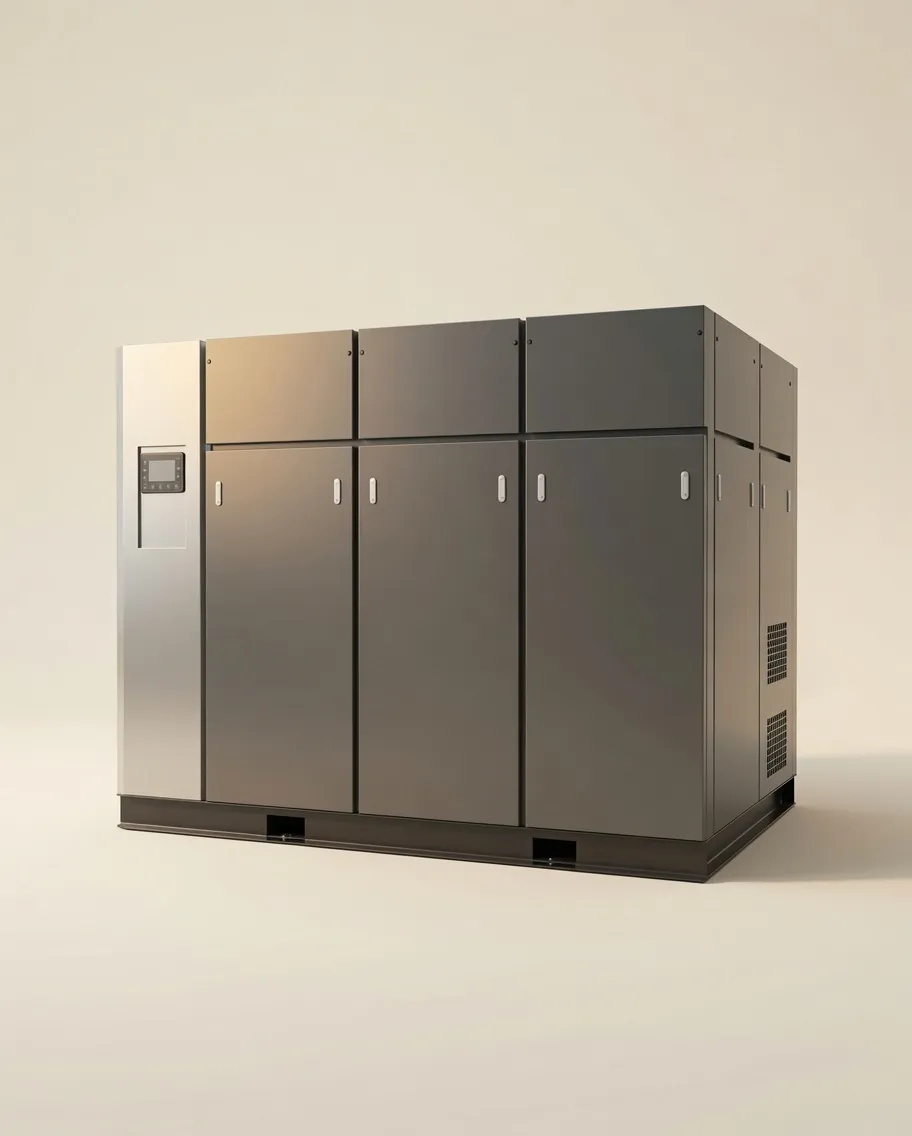
Water-lubricated oil-free screw compressor — the preferred technology for ISO 8573-1 Class 0 in regulated industries, with zero theoretical hydrocarbon contamination pathway and third-party certification documentation supplied at delivery.
Who Needs ISO Class 0: Regulatory Requirements by Industry
The following industries operate under regulatory frameworks that explicitly require or functionally mandate ISO 8573-1 Class 0 at compressed air points that contact — or could contact — product, patient, or critical surfaces. Our CM132DV water-lubricated oil-free compressor and CM45D compact model both carry full ISO 8573-1 Class 0 third-party certification for customers across all these sectors.
💊
Pharmaceutical Manufacturing
PIC/S PE 009-16 Chapter 3 requires that utilities including compressed air not constitute a contamination risk to product. Annex 1 specifically requires oil-free air in sterile manufacturing zones with 0.22 μm terminal filtration. The TGA enforces these requirements under the Therapeutic Goods Act 1989 — absence of Class 0 certification at product-contact points is a Critical finding at inspection.
TGA Critical finding risk — licence suspension
🥗
Food & Beverage Manufacturing
BRCGS Issue 9 Clause 4.9.3 requires oil-free compressed air with documented monitoring for direct product contact. SQF Edition 9 Module 11 and IFS Food Version 8 contain equivalent requirements. FSANZ Standard 3.2.2 requires food to be protected from contamination. Together these create a mandatory oil-free requirement for any GFSI-certified food manufacturer in Australia supplying Woolworths, Coles, ALDI, or export markets.
BRCGS Major — certification suspension risk
🏥
Hospital & Medical Facility
AS 2896:2011 (Medical gas pipeline systems) governs compressed air supply in Australian hospitals and healthcare facilities. Patient-administered air and surgical instrument supply must meet Class 0 oil content. Hyperbaric chamber air is particularly stringent — patients breathe pressurised air directly, making oil vapour contamination a direct inhalation toxicity hazard at therapeutic pressures above atmospheric.
AS 2896:2011 — mandatory clinical compliance
🦷
Dental Practice
AS/NZS 4492 (Dental compressed air systems) and the Dental Board of Australia’s infection control standards require oil-free compressed air for all clinical dental air supply. Oil contamination in dental unit waterlines creates a biofilm environment that is a recognised infection control risk. All major dental handpiece manufacturers (Sirona, KaVo, W&H, NSK) specify oil-free air as a condition of warranty.
AS/NZS 4492 + Dental Board infection control
🔬
Laboratory & Medical Device
ISO 13485 (Quality management systems for medical devices) and laboratory accreditation under ISO 17025 / NATA both require that utility gases including instrument air be free of contaminants that could affect product quality or measurement validity. Oil contamination of analytical instruments destroys chromatographic columns, poisons detector cells, and invalidates measurement traceability.
ISO 13485 / ISO 17025 / NATA accreditation
⚡
Electronics & Semiconductor
ISO 14644 (Cleanroom standards) and customer quality management requirements for electronics and semiconductor manufacturing specify oil-free compressed air for all cleanroom and near-cleanroom operations. Oil aerosol depositing on semiconductor wafers, PCB pads, or optical surfaces causes product failure modes that are typically undetectable until field deployment.
ISO 14644 cleanroom + customer QMS requirements
Which Compressor Technologies Can Achieve and Certify Class 0
ISO 8573-1 Class 0 certification requires both an oil-free compression source and independently verified test data. Not all compression technologies are equally suited to obtaining and maintaining this certification across the full range of regulated industry applications.
| Technology |
Class 0 Certifiable? |
Contamination Pathway |
Regulated Industry Notes |
| Water-lubricated screw |
✓ Preferred |
Zero theoretical — water is the only internal fluid; no oil in machine at all near compression zone |
Preferred by TGA GMP pharma auditors; easiest Class 0 audit trail; IQ/OQ/PQ documentation readily available |
| Dry oil-free screw |
✓ Certifiable |
Low risk — timing gear oil in isolated housing; rotor coating wear particles possible at end of coating life |
Acceptable for most regulated applications with gear oil seal condition monitoring; risk assessment required for sterile pharma |
| Oil-free scroll |
✓ Yes |
Tip seal polymer particles as seals wear; bearing grease isolated from compression zone |
Suitable dental, lab, small medical; capacity and documentation limits apply for large regulated facilities |
| Oil-free centrifugal |
✓ Yes (large) |
Very low — magnetic bearings in modern designs eliminate grease proximity |
Economical above 250 kW; high capital; not modular |
| Oil-lubricated + filter |
✗ Cannot certify |
Oil permanently present in compression stage — filter bypass is credible failure mode; cannot eliminate contamination pathway |
Not accepted for TGA GMP Class A/B, BRCGS direct contact, AS 2896 patient air, AS/NZS 4492 dental |
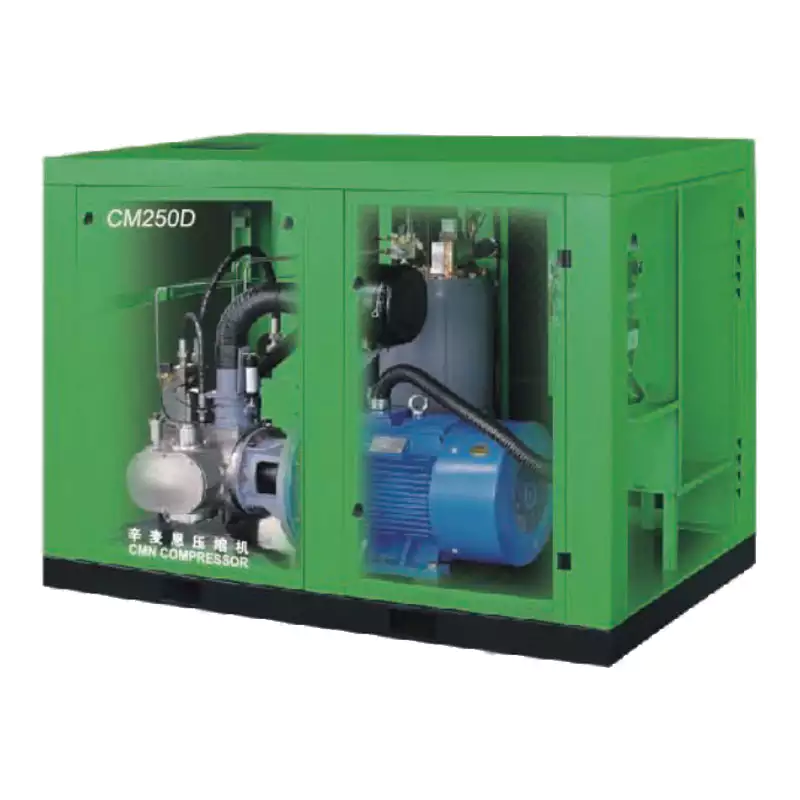
CMD series oil-free compressor — ISO 8573-1 Class 0 certified with third-party documentation supplied at delivery, IQ/OQ/PQ templates available, and annual validation service contract for ongoing compliance.
Specifying Class 0 Correctly: Purchase Language That Protects You at Audit
Vague specifications create ambiguity at audit. The following specification language, included in your purchase order or equipment technical specification, creates a contractually binding Class 0 commitment and generates the documentation trail required for TGA, BRCGS, and AS 2896 audits:
PURCHASE ORDER SPECIFICATION — ISO 8573-1 CLASS 0 (COPY AND ADAPT)
The compressed air system shall supply air quality meeting ISO 8573-1:2010 Class 0 for total oil content at all [product-contact / patient-contact / instrument air] outlets, with specific limit agreed as total oil content < 0.01 mg/m³ at rated operating pressure and flow.
The supplier shall provide at equipment delivery: (a) test report from a NATA-accredited laboratory (or equivalent ILAC MRA body) confirming total oil content measured per ISO 8573-2 (aerosol and liquid) and ISO 8573-5 (vapour) at rated conditions; (b) written confirmation of agreed Class 0 limit as specified above; (c) recommended annual validation protocol for ongoing compliance.
Manufacturer self-declarations do not satisfy this specification. Third-party accredited laboratory test data is required.
ISO 8573-1 Class 0 Certified Range
CM242GPV Medium-Pressure Oil-Free Screw Compressor
Third-party certified to ISO 8573-1 Class 0 with full NATA-accredited laboratory test documentation provided at delivery. Suitable for pharmaceutical manufacturing, food production, and medical facility central plant installations requiring independently verifiable Class 0 oil-free air. IQ/OQ/PQ documentation templates, annual validation contracts, and change control support available for regulated industry buyers.
View Product & Class 0 Certification →
Frequently Asked Questions
If Class 0 and Class 1 have the same oil limit, why can’t I use a filtered oil-lubricated compressor?
+
The numerical similarity is misleading. The regulatory distinction lies in the nature of the control, not just the measured outcome. ISO 8573-1 Class 0 requires a true oil-free source — which is a contamination prevention control. A filtered oil-lubricated compressor achieving 0.01 mg/m³ or below is using contamination reduction as its primary control. Under pharmaceutical GMP (PIC/S principle that contamination risks must be prevented, not merely controlled), BRCGS HACCP frameworks (where physical contamination hazards require preventive controls at product-contact points), and AS 2896 (which specifies oil-free plant as the required source), the filtration-based approach is explicitly inadequate regardless of the measured residual oil level. A filter can fail, saturate, or be bypassed — eliminating the control completely. An oil-free compressor that has no oil in the compression stage cannot produce oil-contaminated air through any mechanism inherent to its normal operation.
Our oil-free compressor failed the annual air quality test. What do we do?
+
An out-of-specification result at the installed system level most commonly has one of three causes — and only rarely indicates a compressor fault. First check: atmospheric hydrocarbon contamination at the intake. Take a background air sample at the compressor inlet — if the ambient air itself contains elevated hydrocarbons (common near loading docks, vehicle areas, or industrial neighbours), the compressor is faithfully delivering contaminated atmospheric air. Solution: relocate the intake or install an activated carbon pre-filter. Second: downstream system contamination — residual oil in pipework from a previously oil-lubricated system, a failed activated carbon filter element, or a bypass valve left open. Check and replace all downstream filter elements and flush the distribution system. Third: if intake air is clean and the system is clean, inspect the compressor’s gear oil shaft seals (dry screw designs) for evidence of oil migration toward the compression zone. Contact our service team immediately for a fault investigation protocol.
Does every outlet in our facility need Class 0, or only product-contact points?
+
Risk-based zoning applies in all regulated frameworks. Class 0 is required at all outlets where compressed air contacts product, patients, or critical surfaces. Outlets that serve only closed pneumatic actuators, engineering tools physically segregated from manufacturing, or building automation may be risk-classified at Class 1 or Class 2 with documented justification in your HACCP plan (food) or Quality Risk Management documentation (pharma). However, most facilities find it simpler and more robust to supply the entire facility from a single Class 0 source — segregating zone quality adds system complexity and the risk of cross-connection during maintenance. The cost of supplying Class 0 throughout is marginal (the compressor and primary treatment train is the same cost regardless); the risk management benefit of a single quality standard across the entire system is substantial.
How often should we retest our installed system to maintain Class 0 compliance?
+
Annual testing is the industry standard and the minimum expected by every regulated industry auditor in Australia. For pharmaceutical manufacturing (TGA GMP), the annual test is supplemented by quarterly spot-checks at Class A and Class B outlets as part of an ongoing monitoring programme. For BRCGS food safety, an annual full-system test covering all direct product-contact outlets is the expected evidence for Clause 4.9.3 compliance. For AS 2896 medical gas systems, annual validation with records retained per the facility’s document retention policy. For AS/NZS 4492 dental systems, annual testing at the dental unit outlet (not just the compressor discharge) is the standard approach for practice accreditation purposes. All test results should be retained for a minimum of 5 years; 15 years is recommended for pharmaceutical manufacturing aligned to therapeutic goods shelf-life retention requirements.
Is a European Class 0 certification valid for Australian TGA and BRCGS audits?
+
Yes — ISO 8573-1:2010 is adopted identically in Australia and all major international markets. A Class 0 test report from a DAkkS (Germany), UKAS (UK), or COFRAC (France) accredited laboratory is accepted in Australia under the ILAC Mutual Recognition Arrangement (ILAC MRA), to which NATA is a signatory. The standard, the purity class definitions, and the test method references are identical regardless of which ILAC MRA signatory country’s accredited laboratory performed the testing. What matters is: (a) the laboratory is accredited by an ILAC MRA signatory body; (b) the test report explicitly references ISO 8573-1:2010 and ISO 8573-2 and/or ISO 8573-5 as the applicable test methods; and (c) the measured values are reported with full uncertainty data. Country of origin of the test laboratory is irrelevant to validity.
Obtain ISO 8573-1 Class 0 Documentation for Your Facility
Australia Oil Free Air Compressor Co., Ltd. supplies ISO 8573-1 Class 0 certified compressors with NATA-accredited laboratory test documentation, annual validation contracts, and IQ/OQ/PQ templates for pharmaceutical, food, medical, and dental customers across Australia.
Request Class 0 Certification Package
Email: [email protected] | Contact Us | About Us