
In a cleanroom, every input to the controlled environment — air, water, materials, personnel — is scrutinised for its contamination contribution. Compressed air is no exception. It is used to pressurise transfer hatches, drive pneumatic actuators, purge product-contact surfaces, operate fill-and-seal equipment, and supply instrument air to process controllers. Each of these applications introduces compressed air — and whatever contamination it carries — directly into the cleanroom environment or onto the product itself. A conventional oil-lubricated compressor introduces hydrocarbon oil aerosol into this environment: a contamination source that is incompatible with cleanroom particle control, incompatible with ISO 8573-1 Class 0 requirements, and categorically unacceptable under pharmaceutical GMP, ISO 14644-based classification frameworks, and medical device manufacturing quality systems. This guide provides the complete technical reference for oil-free compressed air in cleanroom environments: the standards that govern both the cleanroom and the compressed air quality, how these frameworks interact, which oil-free technologies are appropriate for which cleanroom class, how to design and install a compliant system, and how to maintain and qualify it throughout its operating life.
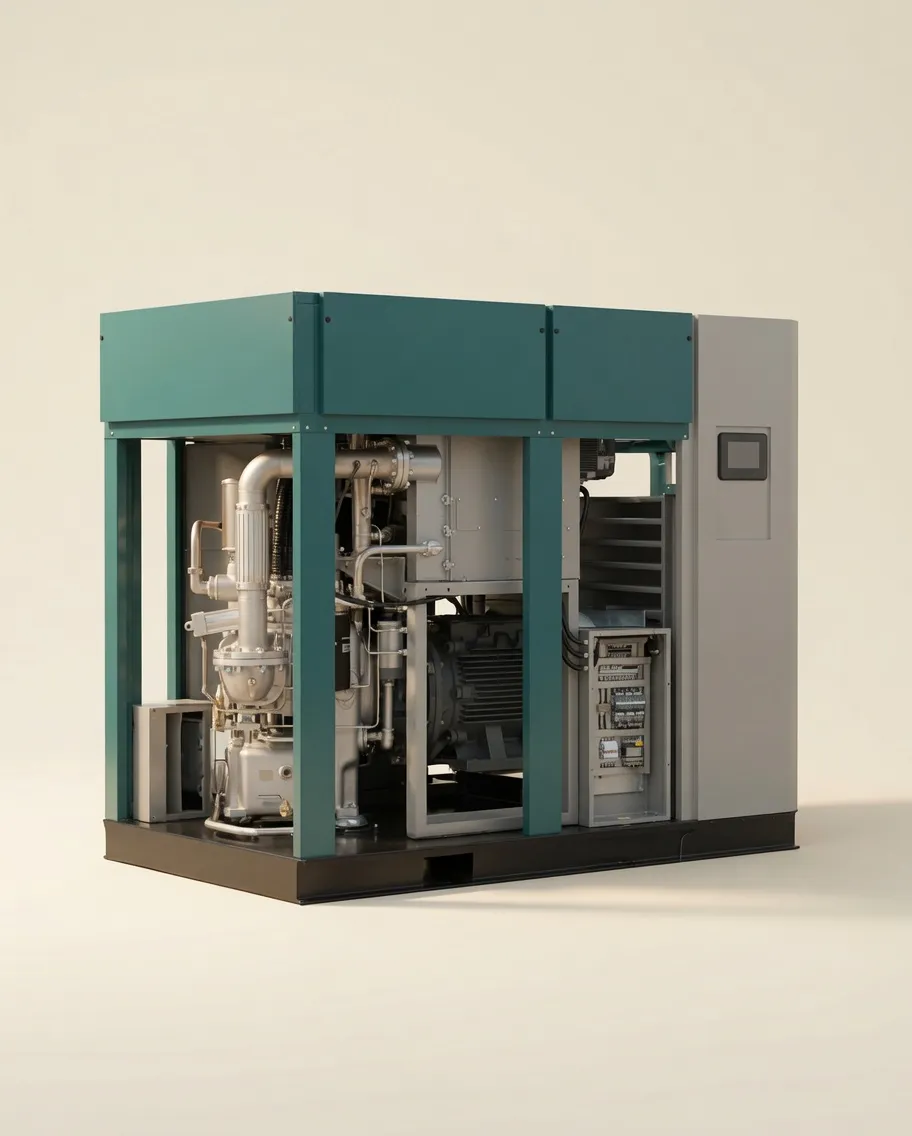
Two Standards, One System: ISO 14644 Meets ISO 8573
Cleanroom compressed air systems are governed by two independent but interacting international standards. Understanding how they work together — and where the gaps between them create specification ambiguity — is the prerequisite for designing a system that will satisfy both cleanroom classification audits and compressed air quality compliance requirements.
ISO 14644 — Cleanroom Classification
ISO 14644-1:2015 classifies cleanrooms by the maximum allowable airborne particle concentration at specified particle sizes. The classification table spans ISO Class 1 (most stringent, sub-nanometre technology) through ISO Class 9 (least stringent, essentially ambient-quality air). Most pharmaceutical manufacturing, semiconductor packaging, medical device assembly, and laboratory cleanroom work occurs in ISO Classes 5–8. ISO 14644 defines the cleanroom environment — the air within the controlled space — not the quality of utility gases supplied to equipment within that space. Compressed air quality must be separately specified using ISO 8573-1.
ISO 8573-1 — Compressed Air Quality Classification
ISO 8573-1:2010 classifies the purity of compressed air across three contamination axes: solid particulate, moisture (pressure dewpoint), and total oil content. For cleanroom applications, the most critical axis is oil content — Class 0 (<0.01 mg/m³ total oil, independently certified) is required at all product contact points and at points where compressed air is discharged into the cleanroom environment itself. The standard’s particulate and moisture classes must also be specified to avoid introducing particulate or condensation into a controlled space that has been engineered to exclude both.
The Interaction: Why ISO 14644 Alone Is Insufficient
ISO 14644 measures airborne particles within the cleanroom space. If oil-contaminated compressed air is discharged into an ISO Class 5 cleanroom through pneumatic actuator exhaust or purge nozzles, the oil aerosol particles from that discharge are not captured in the standard room certification particle counts — because the counts are typically taken in steady-state operation, not during compressed air discharge events. However, oil aerosol settling on product surfaces or re-entraining in room airflow is a contamination mechanism that compromises both product quality and cleanroom classification compliance. The correct approach: specify compressed air quality independently to ISO 8573-1 Class 0 oil content for all cleanroom supply, in addition to meeting ISO 14644 room classification requirements.
Why Oil Contamination Is Uniquely Destructive in Cleanrooms
Of all the contamination types that a cleanroom compressed air system must exclude — moisture, particulate, microorganisms — oil is the most insidious. Unlike moisture (visible as condensation) or particulate (detectable by particle counters), oil aerosol and oil vapour are invisible, undetected by standard cleanroom monitoring instruments, and highly adhesive to the surfaces they contact.
Wafer & Surface Adhesion
Oil aerosol deposits on semiconductor wafer surfaces, optical coatings, and PCB pads with extremely high adhesion. Hydrocarbon contamination at sub-monolayer levels (below 1 ng/cm²) causes adhesion failures, electrical resistance changes, and coating delamination that are typically undetectable until field deployment. In ISO Class 5 or better cleanrooms, oil contamination at any measurable level is cause for batch rejection and deep investigation.
Biofilm Promotion
In pharmaceutical and medical device cleanrooms, hydrocarbon oil provides a nutrient substrate that promotes microbial growth on stainless steel surfaces, filtration media, and distribution pipework. This is particularly serious in Class A/B sterile zones where viable contamination must be below 1 CFU/m³ — oil contamination can cause a sustained bioburden exceedance that persists long after the initial contamination event because the biofilm becomes self-sustaining.
Particle Generation Cascade
Oil aerosol settling on cleanroom surfaces — floors, work surfaces, HEPA filter housings — subsequently re-entrains as larger liquid droplets or oil-coated solid particles when disturbed by foot traffic, equipment movement, or air turbulence. A single oil contamination event can generate an extended elevation of cleanroom particle counts lasting hours or days, potentially triggering an ISO 14644 classification exceedance and forcing a production shutdown for deep cleaning.
Filter Media Degradation
Oil aerosol penetrating a cleanroom HEPA or ULPA filter permanently degrades filtration efficiency by plugging the sub-micron glass fibre media — a phenomenon known as filter “wetting.” A contaminated HEPA filter cannot be cleaned; it must be replaced, which requires a full cleanroom shutdown, re-validation of the air handling system, and re-certification of the cleanroom class before production can resume. Cost: AUD 15,000–80,000 per event in downtime and remediation.
Technology Selection: Matching Oil-Free Type to Cleanroom Class
Not all oil-free compressor technologies deliver equal confidence at ISO 8573-1 Class 0 in cleanroom environments. The choice of technology affects both the theoretical contamination risk and the ease of obtaining and maintaining the third-party certification that cleanroom qualification documents require.
Water-Lubricated Oil-Free Screw — The Cleanroom Standard for Regulated Applications
The water-lubricated oil-free screw compressor is the technology preferred by pharmaceutical GMP auditors for cleanroom compressed air supply in Class A, B, and C environments. Its defining advantage for cleanroom applications is the complete absence of any hydrocarbon fluid in the compression pathway — water is the only injection medium, and water carries no organic contamination pathway. Combined with discharge temperatures below 55°C (reducing thermal stress on downstream treatment equipment and pipework seals), 7,000-hour service intervals (reducing planned maintenance frequency and cleanroom disruption), and full IQ/OQ/PQ documentation capability, the water-lubricated design represents the most defensible technology choice for regulated cleanroom environments.
Dry Oil-Free Screw — ISO Class 7–8 and Non-Pharmaceutical Cleanrooms
The dry oil-free screw compressor — including the CM242GPV medium-pressure design — is certifiable to ISO 8573-1 Class 0 and is suitable for ISO Class 7 and 8 pharmaceutical cleanrooms (EU GMP Grade C and D), as well as semiconductor and electronics cleanrooms at ISO Class 6–8 where the contamination risk from gear oil shaft seal failure is adequately managed through a documented seal integrity monitoring programme. For ISO Class 5 (EU GMP Grade A/B) sterile manufacturing, water-lubricated designs are preferred because the dry screw’s residual gear oil proximity creates a credible (if low-probability) contamination pathway that risk-conscious pharmaceutical QA teams increasingly decline to accept under a prevention-based HACCP approach.
Oil-Free Scroll — Small Cleanroom and Laboratory Applications
For small cleanroom laboratories, analytical suites, and ISO Class 7–8 controlled environments requiring below 500 L/min continuous air supply, oil-free scroll compressors provide Class 0 capability with the lowest noise (45–62 dB(A)) and vibration of any oil-free technology. This makes them suitable for installation adjacent to vibration-sensitive cleanroom instruments — mass spectrometers, electron microscopes, interferometry systems — where screw compressor vibration would be incompatible with instrument performance specifications. Scroll technology’s capacity ceiling (typically 15–22 kW) limits its application to smaller cleanroom installations; larger facilities require the CM45D or larger water-lubricated screw models.
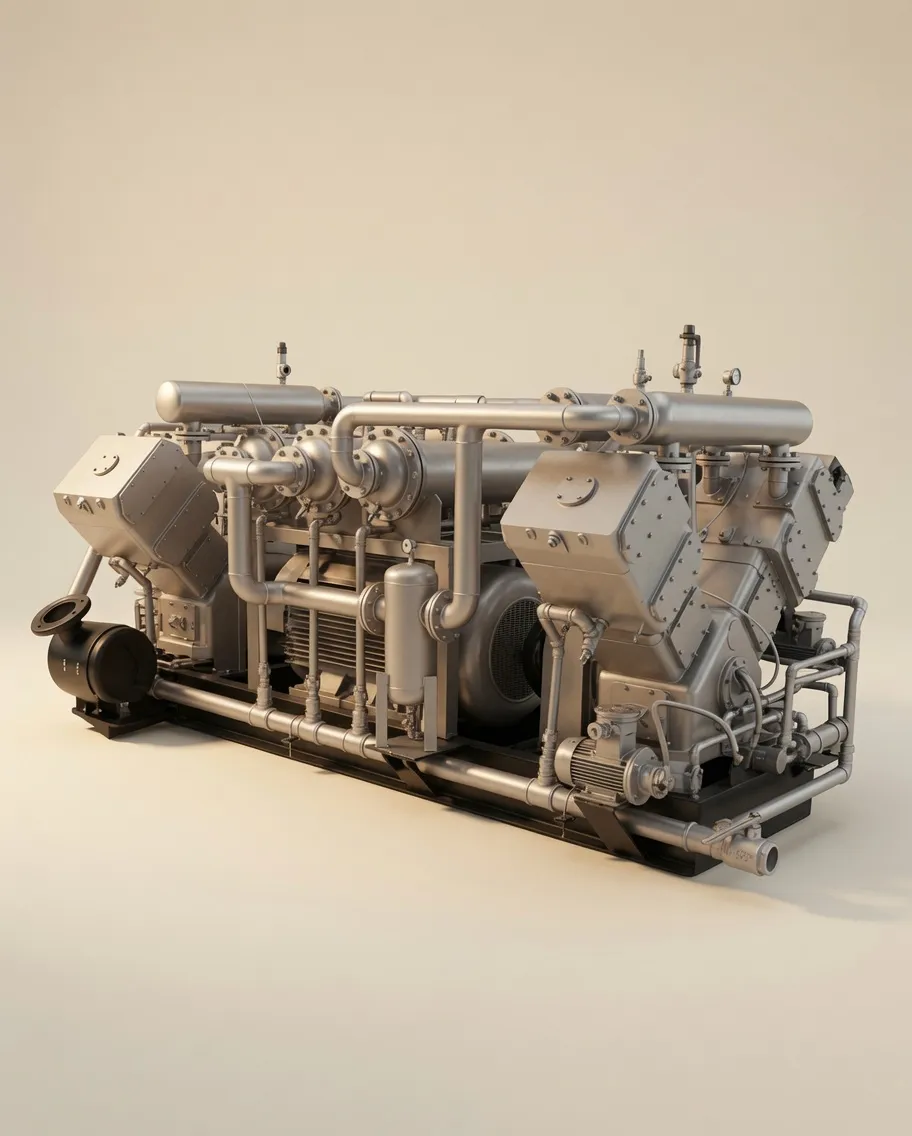
Cleanroom Compressed Air System Design: Five Critical Requirements
1. External Plant Room — Never Inside the Cleanroom Boundary
The compressor, receiver, and primary treatment equipment must be located outside the cleanroom boundary — in a dedicated plant room that is positively pressurised relative to surrounding non-controlled spaces but not connected to the cleanroom HVAC system. Any maintenance activity on the compressor (filter changes, service events, inspections) generates particulate and must not occur within the cleanroom envelope. Pipework penetrations through the cleanroom wall must be sealed with cleanroom-grade penetration seals to prevent uncontrolled air migration.
2. 316L Electropolished Stainless Steel Distribution Pipework
For ISO Class 5–7 cleanroom compressed air supply, distribution pipework must be constructed from electropolished 316L stainless steel with orbital butt-weld joints. Internal surface roughness Ra ≤ 0.8 μm is the standard specification — this minimises particulate accumulation in the pipework and prevents the microscopic crevices that harbour microorganisms. Carbon steel or galvanised steel pipework is categorically unsuitable. Copper pipework (Type A) is acceptable for ISO Class 8 and non-pharmaceutical cleanrooms. All pipework must be thoroughly passivated and flushed before first use.
3. Point-of-Use Terminal Filtration
Even with a Class 0 certified compressor and clean distribution pipework, terminal filtration is required at each cleanroom supply point to capture any particulate that has accumulated in the pipework since the last flow event. For ISO Class 5/6 sterile pharmaceutical applications: 0.22 μm sterilising-grade membrane filters at each Class A supply point, integrity-tested before first use and after each replacement. For ISO Class 7/8 and non-pharmaceutical cleanrooms: 0.01 μm high-efficiency coalescing filter at supply manifold with 0.01 μm fine filters at individual outlets.
4. No Dead-Legs — Minimum-Length Branch Runs
Dead-leg piping (sections of pipe downstream of the last take-off point that are not regularly purged by flow) accumulates particulate, condensation, and in pharmaceutical cleanrooms — microorganisms. GMP piping design limits dead-legs to ≤3× pipe diameter (measured from the centre of the run pipe to the end of the branch). In practice for cleanroom compressed air, every outlet branch should be as short as physically practical and should be provided with a manual purge valve at its terminus for periodic cleaning cycles. System design should be reviewed by a piping engineer familiar with GMP and ISO 14644 requirements before construction.
5. N+1 Redundancy with Automatic Changeover
For cleanroom applications in pharmaceutical GMP and medical device manufacturing, N+1 compressor redundancy is required to prevent production loss from compressor failure. Both the duty and standby units must be qualified and confirmed operational. Automatic changeover — triggered by a pressure drop below the minimum setpoint or by a compressor fault alarm — must be tested quarterly and documented. For sterile pharmaceutical Class A/B zones, the changeover must occur within 30 seconds to prevent a pressure excursion that could compromise zone integrity.
The Treatment Train: From Compressor to Cleanroom Outlet
The complete treatment train for a pharmaceutical ISO Class 5/6 cleanroom compressed air system follows this sequence, with each stage serving a defined function. For ISO Class 7/8 and non-pharmaceutical cleanrooms, the desiccant dryer and sterilising terminal filter requirements are relaxed — see the table following.
Qualification Requirements: IQ/OQ/PQ for Cleanroom Compressed Air
For pharmaceutical GMP cleanrooms and medical device ISO 13485-certified facilities, the compressed air system is a qualified utility — requiring formal Installation Qualification (IQ), Operational Qualification (OQ), and Performance Qualification (PQ) before use in production. The qualification scope for a cleanroom compressed air system extends beyond the compressor itself to include the entire system from intake to outlet.
IQ — Installation Qualification
Confirms the system was installed to specification: compressor model/serial verified against URS; pipework material certificates (316L SS); weld inspection records; P&ID as-built verification; all instrument calibration certificates; utility connections (electrical, drain, ventilation) per design drawings.
OQ — Operational Qualification
Confirms the system performs within design parameters: pressure delivery at worst-case demand; VSD performance across speed range; alarm function testing (high temp, low pressure, fault); automatic changeover test; dryer dewpoint performance under load; initial air quality sampling confirming ISO 8573-1 Class 0 at all cleanroom supply points.
PQ — Performance Qualification
Confirms consistent performance in actual production conditions over a minimum 3-month period: all outlet air quality tests meeting Class 0 at every cleanroom supply point; pressure dewpoint at specification; pressure stability during peak demand; bioburden at Class A/B outlets (pharma sterile only). PQ report approved by Head of Quality before production use.
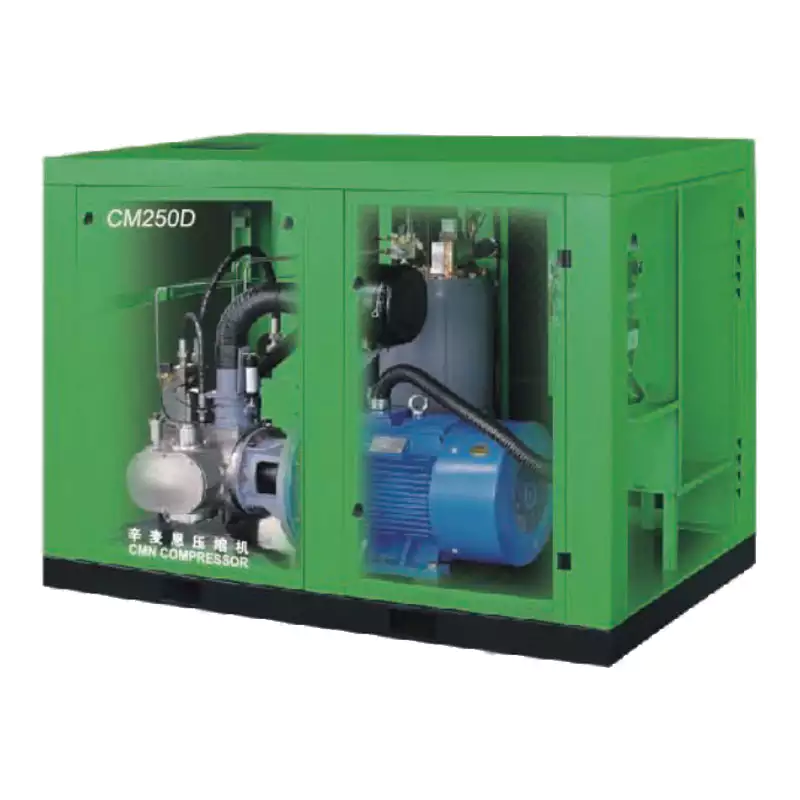
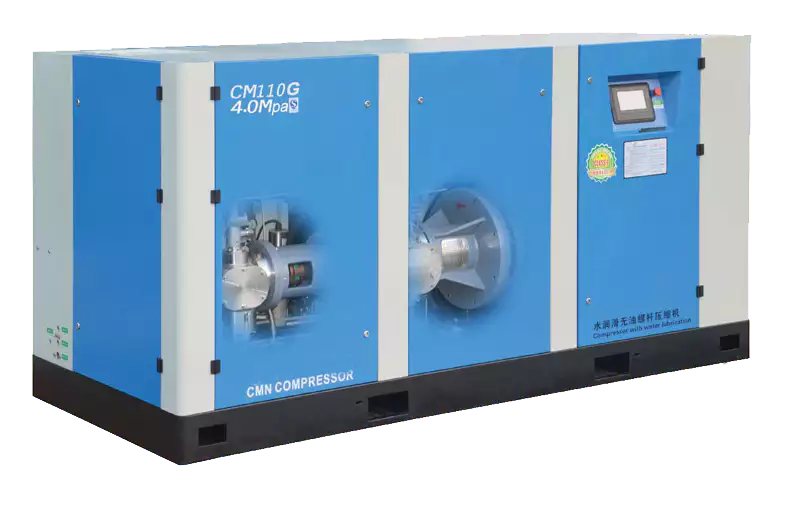
CM132DV Water-Lubricated VSD Oil-Free Compressor
Zero oil contamination pathway. ISO 8573-1 Class 0 certified by NATA-accredited laboratory. IQ/OQ/PQ documentation templates included. VSD energy efficiency for variable cleanroom demand profiles. Discharge temperature below 55°C — lowest thermal stress on cleanroom distribution pipework and terminal filters. Annual validation contract available for ongoing GMP and ISO 14644 compliance documentation.
Frequently Asked Questions
Design Your Cleanroom Compressed Air System
Australia Oil Free Air Compressor Co., Ltd. supplies ISO 8573-1 Class 0 certified compressors with IQ/OQ/PQ documentation, annual validation contracts, and technical design support for pharmaceutical, semiconductor, medical device, and laboratory cleanroom facilities across Australia.
Request Cleanroom System Consultation
Email: [email protected] | Contact Us | About Us