
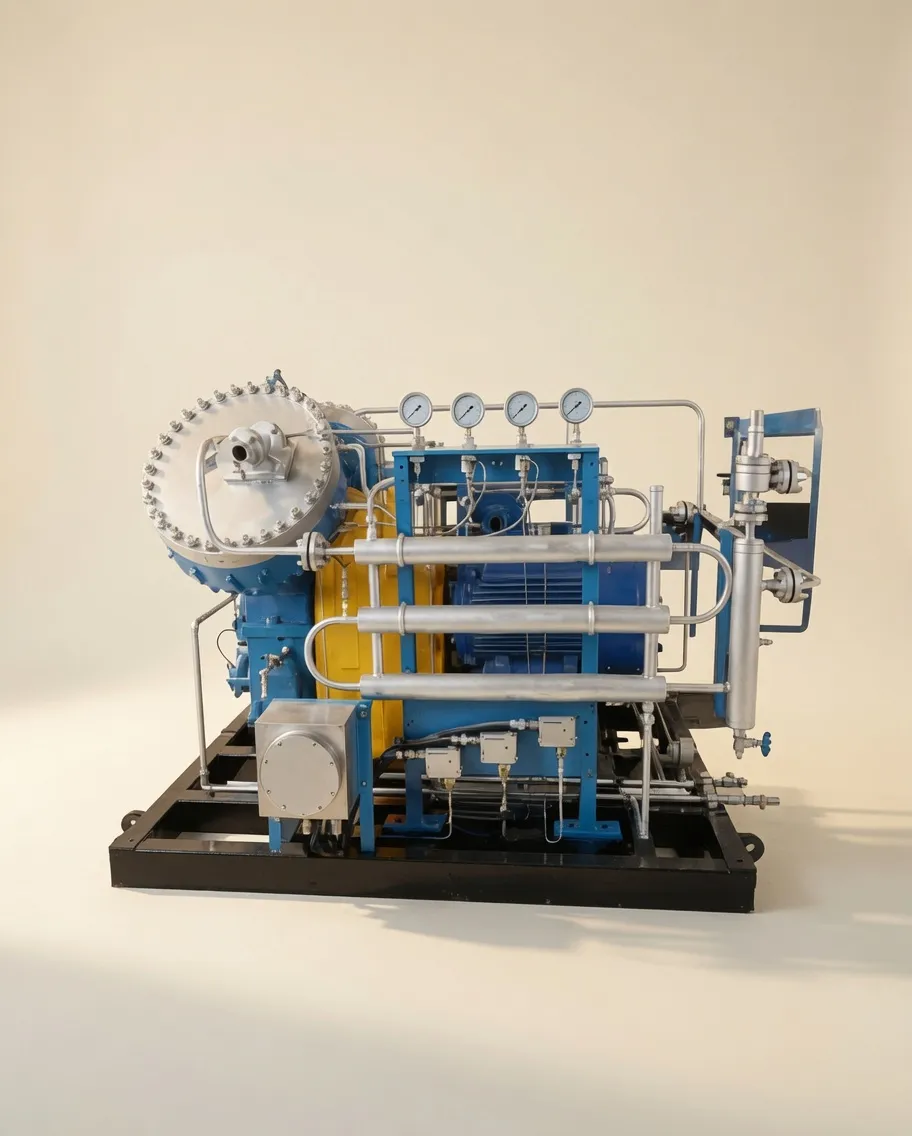
PSI, Bar, and the Language of Compressed Air Pressure
Before diving into industry-specific data, a brief note on units. PSI (Pounds per Square Inch) is the standard pressure reference in the United States and is widely used in Australian industrial specifications. The ISO and European standard uses bar, where 1 bar ≈ 14.5 PSI. Most modern oil-free air compressor controllers display both. This guide uses PSI throughout but the table below provides bar equivalents for quick reference.
It is critical to distinguish between three pressure points in any system: compressor rated pressure (maximum outlet pressure), system working pressure (the setpoint at which the compressor operates), and point-of-use pressure (the pressure available at the tool or process after all losses). The point-of-use figure is the one that determines whether a process functions correctly — and it is almost always 5–20 PSI lower than the compressor outlet, depending on pipe length, diameter, and fitting count.
| Pressure Band | PSI Range | Bar Equivalent | Typical Applications |
|---|---|---|---|
| Low Pressure | 55–100 PSI | 3.8–6.9 bar | Dental, medical, general workshop, food packaging |
| Medium Pressure | 100–175 PSI | 6.9–12 bar | Laser cutting, heavy manufacturing, injection moulding |
| High Pressure | 175–450 PSI | 12–31 bar | High-pressure laser cutting, nitrogen generation, diving |
| Ultra-High Pressure | 450–900+ PSI | 31–62+ bar | PET bottle blowing, SCBA filling, composite moulding |
Medical, Dental & Healthcare PSI Requirements
Healthcare is one of the most demanding environments for oil-free compressed air — not primarily because of pressure requirements (which are relatively modest at 55–100 PSI) but because of air purity standards. Any hydrocarbon contamination in medical air is a patient safety issue. In Australia, medical compressed air must comply with AS 2896 and typically references ISO 8573-1 Class 1 or better for oil content (≤0.01 mg/m³).
Medical and pharmaceutical applications underscore a fundamental principle: PSI is necessary but not sufficient. The compressed air quality standard — defined under ISO 8573 for particles, water, and oil — is equally critical. A compressor delivering the right pressure with inadequate purity can still cause product contamination, regulatory failure, and patient harm. This is precisely why contamination-free compressed air from a certified oil-free source is non-negotiable in these sectors.
Food & Beverage Industry PSI Requirements
The food and beverage sector presents the widest pressure range of any single industry — from 90 PSI for general pneumatic conveyors to over 900 PSI for PET bottle blow moulding. Understanding which processes in a facility require which pressures is the starting point for any system design. Food contact air must also be free of oil at all stages, typically certified to ISO 8573-1 Class 1 or Class 0 for direct product contact.
Food Processing Pressure Zones
| Process | PSI at Point of Use | Outlet PSI | ISO 8573 Class | Air Contact |
|---|---|---|---|---|
| Pneumatic conveyors | 85–100 PSI | 100–115 PSI | Class 2 | Indirect |
| Filling & dosing valves | 90–115 PSI | 115–130 PSI | Class 1 | Direct |
| Air knives / product drying | 50–80 PSI | 80–100 PSI | Class 1 | Direct |
| Packaging sealing pneumatics | 80–100 PSI | 100–115 PSI | Class 1–2 | Indirect |
| PET bottle pre-form blowing | 580–620 PSI | 600–650 PSI | Class 0–1 | Direct (inside bottle) |
| PET bottle full-blow moulding | 810–870 PSI | 850–900 PSI | Class 0 | Direct |
PET bottle blowing deserves special attention: the air is blown directly into the interior of a beverage container, making it one of the most demanding food-contact compressed air applications in existence. Both pressure accuracy (±15 PSI tolerance) and absolute oil-free purity are required simultaneously. A two stage air compressor rated for 600–900 PSI with ISO 8573-1 Class 0 oil content certification is the only appropriate solution.
General Manufacturing & Workshop PSI Standards
General manufacturing covers a broad pressure band. The majority of standard pneumatic tools operate between 80–100 PSI at the point of use, but specialised fabrication and assembly equipment can push requirements significantly higher. The key design principle is to ensure the lowest-pressure point in the system still receives adequate pressure, not to operate the compressor at maximum rated pressure throughout.
CFM: 3–6 per tool
CFM: 5–8 per tool
CFM: 4–14 per gun
CFM: 4–8 per cutter
CFM: 10–20+ per cabinet
CFM: 20–80 per machine
Note the HVLP spray gun entry: HVLP (High Volume Low Pressure) guns are intentionally designed to operate at very low atomising pressure — 10 PSI at the air cap per most US and Australian regulations. However, they require high air volume (CFM) from the compressor. The compressor outlet pressure is higher (40–60 PSI) to overcome gun inlet restrictions, while the actual delivered air cap pressure must remain below legal limits for coating quality and VOC compliance.
Laser Cutting: The Most PSI-Critical Manufacturing Application
Laser cutting is notable because the cutting gas — whether oxygen, nitrogen, or high-pressure air — must be delivered with precise pressure and zero oil contamination simultaneously. Oil droplets in the cutting stream cause inconsistent kerf quality, lens contamination, and potential fire hazard when working with oxygen-assist cutting. This makes the oil-free rotary screw compressor the only viable solution for compressed air assist cutting.
PSI Requirements by Laser Power & Material
| Laser Type & Power | Material | Assist Gas | Nozzle Pressure (PSI) | Compressor Outlet PSI |
|---|---|---|---|---|
| CO₂ laser, 1–3 kW | Thin stainless (<3mm) | Air | 100–145 PSI | 145–175 PSI |
| Fibre laser, 3–6 kW | Carbon steel, aluminium | O₂ / Air | 145–230 PSI | 175–250 PSI |
| Fibre laser, 8–15 kW | Thick stainless (6–20mm) | N₂ | 230–300 PSI | 250–350 PSI |
| Fibre laser, 20+ kW | Heavy plate (20mm+) | N₂ / High-P Air | 300–435 PSI | 400–450 PSI |
The pressure tolerance at the cutting nozzle is typically ±5% — a significant precision requirement that demands stable compressor outlet control. Pressure fluctuations above ±10 PSI from setpoint are directly visible as cut quality variation, particularly in stainless steel and aluminium work where surface finish is critical.
For nitrogen-assist cutting, note that the compressor is feeding an on-site nitrogen generator rather than the cutting head directly. Nitrogen generators have their own inlet pressure requirements, typically 100–145 PSI, and the high-pressure cutting gas is then separately compressed. Always confirm the nitrogen generator’s inlet specification when designing a laser cutting air system.
Electronics, Semiconductor & Cleanroom PSI Specifications
Electronics and semiconductor manufacturing operate at modest pressures — typically 80–100 PSI — but with some of the most stringent air quality standards on earth. ISO 8573-1 Class 0 oil content (zero detectable oil) and particle Class 1 (≤20,000 particles/m³ at ≥0.1 μm) are standard requirements. A single oil aerosol particle on a wafer surface can render an entire lot of semiconductors worthless. The compressed air quality standard must be verified and documented continuously.
Outlet PSI: 100–115 PSI
ISO Class: Class 1–2
Dew point: −4°F (−20°C) pdp
Notes: Solder paste pick-and-place cylinders; vacuum generators
Outlet PSI: 100 PSI
ISO Class: Class 0 (oil-free certified)
Dew point: −58°F (−50°C) pdp
Notes: Tool air for process equipment; N₂ generation feed
Outlet PSI: 100–115 PSI
ISO Class: Class 0–1
Dew point: −40°F (−40°C) pdp
Notes: Pressurisation air; lab instruments; cleanroom HVAC
The ISO 8573 standard is the unified reference framework for these specifications. Under ISO 8573-1, Class 0 for oil represents concentrations lower than Class 1 (≤0.01 mg/m³), with the specific limit defined by the equipment user. In semiconductor applications, this commonly means <0.001 mg/m³ — effectively zero detectable oil. Only true oil-free compression technology — not filtered oil-injected compression — reliably achieves this standard.
Understanding Pressure Drop: Why Outlet PSI ≠ Point-of-Use PSI
Every element in a compressed air distribution system consumes pressure. The accumulation of these losses — known as pressure drop — can easily reach 15–25 PSI between the compressor outlet and the furthest point of use in a large facility. Failing to account for these losses is one of the most common causes of inadequate operating pressure at the tool or process end.
Well-maintained units stay near the low end; fouled coils can push 5+ PSI drop.
Replace element when drop exceeds 5 PSI — clogged elements waste more energy than the filter costs to service.
Depends heavily on pipe diameter; undersized pipe is the largest single source of avoidable pressure drop.
Ball valves: low drop. Gate valves open fully: moderate. Butterfly valves: variable. Minimize fittings count in high-flow lines.
Higher than refrigerated dryers; factor this into total system design especially in medical/pharma systems.
Design compressor outlet pressure = required point-of-use PSI + system pressure drop budget.
A practical example: a pharmaceutical tablet coating line requires 100 PSI at the process. The system includes a desiccant dryer (4 PSI), two coalescing filters (2 PSI each), 200 feet of 1-inch pipework (8 PSI), and assorted fittings (4 PSI). Total drop: 20 PSI. The compressor outlet setpoint must therefore be at least 120 PSI, requiring a unit rated at 130–145 PSI maximum to maintain this setpoint without running at maximum rated pressure continuously.
ISO 8573 & Pressure: How Quality and PSI Work Together
ISO 8573 (and its key sub-standard ISO 8573-1) classifies compressed air quality across three pollutant categories: particles, water/humidity, and total oil content. These quality requirements are independent of, but inseparable from, pressure specifications. A system can deliver exactly the right PSI and still fail if the air contains oil vapour above the application’s tolerable limit.
For any application requiring contamination-free compressed air — medical, pharmaceutical, food direct contact, electronics, or semiconductor — the specification must include both the operating PSI and the ISO 8573-1 class. Specifying PSI alone leaves the quality dimension undefined.
| ISO 8573-1 Oil Class | Max Oil Content (mg/m³) | Requires Oil-Free Compressor? | Suitable Applications |
|---|---|---|---|
| Class 0 | <0.01 (user-specified) | Yes — mandatory | Semiconductor, sterile pharma, direct food contact |
| Class 1 | ≤0.01 mg/m³ | Yes — strongly recommended | Medical air, dental, food contact, cleanrooms |
| Class 2 | ≤0.1 mg/m³ | Filtration-based achievable | Indirect food contact, general electronics assembly |
| Class 3–5 | 0.1–25 mg/m³ | Not required | General manufacturing, construction, non-contact industrial |
Specifying the Right PSI with Confidence: Our Engineering Support
Australia Oil Free Air Compressor Co., Ltd. operates from our Charlton Industrial Area facility with an engineering team experienced across all the industry sectors discussed in this guide. We specify compressors with both pressure and air quality requirements defined — not pressure alone — because we understand that delivering the right PSI to a pharmaceutical line means nothing if the air contains oil vapour.
Our product range covers every pressure band from 90 PSI general workshop units to 450 PSI high-pressure screw compressors for demanding cutting and blowing applications. Every unit is documented with measured FAD at rated pressure, certified ISO 8573-1 class, and appropriate Australian compliance references.
Reach us at [email protected] with your application PSI requirement and industry — we will recommend the right unit with full technical backup.
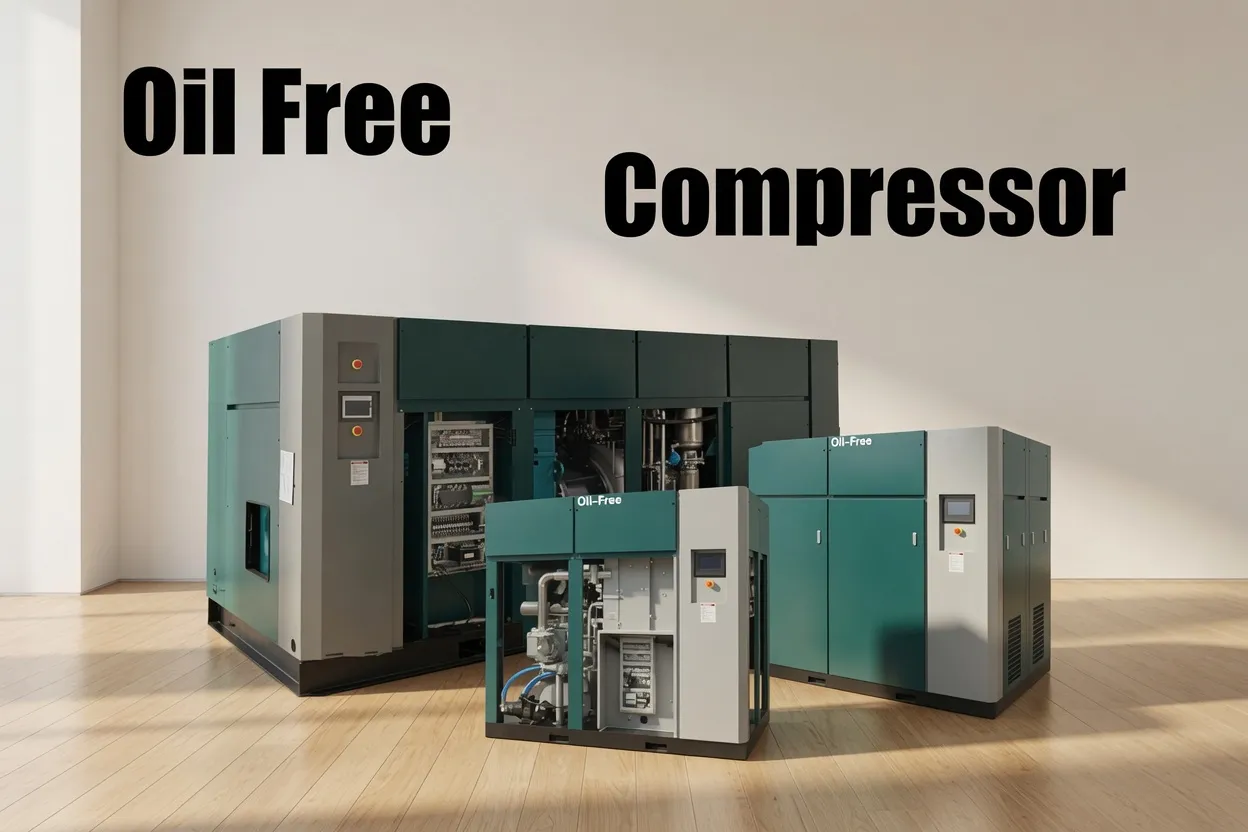
Screw Air Compressor for Laser Cutting — 1.6 MPa Oil-Free
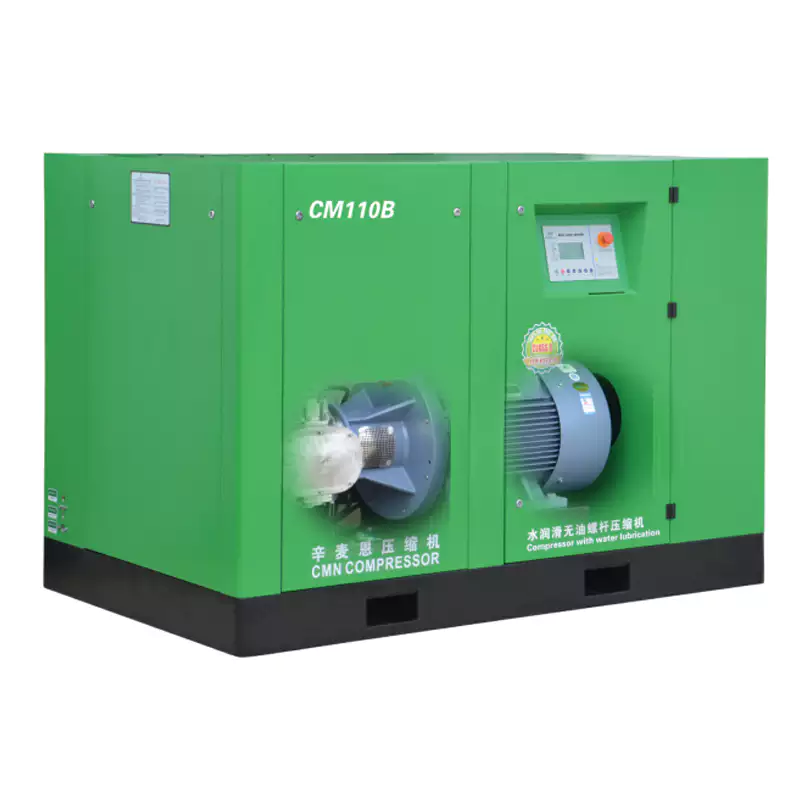
Engineered specifically for medium-to-high-power fibre laser cutting applications, this 1.6 MPa (232 PSI) rated oil-free screw compressor addresses the pressure and purity requirements described throughout this guide. Delivering genuine oil-free air at stable outlet pressure — ideal for cutting stainless steel, aluminium, and carbon steel plate — with certified ISO 8573-1 Class 0 oil content, it removes the risk of lens contamination and ensures consistent kerf quality throughout extended production runs.
Frequently Asked Questions
Australia Oil Free Air Compressor Co., Ltd.
Charlton Industrial Area, Australia | [email protected]