
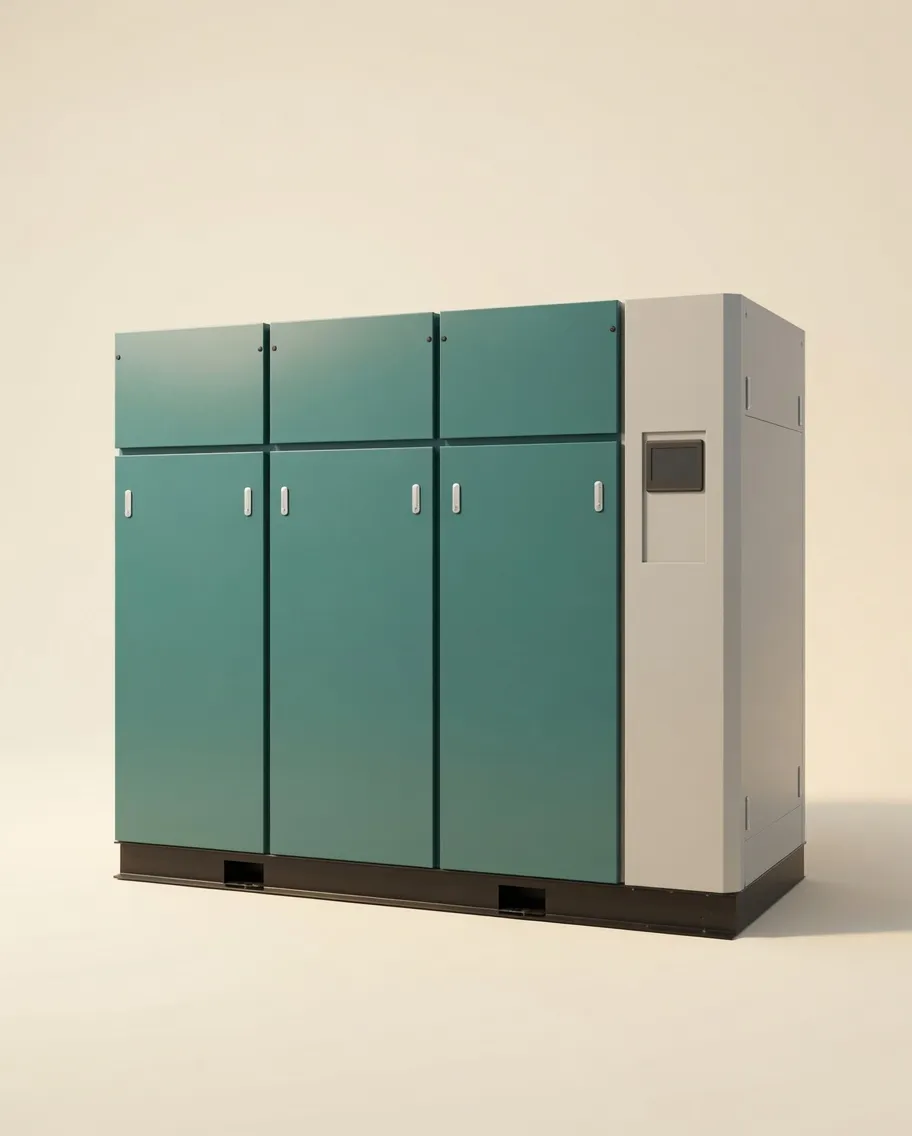
Why Oil-Free Compressors Still Need Dryers — And Why the Right Choice Matters
The term “oil-free” describes the lubrication technology of the compression element — it does not describe the moisture content of the compressed air produced. Atmospheric air drawn into any compressor contains water vapour. When that air is compressed, the water vapour concentration increases proportionally to the compression ratio. At 100 PSI (7 bar), the air volume is compressed to roughly one-seventh of its original volume, concentrating the moisture content sevenfold. When this air subsequently cools in distribution pipework or at the point of use, that concentrated moisture condenses into liquid water.
For oil-free systems in quality-critical applications — pharmaceutical, food processing, electronics, laser cutting — this moisture problem carries additional weight. These applications rely on oil-free air specifically because they cannot tolerate contamination. Liquid water in a pharmaceutical process air line is a contamination event just as surely as oil carryover would be. The compressed air dryer is therefore not an optional add-on to an oil-free system; it is as integral to the system’s quality performance as the compressor itself.
The right dryer choice depends on three questions: What dew point does your application require? What flow rate and inlet conditions does the dryer need to handle? And what energy and maintenance cost profile fits your operating model? This guide addresses each question systematically.
The Four Dryer Technologies for Oil-Free Systems
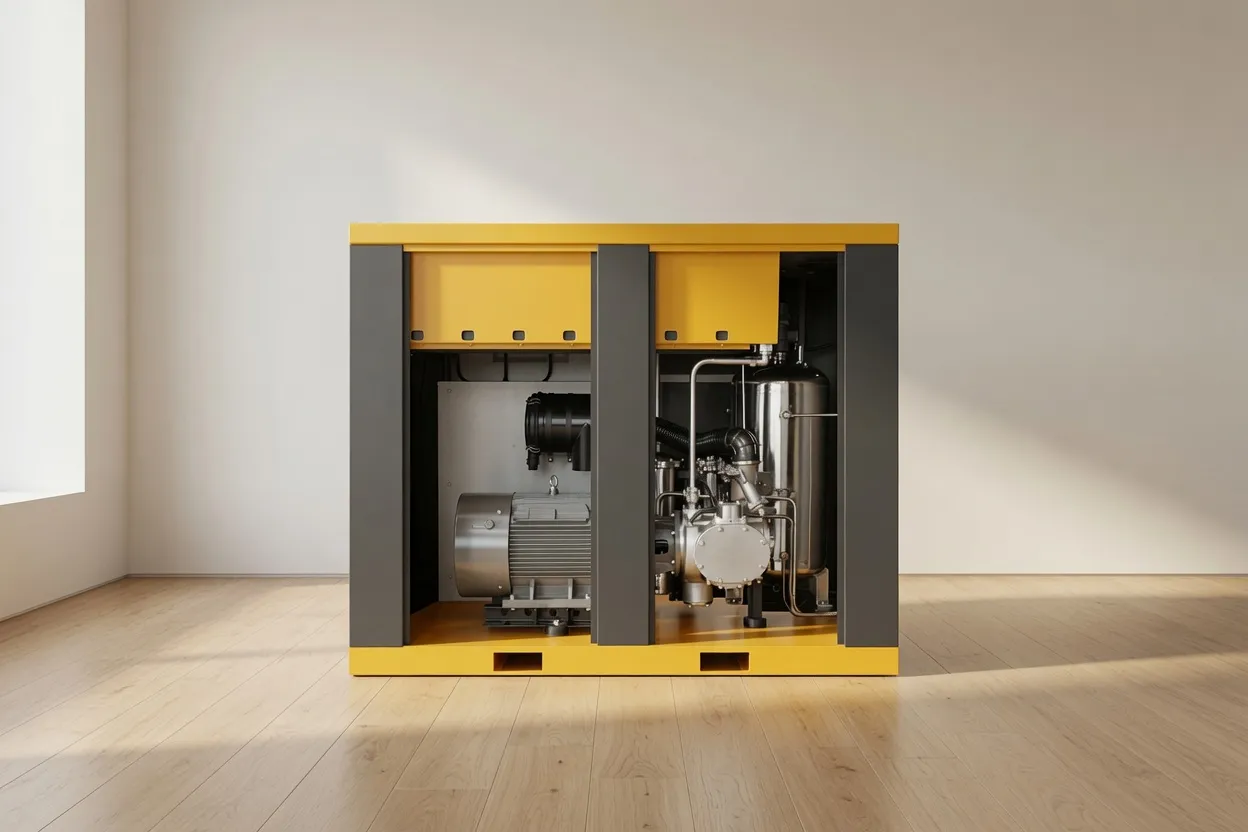
Four distinct drying technologies are used in compressed air systems. Each achieves a different dew point, has a different energy profile, and suits a different range of applications. Understanding their operating principles is the prerequisite for correct selection.
Matching Dew Point to Your Application: The Selection Matrix
The single most consequential dryer selection decision is the target dew point — and it must be matched to the application’s actual requirement, not over- or under-specified. Under-specification leaves moisture problems unsolved. Over-specification wastes capital and energy on drying capability the process does not need.
| Application | Required Dew Point (pdp) | ISO 8573-1 Water Class | Correct Dryer Type |
|---|---|---|---|
| General workshop tools (indoor) | +7°C | Class 4–5 | Refrigerated |
| Spray painting, powder coating | +3°C | Class 3–4 | Refrigerated (cycling) |
| Food packaging (indirect) | +3°C | Class 3 | Refrigerated |
| Laser cutting assist gas | −26°C | Class 1–2 | Refrigerated pre-dryer + desiccant polisher |
| Food direct contact / beverage | −26°C | Class 1 | Desiccant or HOC |
| Medical instrument air (AS 2896) | −26°C | Class 1 | Heatless desiccant |
| Pharmaceutical GMP / FDA | −40°C | Class 1 | Heated desiccant or HOC |
| Electronics / semiconductor | −40°C to −70°C | Class 1 | Heated desiccant (blower purge) |
| Outdoor pipework (cold climate) | Below min. ambient temp | Class 1–2 | Heatless desiccant |
The laser cutting entry warrants explanation: a two-stage approach — refrigerated pre-dryer followed by a smaller desiccant polisher — is often more economical than a full-flow desiccant dryer. The refrigerated stage removes 80–90% of moisture at low energy cost; the desiccant stage polishes the remaining moisture to −26°C or lower at a fraction of the flow volume and energy. For systems above 150 CFM, this combination typically has lower lifecycle cost than a full-flow heatless desiccant dryer.
Dryer Sizing: Why Catalogue CFM Is Never the Whole Story
Every dryer manufacturer publishes a rated CFM capacity — but that rating applies only at a specific set of inlet conditions: typically 35°C inlet air temperature, 100 PSI inlet pressure, and 25°C ambient temperature. When your actual conditions differ from these reference conditions, the dryer’s effective capacity changes — sometimes significantly. For Australian sites with high ambient temperatures and high inlet air temperatures from non-aftercooled systems, the correction can reduce effective dryer capacity by 30–40% below the catalogue rating.
Always apply correction factors before comparing catalogue CFM ratings to your system’s actual flow:
| Parameter | Reference Condition | Correction Factor | Effect |
|---|---|---|---|
| Inlet air temperature | 35°C | −3% per °C above 35°C | At 45°C inlet (common in summer): capacity drops 30% |
| Ambient temperature | 25°C | −2% per °C above 25°C | At 40°C ambient: capacity drops 30% |
| Inlet pressure | 100 PSI | +2% per 14.5 PSI above / −2% below | At 145 PSI: capacity increases ~6% — minor positive effect |
| Required dew point (refrig.) | +3°C pdp | +10% per degree warmer target | +7°C target: capacity increases ~40% (warmer = easier) |
| Altitude | Sea level | −3% per 300 m elevation | At 900 m elevation: capacity drops ~9% |
System flow: 100 CFM · Inlet air temp: 45°C (summer) · Ambient: 40°C · Pressure: 100 PSI
Temperature correction: (45−35) × 3% = 30% reduction → multiply by 0.70
Ambient correction: (40−25) × 2% = 30% reduction → multiply by 0.70
Combined corrected capacity: Catalogue rating × 0.70 × 0.70 = Catalogue × 0.49
→ To deliver 100 CFM effective capacity in summer: specify a dryer rated at 100 ÷ 0.49 = 204 CFM catalogue rating
This example — where Australian summer conditions require specifying a dryer rated at more than twice the actual system flow — is not unusual. It is the direct consequence of selecting a dryer at catalogue conditions for an Australian summer site without applying correction factors. Refrigerated dryers are most affected by high ambient temperature; desiccant dryers are less temperature-sensitive but still require inlet temperature correction.
The Combination Dryer Approach: Refrigerated Pre-Dryer + Desiccant Polisher
For applications requiring dew points below +3°C but with high flow rates, the combination approach — a refrigerated dryer as the primary stage followed by a desiccant polisher — is often the most energy-efficient and cost-effective solution. The principle is straightforward: let the refrigerated dryer remove the bulk of moisture at low energy cost (reducing the moisture load from atmospheric humidity to near saturation at +3°C), then use the smaller desiccant stage to remove the remaining moisture to the required low dew point.
The economic benefit is significant. A heatless desiccant dryer consumes 10–15% purge air. If the refrigerated pre-dryer reduces the moisture load by 80%, the desiccant stage can be sized for only 20–30% of the total flow — dramatically reducing purge air consumption and desiccant bed volume. For a 200 CFM system targeting −40°C dew point, this combination approach can reduce annual desiccant purge air loss by 60–75% compared to a full-flow heatless desiccant dryer.
Dryer Maintenance Requirements: What Each Technology Demands
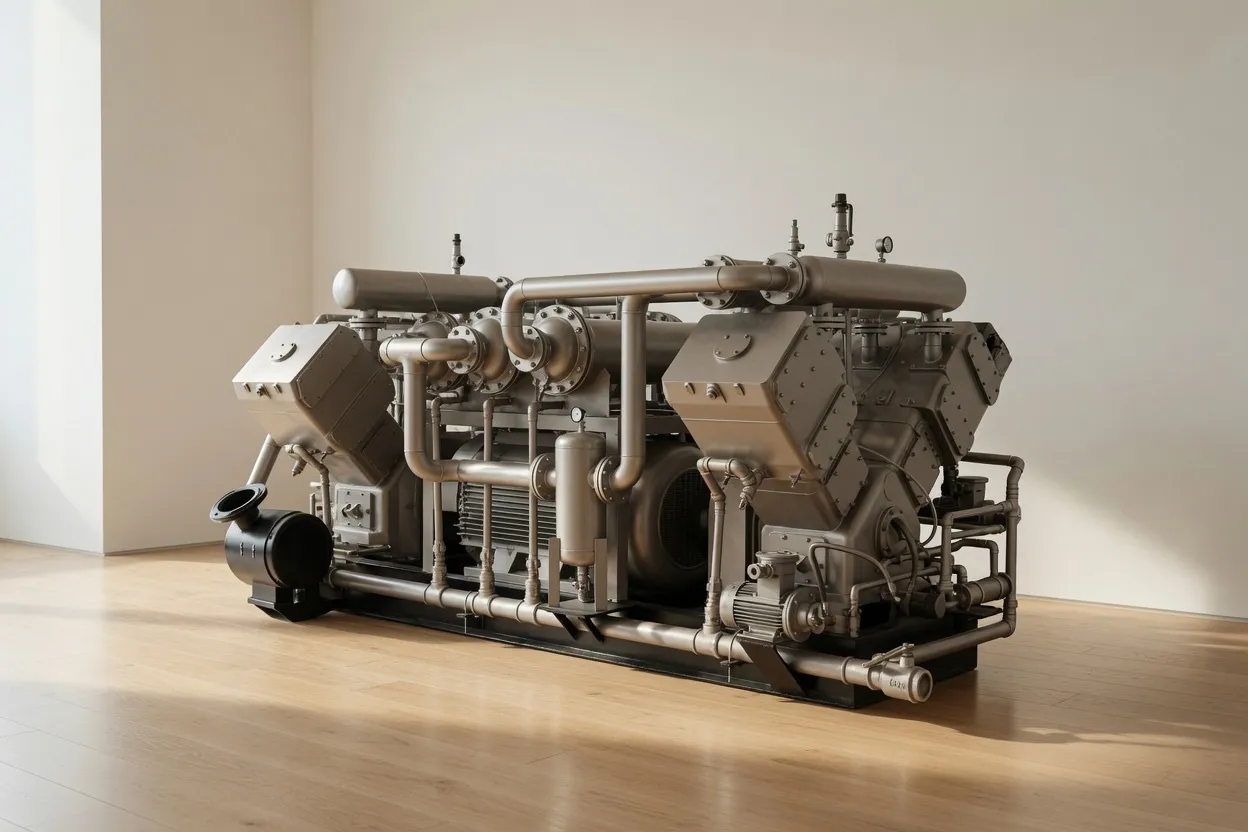
Total cost of ownership for a dryer includes not just purchase price and energy, but maintenance labour, replacement parts, and the cost of performance degradation when maintenance is deferred. Here is what each technology requires in practice for Australian industrial users:
| Dryer Type | Scheduled Maintenance Items | Service Interval | Approx. Annual Cost |
|---|---|---|---|
| Refrigerated | Pre-filter element · Coalescer element · Condensate drain test · Heat exchanger inspection · Refrigerant level check (5-yearly) | Annual | AUD $150–400 |
| Heatless Desiccant | Pre-filter element · After-filter element · Desiccant replacement (3–5 yrs) · Valve inspection · Drain inspection | Annual (filter) + 4-yearly (desiccant) | AUD $300–700 + desiccant |
| Heated Desiccant | Pre-filter · After-filter · Heater element (3–5 yrs) · Desiccant (4–6 yrs) · Blower motor · Valve inspection | Annual + component replacements | AUD $400–1,000 |
| HOC Desiccant | Pre-filter · After-filter · Desiccant (4–7 yrs) · Valve inspection · Switching valve test | Annual + 5-yearly desiccant | AUD $300–600 + desiccant |
The critical maintenance item for all desiccant dryers — frequently neglected in practice — is confirming that the desiccant is achieving its rated dew point. A desiccant bed that has been contaminated with oil, overloaded with moisture, or simply degraded through age continues to operate mechanically (the valves cycle, the regeneration sequence runs) while delivering a worse-than-specified dew point. Annual dew point verification with a calibrated sensor downstream of the dryer is the only reliable confirmation of desiccant performance.
Dryer Selection & ISO 8573 Compliance for Oil-Free Systems
For oil-free compressed air applications requiring ISO 8573 quality certification, the dryer specification must be documented as part of the compressed air system’s quality plan. ISO 8573-1 classifies water content in three sub-categories: vapour pressure dew point, liquid water, and total water vapour content. The relevant parameter for dryer selection is pressure dew point (pdp) — the temperature at which water vapour in the compressed air reaches saturation at the system operating pressure.
For a facility claiming ISO 8573-1 Class 1 water (≤−26°C pdp) in its compressed air quality documentation, the dryer specification, installation record, and ongoing performance verification (dew point monitoring) must all be on file. The compressor type (oil-free) addresses the oil class (Class 0 or 1); the dryer addresses the water class; upstream and downstream filtration addresses the particle class. All three dimensions must be specified and maintained for a complete ISO 8573 quality claim.
Complete Drying System Design from Australia Oil Free Air Compressor
Every oil-free compressor proposal from Australia Oil Free Air Compressor Co., Ltd. includes a dryer specification — matched to your application’s ISO 8573 requirement, corrected for your site’s summer ambient temperature, and sized for the actual system flow including dryer purge losses where applicable. We do not append a generic dryer note to a compressor quotation; we specify the correct dryer technology, capacity, and filter train for your specific conditions.
Our team at the Charlton Industrial Area facility has experience with all four dryer technologies described in this guide, and with the combination approaches that deliver the best lifecycle economics for large oil-free systems. We supply matched dryer-compressor packages and standalone dryer systems for upgrade or replacement projects on existing installations.
Email [email protected] with your application, required dew point, flow rate, and site summer ambient temperature for a dryer specification and lifecycle cost comparison.
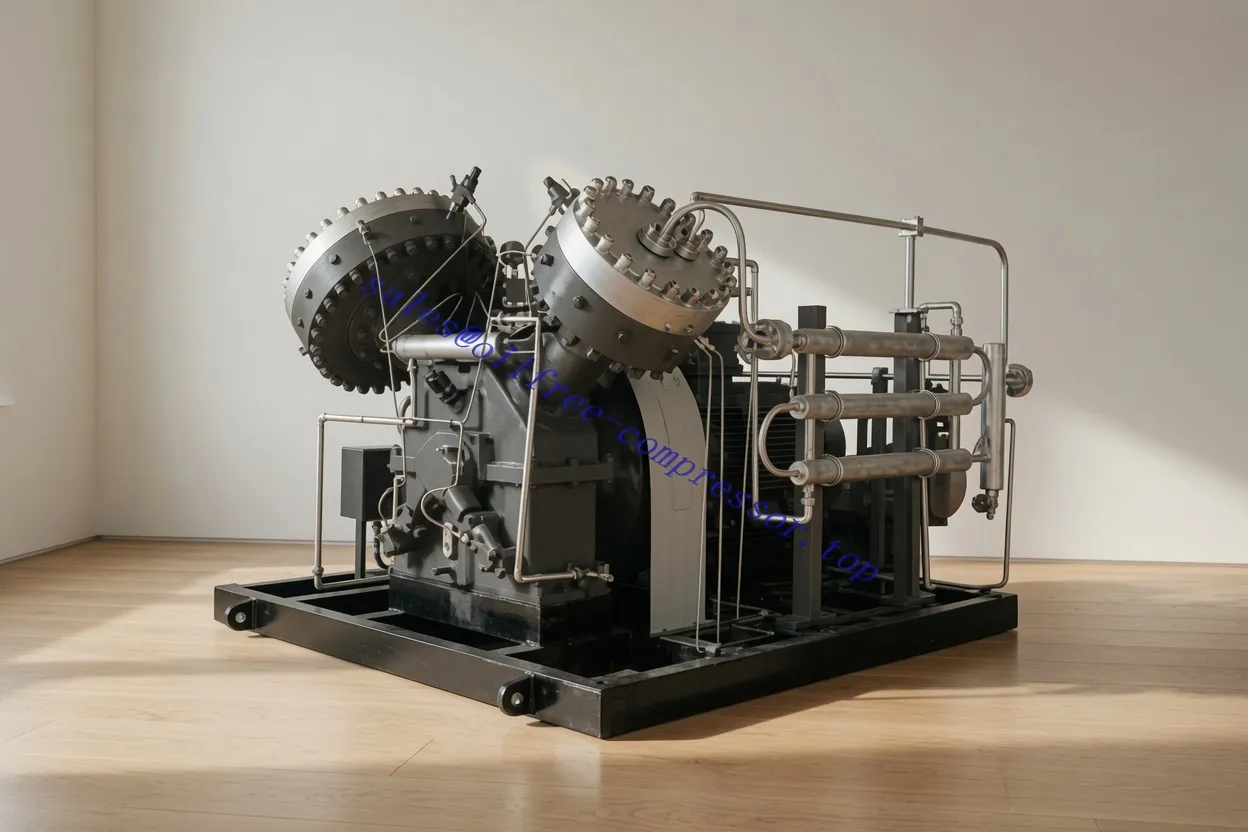
CM132DV — Oil-Free VSD Screw Compressor with HOC Dryer Integration
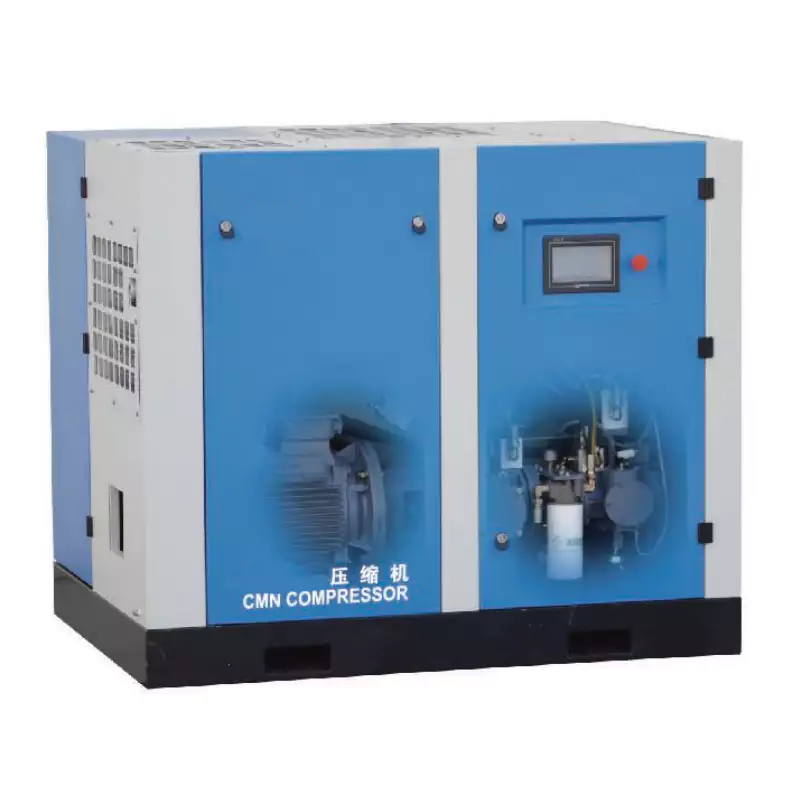
The CM132DV water-lubricated oil-free screw compressor is the ideal candidate for HOC (heat of compression) dryer integration — the only drying configuration in this guide that delivers ISO 8573-1 Class 1 water (−40°C pdp) at zero additional energy cost. The compressor’s continuous-duty rating ensures the HOC dryer receives consistent hot discharge air for desiccant regeneration at all times, and the water-injection cooling keeps aftercooler temperatures stable — creating the predictable thermal conditions that HOC dryers require for reliable dew point performance. For pharmaceutical, food direct-contact, and semiconductor applications requiring both ISO Class 0 oil-free air and Class 1 moisture at the lowest possible lifecycle energy cost, this combination is unmatched.
Frequently Asked Questions
Australia Oil Free Air Compressor Co., Ltd.
Charlton Industrial Area, Australia | [email protected]