
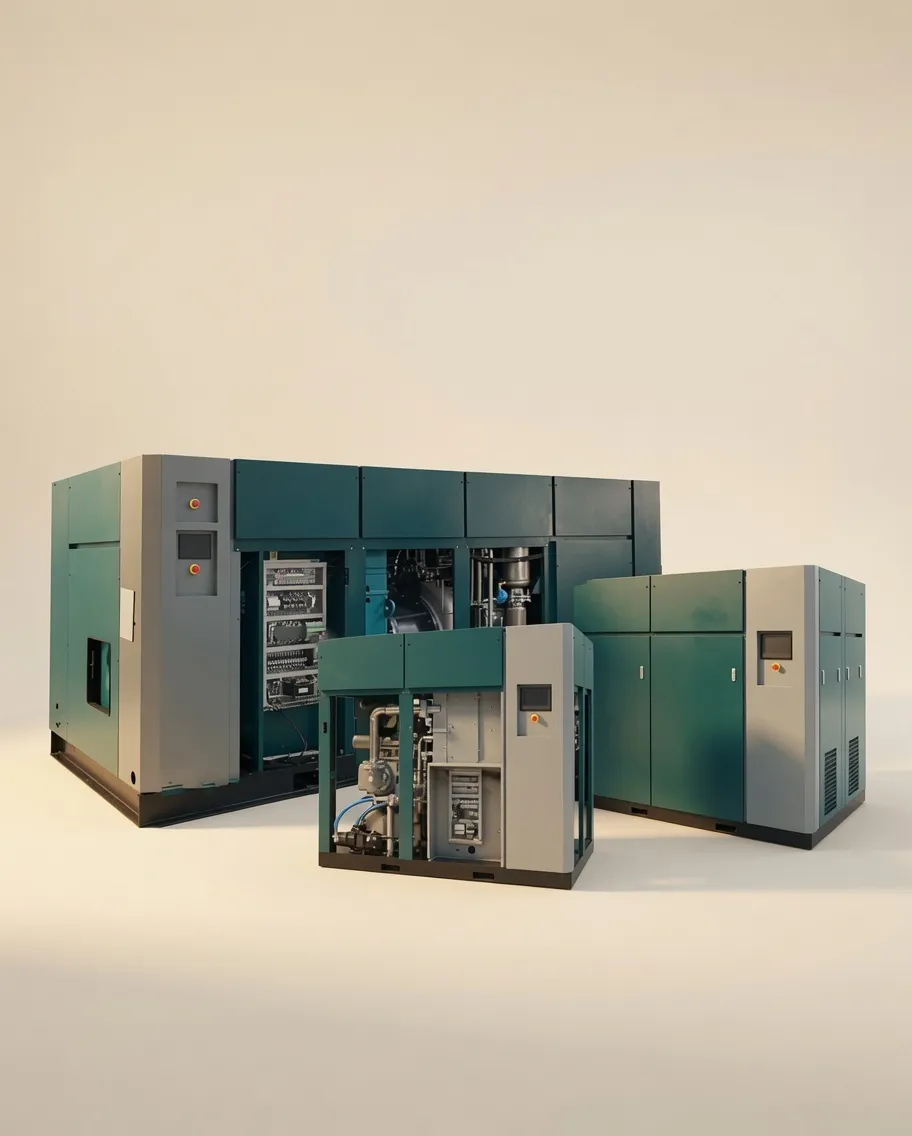
Why GMP Treats Compressed Air as a Critical Pharmaceutical Utility
In GMP pharmaceutical manufacturing, a “critical utility” is any service or medium that, if it fails or becomes contaminated, can directly affect the quality of the drug product. Water for Injection, nitrogen, and clean steam are classic examples — all are strictly controlled, validated, and continuously monitored. Compressed air that contacts drug product, primary packaging, or in-process materials is held to the same standard.
The PIC/S Guide to GMP (adopted by Australia’s TGA and recognised globally as the benchmark for harmonised GMP) addresses compressed air in several contexts: equipment design requirements, cleanroom classification maintenance, and process gas controls. The overarching principle — stated in Chapter 3 (Premises and Equipment) — is that equipment must be designed, located, and maintained to suit its intended purpose, and must not present contamination risks to the products being manufactured.
For a pharmaceutical manufacturer, “compressed air that contacts product must not contaminate product” translates into four practical requirements: the compressor must not introduce oil into the airstream; the air must be dried to a dew point appropriate for the application; particle content must be controlled to prevent contamination; and microbiological content must be controlled for aseptic applications. An oil free compressor addresses the first requirement structurally — the other three require downstream treatment, validation, and ongoing monitoring.
Key GMP Regulations Governing Pharmaceutical Compressed Air
Multiple GMP frameworks govern pharmaceutical compressed air, depending on the jurisdiction. For Australian manufacturers, the TGA’s PIC/S adoption makes the PIC/S Guide the primary reference. Understanding how each framework addresses compressed air is essential for multi-market compliance:
Why GMP Demands Oil-Free — and What “Oil-Free” Must Mean in a GMP Context
GMP auditors draw a fundamental distinction between a compressor that is “oil-free” and a compressor that has oil in its design but achieves low oil carryover through filtration. For direct-contact pharmaceutical compressed air, this distinction matters greatly.
An oil-free rotary screw compressor is defined as one where the compression element operates without lubricating oil — either using water injection (water-lubricated), PTFE-coated rotors (dry oil-free screw), or oil-free piston designs. The compression element produces air with zero oil carryover from the compression process itself. The only oil that could theoretically be present in the output air is atmospheric oil vapour drawn in with the intake air — a fundamentally different and much lower contamination risk than oil carryover from a lubricated compression element.
- → Zero oil in compression element — water or dry technology
- → No oil carryover mechanism from compression process
- → ISO 8573-1 Class 0 oil certification at compressor outlet
- → Manufacturer declaration of oil-free design
- → Remaining atmospheric oil vapour removed by activated carbon adsorber
- → Audit trail: compressor design certificate + ongoing air quality testing
- → Oil present in compression element — carryover is a continuous risk
- → Filter failure = oil in product — catastrophic contamination event
- → Best achievable: ISO 8573-1 Class 1 (not Class 0) oil
- → Class 1 means ≤0.01 mg/m³ oil — not zero
- → Oil type may not be pharma-grade even if quantity is low
- → FDA Warning Letters have cited filtered oil-lubricated systems for direct-contact pharma air
The GMP principle of contamination control by design — rather than contamination control by detection and filtration — is why oil-free compressors are required, not merely preferred. Designing out the contamination source (oil in the compressor) provides a structurally higher assurance than relying on a filter to catch it.
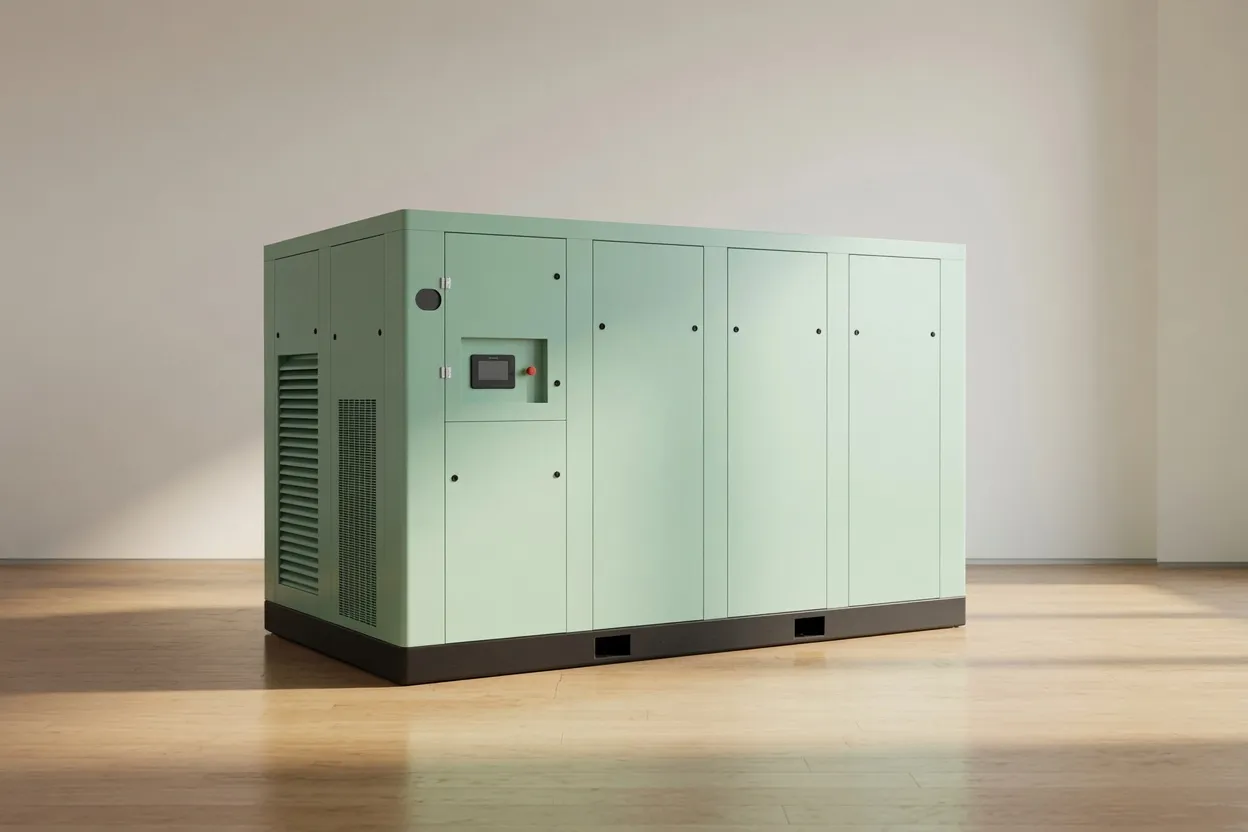
Validating the Pharmaceutical Compressed Air System: IQ, OQ, PQ
GMP requires that equipment and systems used in pharmaceutical manufacturing be qualified — a structured process of documented testing that demonstrates the system is installed correctly, operates as intended, and consistently delivers the required performance. For compressed air systems, qualification is typically structured as Installation Qualification (IQ), Operational Qualification (OQ), and Performance Qualification (PQ).
The qualification scope for a pharmaceutical compressed air system extends beyond the compressor itself to include every component in the treatment train and distribution system. Here is what each qualification phase typically covers:
Ongoing Monitoring Programme: Maintaining the Qualified State
GMP validation is not a one-time event — it establishes a qualified state that must be maintained. A qualified compressed air system can drift out of specification through component degradation, maintenance failures, or system changes. Ongoing monitoring is the mechanism that detects these deviations before they affect product quality.
The ongoing monitoring programme for a GMP pharmaceutical compressed air system should include:
| Parameter | Monitoring Method | Frequency | Action Limit / Alert Limit |
|---|---|---|---|
| Dew point (pdp) | Continuous transmitter (preferred) or weekly portable analyser | Continuous or weekly | Alert: 5°C above spec · Action: at spec limit → investigate immediately |
| Total oil content | Certified third-party lab test per ISO 8573-2 | Annually (minimum) quarterly (aseptic) | Alert: 50% of specification limit · Action: at or above specification limit → OOS investigation |
| Particle count | Particle counter per ISO 8573-4 | Annually (minimum) | Any exceedance of ISO Class 1 limits at direct-contact point → OOS investigation + product impact assessment |
| Microbiological (viable) | Impaction sampler or liquid impinger per ISO 8573-7 | Quarterly (direct contact · aseptic) | Alert: 50% of limit · Action: any detection above limit → investigation, filter integrity test |
| Filter pressure drop | Differential pressure indicator on each housing | Monthly inspection | Replace element when indicator reaches red zone; document element lot number and date |
| Membrane filter integrity | Bubble-point test per ASTM F316 | After each installation; annually | Failure of integrity test → filter quarantine, investigation, replacement before use resumption |
All monitoring results must be recorded, trended, and reviewed periodically as part of the Quality Management System. Trending allows gradual drifts (dew point warming progressively over weeks as desiccant ages, for example) to be detected and addressed before they reach the action limit and trigger a formal Out-of-Specification (OOS) investigation.
Change Control for GMP Compressed Air Systems
Any modification to a validated GMP compressed air system must pass through the facility’s formal Change Control process before implementation. This applies to changes that might seem routine — replacing a compressor model, adding a new distribution branch, changing filter element supplier, or modifying the dryer setpoint — because any of these can potentially affect the system’s ability to deliver air within its validated specification.
The Change Control assessment for a compressed air system change should evaluate: does this change affect any validated parameter? Does it require re-qualification (full or partial IQ/OQ/PQ)? Does it affect the regulatory filing (if the system is described in a drug product registration dossier)? The answers determine whether the change requires a minor variation (implemented with documentation only), a change that requires partial re-qualification, or a major change requiring full re-validation and potentially a regulatory filing update.
- → Same-model filter element replacement from approved supplier
- → Like-for-like instrument replacement (same type, same calibration)
- → PM schedule adjustment within validated range
- → New filter element supplier or grade
- → Dryer setpoint adjustment
- → Additional distribution branch to new area
- → Replacement compressor (same model, new serial)
- → Different compressor technology (e.g., piston to rotary screw)
- → Different dryer technology (refrigerated to desiccant)
- → New use point in direct-contact area
- → Significant piping reconfiguration
GMP-Ready Compressed Air Systems from Australia Oil Free Air Compressor
Australia Oil Free Air Compressor Co., Ltd. supplies GMP-ready compressed air systems to pharmaceutical manufacturers across Australia, with the documentation package that supports IQ — equipment specifications, material declarations, weld maps for 316SS components, and calibration certificates for instrumentation. Our engineering team understands the difference between specifying a compressor for production and specifying one for a GMP pharmaceutical environment where every decision must be documented and justified.
We work with validation consultants and pharmaceutical engineering firms to integrate our equipment specifications into IQ/OQ/PQ protocols. Our water-lubricated oil-free compressors come with ISO 8573-1 Class 0 oil quality declarations, material conformance certificates for all air-path components, and maintenance documentation structured for GMP record-keeping requirements.
Email our team at [email protected] with your GMP pharmaceutical application and required ISO 8573 specification for a complete system proposal with supporting documentation.
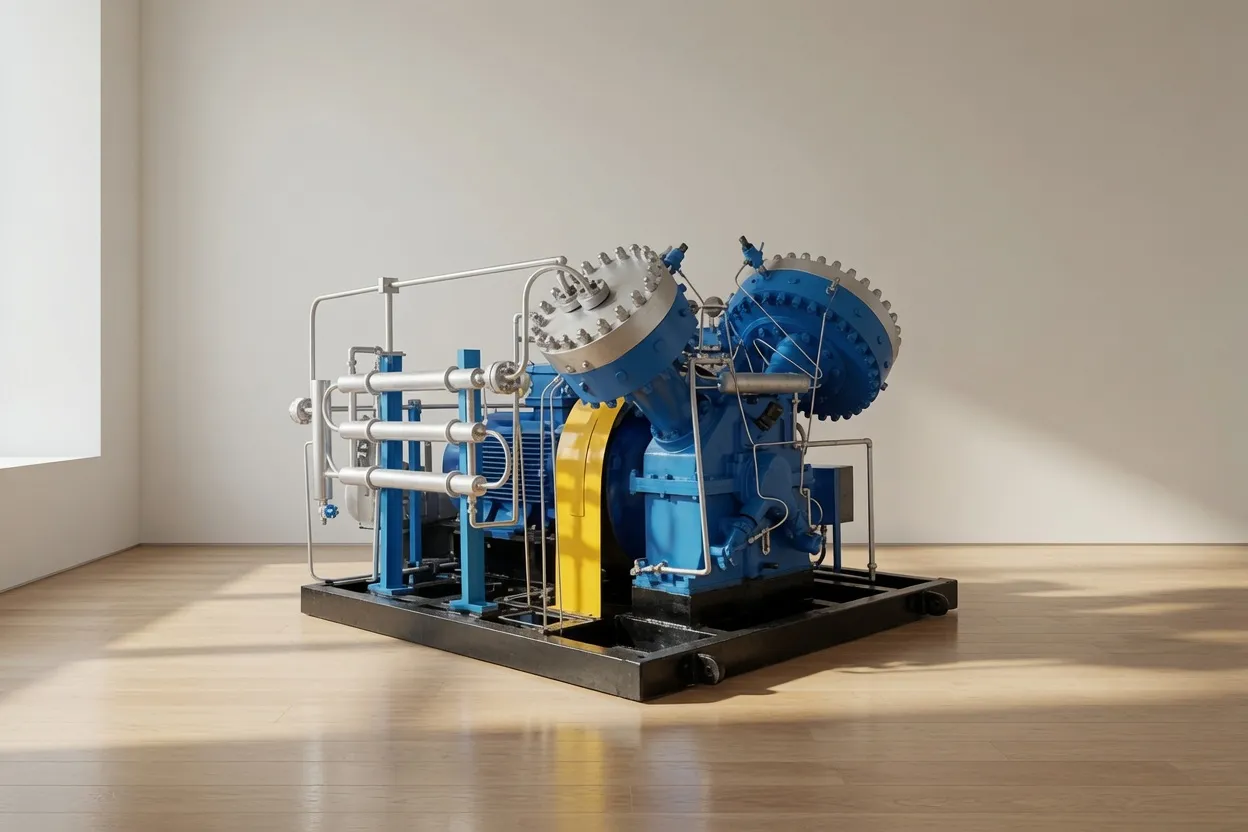
CM132DV — Water-Lubricated Oil-Free Screw Compressor for GMP Pharmaceutical Manufacturing
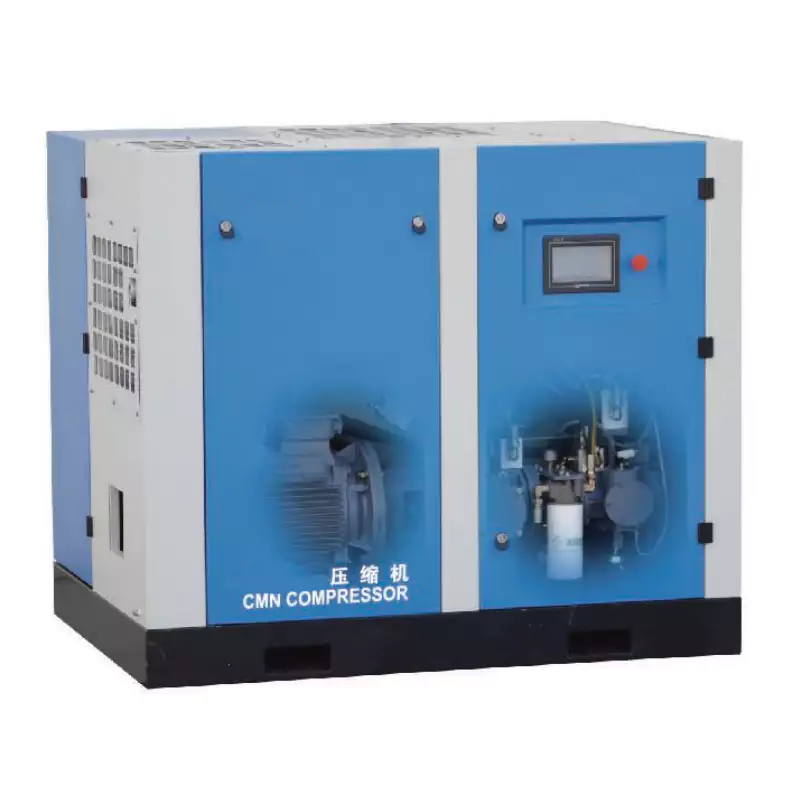
The CM132DV water-lubricated oil-free screw compressor is purpose-matched to GMP pharmaceutical manufacturing requirements. Its water-injection technology provides certified ISO 8573-1 Class 0 oil content with no oil present in the compression element whatsoever — not a filter-dependent claim, but a structural guarantee from the machine design. For GMP IQ documentation, this distinction matters: the Class 0 claim is based on the absence of oil in the system, not on the performance of a filter that could degrade. The CM132DV’s HOC desiccant dryer compatibility means pharmaceutical facilities can achieve Class 1:1:0 compressed air quality at the lowest possible lifecycle energy cost — with all supporting documentation available for IQ protocol inclusion.
Frequently Asked Questions
Australia Oil Free Air Compressor Co., Ltd.
Charlton Industrial Area, Australia | [email protected]