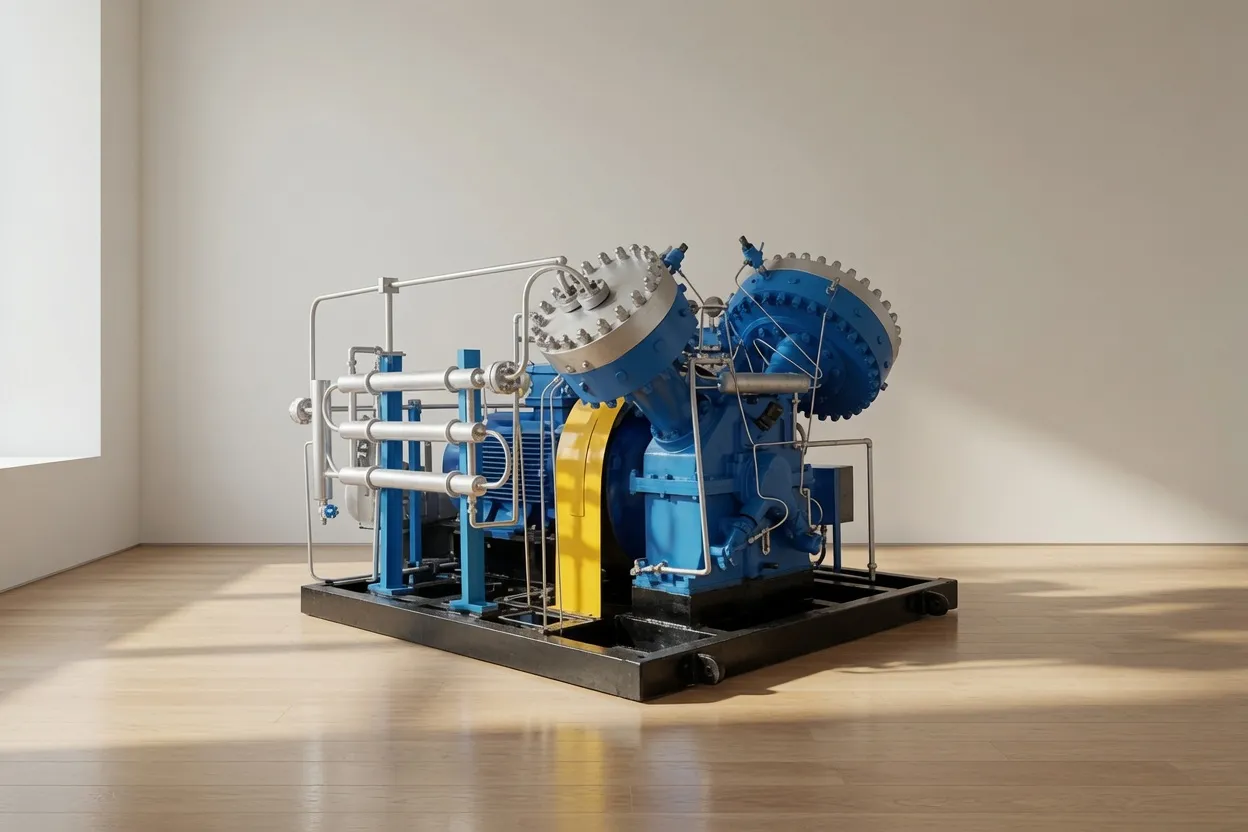
Oil-Free Air Compressor Making Loud Noise? Causes & How to Fix
by ep | Jun 10, 2026 | oil free air
Noise Diagnosis Guide
A change in noise from an oil-free air compressor is one of the earliest and most reliable indicators of a developing mechanical fault. Noise is also one of the most frequently ignored warnings — dismissed as “it’s always been a bit noisy” until the problem progresses to a shutdown or failure. This guide maps every type of unusual compressor noise to its root cause and gives you the diagnostic approach to confirm and fix it.
✦ Noise Type → Root Cause Map
✦ Safe Noise vs Danger Noise
✦ Permanent Noise Reduction
Normal Compressor Noise vs Abnormal Noise: How to Tell the Difference
Every compressor has a characteristic operating sound profile — a combination of compression noise, motor noise, cooling fan noise, and valve operation that is normal for that machine. The key diagnostic principle is change: a noise that has appeared recently or has become louder is the signal, not the absolute decibel level. A compressor that has always produced 72 dB(A) is not concerning; a compressor that was running at 68 dB(A) and is now at 76 dB(A) is producing a warning.
✅ Normal Operational Sounds
- → Steady hum from motor and compression
- → Cooling fan airflow noise (constant during operation)
- → Load/unload click of inlet valve or solenoid
- → Drain valve click on timed drain cycle
- → Minor pulsation in compressed air pipework
- → Slight vibration transmitted to floor via anti-vibration mounts
⚠️ Monitor — May Indicate Developing Fault
- → Gradual increase in overall operating volume over weeks/months
- → Increased vibration transmitted to structure
- → Higher-pitched fan or motor tone than usual
- → Repetitive clicking or ticking at regular intervals
- → Occasional brief rattle that self-resolves
🛑 Stop and Investigate — Danger Sounds
- → Metallic knocking or banging from inside the element
- → Grinding or scraping sound from bearings or rotors
- → High-pitched squeal from bearings or belts
- → Rhythmic hammering coinciding with rotation
- → Sudden increase in noise level during operation
- → Any sound accompanied by vibration increase
Any noise in the “Danger” category warrants immediate shutdown and investigation. Do not continue running — the fault causing the noise is typically progressive, and the damage done in 10 minutes of continued running can make the difference between a bearing replacement (AUD $300–800) and a complete element rebuild or replacement (AUD $8,000–25,000).
Noise Type → Root Cause Diagnostic Map
🔊 High-Pitched Squeal or Screech
Urgent — stop and investigate
Most likely causes:
- → Belt slip (belt-drive units): Loose or glazed drive belt squeals under load, especially at start-up. The squeal typically occurs at maximum load moments.
- → Bearing failure (early stage): A bearing losing lubrication or developing spalling produces a high-pitched intermittent squeal that worsens as the bearing heats up.
- → Dry rotor contact (dry oil-free screw): PTFE coating fully worn in one area, allowing metal-to-metal contact. Very distinctive high-pitched screech — stop immediately.
Diagnosis steps:
1. For belt-drive: check belt tension — overtight and excessively loose belts both squeal. Apply belt tension gauge.
2. Feel the bearing housings (with machine running) for elevated temperature at the source of the squeal — a hot bearing confirms failure.
3. If squeal is from the compression element on a dry oil-free screw: stop immediately. Internal rotor contact causes rapid catastrophic damage.
🔨 Metallic Knocking or Banging
Critical — stop immediately
Most likely causes:
- → Liquid carryover (water hammering): Liquid water drawn into the compression element from a flooded separator or failed drain causes knocking as the incompressible liquid hits the rotor or piston.
- → Connecting rod bearing failure (piston compressors): Worn big-end bearing produces a rhythmic knock coinciding with crankshaft rotation speed — the classic “big-end knock.”
- → Loose internal components: A loose coupling insert, broken fan blade, or dislodged internal baffle can create intermittent banging.
- → Cavitation (water-lubricated screw): Insufficient water supply causing vapour bubble collapse in the water circuit produces knocking.
Action for metallic knock:
Stop the compressor immediately. Do not restart until the source is identified. Continued operation with internal liquid or loose component creates rapid mechanical damage. Check: separator/drain valve function (liquid carryover); water circuit pressure and level (water-lubricated units); all visible external components for looseness. Internal element investigation requires specialist access.
⚙️ Grinding or Rattling
Urgent — investigate promptly
Most likely causes:
- → Bearing grinding: Advanced bearing failure with cage collapse or significant race spalling produces a continuous grinding sound. Unlike early bearing squeal, late-stage bearing failure is continuous rather than intermittent.
- → Debris in cooling fan: A stone, cable tie, or piece of debris caught between the fan blades and the fan guard produces a rhythmic rattling or grinding coinciding with fan speed.
- → Loose anti-vibration mounts: Worn or failed anti-vibration mounts allow the compressor base to contact the floor or frame, creating a transmitted rattling/grinding sound.
- → Dry running (scroll compressor): Failed PTFE tip seals on oil-free scroll causing direct scroll-to-scroll contact produces a distinctive grinding sound.
Diagnosis:
Locate the source by sound direction — is it from the cooling fan area, the bearing housing, or inside the element? Remove the access panel carefully with the machine running (where safe to do so with guards) to localise the sound. Check anti-vibration mounts for collapse (visible gap between mount rubber and base, or mount rubber disintegrated). Inspect fan area for visible debris with machine stopped.
💨 Excessive Airflow Noise / Hissing
Investigate — may indicate air leak or valve fault
Most likely causes:
- → Air leak at compressed air fitting or connection: Hissing from a pressurised connection. Locate with soapy water spray.
- → Drain valve blowing continuously: A stuck-open timer drain or failed float drain produces a continuous hissing/rushing sound as compressed air escapes.
- → Safety relief valve lifting: If system pressure exceeds the PRV setpoint, the PRV hisses or blows — investigate pressure control immediately.
- → Blocked intake filter: A severely restricted intake filter produces a distinctive high-frequency hissing as air is drawn through the restriction — like breathing through a cloth.
- → Unloader valve leaking (screw compressor): A leaking unloader valve allows compressed air to recirculate through the inlet, creating internal hissing during loaded operation.
Diagnosis:
Walk the complete compressed air system with soapy water or an ultrasonic leak detector while the system is pressurised. Listen specifically at all drain valves, connections, and fittings. Check the intake filter differential pressure indicator — a fully blocked filter produces the characteristic intake hiss. Check PRV for signs of discharge (debris or water marks on the outlet).
📳 Vibration / Thumping / Rhythmic Pulsation
Investigate — often structural or mounting issue
Most likely causes:
- → Failed anti-vibration mounts: The most common cause of increased whole-body vibration. Anti-vibration mounts (rubber feet or springs) degrade over years and lose their damping ability.
- → Fan imbalance: A broken fan blade or debris on a fan blade creates dynamic imbalance — a vibration at fan speed frequency that is felt through the floor. Blade breakage is also dangerous (fragment ejection risk).
- → Piping not isolated from compressor vibration: Rigid pipe connections between the compressor and distribution system transmit compressor vibration to the building structure, which amplifies and re-radiates as noise.
- → Piston compressor rhythm: Oil-free piston compressors inherently produce a pulsing output — if the receiver is undersized, the pulsation propagates through the pipework as audible thumping.
Fix:
→ Inspect and replace anti-vibration mounts if rubber is cracked, oil-soaked, or has collapsed (compressor base making metal-to-metal contact with floor)
→ Check fan blade integrity — stop and inspect immediately if fan imbalance is suspected
→ Install flexible hose connections between compressor outlet and fixed pipework (minimum 500mm flexible connection)
→ Add receiver volume for piston compressors with thumping pipework
🌀 Increased Continuous Operating Volume (Whole Machine Louder)
Monitor — may indicate wear or enclosure issue
Most likely causes:
- → Acoustic enclosure panels loose or missing: Modern screw compressors have sound-attenuating enclosure panels. A missing, loose, or incorrectly seated panel can add 5–10 dB(A) to the operating noise level.
- → Machine running harder (higher load): A compressor running at higher duty cycle due to demand increase, air leaks, or capacity loss runs louder because the motor and compression element are working at higher load.
- → Gradual bearing wear: Progressive bearing deterioration increases mechanical noise output gradually — not as a sudden change but as a slow creep in sound level over months.
Diagnosis:
Inspect all enclosure panels — confirm all are present, correctly seated, and latch-secured. Check duty cycle data in the controller — if load hours have increased, investigate demand growth or leaks. Measure sound level with a basic sound level meter app in a consistent position and compare to a baseline recording.
Permanent Noise Reduction Strategies
Where the compressor is operating correctly but its noise level is causing an occupational health concern or affecting the work environment, several permanent noise reduction approaches are available:
Separate Compressor Room
The most effective noise reduction strategy — a dedicated compressor room with sound-insulated walls and door. Even a basic block wall room reduces transmitted noise by 20–30 dB(A). Ensure ventilation is adequate (the most common failure point in compressor room designs — see ventilation guide).
Acoustic Enclosure
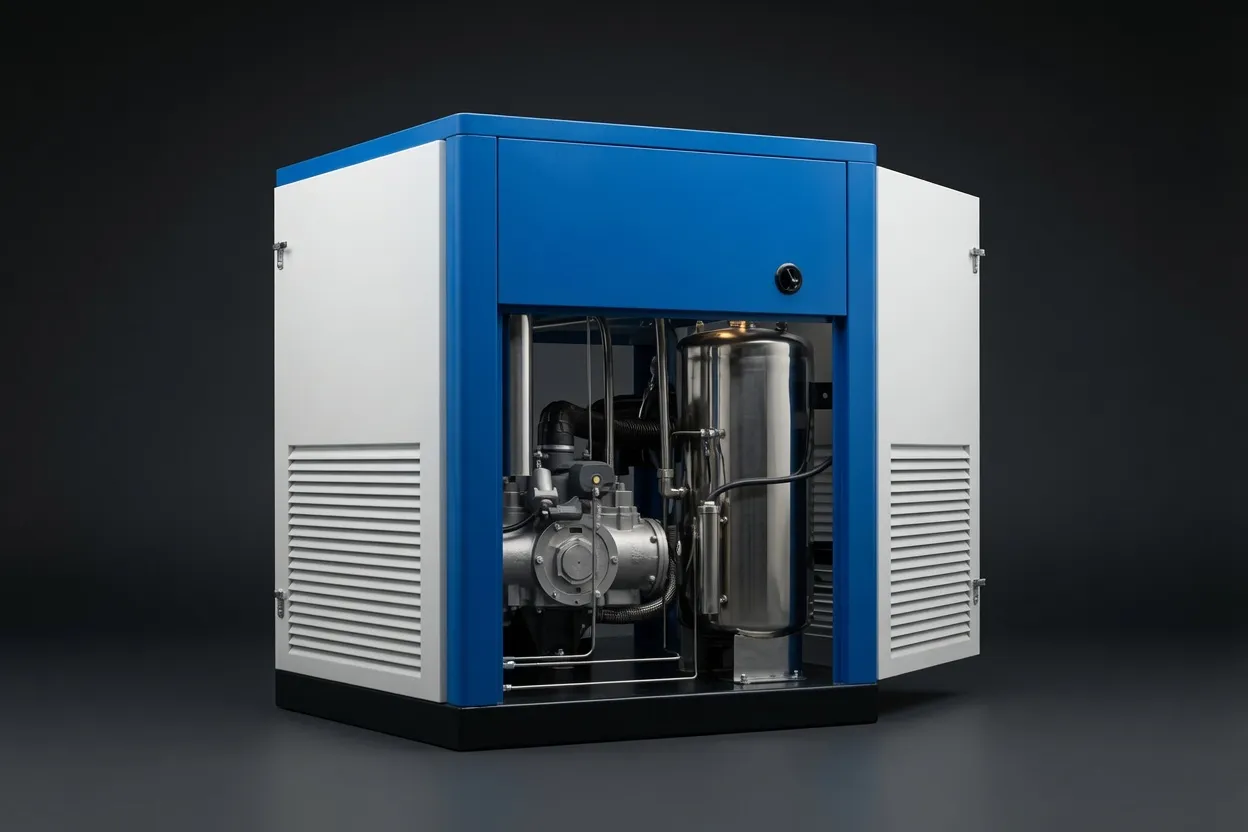
Most modern oil-free screw compressors are delivered with an acoustic enclosure as standard — typically achieving 62–70 dB(A) at 1 metre. Where an older unenclosed machine is too loud, aftermarket acoustic enclosures or cladding panels can be fitted. Ensure any enclosure provides adequate ventilation for the compressor’s cooling requirements.
Anti-Vibration Mounting
Replace worn anti-vibration mounts and add flexible pipework connections. This reduces structure-borne noise transmitted to the building — often the dominant noise path in buildings with concrete floors and shared walls.
Intake and Discharge Silencers
Inlet air silencers reduce intake noise on piston compressors. Discharge (pipework) silencers reduce pulsation noise from piston compressors transmitted through the pipework. Both are inexpensive retrofits that can reduce noise by 5–10 dB(A) at the noisiest frequencies.
Replace with Modern Quiet Design
Current-generation oil-free VSD screw compressors with integrated acoustic enclosures produce 62–68 dB(A) — significantly quieter than fixed-speed predecessors or piston compressors. If an older machine is excessively noisy and approaching replacement age, selecting a quiet modern VSD design eliminates the noise problem permanently.
VSD vs Fixed Speed Noise Comparison
A variable speed drive compressor runs at lower speed during partial-load conditions — and noise output reduces with speed. At 50% load (typical average), a VSD compressor may produce 4–6 dB(A) less than its maximum noise level. For facilities where the compressor runs at partial load for most of the working day, VSD selection provides a meaningful noise reduction benefit beyond its energy savings.
Australian Workplace Noise Regulations
Under the Work Health and Safety (WHS) Regulations and relevant codes of practice in all Australian states, employers must manage noise in the workplace. The key limits:
85 dB(A)
LAeq,8h Action Level
Average noise level over 8-hour work day triggering requirement to implement noise controls. Above this level, engineering controls must be implemented before relying on hearing protection.
140 dB(C)
Peak Sound Pressure Limit
Peak instantaneous sound pressure (e.g., from a PRV discharge or pressure relief event). A single exposure above this limit can cause permanent hearing damage.
62–70 dB(A)
Modern Oil-Free Screw Compressor
Typical noise output of a current-generation enclosed oil-free screw compressor at 1 metre. Well below the WHS action level — allowing installation adjacent to workspaces without additional hearing protection requirements.
For compressors installed in or near occupied workspaces, a noise assessment is required if personnel spend significant time near the machine. Contact the relevant state WHS authority or a qualified occupational hygienist for workplace noise measurement and assessment.
Noise Assessment Support from Australia Oil Free Air Compressor
Australia Oil Free Air Compressor Co., Ltd. can assist with both abnormal noise diagnosis and permanent noise reduction planning. For abnormal noise faults — unexpected knocking, grinding, or squealing — our technical team provides remote initial diagnosis using the noise description from this guide, followed by on-site service for mechanical investigation and repair.
For facilities planning compressor room upgrades or seeking quieter replacement compressors, we provide noise comparison data for all models in our range, room layout advice for minimising noise transmission, and specifications for acoustic enclosure panels and anti-vibration mounting systems.
Contact us at [email protected] with a description of the noise change you are experiencing and your compressor model.
Recommended Product
CM132DV — Water-Lubricated Oil-Free VSD: Quietest in Class
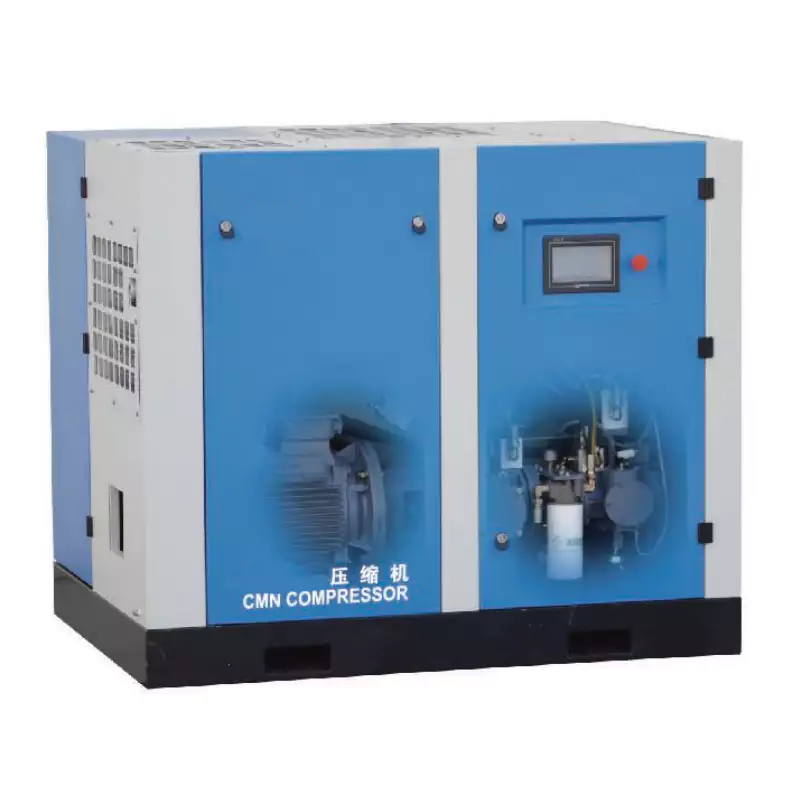
The CM132DV water-lubricated oil-free VSD screw compressor combines two inherent noise advantages over competing designs: water lubrication dramatically reduces compression element noise compared to dry oil-free screw designs (water acts as a noise-damping medium in the compression chamber), and VSD control reduces motor speed at partial load — where most compressors spend the majority of their operating time. The CM132DV’s integrated acoustic enclosure achieves 66–70 dB(A) at 1 metre across the full operating range, with lower noise output at partial load conditions where the VSD reduces speed. For facilities where compressor noise is a workspace concern, the CM132DV’s combination of water lubrication and VSD speed modulation delivers the lowest noise profile of any comparable oil-free screw compressor design.
View CM132DV Specifications
Frequently Asked Questions
Is it safe to keep running a compressor that has started making noise?+
It depends on the noise type. Increased airflow noise (hissing) or a noise that is clearly from the cooling fan or a loose external panel may allow continued short-term operation while the fault is investigated. Metallic knocking, grinding from inside the element, or bearing squealing warrant immediate shutdown — these sounds indicate mechanical damage that worsens rapidly with continued operation. The cost of continued running with an internal mechanical fault typically multiplies repair cost by 5–10× compared to prompt shutdown and investigation.
My compressor is much louder at start-up than when running — is this normal?+
Brief start-up noise slightly above steady-state is normal for fixed-speed compressors during the DOL (direct-on-line) or star-delta starting transient — the motor briefly draws 5–7 times running current at start, producing elevated electrical noise and vibration for 1–3 seconds. On belt-drive compressors, a brief squeal at start-up is often a slightly loose belt that seats as the drive stabilises. If the start-up noise is significantly louder (grinding, banging) or persists for more than 3–5 seconds before settling to steady-state sound, it indicates a mechanical issue at start — suspect stiff bearings (cold start), belt alignment, or coupling problems.
What dB(A) level do I need to be under to avoid needing hearing protection near the compressor?+
Under Australian WHS regulations, hearing protection becomes mandatory when workers are exposed to a time-weighted average of 85 dB(A) or more over an 8-hour shift. If a worker spends 2 hours per 8-hour shift within 1 metre of a 90 dB(A) compressor and 6 hours at a much lower background level, the time-weighted average may still be below 85 dB(A) and may not technically require hearing protection. The correct approach is to measure the worker’s actual time-weighted average noise exposure using a personal dosimeter. For most workers who spend the majority of their shift away from the compressor, current-generation enclosed compressors at 65–70 dB(A) do not require hearing protection even at close proximity.
Can I soundproof the compressor myself with acoustic foam panels?+
Acoustic foam (open-cell foam panels) is an absorption material — it reduces reverberation within a room rather than blocking sound transmission between rooms. Lining a compressor enclosure with acoustic foam does reduce some airborne noise but typically achieves only 2–5 dB(A) reduction. For significant noise reduction, mass is needed — a heavy, airtight enclosure or room wall. A properly constructed compressor room with 200mm block wall, acoustic door, and ventilated sealed penetrations achieves 25–35 dB(A) insertion loss — far more than foam. If building a full room is impractical, a purpose-designed modular acoustic enclosure for the compressor model is the most effective alternative and typically achieves 10–15 dB(A) additional attenuation beyond the compressor’s own acoustic panels.
How often should anti-vibration mounts be replaced?+
Anti-vibration mounts (rubber pads or spring mounts) typically last 5–10 years depending on the rubber compound, operating temperature, and whether they have been exposed to oil or solvents. Signs of mount failure: visible cracking or crumbling of the rubber; the mount base making contact with the floor (mount has collapsed); increased vibration transmitted to the floor; and the compressor tilting or shifting out of level. Replacement is inexpensive (AUD $20–100 per mount) and is typically included in a major service interval. When replacing mounts, replace all mounts simultaneously — mixing new and old mounts creates uneven support that itself causes vibration.