
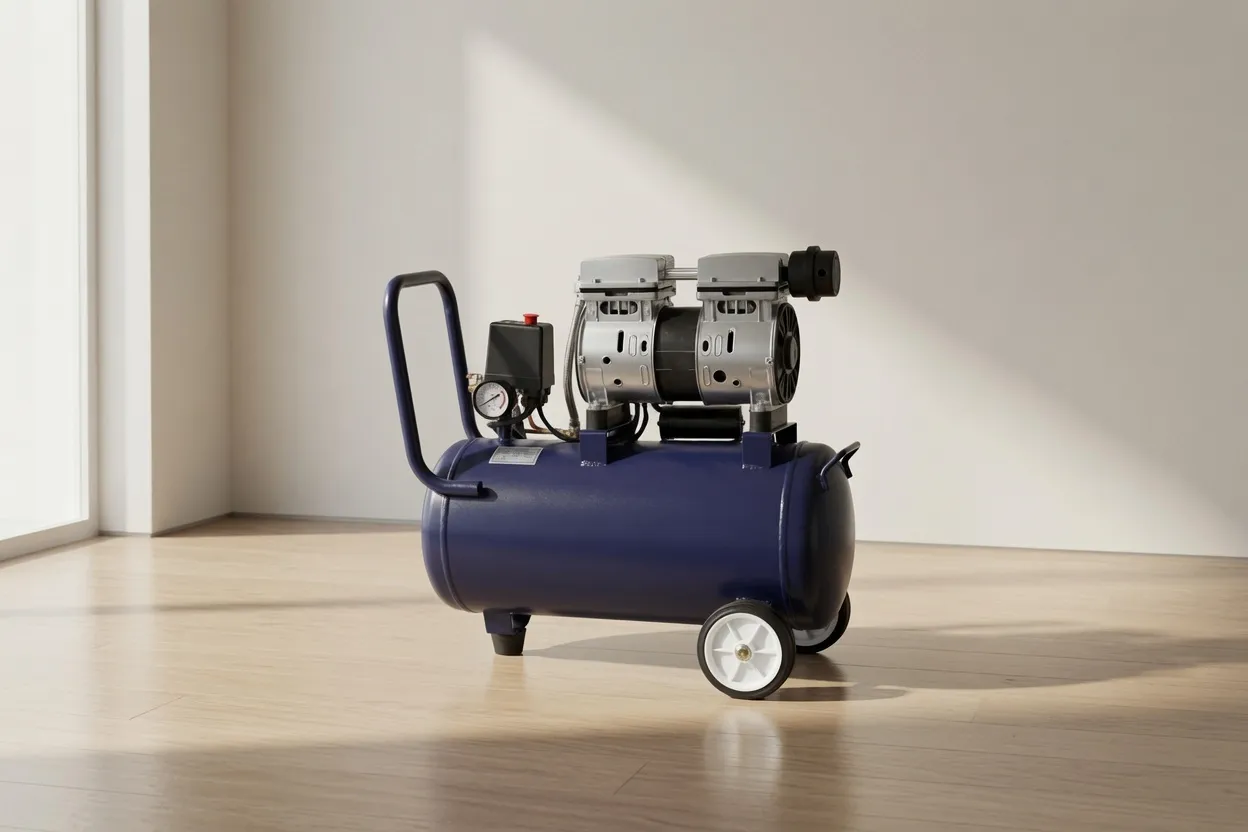
How Compressed Air Is Used in Printing Operations
Compressed air is one of the most versatile utilities in a modern printing plant, serving functions that range from precision mechanical actuation to high-volume sheet transport. Understanding where air is used — and what contamination would cost at each point — is the starting point for specifying the right compressor system.
In offset lithography, compressed air drives the sheet feeder pile lifters, gripper bar mechanisms, impression cylinder controls, and ink fountain adjustments. Air jets separate individual sheets and prevent double-feeding. On web presses, air is used in the infeed, tension control systems, and dryer sections. In all offset applications, any oil or moisture carryover reaching the inking or dampening system can alter ink viscosity, interfere with the water–ink balance, and cause dot gain inconsistency that ruins colour matching across a run.
Digital inkjet and UV printing systems are even more sensitive. Print head nozzle purging, capping station actuation, and maintenance cycle air must be absolutely oil-free — even a sub-ppm oil aerosol reaching an inkjet print head can permanently block nozzles or degrade the hydrophobic coating on print head surfaces, causing a repair bill that dwarfs months of compressor operating costs.
Flexographic printing for packaging uses compressed air in anilox roller cleaning, doctor blade systems, and corona treatment equipment. Post-press operations including laminating, die-cutting, folding, and saddle-stitching all use pneumatic drives and actuators. The oil free compressor is the only technology that eliminates oil contamination risk at the source across all of these applications simultaneously.
What Contaminated Compressed Air Does to Print Quality
Oil contamination in printing compressed air systems rarely announces itself dramatically. It accumulates gradually, causing progressive quality degradation that is easy to misattribute to ink formulation changes, substrate variations, or press wear. Recognising the contamination signatures helps printers trace quality problems to their true source.
- • Ink/water emulsification problems from oil in dampening system
- • Blanket glazing and premature blanket deterioration
- • Roller slippage and ink-form roller stripping
- • Hickeys and coating adhesion failures on coated stocks
- • Clogged air jets causing double-feeding and misfeeds
- • Print head nozzle blockage from oil aerosol contact
- • Degraded hydrophobic nozzle plate coatings
- • UV ink adhesion failure on contaminated substrates
- • Corona treatment effectiveness reduction
- • Media transport roller contamination and slip
- • Anilox cell contamination causing ink transfer inconsistency
- • Doctor blade chatter from oil-contaminated blade holder air
- • Lamination delamination from substrate contamination
- • Failed food-contact compliance testing for packaging
- • Ink adhesion failure on film substrates
- • Pneumatic valve stiction and premature seal failure
- • Contaminated actuators requiring early overhaul
- • Air-powered tool degradation in post-press finishing
- • Blocked air filtration requiring frequent cartridge changes
- • Scale and biofilm build-up in moisture-contaminated lines
The hidden cost: A rejected press run on a 4-colour A1 offset sheet represents not just wasted substrate — it includes pre-press costs, plate-making, make-ready time, and press crew time. A single contamination-related reprint event on a long-run job can cost more than a year’s operation of an oil-free compressor system.
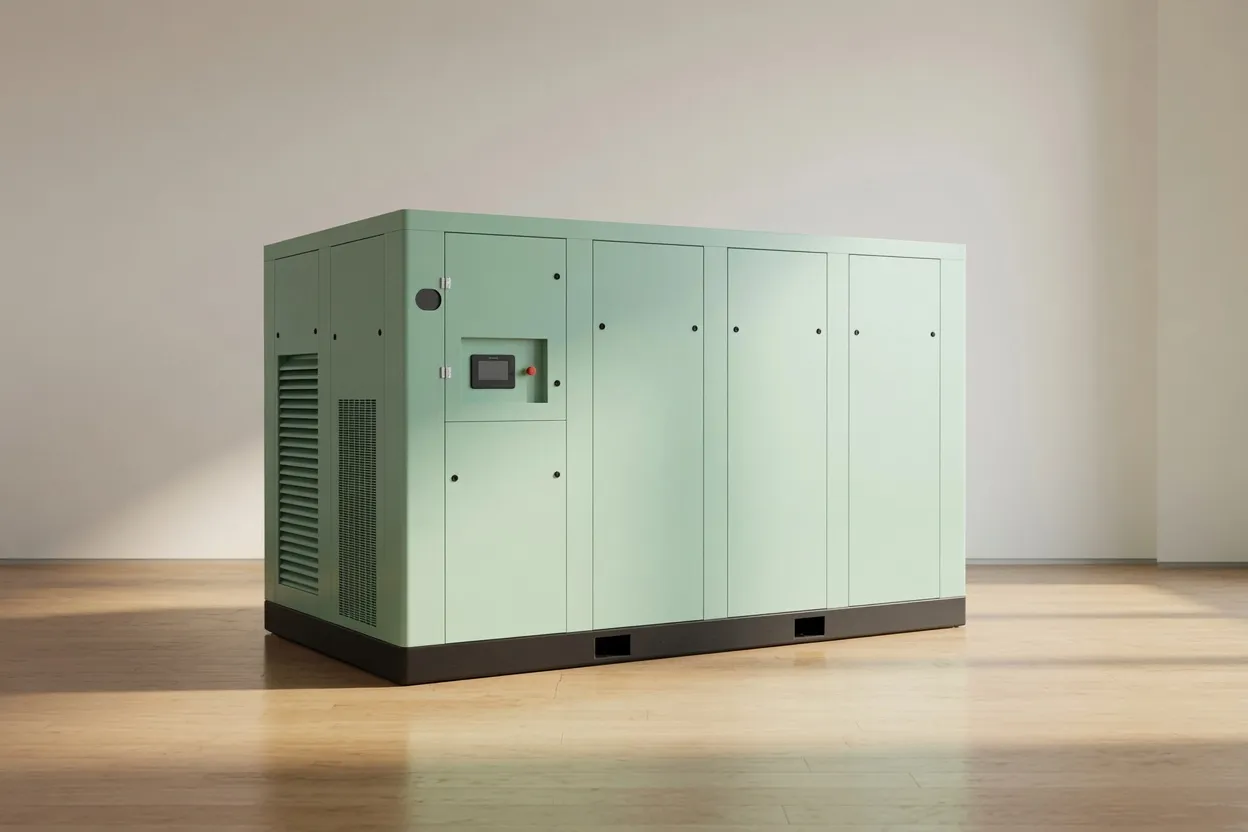
Air Purity Requirements by Printing Process
ISO 8573-1 provides the standard classification framework for compressed air quality in three dimensions: particulate, moisture (dew point), and oil content. Different printing processes impose different requirements, though the oil content class is consistently Class 1 or Class 0 across all direct-contact applications.
| Printing Process / Application | ISO 8573 Particulate | ISO 8573 Moisture | ISO 8573 Oil | Key Risk |
|---|---|---|---|---|
| Offset sheet feeder & grippers | Class 2 | Class 4 | Class 1 | Sheet contamination, misfeeds |
| Ink & dampening system actuation | Class 1 | Class 3 | Class 0 | Ink emulsification, colour shift |
| Inkjet print head purging | Class 1 | Class 2 | Class 0 | Nozzle blockage, head damage |
| UV curing system pneumatics | Class 2 | Class 3 | Class 0 | Lamp contamination, cure failure |
| Anilox cleaning & doctor blade (flexo) | Class 1 | Class 3 | Class 0 | Cell contamination, ink transfer inconsistency |
| Post-press finishing (die-cut, fold) | Class 2 | Class 4 | Class 1 | Surface contamination before packaging |
| Food-contact packaging print | Class 1 | Class 2 | Class 0 | Regulatory compliance, customer audits |
Quality classes per ISO 8573-1:2010. Class 0 oil content means no detectable oil by the most sensitive measurement method — achievable only with a true oil-free air compressor, not downstream filtration alone.
Why Filtration Alone Is Not Sufficient in Printing
A common misconception in printing facilities upgrading from oil-lubricated compressors is that high-efficiency downstream coalescing filters provide equivalent protection to an oil-free compressor. This assumption has cost printers dearly — and the reasons are well understood within the compressed air engineering community.
Coalescing filters have finite service life. When cartridges approach saturation — which occurs faster in hot Australian summer conditions — filtration efficiency drops and oil aerosol breakthrough occurs. If a filter change is delayed during a busy press period, an entire run can be contaminated without any visible warning signal.
Coalescing filters remove oil aerosol droplets but are ineffective against oil vapour — the gaseous form of oil that becomes significant at higher compressed air temperatures. As compressor discharge temperatures rise (common in under-ventilated plant rooms), the proportion of oil in vapour form increases, bypassing coalescing stages entirely. An activated carbon filter is required for vapour removal, adding complexity and another failure point.
A filtration system gives no real-time indication of oil content at the point of use. For printing facilities supplying food-contact packaging — where customer quality audits are increasingly common — demonstrating compressed air purity requires monitoring, sampling, and documentation that a filter alone cannot provide without additional investment.
Oil contamination that penetrates a filtration system deposits in the interior surfaces of pipework, receiver tanks, and actuators. Switching to an oil-free compressor after contamination does not automatically clean the distribution system — the residual oil continues to bleed out for months, meaning the press continues to receive contaminated air even after the compressor change. A professional system clean-down is required, adding further cost.
The oil-free air compressor eliminates oil from the process entirely — removing the risk, the maintenance overhead, and the audit liability that filtration-dependent systems carry.
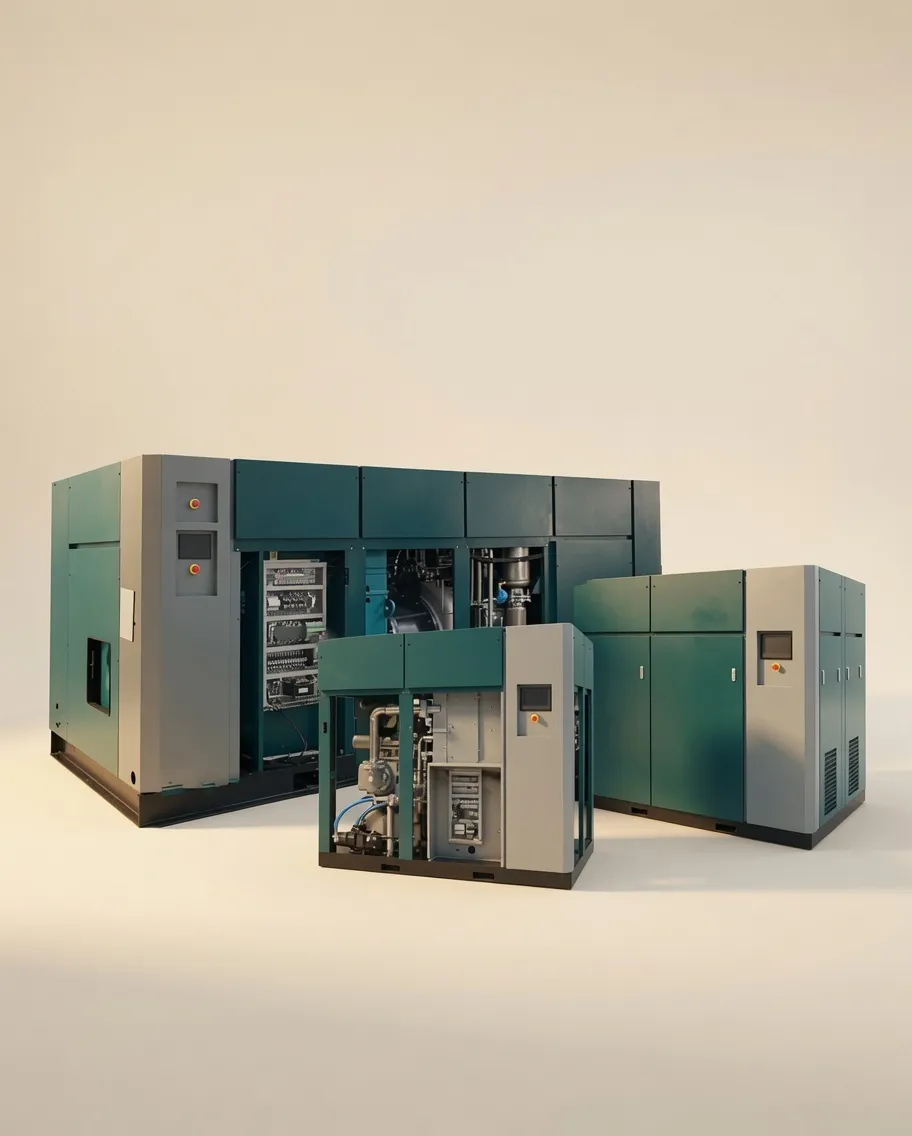
Sizing an Oil-Free Compressor for a Printing Plant
Compressed air demand in printing facilities has two characteristics that make accurate sizing important: high peak demand during make-ready and press speed changes, and relatively stable baseline demand during steady-state production runs. Undersizing causes pressure drops that affect register and sheet feed consistency; oversizing wastes energy on an always-loaded fixed-speed machine.
| Press / Equipment Type | Typical Air Demand | Working Pressure |
|---|---|---|
| B1 offset sheet-fed press (single) | 80–120 L/min | 6–7 bar |
| B2 offset sheet-fed press (single) | 50–80 L/min | 6–7 bar |
| Web offset press | 200–400 L/min | 6–8 bar |
| Wide-format inkjet printer | 20–40 L/min | 4–6 bar |
| Central impression flexo press | 150–300 L/min | 6–8 bar |
| Post-press finishing line (full) | 100–250 L/min | 6–7 bar |
Add 20–25% to total calculated demand for system leakage, simultaneous demand peaks, and future capacity expansion. For facilities with significant variation between day-shift production and overnight/weekend shutdowns, a variable-speed drive (VSD) oil-free compressor delivers the most efficient solution — matching output to actual demand rather than running at full capacity during low-production periods.
For most commercial print operations running two to four B1/B2 presses plus a finishing line, a 22–55 kW oil-free screw compressor provides adequate capacity. Larger web and newspaper print facilities typically require 75–160 kW systems with redundancy built in through multiple compressor installations with automatic lead/lag switching.
Moisture Control: Dryers and Dew Point for Printing
Oil contamination gets most of the attention in printing compressed air discussions, but moisture contamination causes an equally wide range of quality problems. Wet compressed air reaching a printing press causes corrosion inside pneumatic actuators, freezing in outdoor or cool-room distribution lines, rust staining on sheet-fed stocks, and erratic pneumatic response in control valves during humidity swings.
Most commercial printing plants benefit from a refrigeration dryer on the main ring with point-of-use desiccant dryers or membrane dryers on the most sensitive inkjet and UV equipment. Water-injected oil-free air compressors produce naturally cooler discharge air, reducing the moisture burden on downstream dryers and improving drying efficiency — an operational advantage in Australia’s high-humidity coastal printing markets.
Food-Contact Packaging Print: Regulatory Compliance Requirements
Printers producing flexible packaging, labels, folding cartons, or corrugated packaging for food and beverage customers face an additional compliance dimension: the compressed air used in their printing process may be assessed as part of their customer’s food safety supply chain audit program.
Major supermarket chains and branded food manufacturers increasingly require their packaging suppliers to demonstrate compliance with food-contact packaging standards including BRC/IOP Packaging Materials Global Standard, SQF (Safe Quality Food) Edition 9, and FSSC 22000 Packaging. All of these standards require demonstration of contamination control across the packaging production environment — including compressed air systems used in print processes that result in food-contact surfaces.
The practical requirement for food-contact packaging printers is:
An oil-free compressor system is the most defensible technical foundation for all of these requirements. When an auditor asks “how do you ensure your compressed air does not contaminate food-contact packaging?”, the answer “we use an oil-free compressor system, confirmed Class 0 by our last annual test” closes the conversation. The alternative — explaining filter grades, maintenance schedules, and oil content estimates — invites follow-up questions that take much longer to answer satisfactorily.
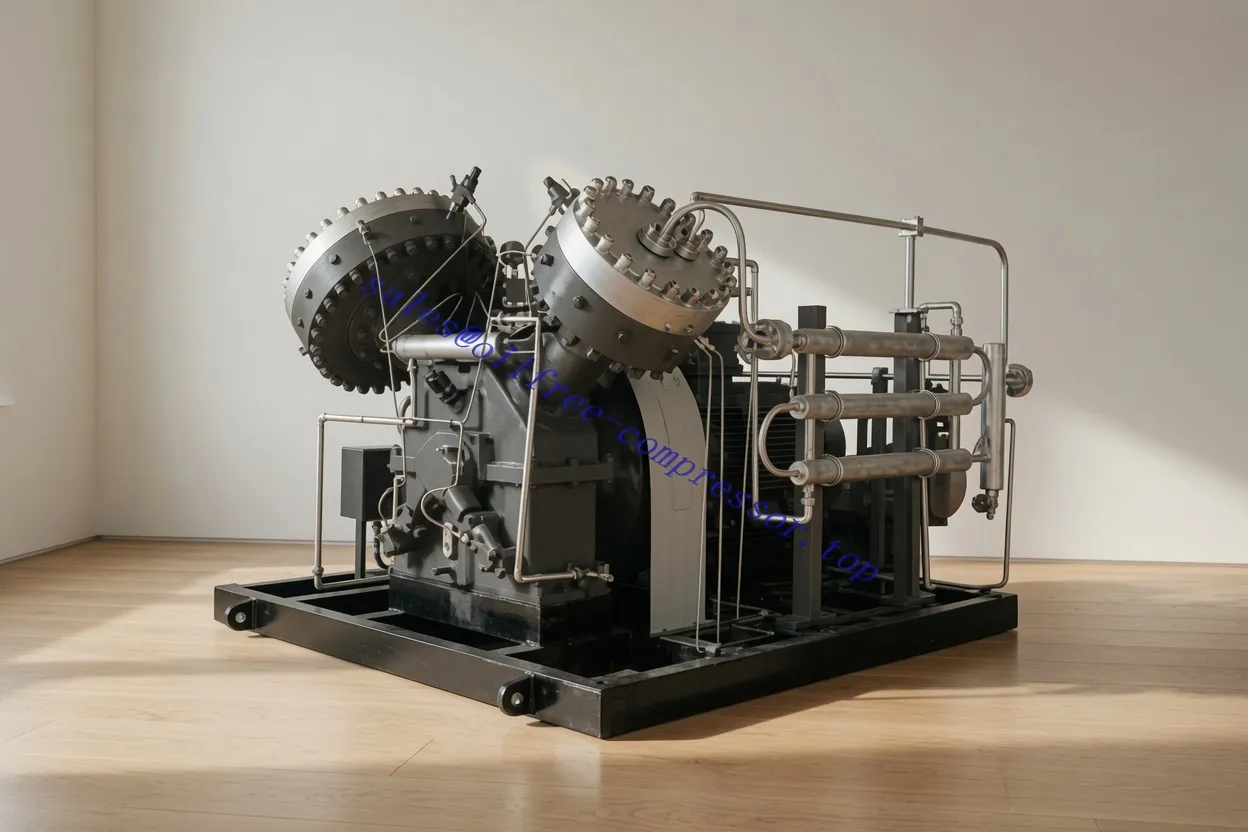
Total Cost of Ownership: Oil-Free vs Oil-Lubricated in Print
The higher capital cost of an oil-free compressor relative to a comparable oil-lubricated machine is the most common objection raised during purchasing decisions. A full total cost of ownership (TCO) analysis consistently reverses this objection for printing facilities.
- • Coalescing + activated carbon filter cartridges: $800–$2,500/year
- • Oil changes and disposal: $400–$1,200/year
- • Separator element replacement: $300–$800/year
- • Increased filter monitoring labour
- • Risk of press contamination event: $5,000–$50,000+ per incident
- • Potential audit failure cost (customer relationship)
- • Compressed air testing to verify filter performance
- • Higher capital cost: typically +20–40% vs oil-lubricated equivalent
- • Particulate filter only (no coalescing or carbon required)
- • No oil changes or disposal costs
- • Standard dryer maintenance
- • Periodic annual compressed air quality test (simple documentation)
- • Zero contamination risk to press or print quality
- • Full compliance documentation for customer audits
For a typical commercial print facility operating two B1 presses and a finishing line, the oil-free compressor premium pays back within 18–30 months when filtration savings, reduced maintenance labour, and risk avoidance are included. Beyond payback, every year of oil-free operation represents savings relative to the filtration-dependent alternative.
CM45D Water-Lubricated Oil-Free Screw Compressor
The CM45D uses water lubrication to deliver genuinely oil-free compressed air with cooler discharge temperatures — ideal for printing environments where heat adds to moisture load and where zero oil contamination risk is non-negotiable. Its low noise output suits print plant environments where operator communication matters.
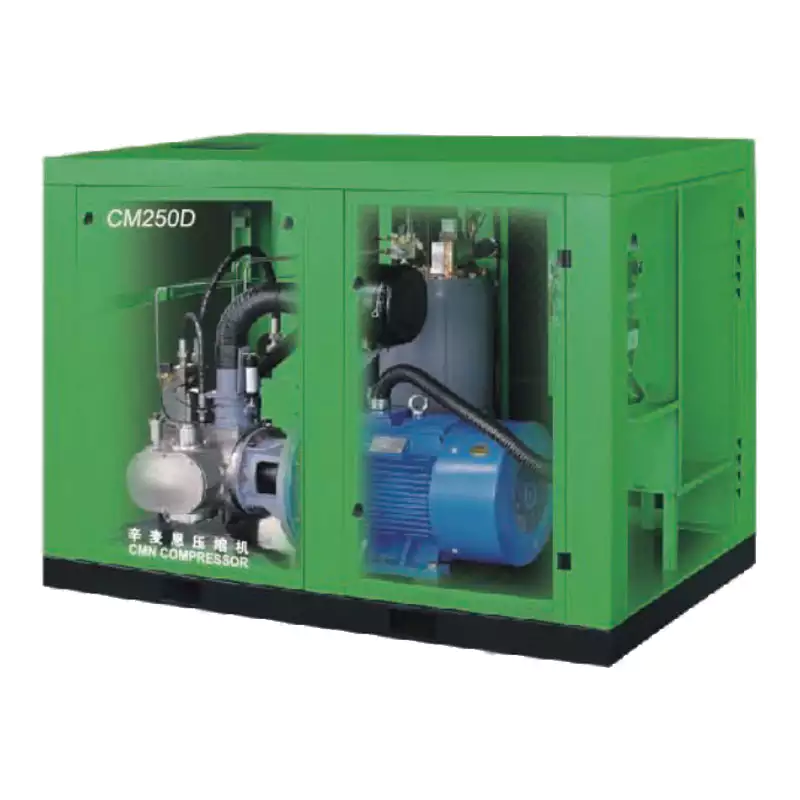
- ✓ True ISO Class 0 oil-free air — zero risk to ink systems and print heads
- ✓ Water injection delivers lower discharge temperature, reduced moisture load
- ✓ Low noise operation — suitable for open-plan or adjacent-to-press installation
- ✓ No oil changes, no oil-contaminated condensate disposal costs
- ✓ VSD option available for energy savings during variable production cycles
Frequently Asked Questions
Do all printing presses need Class 0 oil-free air, or only specific press types?
Can I retrofit an oil-free compressor into an existing system that previously used an oil-lubricated machine?
What pressure is typically required for offset and digital printing compressed air systems?
How often should compressed air quality be tested in a printing facility?
Are water-lubricated oil-free compressors a good choice for printing, or should I choose dry-screw technology?
Protect Your Press Quality with Oil-Free Air
Australia Oil Free Air Compressor Co., Ltd. supplies oil-free compressed air systems to commercial and industrial printing facilities across Australia. Our team can specify the right compressor, dryer, and filtration system for your press fleet and air purity requirements.
📧 [email protected] | Charlton Industrial Area, Australia