
The Energy Paradox: Why Compressors Are Heat Machines First
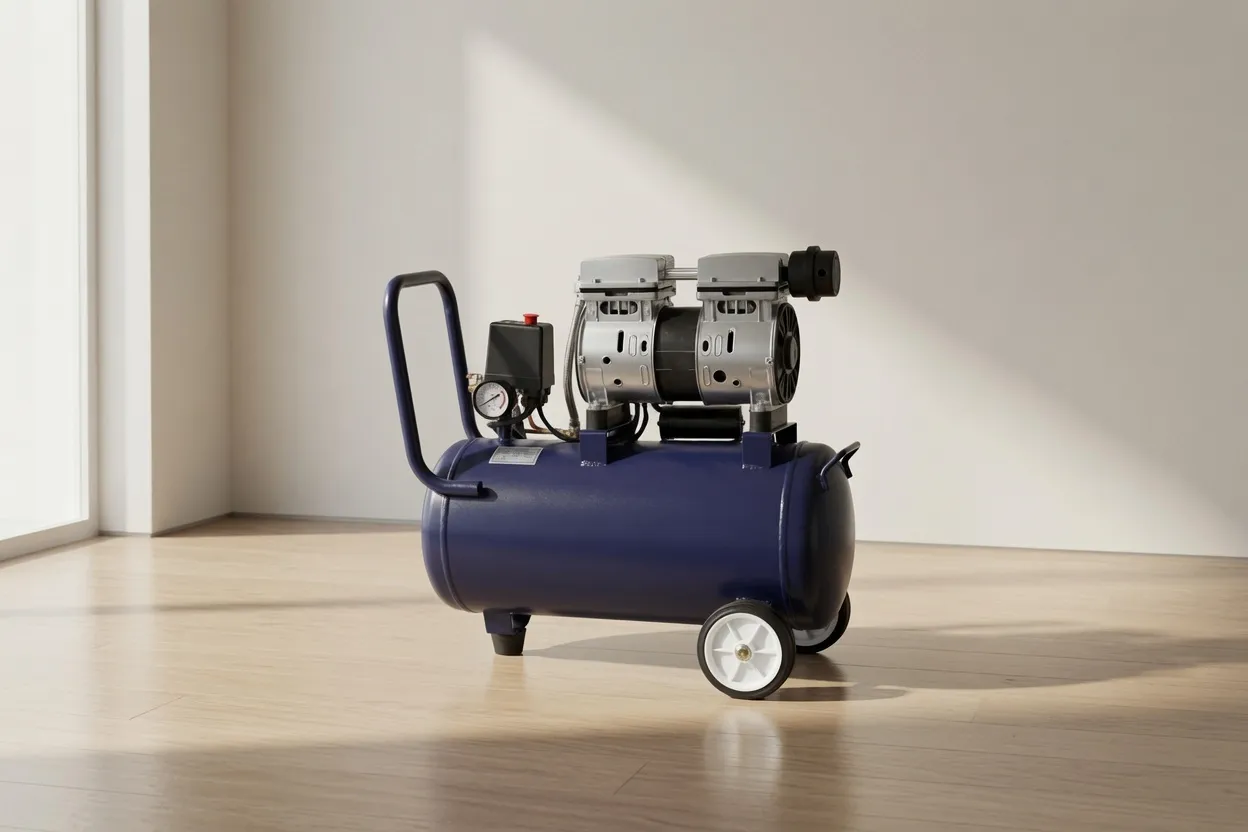
Compressed air is one of the most energy-intensive utilities in industrial manufacturing — typically consuming 10–30% of a facility’s total electricity spend. What most operators do not fully appreciate is that compression is fundamentally a heat-generation process. When air is compressed, the mechanical work of the motor does not simply disappear into the compressed air — it is almost entirely converted to heat within the compression element and immediately transferred to the discharged air and surrounding components.
The physics are unambiguous: the temperature of compressed air rises sharply with compression ratio. By the time air has been compressed from atmospheric to 100 PSI in a single-stage oil-free rotary screw compressor, it has reached 150–200°C. This heat must be removed before the air is usable — hence the aftercooler that every industrial compressor carries. The aftercooler does exactly this: it transfers compression heat from the air to a cooling medium (air or water). In the vast majority of installations, that heat-laden cooling medium is then simply exhausted — sent out of the compressor room or building as warm air or returned to a cooling tower where the heat dissipates to atmosphere.
This represents an extraordinary waste. A 45 kW compressor running 4,000 hours per year at full load generates approximately 180,000 kWh of recoverable heat annually — equivalent to the space heating requirement of a medium-sized office building. At Australian gas prices of approximately $0.03–0.05/kWh equivalent, this is AUD $5,400–9,000 in heating value discarded every year, for a single mid-size compressor.
Where the Heat Goes: The 94% Recovery Potential Explained
The 94% figure is not a theoretical maximum — it is the measured recovery achievable with a properly designed water-cooled heat recovery system on a modern oil free compressor. Understanding how the heat is distributed explains why this figure is realistic and what system design decisions determine how close to it you can get.
72% — 32.4 kW
22% — 9.9 kW
6% — 2.7 kW
The aftercooler removes compression heat from the discharged air before it enters the distribution system. In a water-cooled configuration, this heat is transferred to a closed cooling water circuit at 55–80°C — the ideal temperature range for space heating coils, domestic hot water pre-heating, and low-temperature industrial process water.
Motor winding losses and (for VSD units) inverter drive losses generate heat at lower temperatures than the compression element — typically 40–60°C above ambient. In air-cooled configurations, this heat is present in the compressor room exhaust air. In water-cooled designs, dedicated motor cooling circuits can capture a portion of this heat to the recovery loop.
Air-cooled compressors exhaust hot air into the compressor room. This warm air stream (typically 30–50°C above ambient) can be ducted directly to spaces requiring space heating in winter, or exhausted outside in summer via duct dampers. This is the simplest form of heat recovery — requiring only ductwork, not heat exchangers.
Heat Recovery System Types: From Simple to Comprehensive
Heat recovery systems range from low-cost duct arrangements that redirect warm exhaust air to purpose-built water-to-water heat exchangers integrated into the compressor system. The appropriate solution depends on your heat demand profile, the temperature level required by the end use, and the capital budget available.
Calculating Your Heat Recovery ROI
The financial return from heat recovery depends on three variables: compressor power rating, annual running hours, and the cost of the heating fuel it displaces. For Australian facilities, the comparison is typically against natural gas (AUD $0.030–0.055/kWh equivalent) or electric resistance heating (AUD $0.15–0.22/kWh). The higher the displaced fuel cost, the faster the payback.
Annual saving (AUD) = Recoverable kWh × Displaced fuel cost ($/kWh)
Simple payback (years) = System capital cost ÷ Annual saving
Worked Example: Food Processing Facility
A food processing plant runs a 75 kW oil-free rotary screw compressor 6,000 hours per year. They currently use gas-fired hot water for process cleaning at a cost of AUD $0.045/kWh. A Level 2 water-cooled heat recovery system (AUD $12,000 installed) is being evaluated.
Annual saving (gas displaced): 360,000 × $0.045 = AUD $16,200/year
Simple payback: $12,000 ÷ $16,200 = 0.74 years (9 months)
10-year cumulative saving: AUD $162,000 − $12,000 capital = AUD $150,000 net
| Compressor Size | Annual Hours | Recoverable Heat (kWh) | Annual Saving (gas) | Payback (Level 2) |
|---|---|---|---|---|
| 22 kW | 4,000 | 70,400 | AUD $3,200 | 1.6 yrs |
| 45 kW | 5,000 | 180,000 | AUD $8,100 | 1.1 yrs |
| 75 kW | 6,000 | 360,000 | AUD $16,200 | 0.9 yrs |
| 132 kW | 7,000 | 739,200 | AUD $33,300 | 0.7 yrs |
Assumptions: 80% recovery fraction, AUD $0.045/kWh displaced gas cost, Level 2 system capital AUD $5,000 (22 kW) to $25,000 (132 kW).
Productive Uses for Recovered Compression Heat
The value of recovered heat depends entirely on finding a productive use for it at the available temperature. Most compressor aftercooler heat is available at 55–80°C — a temperature range that suits a wide variety of industrial and commercial applications. Here are the most economically valuable end uses in Australian industrial environments:
Food processing, dairy, brewing, and manufacturing facilities use large volumes of hot water for CIP (clean-in-place) systems, equipment washing, and product rinsing. Compressor heat at 60–75°C pre-heats cold mains water before final boost to process temperature — reducing gas or electric heater load by 40–70%.
Warehouses, workshops, and manufacturing floors with high ceiling volumes require substantial space heating in winter. Compressor exhaust air (air-cooled system) or recovered hot water (water-cooled) fed to unit heaters or radiant heating panels can displace 100% of auxiliary space heating costs in suitably insulated buildings during the heating season.
Heated desiccant (HOC — heat of compression) dryers use compressor discharge air heat directly for desiccant regeneration, eliminating the electrical heater element found in conventional heated desiccant dryers. Properly integrated, this can deliver dew points of −40°C without any additional energy input — combining air treatment and heat recovery in a single system.
Fish farms, hydroponic greenhouses, and nurseries require water or air heating to precise temperature bands — often 22–28°C, perfectly matched to the low-grade heat available from compressor exhaust air or cooling water. Several Australian aquaculture operations have integrated compressor heat recovery into their water temperature management systems with payback periods under 18 months.
VSD Compressors and Heat Recovery: Important Interaction
A variable speed drive compressor introduces one consideration for heat recovery system design that fixed-speed machines do not: the recovered heat output varies with motor speed. When the VSD runs at 60% speed to match lower demand, recoverable heat output drops proportionally — to approximately 60% of full-load heat output. A heat recovery system designed for peak heat output will be oversized during typical partial-load operation.
For facilities using recovered heat for space heating (which naturally corresponds to cooler outdoor temperatures when demand may also be lower), this variation can work beneficially. For process heat applications requiring a consistent thermal supply, a buffer storage tank is essential — typically sized to hold 30–60 minutes of full-load heat output at the average operating temperature, smoothing out the VSD speed modulation effect on thermal delivery rate.
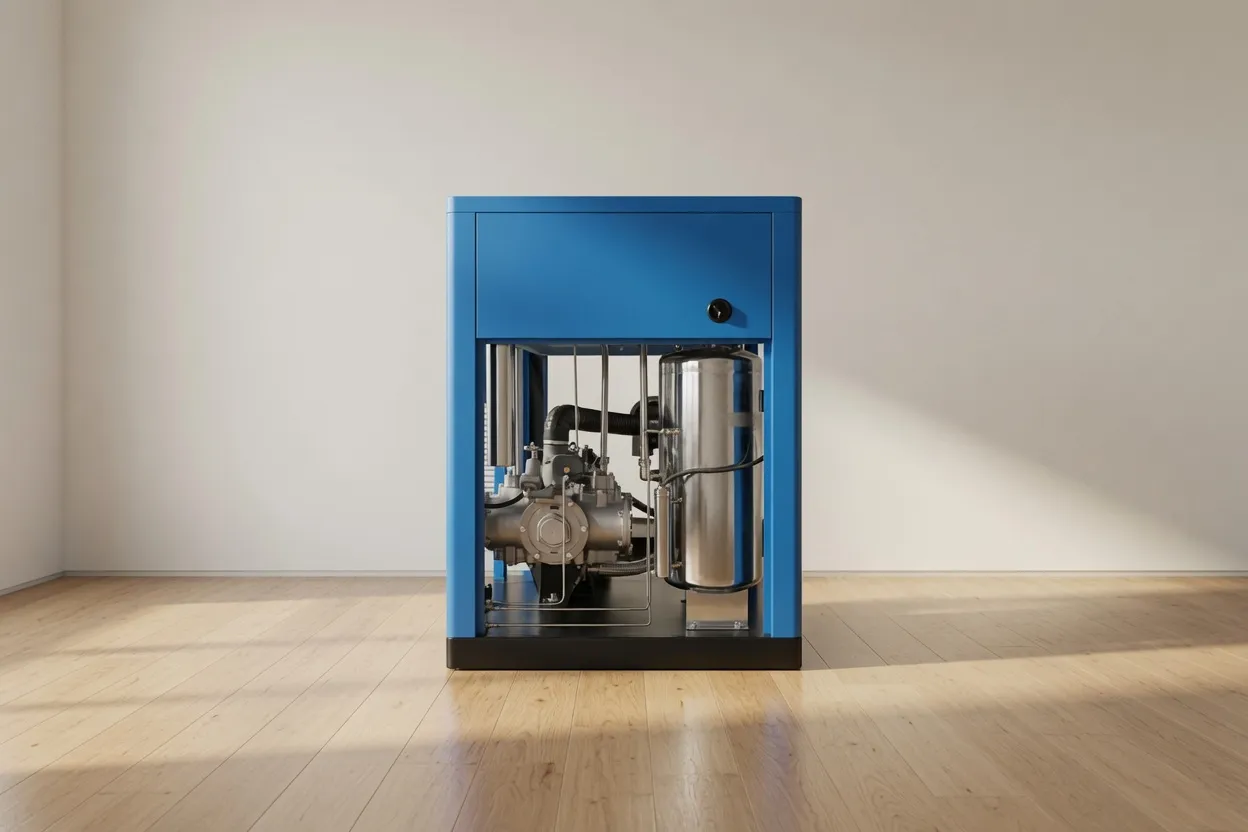
A two stage air compressor offers heat recovery opportunities at two temperature levels: the intercooler (lower temperature, typically 40–55°C) and the aftercooler (higher temperature, typically 60–80°C). The intercooler heat is suitable for low-temperature applications (space heating pre-heat, aquaculture); the aftercooler heat suits higher-temperature uses (process hot water, CIP systems). A well-designed dual-circuit heat recovery system for a two-stage unit can achieve recovery rates above 90%, approaching the theoretical maximum.
Heat Recovery & Total Cost of Ownership: The Complete Picture
The total cost of ownership analysis for an oil-free compressor system is fundamentally incomplete without accounting for heat recovery potential. Most TCO models consider only purchase price, energy consumption, and maintenance — ignoring the heat energy value that is simultaneously generated and potentially wasted. When heat recovery is correctly included, the effective energy cost of compressed air production drops dramatically.
For a 75 kW compressor running 6,000 hours per year consuming 450,000 kWh at AUD $0.16/kWh = AUD $72,000 in annual electricity, a 80% heat recovery system generating 360,000 kWh of heat value at AUD $0.045/kWh equivalent = AUD $16,200 in annual heat credit. The effective net annual energy cost of the compressor system drops from AUD $72,000 to AUD $55,800 — a 22.5% reduction in effective operating cost without changing the compressor at all.
Australian gas and electricity prices have risen 40–80% since 2020, significantly improving the economic case for heat recovery. Any facility running a compressor above 30 kW for more than 3,000 hours per year should commission a heat recovery feasibility assessment as part of the system specification process — not as an afterthought. At current energy prices, most Level 1 and Level 2 systems pay back in under 2 years, placing them among the highest-returning energy investments available to industrial operators.
Heat Recovery Design Support from Australia Oil Free Air Compressor
Australia Oil Free Air Compressor Co., Ltd. includes heat recovery assessment as a standard element of every compressor proposal for units above 22 kW. Our engineering team at the Charlton Industrial Area facility calculates recoverable heat output for your specific compressor model, running profile, and site conditions — then identifies the most appropriate recovery configuration based on your existing heat loads and infrastructure.
We work with heat exchanger and thermal storage specialists to design complete Level 2 and Level 3 recovery systems that integrate cleanly with our compressor range. Every proposal includes a documented ROI calculation at current local energy prices — not generic international benchmarks. If a heat recovery system does not meet a 3-year payback threshold for your specific application, we will tell you that too.
Email [email protected] with your compressor size and operating hours for a no-obligation heat recovery assessment.
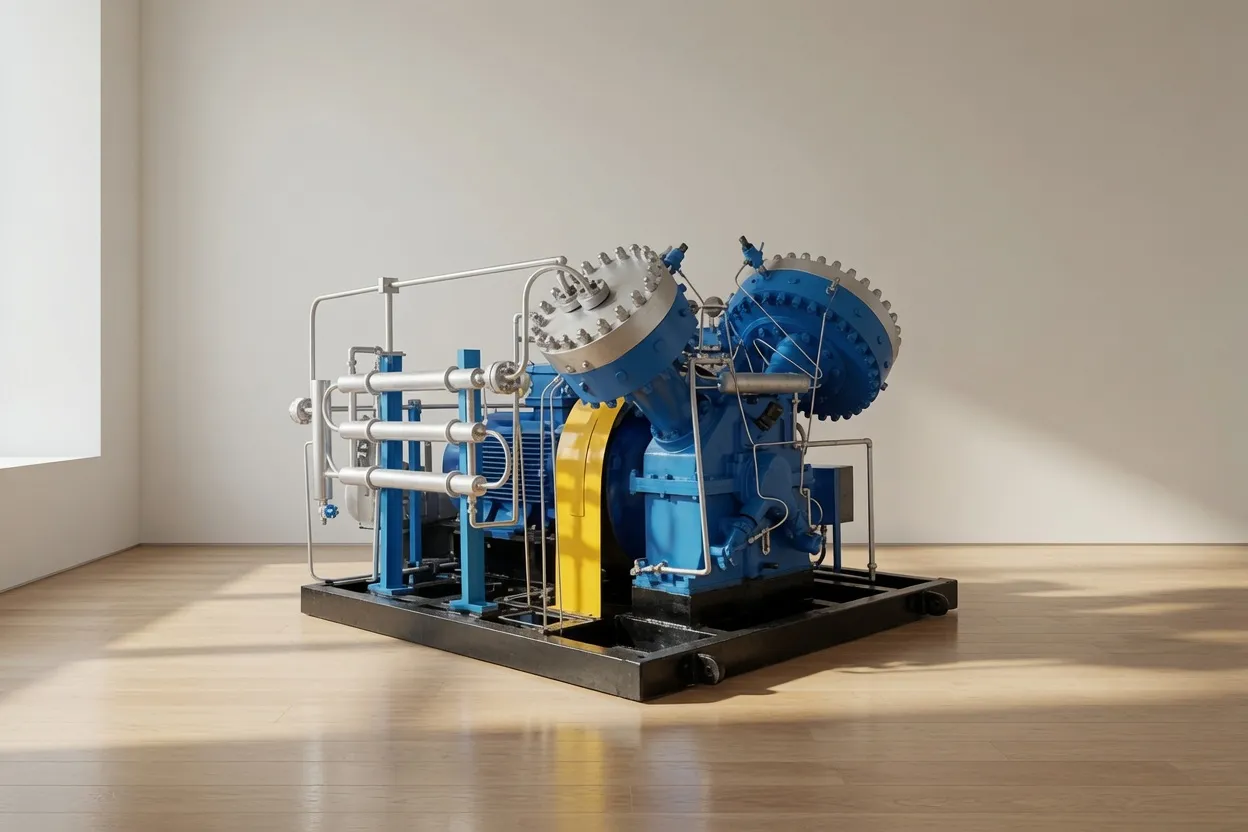
CM242GPV — Medium-Pressure Oil-Free Screw Air Compressor with Heat Recovery Capability
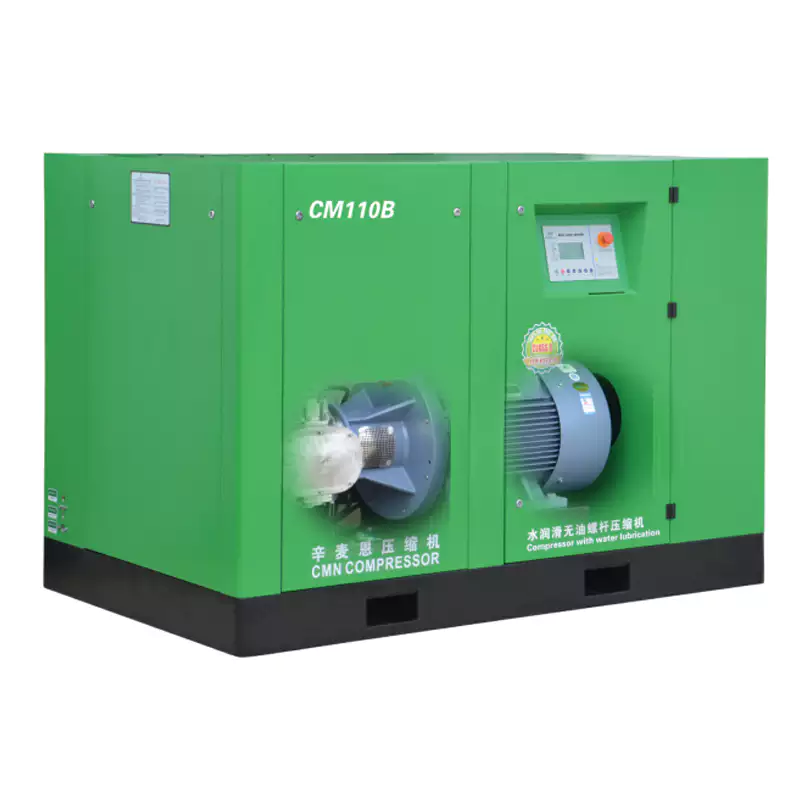
The CM242GPV is designed with heat recovery integration in mind — its cooling circuit architecture accommodates external heat exchanger connections for water-cooled aftercooler retrofit without requiring major modifications. For facilities looking to capture the maximum energy value from their compressed air investment, the CM242GPV’s continuous-duty screw design and high running hours make it one of the most economically rewarding candidates for Level 2 or Level 3 heat recovery in our range. Available with factory-fitted heat recovery preparation as an option.
Frequently Asked Questions
Australia Oil Free Air Compressor Co., Ltd.
Charlton Industrial Area, Australia | [email protected]