
Choosing between an oil-free air compressor and an oil-lubricated model is one of the most consequential equipment decisions a facility manager or procurement engineer can face. Get it right and you streamline operations, reduce contamination risk, and slash long-term maintenance costs. Get it wrong and you may be dealing with product recalls, regulatory penalties, or premature machine failure. This guide lays out every dimension of the comparison — technology, performance data, total cost of ownership, and application suitability — so you can walk away with a clear, defensible answer.
Understanding the Core Technology Difference
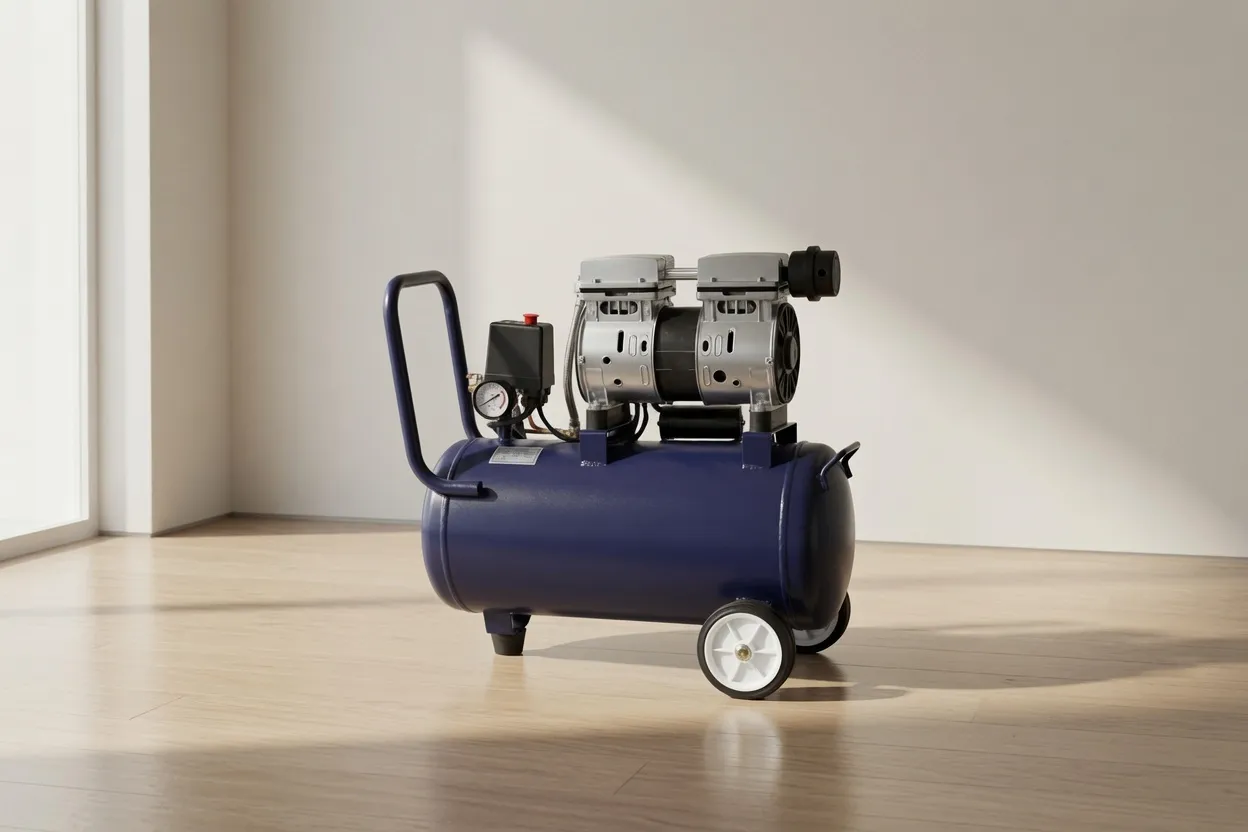
At the heart of this comparison is a single question: does lubricating oil enter the compression chamber? In an oil-lubricated compressor, oil is deliberately injected into the airend to reduce friction, seal rotors, and carry away heat. This produces efficient compression but introduces oil aerosols — typically 2–10 ppm — into the discharge air. In contrast, a true oil-free air compressor keeps oil entirely out of the compression pathway. The rotors operate with precision-engineered clearances, and alternative cooling systems — often water injection or air-cooled inter-stage cooling — handle the thermal load without any hydrocarbon contamination risk.
Class Designations Under ISO 8573-1
The international standard ISO 8573-1 classifies compressed air purity in terms of particulates, moisture, and total oil content. Oil-free compressors — when paired with proper filtration — can reliably achieve Class 0 air quality: less than 0.01 mg/m³ of oil. Oil-lubricated machines, even with high-efficiency coalescing filters downstream, typically achieve Class 1 or Class 2 (0.01–0.1 mg/m³). For industries where even trace contamination is unacceptable, there is no substitute for a true oil-free design.
How Each Type Handles Lubrication Internally
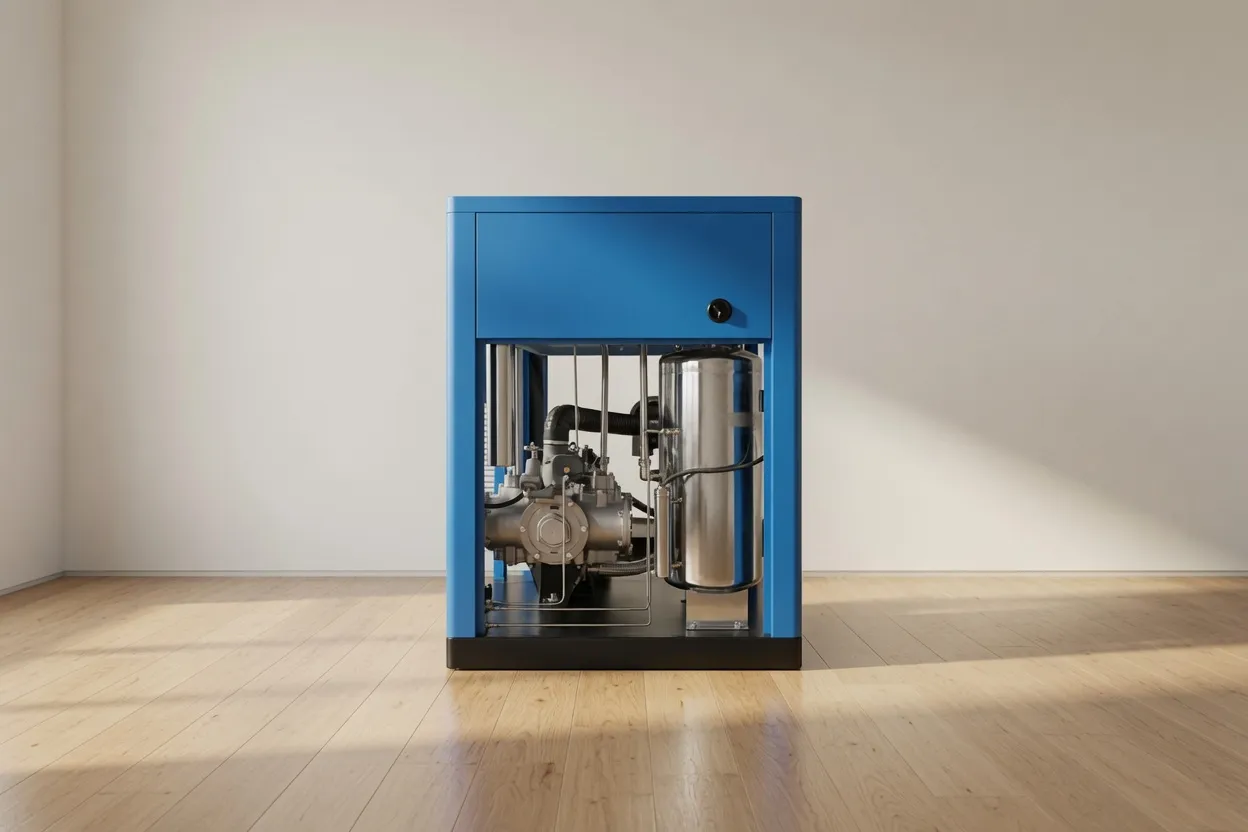
Oil-lubricated compressors route oil through a dedicated circuit: oil pump → bearing journals → rotor injection ports → oil separator → oil cooler → repeat. The system is well-understood and highly reliable, but demands periodic separator element replacement (every 4,000–8,000 hours), oil analysis programs, and downstream coalescing filters. Oil-free screw air compressors replace all of this with precision timing gears that synchronize rotors without contact, combined with specialized coatings (PTFE, ceramic, or DLC) that handle dry friction, or water-film lubrication that evacuates heat and provides a non-contaminating seal.
Performance Metrics: A Data-Driven Side-by-Side
Performance trade-offs between the two technologies are real and measurable. The table below compiles typical specifications drawn from field studies and manufacturer data across the 15–132 kW range — a segment that covers the vast majority of industrial and commercial compressor installations.
Total Cost of Ownership: Beyond the Purchase Price
Capital expenditure represents only a fraction of the true cost of operating a compressed air system over its service life. Industry benchmarks consistently show that energy consumption accounts for 70–80% of the lifetime cost of any industrial compressor. Maintenance consumables, downtime, and downstream filtration make up most of the remainder. When you factor in these numbers, the calculus often tips decisively in favour of the oil-free air compressor.
Energy Costs
Oil-free screw compressors with variable speed drives (VSD) reduce electricity consumption by 20–35% compared to fixed-speed oil-lubricated units. At Australian industrial electricity rates averaging AUD 0.12–0.18/kWh, a 75 kW unit running 6,000 hrs/year saves AUD 8,000–14,000 annually with VSD technology.
Maintenance Consumables
Oil-lubricated compressors require oil changes (every 2,000 hrs), oil separator elements (every 4,000 hrs), and coalescing filters (every 4,000 hrs). A 75 kW unit accumulates AUD 4,000–7,000 in consumables annually. Oil-free units eliminate most of these, reducing annual maintenance spend by 60–70%.
Contamination Risk Cost
A single product recall event in food or pharmaceutical manufacturing can cost AUD 500,000 to millions. The risk premium alone — insurance, validation protocols, downstream filter systems — often exceeds the capital cost differential between oil-lubricated and oil-free solutions within 2–3 years of operation.
Application Suitability: Where Each Technology Belongs
Not every application demands oil-free air, but industries with stringent regulatory requirements or product purity standards have little choice. Mapping your application to the right technology is the fastest way to size your investment correctly.
Industries That Require Oil-Free Air Compressors
Where Oil-Lubricated Compressors Still Make Sense
Oil-lubricated compressors remain the workhorse of applications where air purity is not the critical variable. Heavy-duty construction, mining, tyre inflation, pneumatic power tools, general workshop air, and quarry operations all fall into this category. These environments typically accept Class 2–3 air quality, demand maximum pressure output and flow capacity at minimum capital cost, and have maintenance personnel accustomed to oil servicing cycles. The oil-lubricated compressor‘s lower upfront price and slightly superior energy efficiency at peak load make it the rational choice when contamination risk is absent.
Pressure Range and Flow Capacity Compared
A persistent misconception is that oil-free compressors cannot match the pressure and flow capacity of oil-lubricated designs. Modern engineering has largely erased this gap. Today’s oil-free screw air compressors are available in configurations delivering pressures from 0.7 MPa all the way to 1.6 MPa in single-stage designs, and up to 3.0 MPa in two-stage configurations — figures that directly compete with oil-injected models in all but the most extreme high-pressure niche applications. Flow capacity scales from 0.5 m³/min for compact workshop units up to 100+ m³/min for large industrial plant installations.
For demanding laser cutting operations, specialized oil-free models designed for 1.6 MPa to 3.0 MPa assist-gas delivery are now standard. These machines protect focusing optics from oil film deposition that degrades cut quality and shortens lens service life dramatically — a hidden cost that makes the oil-free premium easy to justify.
Environmental and Regulatory Considerations in Australia
Australian food safety standards under FSANZ, pharmaceutical manufacturing guidelines from the TGA, and environmental waste disposal regulations all create compliance obligations that favour oil-free air compressors. Disposal of compressor oil and oil-saturated separator elements is classified as controlled waste in most Australian states, adding logistics cost and regulatory exposure. Oil-free units eliminate this waste stream entirely. For facilities pursuing ISO 14001 environmental management certification, the reduction in hazardous waste and the lower carbon footprint of reduced consumable production are quantifiable benefits that support the certification audit.
At Australia Oil Free Air Compressor Co., Ltd., located in the Charlton Industrial Area, Australia, every oil-free air compressor in our range is engineered against these exact compliance requirements. Our technical team can provide documentation supporting TGA validation, HACCP implementation, and ISO 8573-1 Class 0 certification — critical paperwork that oil-lubricated alternatives simply cannot furnish.
Why Australia Oil Free Air Compressor Co., Ltd. Is the Right Partner
Selecting the right equipment is only half the equation. Working with a supplier who understands your compliance requirements, delivers genuine technical support, and backs their machines with responsive after-sales service makes the difference between a smooth installation and years of frustration. Here is what sets us apart in the Australian market.
ISO 8573-1 Class 0 Certified
Every model in our oil-free range carries independent certification to ISO 8573-1 Class 0 — not just a manufacturer’s claim, but third-party verified air purity documentation for your compliance file.
Full-Range Pressure Portfolio
From 0.7 MPa general industrial models to 3.0 MPa two-stage laser-cutting compressors, our portfolio covers every pressure demand without requiring compromise on air quality or energy efficiency.
Local Australian Support
Based in the Charlton Industrial Area, our service team provides on-site commissioning, preventive maintenance contracts, and rapid spare parts dispatch across Eastern and Western Australia — no waiting for offshore support desks.
The Decision Framework: A Step-by-Step Approach
Rather than defaulting to whichever technology your previous supplier stocked, work through this structured evaluation process to arrive at a defensible, documented decision.
Define Your Air Quality Requirement
Consult ISO 8573-1 and identify the Class your application demands. If the answer is Class 0 or Class 1 at point-of-use, an oil-free air compressor is mandatory. If Class 2–4 is acceptable, oil-lubricated equipment is a valid option.
Calculate Your 5-Year Total Cost of Ownership
Request energy consumption specifications (kW/m³/min at your required pressure) from shortlisted suppliers. Multiply by your annual operating hours and local electricity tariff. Add projected maintenance consumables. Compare the five-year totals, not just the capital cost line.
Assess Compliance Obligations
List every regulatory standard, customer quality requirement, and certification your facility must maintain. If any of these require third-party verified Class 0 air, document this as a hard technical specification — it removes the debate entirely.
Match Pressure and Flow to Your Demand Profile
Perform a compressed air audit to map peak, average, and minimum demand across your shift patterns. Oversizing wastes capital; undersizing creates pressure drops that harm downstream equipment and process quality. A correctly sized VSD-equipped oil-free unit often beats a larger fixed-speed oil-lubricated unit on every performance metric.
Making the Final Investment Decision
The verdict is rarely universal. For any facility processing food, producing pharmaceuticals, manufacturing electronics, or operating precision laser cutting equipment, the oil-free air compressor is the only responsible choice — full stop. The contamination risk, compliance exposure, and downstream filter costs of oil-lubricated alternatives cannot be engineered away cheaply or reliably enough to justify the saving. For general workshop, construction, and heavy industrial applications where air purity is not safety-critical, oil-lubricated compressors offer a lower entry cost that may still be the right commercial decision, particularly for facilities with experienced maintenance teams and low operating hours.
If you are still uncertain after working through the framework above, the team at Australia Oil Free Air Compressor Co., Ltd. is ready to conduct a free application assessment. Reach us at [email protected] or visit our contact page — our engineers will analyse your specific application requirements and provide a documented recommendation with supporting technical data.
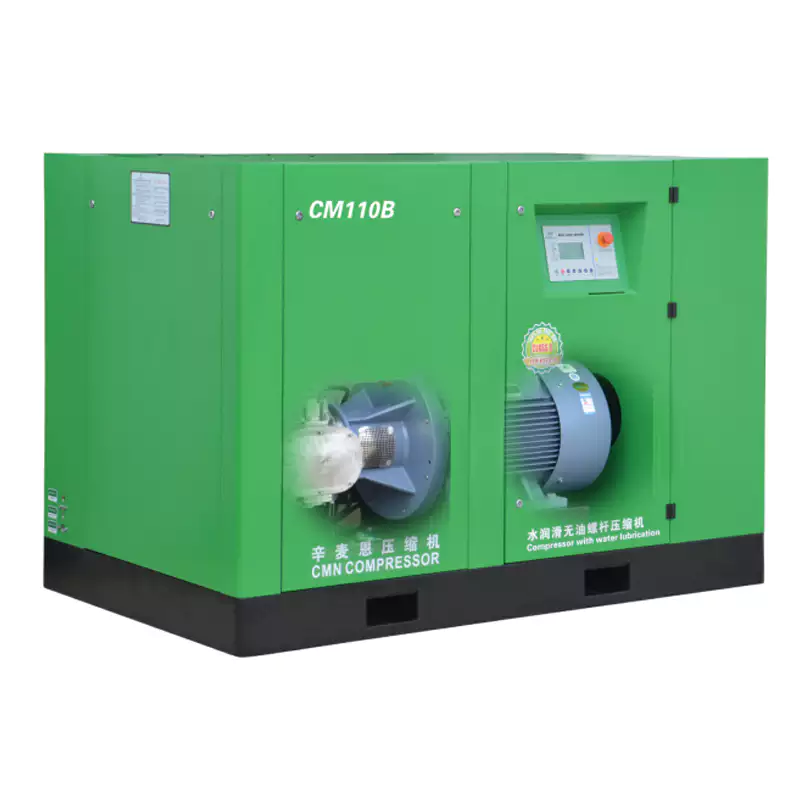
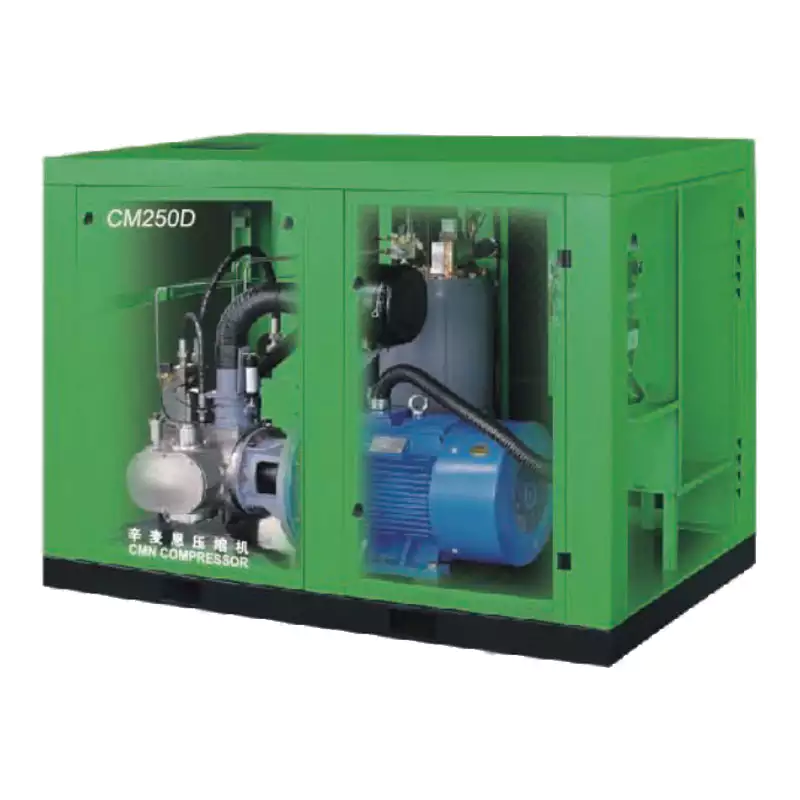
Oil-Free Screw Air Compressor — 1.6 MPa
ISO 8573-1 Class 0 certified. Perfect for laser cutting, food processing, and pharmaceutical manufacturing. Delivers 100% oil-free compressed air at 1.6 MPa with industry-leading specific power performance and minimal maintenance demands.
Frequently Asked Questions
Ready to Specify the Right Compressor?
Our application engineers will assess your flow rate, pressure, and air purity requirements and recommend the most cost-effective oil-free solution for your facility.
Get a Free Technical Assessment
Email: [email protected] | Contact Us Online